
Israel Agrees to Limited Reopening of Rafah Border Crossing in Gaza
Palestinians hope for relief as restricted movement resumes at critical crossing

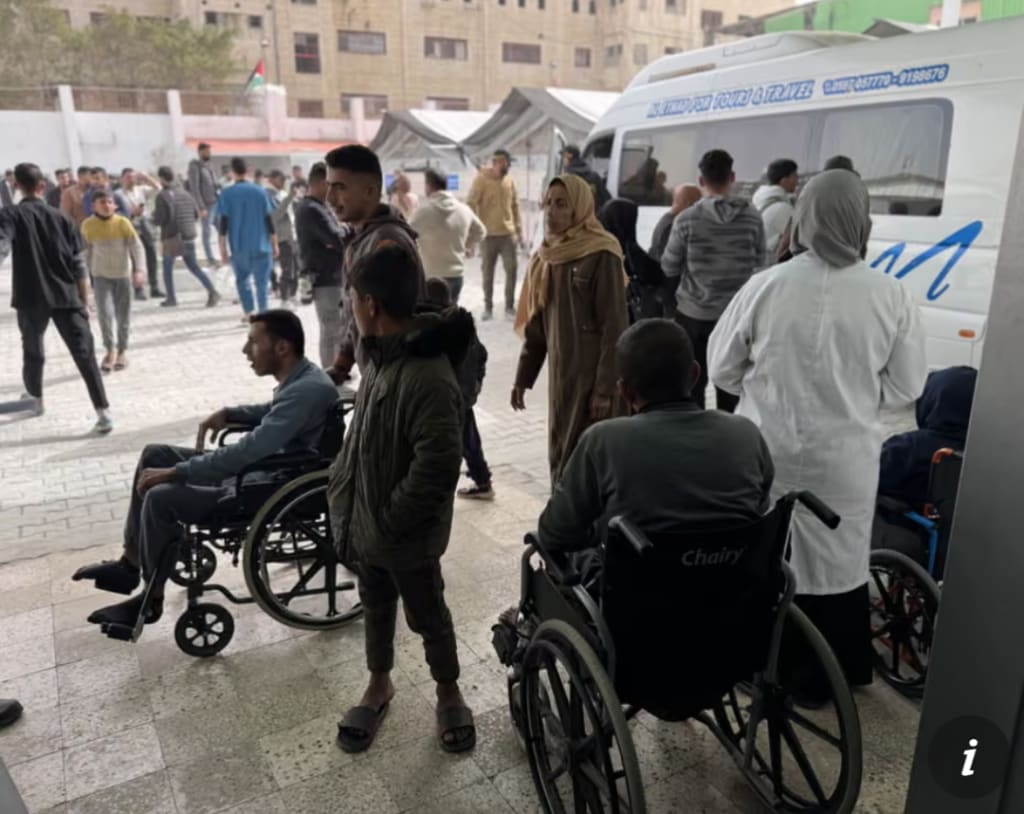
Israel has agreed to a limited reopening of the Rafah border crossing in Gaza, a development that comes amid mounting international pressure and growing humanitarian concerns. The crossing, which links the Gaza Strip with Egypt, has been largely closed for months, severely restricting the flow of people, goods, and essential medical supplies.
The decision to allow limited movement represents a small but significant shift in Israel’s policy, reflecting both security concerns and the urgent need to address humanitarian needs in Gaza, which has faced years of blockade and conflict.
---
Background: Rafah Border’s Strategic Importance
The Rafah crossing is Gaza’s only non-Israeli-controlled entry point to the outside world. Operated by Egyptian authorities with coordination from Israel, the crossing is vital for Palestinians seeking medical care, education, or travel abroad.
Since 2007, when Hamas took control of Gaza, Israel has imposed strict restrictions on the movement of people and goods, citing security risks. These restrictions, combined with periodic military escalations, have left the Palestinian territory largely isolated. The closure of Rafah has particularly impacted vulnerable groups, including patients needing specialized medical treatment, students, and families separated by the blockade.
Analysts note that the Rafah crossing is more than just a transit point—it is a lifeline for Gaza’s population of over 2.3 million people.
---
The Reopening: Limited but Significant
According to Israeli and Egyptian officials, the reopening will be limited in scope, allowing only certain categories of people to cross. Priority will be given to medical patients, students, and foreign nationals, while other travel may remain restricted.
Officials emphasized that the move is not a full reopening, and security measures will remain tight. All travelers will undergo extensive security screenings, and the flow of goods will continue to be controlled.
Palestinian authorities welcomed the announcement cautiously, noting that while the reopening is limited, it provides critical relief for those in urgent need. “Even a partial reopening gives hope to people who have been trapped for months without access to essential services,” said a spokesperson for the Palestinian Ministry of Health.
---
Humanitarian Implications
The reopening comes at a time when Gaza faces a deepening humanitarian crisis. Food, fuel, and medical supplies are in short supply, and electricity shortages have disrupted hospitals and essential services.
International organizations, including the United Nations Relief and Works Agency (UNRWA), have repeatedly called for the easing of restrictions at Rafah to prevent further deterioration of living conditions. UN officials have expressed cautious optimism about the limited reopening but warn that it is insufficient to meet the ongoing needs of Gaza’s population.
Medical patients, in particular, stand to benefit immediately. Thousands have been unable to receive specialized treatment outside Gaza due to travel restrictions. The limited reopening could allow some of these patients to access life-saving care in Egypt or beyond.
---
Regional and International Reactions
The announcement has drawn attention from international leaders and humanitarian organizations. Egypt has expressed support for the decision, noting that it aligns with its long-standing role as a mediator between Israel and Palestinian authorities.
Meanwhile, the United Nations and several European countries have praised the move as a necessary humanitarian step, while urging Israel to consider further easing of restrictions. Human rights organizations have highlighted that prolonged closures exacerbate the humanitarian crisis and stress the importance of allowing freer movement for civilians.
Security concerns remain a central issue in Israel’s policy. Israeli officials have repeatedly stressed that any relaxation of border restrictions will be balanced against the risk of militant activity. This cautious approach has led to a pattern of partial openings, often in response to international pressure or urgent humanitarian needs.
---
Looking Ahead: Challenges and Opportunities
While the limited reopening is a positive development, many challenges remain. For one, the scale of the reopening is small compared to the demand for cross-border travel. Thousands of Palestinians remain stranded, unable to reunite with family members or access necessary services.
Moreover, the political and security dynamics in Gaza continue to complicate border management. Tensions between Hamas, the Palestinian Authority, and Israel have historically influenced border policies, creating uncertainty for residents and travelers.
Experts suggest that sustained international engagement will be crucial to expand access at Rafah. Greater coordination between Israel, Egypt, and Palestinian authorities could improve the flow of humanitarian aid, medical services, and essential goods. Additionally, monitoring mechanisms may help ensure that security concerns are addressed while civilians receive needed relief.
---
Conclusion
Israel’s decision to allow a limited reopening of the Rafah border crossing represents a cautious but meaningful step in addressing Gaza’s humanitarian needs. While the move does not fully alleviate the hardships faced by the territory’s residents, it provides temporary relief for medical patients, students, and others urgently in need of travel.
The reopening underscores the delicate balance between security considerations and humanitarian obligations, highlighting the role of international advocacy and regional cooperation in shaping policy.
For Gaza’s population, even a limited opening offers a glimpse of hope—a reminder that connectivity, access, and humanitarian support are possible despite years of blockade and conflict.
About the Creator
Keep reading
More stories from Salaar Jamali and writers in The Swamp and other communities.
The House Races to End Shutdown. And, Trump Wants to Close Kennedy Center for 2 Years
The U.S. federal government is once again facing the specter of a shutdown, with lawmakers in the House of Representatives scrambling to pass critical funding legislation before deadlines expire. At the same time, former President Donald Trump has proposed a controversial plan to close the John F. Kennedy Center for the Performing Arts for two years, a move that has sparked heated debate over cultural priorities and federal spending.
By Salaar Jamaliabout 4 hours ago in The Swamp
Deadly US Winter Storm Brings Travel Chaos, Power Outages and Multiple Fatalities
Introduction A deadly winter storm, named Winter Storm Fern, has swept across the United States over the past few days, leaving widespread destruction in its wake. The storm has caused thousands of flight cancellations and delays, left hundreds of thousands without electricity, and tragically claimed multiple lives. Stretching from the Southern Plains to New England, this storm has affected more than half the nation, prompting emergency declarations and an urgent public response.
By Ayesha Lashari7 days ago in The Swamp
Shabana Mahmood: Teething Troubles with One in, One Out Deal.
Keir Starmer did a deal with French President Emmanuel Macron. The agreement is one in, one out. In other words, we send a migrant back to France, and we accept one from France. Or at least that's the basic theory of it. So illegal migrants can be removed from Britain, and an equal number can come to Britain via the legal route. However, some have questioned the logic of this. Surely a sound policy would be stop or at least deter migrants from crossing the English Channel in the first place. The Channel is the busiest or one of the busiest shipping lanes in the world, so dinghies stacked up with people are taking a hell of a risk. There have been no collisions with shipping as far as I know; however, dinghies have capsized with fatalities. Mr. Starmer was also supposed to be cracking down on the gangs exploiting migrants, but how well that has gone, I cannot say.
By Nicholas Bishop5 days ago in The Swamp




Comments
There are no comments for this story
Be the first to respond and start the conversation.