
How a Local Green Candidate Disrupted Labour’s Election Strategy
The rise of a working-class campaigner highlights shifting political loyalties ahead of a Labour-led government

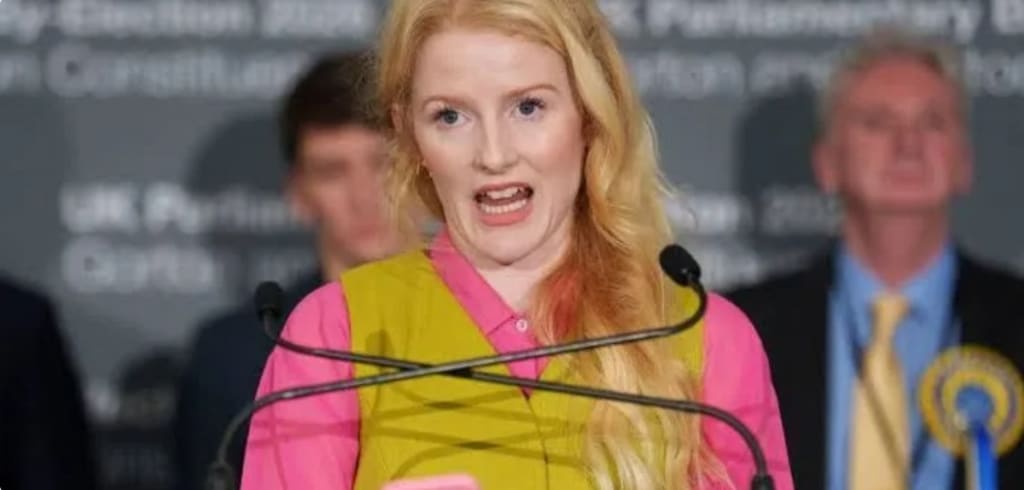
The recent UK general election delivered a clear victory for the Labour Party under the leadership of Keir Starmer. Yet beneath the headline result, smaller political movements made gains that may shape British politics in the coming years. Among them was the Green Party of England and Wales, which expanded its presence and influence in several constituencies.
In one race, a working-class plumber running as a Green candidate drew unexpected support, narrowing Labour’s margin and complicating what had once looked like a straightforward path. While Labour secured government, the Green campaign signaled changing voter priorities, especially on climate policy and local accountability.
A Changing Political Landscape
British politics has been in flux for several years. After a long period of Conservative rule, Labour entered the election campaign with strong polling numbers. Starmer positioned his party as stable and focused on economic recovery, public services, and pragmatic reform.
At the same time, the Greens aimed to broaden their appeal beyond traditional environmental voters. The party sought to present itself as a voice for social justice, housing reform, and cost-of-living concerns, while maintaining its emphasis on climate action.
This shift allowed the Greens to connect with working-class communities that had not previously viewed the party as a natural choice.
The Candidate’s Background
The Green candidate at the center of this local contest came from a working-class background and had spent years employed as a self-employed plumber. He framed his campaign around everyday issues: housing quality, rising utility bills, and infrastructure maintenance.
By highlighting his trade experience, he positioned himself as someone familiar with practical problems rather than political rhetoric. Campaign messaging focused on accountability and long-term investment in communities.
This approach resonated with voters who felt disconnected from mainstream party leadership.
Why the Seat Mattered
Labour’s strategy relied on reclaiming constituencies it had previously lost or narrowly held. In several areas, party planners expected modest competition from smaller parties.
However, in this particular seat, the Green campaign gained momentum early. Community meetings drew strong attendance, and local media coverage amplified the candidate’s message.
Though Labour ultimately held the seat, the Green vote share increased significantly compared with previous elections.
That shift suggested that even in a year of Labour success, alternative parties could influence margins and campaign dynamics.
Climate Policy and Local Concerns
Climate policy played a central role in the Green platform. The candidate argued that environmental measures could create jobs in home insulation, renewable energy installation, and infrastructure upgrades.
By linking environmental action with skilled trades, he reframed climate policy as an economic opportunity rather than an abstract goal.
This framing appealed to voters concerned about both employment and energy costs.
Labour’s national campaign also included green investment proposals, but the local Green campaign emphasized stronger and faster commitments.
Labour’s Strategic Calculation
For Starmer and the Labour leadership, the presence of a strong Green candidate presented both risk and opportunity.
On one hand, vote splitting on the center-left could reduce Labour’s margin. On the other, the rise of the Greens underscored voter interest in progressive policies.
Labour’s campaign team focused on persuading voters that only a Labour government could realistically implement change at scale.
National messaging stressed competence, fiscal discipline, and restoring trust in government.
In many seats, this strategy worked effectively. Yet the Green surge in certain constituencies served as a reminder that voters were willing to consider alternatives.
Grassroots Campaigning
The Green candidate’s campaign relied heavily on volunteer outreach. Door-to-door canvassing and local events were central to the effort.
Social media platforms also played a role in amplifying campaign messages, particularly among younger voters.
Rather than relying on large advertising budgets, the campaign emphasized direct engagement.
This grassroots approach helped build credibility and visibility in a relatively short period.
Working-Class Identity in Politics
The candidate’s trade background became a defining feature of the race.
In recent years, political debate in the UK has often centered on representation and class identity. Labour traditionally positioned itself as the party of working people, yet critics have argued that many voters feel disconnected from party leadership.
By foregrounding his experience in manual labor and small business ownership, the Green candidate tapped into broader conversations about representation.
While he did not win the seat, his performance suggested that professional background can influence voter perception.
National Implications
The broader question is whether such campaigns represent isolated cases or a lasting trend.
The Green Party increased its parliamentary presence in the election, marking a milestone for the party.
Although it remains smaller than Labour and the Conservatives, its expanded representation provides a stronger platform in Parliament.
For Labour, managing expectations on climate and public investment will be essential to maintaining support among voters who considered the Greens.
If Labour delivers measurable progress, it may consolidate those voters. If not, smaller parties could continue gaining ground.
Electoral System Considerations
The UK’s first-past-the-post electoral system often limits smaller parties’ representation in Parliament.
However, vote share growth can still influence debate and policy direction.
Even without winning every contested seat, a strong Green showing may pressure larger parties to adopt or strengthen environmental commitments.
In close races, smaller parties can also shift campaign narratives.
The Road Ahead
With Labour now forming a government, attention turns to policy implementation.
Starmer’s leadership will be judged not only by headline achievements but also by responsiveness to grassroots concerns.
The Green Party, meanwhile, will likely build on its recent gains, targeting areas where local campaigns proved effective.
Future elections may see increased competition for progressive voters, particularly on issues such as housing, transport, and energy transition.
Conclusion
The general election confirmed Labour’s return to power under Keir Starmer. Yet within that broader outcome, local contests revealed evolving political dynamics.
A working-class plumber running as a Green candidate demonstrated that alternative voices can attract significant support, even in seats expected to follow established patterns.
While Labour retained the constituency, the increased Green vote share highlighted shifting priorities among parts of the electorate.
For voters, the campaign underscored the importance of local engagement and policy clarity.
For political parties, it served as a reminder that no seat can be taken for granted.
As the new government begins its term, the balance between national strategy and local accountability will remain central to British politics.
The Green Party’s progress suggests that debates over climate policy, economic fairness, and representation will continue shaping electoral contests in the years ahead.
About the Creator
Saad
I’m Saad. I’m a passionate writer who loves exploring trending news topics, sharing insights, and keeping readers updated on what’s happening around the world.
Why Black History Matters in America?
The United States of America is celebrating their 250th anniversary in 2026. I'm proud to be an American and as someone who was born here, I wouldn't imagine myself living anywhere else. This is a country where opportunities are possible. Where anyone can be successful in anything they desire to do. Equality, community, and togetherness are the backbones of what America is and should be about. However, we have an administration who wants to erase and disregard those who have made positive, meaningful impacts in our country, specifically Black figures, such as Martin Luther King, Jr., Rosa Parks, and Maya Angelou. President Trump and his administration have been constantly complaining and fighting against what they call the "Woke agenda". They use this excuse as a distraction from other issues they refuse to address, such as the high cost of living, climate change, and inflation. That equality is dividing America, when in reality, it's bringing us together. Being woke is not tied to a specific political party. No matter where you stand on the political spectrum, you can still care about other people and their plights. Compassion and empathy for others isn't tied to a political party, either. We were taught as children to treat others the way we want to be treated and not judge others because they're different from us. Caring about others isn't a personal attack on your beliefs. It doesn't make you any less of a person. People who are easily offended over African American figures, past or present, or anything related to it, are grasping at straws. Current and future generations need to know who people like Harriet Tubman and Shirley Chisholm were, especially in the classroom. Black History is part of American History. It should be recognized, not hidden or forgotten. Besides, you can't shield children from everything, just because your feelings are easily hurt.
By Mark Wesley Pritchard 26 days ago in The Swamp
Belle of the Bayou
Bad move, cher. Not just the slip of her kitten heel on the rainy February cobblestones in the Fourth Ward. She got caught snooping. Detective Deleon clucked and strutted like a rooster in his rush to clear her from the scene, waving cigar smoke to and fro as he gesticulated amid the thick air of the speak easy. An experienced crime reporter, Marie knew better than to let the coppers catch her on the wrong side of the line, but curiosity had gotten the better of her.
By Maia Gadwall the metAlchemist6 days ago in Fiction




Comments
There are no comments for this story
Be the first to respond and start the conversation.