
US Voices Support for Pakistan’s “Right to Defend Itself” After Cross-Border Strikes on Afghanistan
Washington urges restraint as tensions rise between Islamabad and the Taliban-led government in Kabul

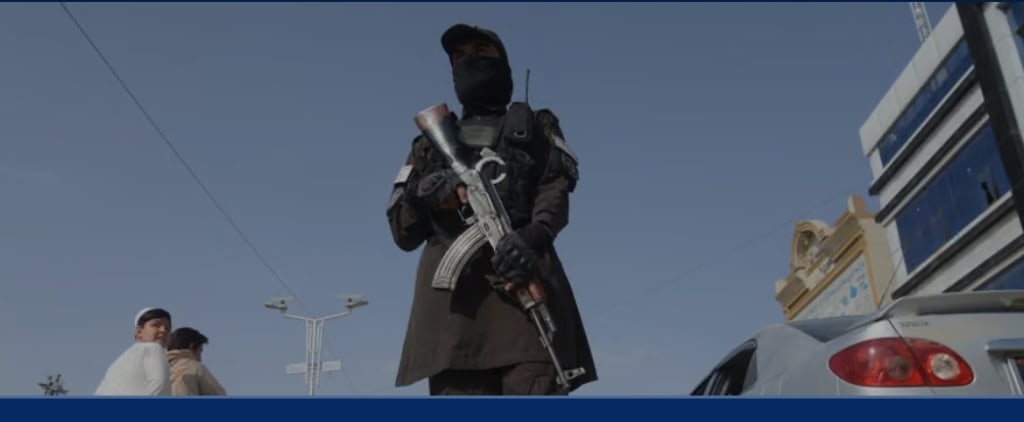
The United States has said it supports Pakistan’s “right to defend itself” following a series of cross-border strikes targeting militant positions inside Afghanistan. The comments come amid rising tensions between Islamabad and the Taliban-led government in Kabul, which has condemned the attacks as violations of sovereignty.
While backing Pakistan’s security concerns, US officials also called for restraint and dialogue to prevent further escalation. The situation highlights ongoing instability along the Afghanistan-Pakistan border and the complex regional dynamics that have persisted since the Taliban returned to power in 2021.
This article outlines what has happened, why Washington’s position matters, and what could follow in the coming weeks.
What Prompted the Strikes?
Pakistan launched air and artillery strikes on what it described as militant camps operating from Afghan territory. Pakistani officials say the targets were linked to armed groups responsible for recent attacks inside Pakistan.
Islamabad has long accused militants based in Afghanistan of carrying out cross-border assaults, particularly those affiliated with the Tehrik-i-Taliban Pakistan (TTP), also known as the Pakistani Taliban. The TTP is distinct from the Afghan Taliban but shares ideological roots.
Afghan authorities rejected Pakistan’s justification for the strikes and said civilian areas were affected. The Taliban-led government in Kabul called the attacks unacceptable and warned that such actions could worsen relations between the two neighbors.
US Reaction to the Developments
In response to questions about the situation, US officials said Pakistan has a right to defend itself against militant threats. At the same time, Washington emphasized the importance of minimizing civilian harm and avoiding broader conflict.
The United States does not formally recognize the Taliban government as the legitimate authority in Afghanistan, but it maintains diplomatic engagement on issues such as humanitarian aid and security.
By expressing support for Pakistan’s defensive measures, Washington signaled alignment with Islamabad’s concerns about militancy. However, US officials stopped short of endorsing any long-term military escalation.
A History of Border Tensions
The border between Pakistan and Afghanistan has been a source of tension for decades. Known as the Durand Line, it stretches roughly 1,600 miles across mountainous terrain.
Pakistan recognizes it as the official international boundary. Afghan governments, including the current Taliban administration, have historically disputed its legitimacy.
Militant groups have often operated in remote border areas, complicating efforts by both countries to maintain security. Cross-border accusations are common, with each side alleging the other harbors armed factions.
Since the Taliban regained control of Afghanistan in August 2021, Pakistan has expressed frustration over what it describes as insufficient action against anti-Pakistan militants.
The Role of the Taliban Government
The Taliban leadership has repeatedly stated that Afghan territory will not be used to launch attacks against other countries. However, Pakistan argues that groups such as the TTP continue to find safe haven across the border.
The Taliban government denies supporting the TTP but faces challenges in asserting complete control over all armed elements within Afghanistan.
The current tensions test the Taliban’s ability to manage relations with neighboring countries while maintaining internal cohesion.
Regional Security Concerns
The exchange of strikes raises broader concerns about regional stability in South Asia.
Pakistan is a nuclear-armed state with significant military capacity. Afghanistan, while lacking the same conventional power, has a history of prolonged insurgency warfare.
Escalation could disrupt trade, displace border communities, and strain diplomatic channels.
Neighboring countries, including China and Iran, have strategic interests in the stability of the region. Prolonged conflict could affect economic initiatives and security cooperation.
Counterterrorism in a Post-2021 Landscape
The US withdrawal from Afghanistan in 2021 marked a shift in regional counterterrorism strategy.
Without a direct military presence, Washington now relies on diplomatic engagement and intelligence partnerships.
Pakistan remains an important security partner for the United States in counterterrorism efforts.
By supporting Pakistan’s right to self-defense, the US reinforces its position that cross-border militant attacks are a legitimate security concern.
However, US officials also stress that military solutions alone cannot resolve underlying tensions.
Civilian Impact and Humanitarian Concerns
Reports from Afghan officials indicate that some civilians were injured in the strikes. Pakistan disputes claims of civilian targeting and says operations were directed at militant sites.
Independent verification remains limited due to restricted access in border regions.
Humanitarian organizations have warned that renewed violence could exacerbate economic hardship in Afghanistan, where millions already face food insecurity and limited access to services.
Cross-border displacement could also increase if fighting intensifies.
Diplomatic Channels and Possible De-Escalation
Despite sharp rhetoric, diplomatic engagement between Pakistan and Afghanistan continues.
Officials from both sides have participated in talks aimed at reducing tensions in the past. International actors may encourage renewed dialogue.
The United States has called on all parties to exercise restraint and prioritize communication.
Regional forums and bilateral meetings could provide opportunities for de-escalation.
Domestic Political Context in Pakistan
Security issues carry significant political weight within Pakistan.
Militant attacks have increased in certain regions over the past two years. Public pressure on the government to respond firmly has grown.
By conducting cross-border strikes and receiving US support, Pakistan’s leadership may seek to demonstrate resolve against militant threats.
However, sustained conflict carries risks, including economic strain and international scrutiny.
Afghanistan’s Position on Sovereignty
For the Taliban-led government, the strikes represent a challenge to sovereignty.
Kabul’s leadership must balance internal messaging with external diplomacy. Responding forcefully could satisfy domestic audiences but may escalate tensions further.
Maintaining working relations with Pakistan remains important for trade and regional connectivity.
Afghanistan’s economic situation remains fragile, making stability a priority.
The US Strategic Balance
The United States faces a delicate balancing act.
It seeks to maintain counterterrorism cooperation with Pakistan while avoiding deeper involvement in Afghan affairs.
Washington also aims to prevent Afghanistan from becoming a safe haven for international militant networks.
Publicly backing Pakistan’s right to self-defense reflects one aspect of that strategy, while calls for restraint reflect another.
What Comes Next?
The immediate trajectory will depend on actions taken by both Islamabad and Kabul.
If cross-border strikes continue, tensions could rise further. If diplomatic talks resume, the situation may stabilize.
Observers will monitor:
Statements from Pakistani and Afghan officials.
Evidence of additional military operations.
Engagement from regional powers.
Humanitarian developments in border areas.
The US position is likely to remain consistent: support for counterterrorism efforts combined with encouragement for dialogue.
Conclusion
The United States’ support for Pakistan’s “right to defend itself” comes at a moment of renewed tension along the Afghanistan-Pakistan border.
While Washington backs Islamabad’s security concerns, it also urges caution to prevent wider conflict.
The situation underscores the unresolved challenges that persist in the region after the US military withdrawal from Afghanistan.
For Pakistan, the issue centers on militant threats and national security. For Afghanistan’s Taliban leadership, it raises questions of sovereignty and regional standing.
Whether the current tensions lead to sustained confrontation or renewed diplomacy will depend on decisions made in the coming days.
As the situation develops, international observers continue to watch closely, aware that stability in this region carries implications beyond its borders.
About the Creator
Saad
I’m Saad. I’m a passionate writer who loves exploring trending news topics, sharing insights, and keeping readers updated on what’s happening around the world.
Why Black History Matters in America?
The United States of America is celebrating their 250th anniversary in 2026. I'm proud to be an American and as someone who was born here, I wouldn't imagine myself living anywhere else. This is a country where opportunities are possible. Where anyone can be successful in anything they desire to do. Equality, community, and togetherness are the backbones of what America is and should be about. However, we have an administration who wants to erase and disregard those who have made positive, meaningful impacts in our country, specifically Black figures, such as Martin Luther King, Jr., Rosa Parks, and Maya Angelou. President Trump and his administration have been constantly complaining and fighting against what they call the "Woke agenda". They use this excuse as a distraction from other issues they refuse to address, such as the high cost of living, climate change, and inflation. That equality is dividing America, when in reality, it's bringing us together. Being woke is not tied to a specific political party. No matter where you stand on the political spectrum, you can still care about other people and their plights. Compassion and empathy for others isn't tied to a political party, either. We were taught as children to treat others the way we want to be treated and not judge others because they're different from us. Caring about others isn't a personal attack on your beliefs. It doesn't make you any less of a person. People who are easily offended over African American figures, past or present, or anything related to it, are grasping at straws. Current and future generations need to know who people like Harriet Tubman and Shirley Chisholm were, especially in the classroom. Black History is part of American History. It should be recognized, not hidden or forgotten. Besides, you can't shield children from everything, just because your feelings are easily hurt.
By Mark Wesley Pritchard 26 days ago in The Swamp



Comments
There are no comments for this story
Be the first to respond and start the conversation.