
All of Trump’s Legal Cases, Explained
The Timeline That Might Decide America’s Future

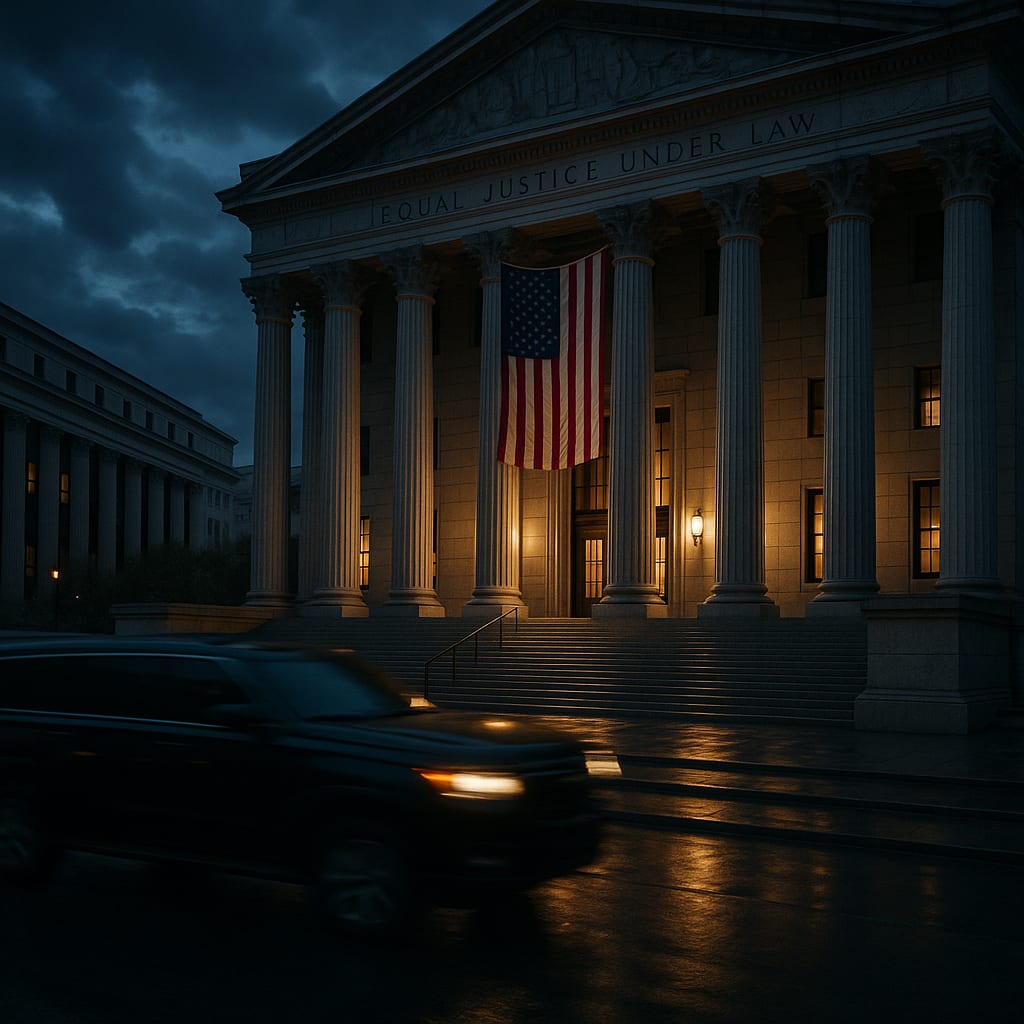
The trials of one man have quietly become a test of what this country really is
The first time I saw a presidential motorcade in person, I remember the feeling in my chest more than the sound of the engines.
You don’t think about the individual people behind the tinted glass. You think about power, history, the weight of the office.
Now, when I see those black SUVs on screen and hear the phrase “former President Donald J. Trump…defendant,” something in my brain glitches.
I grew up believing American presidents were untouchable in a way that wasn’t written in the Constitution, but lived in our heads. They were above the dirt and drama the rest of us slog through.
That myth died slowly over the past few years, and it’s being buried right now in courtrooms across the country.
This isn’t just “Trump’s legal troubles.”
It’s a sprawling, overlapping, exhausting maze of criminal charges, civil verdicts, and looming trials that could shape the 2024 election and how the world views American democracy for decades.
And if you’ve ever tried to keep track of all of it, you probably hit the same wall I did: it feels like drinking from a fire hose while someone keeps changing which way the water is pointed.
So here’s the story, case by case, in plain language—what’s actually happening, where things stand now, and what really matters next.
The New York Hush Money Case: The First Criminal Conviction of a Former President
When the alert came through on my phone—“Guilty”—I was standing in line at a grocery store.
People were scrolling, heads down, reading the same thing. No one said a word.
In Manhattan, a jury convicted Trump on 34 felony counts related to hush money payments to adult film actress Stormy Daniels during the 2016 campaign.
That sentence alone is wild if you really pause on it.
The core of the case: prosecutors said Trump falsified business records to hide payments made through his then-lawyer Michael Cohen to keep Daniels’ story quiet before the election.
Falsifying business records is usually a misdemeanor in New York. It became a felony because the prosecution argued it was done to conceal another crime: essentially, a scheme to influence the election by suppressing damaging information.
Where it stands now (as of early 2025):
Trump has been convicted on all 34 counts by a New York jury.
Sentencing was initially scheduled for July 2024, but the timeline shifted as appeals and election realities collided.
Trump’s legal team is appealing, arguing everything from jurisdictional issues to quirks in jury instructions.
Here’s the weird, almost surreal twist:
Even as a convicted felon in this case, Trump remains eligible to run for president. The Constitution says who can be president. New York law—and public outrage—don’t get a vote there.
What to watch next:
Whether any sentence includes jail time, probation, fines, or some combination.
How quickly appeals move and whether any higher court throws out or narrows the conviction.
The political fallout: does “convicted felon” stick as a defining label, or just become more background noise in an already overloaded news cycle?
If this case had landed in any other era, it would have been all-consuming. Instead, it’s one tile in a mosaic.
The Federal Election Interference Case: January 6 and the Question of Accountability
I remember watching January 6th live with that sick, hollow feeling you get when you realize you’re living through something your grandkids might read about in textbooks.
What came later was the question that haunted a lot of people I know:
If a president tries to overturn an election, and nothing truly happens to him…what does that say about us?
Special Counsel Jack Smith’s federal election interference case is the one that tries to answer that.
Trump was indicted in Washington, D.C., for his efforts to overturn the 2020 election. The charges include:
Conspiracy to defraud the United States
Conspiracy to obstruct an official proceeding
Obstruction of an official proceeding
Conspiracy against rights (the right to have your vote counted)
The indictment reads less like a technical legal document and more like a brutally detailed story of what prosecutors say happened between Election Day and January 6, 2021—fake electors, pressure on Mike Pence, and repeated false claims of fraud.
Where it stands now:
This case has been stalled in a kind of constitutional limbo.
Trump’s legal team pushed a sweeping argument: that former presidents have broad immunity from prosecution for “official acts.”
That question went all the way to the Supreme Court, which issued a decision that carved out partial immunity for certain core presidential functions, but left open big areas where prosecution could still proceed.
The result: delays, legal wrangling, and a trial date that keeps drifting further from where it was supposed to be.
What to watch:
How the trial judge applies the Supreme Court’s immunity ruling to specific allegations.
Whether parts of the case get thrown out as “official acts” and what’s left standing.
If a jury ever actually hears this case before or soon after the election.
This is the case that goes to the heart of the question: can a president use the power of the office to cling to power, and then walk away untouched?
The Federal Classified Documents Case: Boxes, Bathrooms, and Bedminster
If the January 6 case is about democracy, the classified documents case is about something more mundane but strangely symbolic: rules.
The rules every low-level federal employee knows. The rules that suddenly seemed negotiable when it came to a former president.
At his Mar-a-Lago estate in Florida, Trump kept boxes of government documents after leaving office, including highly classified material. We’ve all seen the photos by now—banker’s boxes stacked carelessly beside a chandelier and in a bathroom.
Special Counsel Jack Smith brought federal charges including:
Willful retention of national defense information
Obstruction of justice
False statements
Prosecutors say Trump refused to return documents, misled investigators, and suggested moving or hiding boxes. His lawyers say he had broad authority as president, and that this is overreach and selective prosecution.
Where it stands now:
The case was assigned to Judge Aileen Cannon, a Trump appointee, and the timeline has moved at a crawl.
Hearings over evidence, classified material procedures, and pre-trial motions have repeatedly pushed back the schedule.
At one point, a trial date seemed imminent. Then it evaporated under layers of legal process, security issues, and disputes over how to handle highly classified information in court.
What to watch:
Whether this case ever reaches trial before it gets overshadowed or sidelined.
How jurors might react to both the casual way documents were stored and the argument that this is all politically motivated.
The precedent: if this stalls out, what message does that send to future presidents about handling national secrets?
The classified documents case feels almost small in comparison to trying to overturn an election. But it speaks to something deeply human: whether the rules are real, or just suggestions for people without power.
The Georgia Election Case: State Charges and the “Find 11,780 Votes” Call
There’s a moment in the Georgia story that’s almost cinematic in its clarity.
Trump, on a recorded call with Georgia Secretary of State Brad Raffensperger, saying:
“I just want to find 11,780 votes, which is one more than we have.”
You don’t need a law degree to hear what that sounds like.
Fulton County District Attorney Fani Willis brought a sweeping state indictment in Georgia, built around a racketeering (RICO) charge typically used against organized crime.
The case ties together:
Efforts to pressure Georgia officials
Organizing fake slates of pro-Trump electors
False claims of fraud
Coordinated attempts to overturn the result
Trump and multiple co-defendants were charged, though several have since taken plea deals.
Where it stands now:
This case has been messy and dramatic in its own way.
There were intense fights over whether DA Fani Willis should be removed from the case because of a relationship with a special prosecutor she hired. Those battles led to hearings that felt more like reality television than a sober legal proceeding.
Although the case survived efforts to remove Willis entirely, the distractions cost time, and the already-complex RICO case slowed down further.
What to watch:
Whether this sprawling case gets streamlined—fewer defendants, narrower scope—to actually make it to trial.
Which insiders cooperate with prosecutors, and what they’re willing to say under oath.
The state angle: even if a president controls federal prosecutors, state cases are a different animal. A federal pardon wouldn’t touch a state conviction.
Georgia is the case that hugs Trump the tightest to the grassroots level of election machinery—the local people, the phone calls, the pressure campaigns. It’s not abstract. It’s personal.
The Civil Fraud Case in New York: Money, Image, and the Trump Brand on Trial
If the criminal cases aim at Trump’s freedom, the New York civil fraud case went after something he spent his whole life building: the myth of his wealth.
New York Attorney General Letitia James accused Trump and his company of a years-long scheme to inflate property values on paper in order to get better loans and insurance terms.
Think: claiming one number to a bank, another to a tax authority, and using those shifting figures to his advantage.
Because this was a civil case, not a criminal one, there was no risk of prison. But the potential penalties were brutal in a different way:
Hundreds of millions of dollars in fines
Restrictions on doing business in New York
Threats to key Trump Organization assets
Where it stands now:
A New York judge found Trump liable for fraud.
He imposed massive financial penalties, ordered limitations on Trump’s ability to run New York businesses, and took direct aim at the credibility of his decades-old narrative as a brilliant billionaire dealmaker.
Trump has appealed, of course. But the ruling itself already did damage—not just in dollars, but in the story Trump sells about himself.
What to watch:
How much of the judgment survives appeal.
Whether banks, insurers, and business partners treat him differently going forward.
The quiet shift: does “successful businessman” still work as a political calling card after a judge says your empire was built partly on paper illusions?
This case didn’t trigger the same adrenaline in the headlines, because there were no handcuffs. But for a man who cares deeply about image and wealth, it cut in a different, almost more intimate way.
The E. Jean Carroll Cases: Reputation, Assault Allegations, and Consequences
There’s a particular kind of fatigue that sets in when politics, power, and sexual assault allegations collide.
Some people tune out. Others get triggered. Many just feel numb.
Writer E. Jean Carroll accused Trump of sexually assaulting her in a department store in the 1990s, and later sued him for defamation after he denied it and attacked her credibility.
Two major civil trials followed:
A jury found Trump liable for sexual abuse and defamation, awarding Carroll millions in damages.
A second jury, focused on additional defamatory statements Trump made while president, ordered him to pay even more.
Where it stands now:
Trump has been found liable for sexual abuse, not criminally convicted of rape, but legally held responsible for assault and for defaming Carroll.
His legal team has appealed the verdicts and the damages, but the facts as found by the jury remain: a group of ordinary citizens listened to both sides and sided firmly against him.
What to watch:
Whether the damage awards are reduced, upheld, or increased on appeal.
How this shapes public perception, especially among women voters and younger generations who grew up with #MeToo.
The cultural shift: whether this fades into the background noise or sticks as a defining stain that can’t be spun away.
A lot of people I know didn’t follow the Carroll trials closely. Too much else was happening.
But in a quieter way, these cases ask a brutal question: what does it take for the reputation of a powerful man to actually suffer consequences?
The Calendar From Hell: How All These Cases Collide With the 2024 Election
If you’ve ever tried to keep up with court dates, you know how stressful even a single case can be. Multiply that by four or five, add a presidential campaign, and you get something that feels almost impossible to process.
At one point, Trump’s 2024 looked like this:
Campaign rallies
Debates and conventions
Pre-trial hearings in multiple states
Potential criminal trials in Washington, Florida, Georgia, and New York
Civil appeals in New York and federal courts
Then you add the Supreme Court’s decisions on immunity and ballot access, and the timeline doesn’t just get crowded—it gets unstable. Dates move. Hearings get postponed. Judges wrestle with the reality that they’re operating inside an election they didn’t choose to be part of.
What to watch going forward:
Whether any major criminal trial reaches a jury before voters cast their ballots.
How judges handle requests to delay proceedings because of campaign events, and vice versa.
The public’s threshold for chaos: at what point do people stop paying attention, or decide none of this matters to their vote?
Here’s the strange, uncomfortable truth: the legal system was not built to run on the same timeline as a national election.
We’re watching them crash into each other in real time.
What All of This Is Really About
When I strip away the headlines, the partisanship, the legal jargon, I keep coming back to one simple, uneasy feeling:
These cases are not just about Donald Trump. They’re about us.
They’re about whether rules written on paper actually apply to people with power.
They’re about how far someone can go and still be rewarded with loyalty, votes, and influence.
They’re about whether a country can look straight at something wild and unprecedented and do something about it, instead of just adding it to the pile of “things we no longer know how to process.”
Trump’s lawyers say this is all political. His critics say this is basic accountability, overdue and incomplete. The rest of us are stuck in the middle, trying to make sense of a world where a former president can be:
A leading candidate for the White House
A convicted felon in one courtroom
A civil fraud defendant in another
A central figure in alleged efforts to overturn an election elsewhere
It’s exhausting. It’s confusing. It’s also, in a quiet way, clarifying.
Because underneath the chaos, one question keeps surfacing:
Do we still believe that no one is above the law?
Not as a slogan, not as a thing kids learn in civics class, but as a lived reality that actually costs powerful people something when they cross the line.
The answer is not going to come in one dramatic verdict or one televised sentencing. It’s going to come in a hundred smaller decisions:
A judge who refuses to be intimidated.
A juror who takes their oath seriously.
A voter who decides whether any of this matters when they’re alone with their ballot.
Trump’s legal timeline is still unfolding. Cases will be delayed, narrowed, appealed, maybe even overturned. Some may never reach a jury. Others might end with outcomes that surprise everyone.
But years from now, when the motorcades are gone and the headlines are archived, we’ll look back at this moment and ask ourselves something uncomfortable:
When the system was tested, not in theory but in reality, did it bend toward accountability—or did it flinch?
You don’t have to like Trump or hate him to feel the weight of that question.
You just have to care, even a little, about whether the rules that apply to you and me still mean anything at all when they reach the people in those black SUVs with the tinted glass.
About the Creator
abualyaanart
I write thoughtful, experience-driven stories about technology, digital life, and how modern tools quietly shape the way we think, work, and live.
I believe good technology should support life
Abualyaanart
Keep reading
More stories from abualyaanart and writers in The Swamp and other communities.
Why Black History Matters in America?
The United States of America is celebrating their 250th anniversary in 2026. I'm proud to be an American and as someone who was born here, I wouldn't imagine myself living anywhere else. This is a country where opportunities are possible. Where anyone can be successful in anything they desire to do. Equality, community, and togetherness are the backbones of what America is and should be about. However, we have an administration who wants to erase and disregard those who have made positive, meaningful impacts in our country, specifically Black figures, such as Martin Luther King, Jr., Rosa Parks, and Maya Angelou. President Trump and his administration have been constantly complaining and fighting against what they call the "Woke agenda". They use this excuse as a distraction from other issues they refuse to address, such as the high cost of living, climate change, and inflation. That equality is dividing America, when in reality, it's bringing us together. Being woke is not tied to a specific political party. No matter where you stand on the political spectrum, you can still care about other people and their plights. Compassion and empathy for others isn't tied to a political party, either. We were taught as children to treat others the way we want to be treated and not judge others because they're different from us. Caring about others isn't a personal attack on your beliefs. It doesn't make you any less of a person. People who are easily offended over African American figures, past or present, or anything related to it, are grasping at straws. Current and future generations need to know who people like Harriet Tubman and Shirley Chisholm were, especially in the classroom. Black History is part of American History. It should be recognized, not hidden or forgotten. Besides, you can't shield children from everything, just because your feelings are easily hurt.
By Mark Wesley Pritchard 25 days ago in The Swamp
The Future of Military Power Is Space Power
For centuries, military dominance has been defined by control over land and sea. In the 20th century, air power reshaped warfare, and nuclear weapons introduced a new level of deterrence. In the 21st century, however, a new domain is emerging as the decisive frontier of strategic competition: space. The future of military power is increasingly tied to space power—control of satellites, orbital infrastructure, and the technologies that operate beyond Earth’s atmosphere.
By Ibrahim Shah 4 days ago in The Swamp

Comments
There are no comments for this story
Be the first to respond and start the conversation.