
Air India Grounds Boeing Dreamliner After Pilot Flags Possible Fuel Control Switch Defect
Safety Concerns Rise as Airline Pulls 787‑8 From Service Amid Post-Crash Scrutiny

By [Your Name]
Bengaluru, India — February 3, 2026
Air India has temporarily grounded a Boeing 787‑8 Dreamliner after one of its pilots reported a potential defect with a fuel control switch, a critical component used to regulate engine fuel flow. The precautionary measure comes amid heightened safety scrutiny following last year’s deadly Air India Dreamliner crash, which killed 260 people.
The incident occurred when Flight AI132, traveling from London Heathrow to Bengaluru’s Kempegowda International Airport, completed its journey without incident. However, during post-flight checks, pilots noticed irregular behavior in the aircraft’s left engine fuel control switch, prompting immediate reporting to Air India’s engineering team.
“Safety is our top priority. The aircraft has been grounded as a precaution, and a full inspection of the fuel control system is underway,” said a senior Air India spokesperson.
Grounding Triggered by Switch Anomaly
Airline sources revealed that the left engine fuel control switch did not remain securely in the ‘RUN’ position during repeated checks, slipping toward ‘CUTOFF’ without deliberate pilot action. Although the plane was safely on the ground, the airline deemed it necessary to remove it from service immediately.
Fuel control switches are essential cockpit components, allowing pilots to start or shut down engines and, in certain emergencies, manually stop an engine during flight. The Boeing 787 design includes a spring-loaded latch to prevent accidental movement; the switch must be lifted deliberately before being moved from RUN to CUTOFF.
“Even minor anomalies with fuel control switches can have serious consequences, which is why Air India is taking this report extremely seriously,” said an aviation safety expert.
Precautionary Measures Across Fleet
Following the pilot report, Air India has initiated a fleet-wide inspection of all 787 Dreamliners to check the fuel control switches. A memo sent to pilots and engineers instructed careful verification of latch mechanisms and immediate reporting of any issues. So far, no anomalies have been found on other aircraft already inspected.
Air India operates 33 Boeing 787 aircraft, including 787‑8 and 787‑9 models. The airline’s swift action reflects its commitment to high safety standards and proactive risk management.
“We are working closely with Boeing and the DGCA to ensure this is a precautionary measure, and not indicative of a larger fleet-wide problem,” an Air India official said.
Context: Connection to 2025 Crash
The timing of this grounding has raised concern because of the June 12, 2025 Air India Flight AI171 crash. Investigators found that both engine fuel control switches moved from RUN to CUTOFF seconds after takeoff, causing a total loss of engine thrust. While the current report does not establish a mechanical defect as the cause, the similarity has reignited questions about switch reliability.
Boeing previously faced scrutiny over fuel control switches after the 2018 FAA advisory highlighted potential issues with latch mechanisms. The advisory noted that improper installation could lead to disengagement, though it was not a mandatory directive.
“Aircraft safety systems are designed with multiple redundancies. Any anomaly, no matter how minor, triggers thorough investigation,” said a former DGCA official.
Industry and Regulatory Implications
Experts emphasize that fuel control switches are normally highly reliable and designed to prevent unintentional operation. Still, a switch that slips unintentionally could allow fuel interruption at critical moments, which is why regulators and airlines respond quickly to reports like this.
Boeing has confirmed it is assisting Air India in reviewing the issue. At present, no broader grounding of 787 fleets worldwide has been announced.
“This is a precautionary measure, reflecting both safety and public confidence priorities. Airlines worldwide monitor even minor anomalies closely,” said an aviation consultant.
What Comes Next
The aircraft will remain grounded until detailed inspections are completed. Aviation authorities, including India’s DGCA, will monitor findings before determining whether further regulatory action is required. The results could inform updates to maintenance protocols and cockpit procedures.
For passengers and industry watchers, the incident underscores that even routine cockpit controls are under constant vigilance. Airlines like Air India continue to prioritize safety, demonstrating that precautionary measures — even if inconvenient — are crucial for preventing accidents.
“This shows that safety is never compromised, even for routine flights,” concluded the Air India spokesperson.
About the Creator
Keep reading
More stories from Ayesha Lashari and writers in The Swamp and other communities.
Wild Elephant Kills Tourist in Thailand’s Khao Yai National Park
By [Your Name] | February 3, 2026 A wild bull elephant in Thailand’s Khao Yai National Park has killed a tourist, marking the third death linked to the same animal and raising urgent concerns about human-wildlife conflict in the region.
By Ayesha Lasharia day ago in The Swamp
Why Black History Matters in America?
The United States of America is celebrating their 250th anniversary in 2026. I'm proud to be an American and as someone who was born here, I wouldn't imagine myself living anywhere else. This is a country where opportunities are possible. Where anyone can be successful in anything they desire to do. Equality, community, and togetherness are the backbones of what America is and should be about. However, we have an administration who wants to erase and disregard those who have made positive, meaningful impacts in our country, specifically Black figures, such as Martin Luther King, Jr., Rosa Parks, and Maya Angelou. President Trump and his administration have been constantly complaining and fighting against what they call the "Woke agenda". They use this excuse as a distraction from other issues they refuse to address, such as the high cost of living, climate change, and inflation. That equality is dividing America, when in reality, it's bringing us together. Being woke is not tied to a specific political party. No matter where you stand on the political spectrum, you can still care about other people and their plights. Compassion and empathy for others isn't tied to a political party, either. We were taught as children to treat others the way we want to be treated and not judge others because they're different from us. Caring about others isn't a personal attack on your beliefs. It doesn't make you any less of a person. People who are easily offended over African American figures, past or present, or anything related to it, are grasping at straws. Current and future generations need to know who people like Harriet Tubman and Shirley Chisholm were, especially in the classroom. Black History is part of American History. It should be recognized, not hidden or forgotten. Besides, you can't shield children from everything, just because your feelings are easily hurt.
By Mark Wesley Pritchard 3 days ago in The Swamp
Several States Move to Ban Local Cooperation in Immigration Arrests
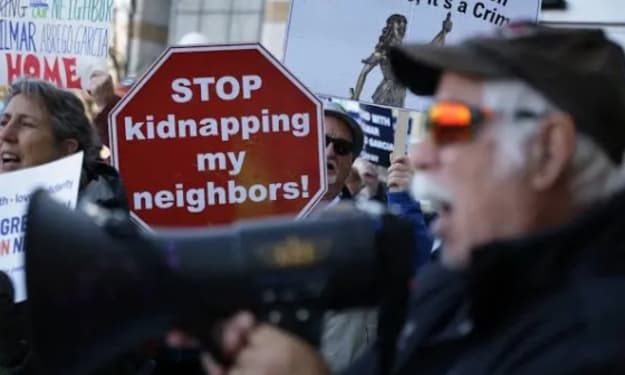
Across the United States, immigration policy is once again at the center of a fierce political and legal struggle. In recent months, several states have moved to ban or sharply limit cooperation between local law enforcement agencies and federal immigration authorities, particularly Immigration and Customs Enforcement (ICE). Supporters of these measures argue that local police should focus on community safety—not immigration enforcement. Critics counter that such policies undermine federal law and allow dangerous criminals to avoid deportation. As states pass new laws and courts weigh challenges, the debate exposes a deeper conflict over states’ rights, federal authority, public safety, and the future of immigration enforcement in America. What Does “Local Cooperation” Mean? Local cooperation with immigration authorities can take many forms, including: Honoring ICE detainer requests to hold individuals after arrest Sharing jail booking information with federal immigration agents Allowing ICE access to local jails Assisting in immigration-related arrests or transfers States moving to restrict cooperation typically aim to limit or prohibit these actions, especially when individuals are accused of minor offenses or have no criminal convictions. These laws do not stop federal agents from enforcing immigration law themselves—but they prevent local agencies from acting as extensions of federal immigration enforcement. Why States Are Moving to Ban Cooperation 1. Community Trust and Public Safety Proponents argue that cooperation with ICE discourages undocumented immigrants from: Reporting crimes Serving as witnesses Seeking help from police When residents fear that any interaction with law enforcement could lead to deportation, entire communities may retreat into silence. Lawmakers backing non-cooperation laws say public safety improves when police are seen as protectors, not immigration agents. 2. Constitutional and Legal Concerns Several states point to the Tenth Amendment, which limits the federal government’s power to compel state or local officials to enforce federal law. The Supreme Court has previously ruled that the federal government cannot “commandeer” state resources for federal purposes. Supporters say ICE detainers are requests, not legal mandates, and states are within their rights to refuse. 3. Cost and Liability Holding individuals for ICE can be expensive. Local governments may bear: Jail costs Legal risks if detentions are ruled unconstitutional Civil liability for unlawful detention Some cities and counties have paid millions in settlements after being sued for holding individuals without warrants. States restricting cooperation argue they are protecting taxpayers. Which States Are Leading the Movement? While policies vary, states often described as “sanctuary states” include: California New York Illinois New Jersey Oregon Colorado Recently, additional states and legislatures have introduced or expanded laws to: Limit data sharing Require judicial warrants for ICE holds Penalize local agencies that voluntarily cooperate These efforts reflect a growing divide between states that resist federal immigration enforcement and those that actively support it. Opposition: Claims of Lawlessness and Risk Critics—often Republican lawmakers, sheriffs, and federal officials—argue that non-cooperation: Shields dangerous criminals Undermines national security Encourages illegal immigration They cite cases in which undocumented immigrants accused of violent crimes were released from local custody and later re-arrested by ICE after new offenses. For these opponents, local cooperation is not optional—it is a moral obligation tied to public safety. Federal Pushback and Legal Challenges The federal government has repeatedly challenged state and local non-cooperation policies. Key tactics include: Lawsuits claiming obstruction of federal law Threats to withhold federal funding Public pressure campaigns targeting “sanctuary jurisdictions” However, courts have often ruled that while states cannot block federal enforcement, they cannot be forced to participate either. This legal gray area ensures continued litigation. Law Enforcement Is Divided Not all police leaders agree on the issue. Those Supporting Non-Cooperation Say: Immigration enforcement damages community policing Local resources are overstretched Officers should not act as immigration agents Those Opposing It Argue: Cooperation removes repeat offenders from the streets Federal partnerships provide critical resources Public trust can coexist with enforcement The split highlights how immigration policy reshapes even traditional policing roles. Immigration Arrests vs. Criminal Justice A central tension lies in how immigration enforcement intersects with criminal law. Immigration violations are civil offenses, not criminal ones. Critics of ICE cooperation argue it is inappropriate to treat civil immigration matters as criminal threats. Supporters respond that many ICE targets have criminal histories, even if current charges are minor. This clash reveals conflicting views of what justice should prioritize: legal status or public behavior. Political Stakes in an Election Era Immigration remains one of the most polarizing issues in U.S. politics. For Democrats, limiting ICE cooperation often aligns with: Civil rights advocacy Immigrant voter support Criminal justice reform For Republicans, opposing sanctuary-style laws energizes: Law-and-order voters Border security advocates Nationalist constituencies As elections approach, state immigration laws are increasingly shaped by political calculations rather than consensus. Impact on Immigrant Communities For millions of immigrants—documented and undocumented—these policies directly affect daily life. In states limiting cooperation: Fear of deportation may ease Community engagement may increase Families may feel more secure In states that mandate cooperation: ICE arrests often increase Mixed-status families face greater risk Local jails become immigration gateways The difference between state lines can determine whether a traffic stop becomes a life-altering event. Business and Economic Effects Businesses, particularly in agriculture, construction, hospitality, and healthcare, closely watch immigration enforcement trends. Reduced ICE cooperation can: Stabilize workforces Reduce labor shortages Lower turnover Opponents argue it may also encourage undocumented labor, complicating compliance with federal employment laws. The Federalism Question At its core, this debate is about who controls immigration enforcement. Is it: A purely federal responsibility? A shared obligation with states? Or a federal power states may decline to support? The answer remains unresolved—and likely headed for continued Supreme Court review. What Happens Next? Several developments are likely: More state legislation on both sides Expanded court challenges Federal policy shifts depending on administration changes Increased political polarization Immigration enforcement will remain uneven, shaped more by geography than by federal uniformity. Conclusion: A Nation with Two Approaches to Enforcement As several states move to ban local cooperation in immigration arrests, the United States edges closer to a dual-system reality—one where immigration enforcement depends heavily on where someone lives. Supporters see these laws as humane, constitutional, and pragmatic. Critics view them as reckless and dangerous. What is clear is that the immigration debate is no longer just about borders—it is about policing, federalism, civil rights, and the identity of American governance itself. Until Congress delivers comprehensive reform, states will continue filling the vacuum—one law at a time.
By Zahid Hussainabout 4 hours ago in The Swamp



Comments
There are no comments for this story
Be the first to respond and start the conversation.