
She Lost Her Hair to Cancer — Then Built a 150% Growth Business
How a Düsseldorf studio owner turned lived experience, men’s hair systems, and a partnership with Newtimes Hair into 1.5x online growth and 85% client loyalty

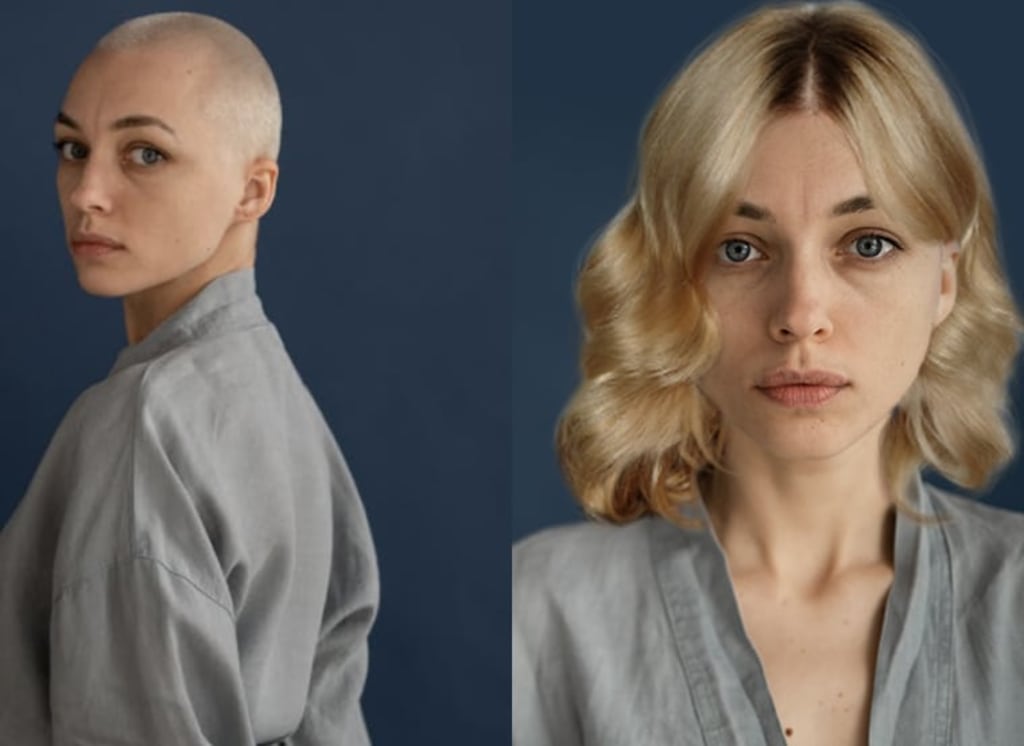
I Didn’t Start a Hair Replacement Studio Because It Was “A Good Business Opportunity.”
I Started It Because I Lost My Hair.
When people talk about entrepreneurship, they usually talk about market gaps, margins, or timing.
That’s not how this began.
Birgit, the founder of a Düsseldorf-based studio originally listed as D**R* Hair Design, didn’t enter the hair replacement industry as an outsider spotting a trend. She entered it as someone who had lived through hair loss herself.
Before she became an entrepreneur, she was a hairdresser. At 27, shortly after giving birth, she was diagnosed with a breast tumor. Chemotherapy saved her life.
It also took her hair.
If you’ve never lost your hair, it’s easy to think of it as cosmetic. Temporary. Surface-level.
It’s not.
When Birgit lost hers, she didn’t just lose strands. She lost familiarity. Identity. The face in the mirror that felt like “me.”
She tried medical wigs. She tested different hair replacement systems. Some looked good in photos but felt wrong in daily life. Some were uncomfortable. Some didn’t move naturally. Some simply didn’t hold up.
That period became her education.
Not in theory.
In lived experience.
And that experience became the foundation of her business.
From Online Shop to Studio — And 1.5x Growth in One Year
The business didn’t start with a salon chair.
It started online.
Birgit’s husband works in IT, and together they saw a practical path forward: build an online store focused on people dealing with hair loss.
It worked.
Within the first year, monthly online sales increased 1.5 times. Not through flashy marketing stunts. Not through viral campaigns.
Through product-market fit.
But here’s the part that mattered more: she didn’t stop there.
Hair replacement isn’t just a product category.
It’s a service category.
So Birgit expanded into a physical studio in Düsseldorf, Germany — creating a hybrid model: online shop + in-person studio.
That decision changed everything.
Because online builds reach.
But in-person builds trust.
And trust builds loyalty.
The Strategic Shift That Unlocked Real Scale
In the beginning, Birgit focused primarily on helping women — especially those experiencing chemotherapy-related hair loss.
That made sense. It was her story.
But before scaling aggressively, she did something many small businesses skip:
She researched the market.
The data showed something clear in Germany: men’s hair systems were rising in popularity and demand.
So she pivoted.
Today, her customer base includes more male clients than female clients.
This wasn’t abandoning her mission.
It was expanding it intelligently.
Men’s systems carry strong retention potential when the results are natural and the wearer feels supported. And when demand is already rising, marketing becomes less about convincing and more about being found.
Alignment with demand reduces friction.
That shift helped fuel what would later become a 150% growth over two years.
The Supplier Problem No One Talks About
Here’s something people outside the industry don’t realize:
A hair system doesn’t just need to look good in a catalog photo.
It needs to:
– look natural in real lighting
– feel manageable in daily wear
– remain consistent across batches
– support reasonable business margins
– arrive on time, correctly manufactured
When you’re running a studio, inconsistency kills trust.
Repeat clients expect repeat results.
Birgit tested multiple suppliers before choosing Newtimes Hair.
Her reasoning wasn’t dramatic.
It was practical
Great products.
Great prices.
Great service.
That combination matters because loyalty is built on repeatable experience.
Early on, there were challenges — including language and cultural barriers. But processes improved. Communication tightened. Workflow stabilized.
Real partnerships don’t start perfect.
They improve with structure.
The Systems Clients Kept Reordering
Over time, three systems stood out as consistent performers in her studio:
– HS1
– HS25-V
– HS1-V
Clients repeatedly chose them for two reasons:
Ultra-natural appearance.
Easy-to-handle base.
That second point sounds technical. It isn’t.
An easier base means smoother installations. Faster appointments. Better daily wear. Fewer complaints.
It reduces churn.
It reduces salon stress.
It protects margins.
Operational simplicity is a growth strategy.
The Numbers That Actually Matter
Within one year:
Online sales increased 1.5x.
Within two years:
Total business growth reached 150%.
But the number that tells the real story?
85% of salon visitors became loyalists — repeat clients.
In hair replacement, loyalty isn’t a vanity metric.
It means repeat purchases. Maintenance visits. Referrals whispered quietly between friends.
It means you’re not starting from zero every month.
You’re compounding.
And compounding businesses are calmer businesses.
What Actually Drove the Growth
It wasn’t “just marketing.”
It was experience.
Customer experience created retention.
Hair replacement isn’t a one-time purchase. When clients feel safe and supported, they return.
Word-of-mouth became a real acquisition channel.
In this industry, referrals are private, personal, and powerful.
Online and offline reinforced each other.
Online expanded reach. The studio deepened trust. Together, they strengthened the brand.
Market research shaped inventory decisions.
The pivot toward men’s systems aligned the business with rising demand instead of fighting it.
Supplier consistency protected reputation.
Repeatable quality enabled repeatable results.
Why This Story Matters
This isn’t a “get rich quick” story.
It’s a resilience story.
A woman loses her hair during cancer treatment.
She learns what actually matters when you wear hair every day.
She builds an online shop.
She scales into a studio.
She researches the market.
She pivots strategically.
She builds supplier relationships.
She focuses on loyalty instead of vanity metrics.
And over two years, the business grows 150%.
Not because it was lucky.
Because it was aligned.
Hair replacement, at its best, isn’t about hiding something.
It’s about restoring something.
For Birgit, it restored identity first.
Then it built a business.
And today, in Düsseldorf, that business continues to grow — not because it sells hair, but because it understands what hair means.
About the Creator
Emma Smith
explores the latest trends in hair, hairstyles, and hair systems, creating insightful content that blends fashion, innovation, and confidence.
Keep reading
More stories from Emma Smith and writers in Potent and other communities.
How Can I Stop Receding Hairline
The first time I noticed it, I thought it was the lighting. I was seventeen, standing in the bathroom before school, pushing my hair back the way I always did. The corners at my temples looked… different. Slightly higher. Slightly thinner.
By Emma Smith2 days ago in Potent
The Day My Hair Changed the Gravity of Love
The first time I wore nano ring hair extensions, I kept telling myself it was just hair. Just a little more length. A little more volume. A small, tidy upgrade that would make me look “done” in photos, the way women are expected to look done—like we woke up already edited.
By Natalee Chand3 days ago in Potent


Comments
There are no comments for this story
Be the first to respond and start the conversation.