
Everything You Need to Know About Hair Systems
How modern technology, cultural shifts, and unapologetic transparency transformed men’s hair replacement from a punchline into a power move

For most of my life, the phrase “men’s hairpiece” came with a punchline.
It meant a wind-blown disaster.
A shiny, immovable helmet.
A thick, suspicious rug that looked like it might detach mid-conversation.
We all knew the stereotype.
And for years, that stereotype kept a lot of us quietly thinning in the background.
But here’s the truth no one updated you on:
The toupee is dead.
What replaced it isn’t a “piece.” It’s a system.
And that word matters.
The Death of the Rug
The old-school toupee was about concealment. It was something you wore on your head.
A modern hair system is something that integrates with your head.
The difference is subtle until you see it up close. Then it’s undeniable.
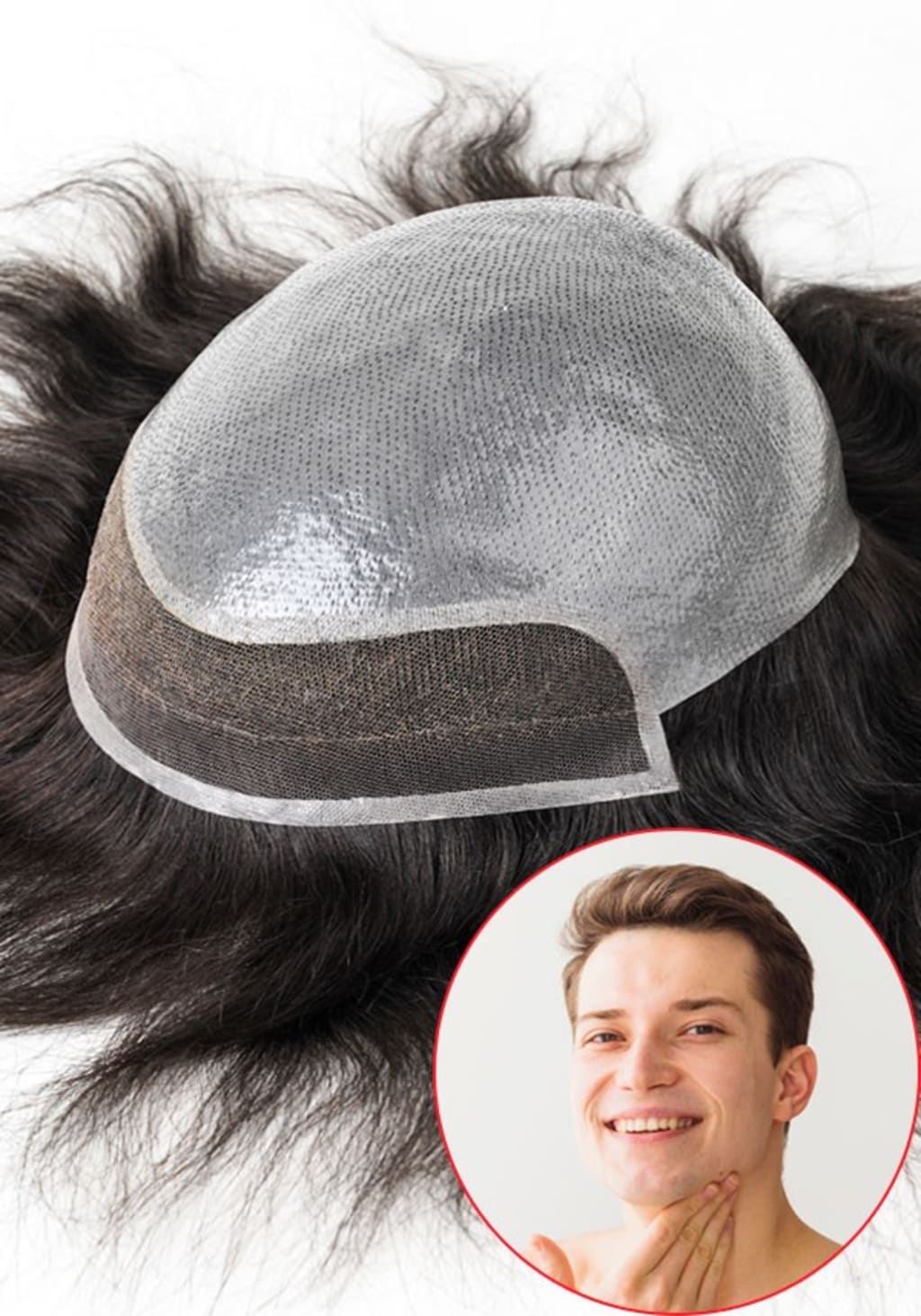
As explained by the specialists at Lordhair, today’s systems aren’t wigs in the traditional sense. They’re non-surgical, precision-engineered solutions designed to merge with your lifestyle — not interrupt it.
In 2025 and 2026, the realism has crossed a threshold. Under bright light. Under scrutiny. Even inches away.
It passes.
And that changes everything.
It’s Not a Piece. It’s a Process.
When people hear “hair system,” they imagine a slab of hair glued on top.
That’s not how this works.
Modern systems start with templating your exact head shape. Not approximate. Exact. The curvature, the contours — mapped.
Then comes color matching — including natural gray percentages. Because nothing screams “fake” like a jet-black hairline on a 42-year-old face.
Density calibration is where artistry kicks in. Too thick? It looks cartoonish. Too sparse? It defeats the purpose. The goal is controlled imperfection.
Even the hairline isn’t straight anymore. Stylists intentionally design slight asymmetry. Minor recession. A whisper of irregularity.
Perfection is suspicious.
Natural is nuanced.
And the base? That’s where the real revolution happened.
The Race to Zero Thickness
Technology quietly solved the biggest giveaway: the edge.
Ultra-thin polyurethane bases — as thin as 0.03mm — disappear against skin. When bonded properly, they become translucent. They mimic the scalp. With advanced V-loop ventilation, hair is injected without visible knots.
It looks like growth. Not attachment.
Swiss lace and newer nano-lace materials push breathability to another level. Even under magnification, the mesh is nearly undetectable.
Hybrids combine invisible lace fronts with durable perimeters for grip and easier cleaning.
The industry stopped asking, “How do we cover baldness?”
It started asking, “How do we recreate biology?”
That shift changed the game.
The Cultural Flip No One Saw Coming
But the biggest evolution isn’t technical.
It’s cultural.
Scroll through TikTok or Instagram and you’ll see it — men documenting installs like gym transformations. Before-and-after videos. Hairline reveals. Transparency instead of secrecy.
#HairSystem isn’t whispered anymore.
It’s shown.
There’s a new kind of masculinity emerging — one that treats grooming like optimization, not insecurity. The same generation that normalizes skincare routines and dental veneers isn’t ashamed of engineered hair.
And honestly?
That honesty is more attractive than pretending.
The Surgery Question
People always ask:
“Why not just get a transplant?”
Hair transplants have improved, sure. But they require months of waiting. Shedding phases. Uncertainty about graft survival. Limited donor supply.
A hair system takes a couple of hours.
You walk in thinning.
You walk out transformed.
No scars. No recovery downtime. No gamble on whether follicles “take.”
And versatility? That’s where systems dominate.
With surgery, you’re limited by biology.
With a system, you can change density, length, texture. Pompadour today. Textured crop next month.
You’re not locked in.
You’re flexible.
The Lifestyle Myth
Another outdated fear: “What if it flies off?”
Modern medical-grade adhesives are engineered for sweat, showers, swimming pools, and saltwater. Acrylic and water-based bonds hold through workouts and summer heat.
Can you live normally?
Yes.
But here’s the part influencers sometimes skip:
Maintenance is mandatory.
Every 3–5 weeks, the system needs removal, cleaning, scalp reset, and re-bonding. Adhesive breaks down over time. Oils build up. Neglect shows.
It’s not effortless.
It’s intentional.
And that distinction matters.
This Isn’t About Youth
The old narrative framed hair systems as desperation. A man clinging to his twenties.
That’s outdated.
This is about symmetry. Presentation. Psychological alignment between how you feel and what you see in the mirror.
Confidence isn’t vanity. It’s functionality.
When your reflection stops distracting you, your energy goes elsewhere — into conversations, work, relationships, presence.
A hair system doesn’t make you younger.
It makes you uninterrupted.
So Here’s the Real Question
Why are we still reacting to a 1990s stereotype?
The technology evolved.
The culture evolved.
The stigma is dissolving.
The only thing that hasn’t evolved is the joke.
And maybe it’s time that did too.
Because the toupee? That relic is gone.
The system is here.
And you don’t have to settle for hair loss just because someone once made it funny.
About the Creator
Leo
Passionate men's hairstylist with a keen eye for detail and a knack for creating on-trend looks. Dedicated to delivering hair restoration education that enhances individual style.
The Day My Hair Changed the Gravity of Love
The first time I wore nano ring hair extensions, I kept telling myself it was just hair. Just a little more length. A little more volume. A small, tidy upgrade that would make me look “done” in photos, the way women are expected to look done—like we woke up already edited.
By Natalee Chand3 days ago in Potent
Belle of the Bayou
Bad move, cher. Not just the slip of her kitten heel on the rainy February cobblestones in the Fourth Ward. She got caught snooping. Detective Deleon clucked and strutted like a rooster in his rush to clear her from the scene, waving cigar smoke to and fro as he gesticulated amid the thick air of the speak easy. An experienced crime reporter, Marie knew better than to let the coppers catch her on the wrong side of the line, but curiosity had gotten the better of her.
By Maia Gadwall the metAlchemist5 days ago in Fiction


Comments
There are no comments for this story
Be the first to respond and start the conversation.