
How Can I Stop Receding Hairline
What losing my hair as a teenager taught me about biology, identity, and choosing my own version of confidence

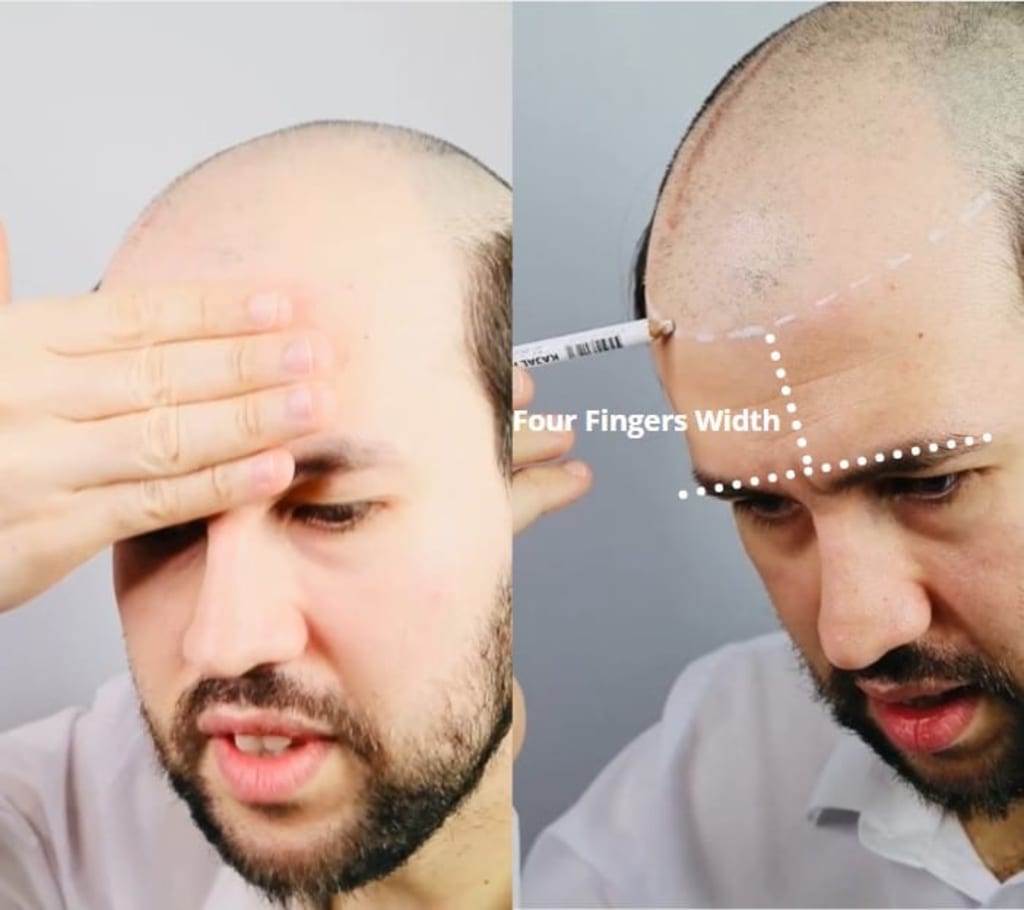
The first time I noticed it, I thought it was the lighting.
I was seventeen, standing in the bathroom before school, pushing my hair back the way I always did. The corners at my temples looked… different. Slightly higher. Slightly thinner.
I leaned closer.
Teenage boys aren’t supposed to check their hairlines. We check acne. We check muscle growth. We check whether we finally need to shave.
Hairlines are something men over fifty worry about.
But there it was—an unfamiliar “M” shape beginning to sketch itself across my forehead.
At school, no one said anything. Or maybe they did, and I heard it louder than they meant it. A joke about “early retirement.” A comment about my “big brain expanding.” Teenage humor doesn’t come with disclaimers.
I laughed along.
Then I went home and searched: hair loss at 17.
That was the night I learned more about biology than any class had taught me.
Hair, it turns out, lives in cycles. Anagen. Catagen. Telogen. Growth, transition, rest. And somewhere in that quiet rhythm, a hormone called DHT can interfere—shrinking follicles slowly, subtly, until thick strands become thin ones, and thin ones disappear.
It felt strange knowing something microscopic could reshape how I saw myself.
My father tried to reassure me. “It’s normal,” he said. “Happens to a lot of men.”
But I wasn’t a man yet.
I was still becoming one.
The hardest part wasn’t the hair itself. It was the geometry of it. The way a receding line changes the proportions of your face. The way photos suddenly look different. The way wind becomes something you calculate.
Confidence at seventeen is fragile. It’s built on mirrors and comparisons. And mine felt like it had developed a crack.
I considered everything.
Medications that promised to slow it down. Stories of transplants that required years of waiting and saving. Hairstyles designed to camouflage. For a while, I wore my fringe forward, like a curtain I refused to open.
But hiding is exhausting.
The turning point came quietly. I was in my first year of college when a classmate mentioned he wore a hair system. He said it casually, the way someone might mention contact lenses.
“No one knows unless I tell them,” he shrugged.
That sentence stayed with me.
Months later, after more hesitation than I’d admit out loud, I decided to try one myself. I found NewTimes Hair through forums—not advertisements, just people sharing experiences.
The process was surprisingly technical. Measurements. Density preferences. Matching color to what I still had. It felt less like buying something and more like designing a missing piece.
When the system arrived, I expected it to feel artificial.
It didn’t.
The base was thin and flexible, almost like a second layer of skin. The hair itself moved the way mine used to—light, responsive, imperfect in a natural way. When it was fitted and blended, I stared at the mirror for a long time.
I didn’t see “fake.”
I saw familiar.
Not the exact seventeen-year-old version of me. But a version that felt balanced again. The proportions made sense. My face looked like the one in my memories.
The most surprising part wasn’t appearance—it was silence.
The silence in my head.
I stopped checking reflections constantly. I stopped adjusting angles in photos. I stopped measuring myself against every other guy in the room.
Wearing a hair system didn’t erase biology. DHT still does what it does. Time still moves forward.
But it gave me control over the narrative.
And at an age when so much feels uncontrollable, that mattered.
I still think about the science sometimes—the cycles, the hormones, the Norwood diagrams mapping potential futures. But I no longer see them as destiny. They’re just information.
Hair loss can begin in your teens. It can shake you. It can make you question things you didn’t know were tied to identity.
But it doesn’t have to define the shape of your confidence.
For me, the choice wasn’t about pretending nothing changed.
It was about deciding that change didn’t get to decide who I was.
And that, more than hair, is what grew back.
About the Creator
Emma Smith
explores the latest trends in hair, hairstyles, and hair systems, creating insightful content that blends fashion, innovation, and confidence.
Keep reading
More stories from Emma Smith and writers in Potent and other communities.
A Day Off
I haven’t had a day off since the early 2000’s. I am so tired and weary. Actually, I am disgusted. Not having a break in more than 25 years is maddening. Day in and day out, the same thing, constant aggravation, and misery and surrounded by angry people, takes a toll. I feel like I am on the turnpike of no return, and the toll cost is higher than it should be, or I can afford..
By Alexandra Grant3 days ago in Potent
The Seam That Holds the Sky
I didn’t plan for hair extensions to change anything big. I told myself it was just a practical decision—something to make mornings easier, something to help my hair look the way I wished it always did when I was rested, hydrated, and living a life with fewer deadlines. But I still remember the moment I sat in the salon chair and realized this wasn’t only about hair. It was about how often I’d been shrinking myself without noticing.
By Natalee Chand3 days ago in Potent



Comments
There are no comments for this story
Be the first to respond and start the conversation.