
Why Some People Never Seem to Age
The Science, Secrets, and Surprising Habits Behind People Who Look Younger for Decades
We all know at least one person like this.
They’re 45 but look 30.
They’re 60 but still have the glow, the energy, and the smoothness of someone much younger.
And when you ask them their age, you almost want to argue.
Because how is it possible?
Is it just good genes? Expensive skincare? Or some secret routine they’re hiding from the rest of us?
The truth is, the reason some people seem to age slowly is not magic — it’s a combination of biology, habits, and something most people forget: the invisible aging happening inside the body.
Let’s talk about what science says, what lifestyle changes actually matter, and why “anti-aging” isn’t only about looking younger… it’s about functioning younger.
Aging Isn’t Just Wrinkles — It’s Cellular
Most people think aging is something you see in the mirror.
Fine lines.
Grey hair.
Sagging skin.
But the real aging starts much deeper.
Your body is made of trillions of cells, and these cells constantly divide to replace old or damaged ones. The problem is: cells can’t divide forever.
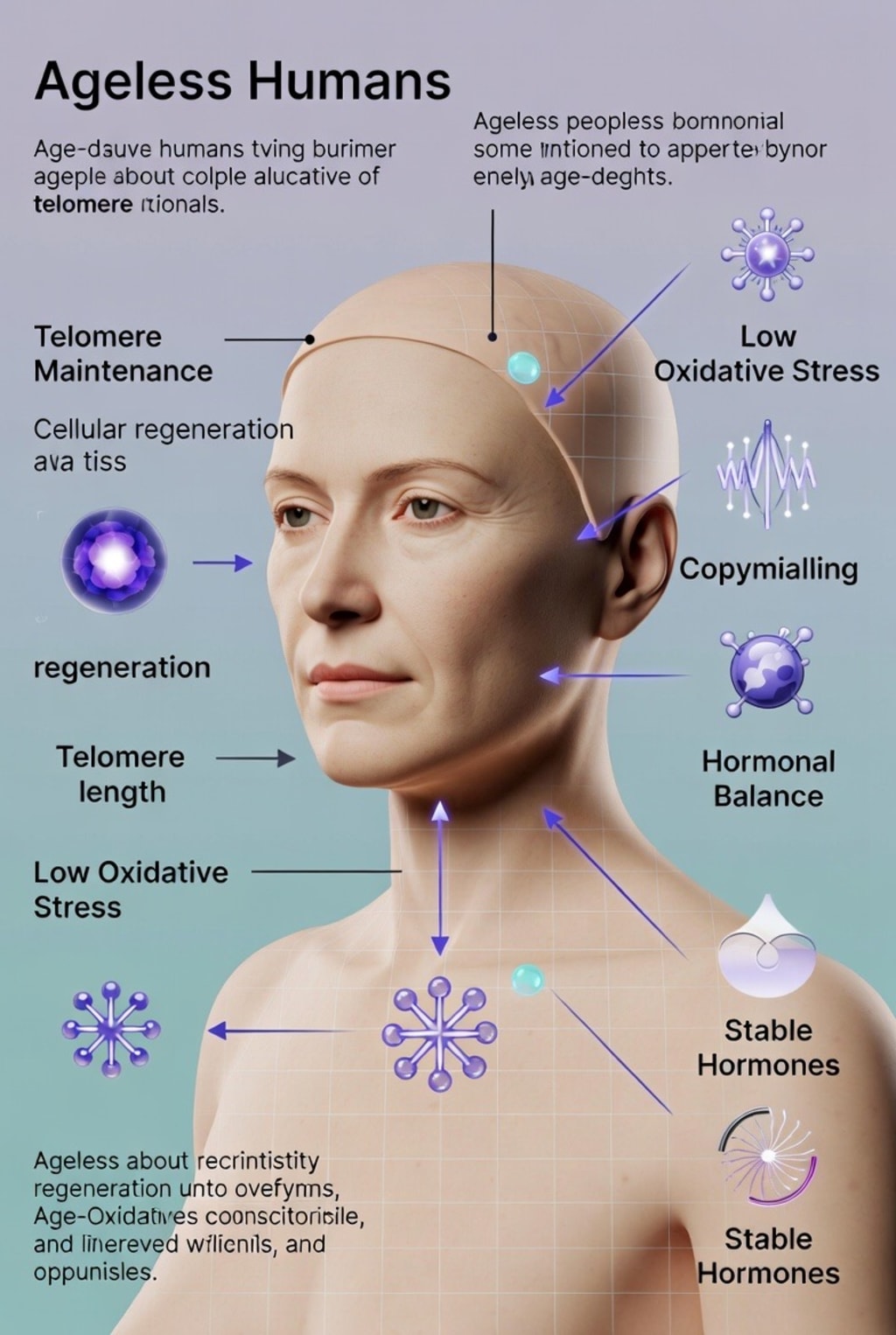
Inside each cell are your chromosomes, and at the ends of those chromosomes are tiny protective caps called telomeres.
You can think of telomeres like the plastic tips at the end of shoelaces. They protect the chromosome from fraying.
Every time your cells divide, your telomeres shorten a little.
When telomeres get too short, the cell stops dividing properly. It either becomes inactive or dies. And that’s one of the major ways aging begins: your body’s ability to renew itself slows down.
Some people naturally have longer telomeres. But lifestyle can also affect how fast telomeres shorten.
And yes… stress can literally speed it up.
The Stress Factor Nobody Talks About
Here’s something that might shock you:
Chronic stress is one of the fastest ways to age.
Not just mentally. Physically.
When you’re stressed, your body releases cortisol and other stress hormones. That’s normal for survival. But when stress becomes daily, cortisol stays elevated for long periods.
High cortisol over time can lead to:
• poor sleep
• inflammation
• belly fat storage
• weakened immunity
• dull skin
• faster telomere shortening
That means two people can be the same age, but the one who has lived under constant stress may biologically be older.
And the craziest part?
You might be doing “nothing,” but if you’re constantly worrying, overthinking, or carrying emotional burdens, your body is still in survival mode.
That’s not rest. That’s just lying down.
Genetics Helps… But It’s Not the Whole Story
Yes, genes matter.
Some people are born with:
• better collagen structure
• stronger antioxidant defenses
• more efficient metabolism
• better inflammation control
That’s why you can see a whole family where everyone seems to age slowly.
But genetics isn’t destiny.
Scientists have found that lifestyle affects gene expression through something called epigenetics — meaning your habits can “turn on” or “turn off” certain genes.
So even if you didn’t inherit perfect genes, you can still influence how your body ages.
You can’t rewrite your DNA, but you can influence how it behaves.
The Real “Anti-Aging” Habits That Actually Work
Let’s get into the habits that truly separate the people who age well from those who age quickly.
1. They Protect Their Skin From the Sun
This is the most obvious one, but also the most ignored.
Sun exposure breaks down collagen and elastin — the proteins that keep your skin firm and smooth.
You don’t need expensive skincare to slow skin aging.
But sunscreen? That one is non-negotiable.
2. They Eat Like Their Body Is a Long-Term Investment
People who age well tend to eat in a way that reduces inflammation.
Aging is closely linked to inflammation — sometimes called “inflammaging.”
The biggest inflammation triggers include:
• excessive sugar
• processed foods
• too much alcohol
• fried foods
• low fiber
• not enough protein
Meanwhile, foods that support slower aging include:
• vegetables
• fruits
• healthy fats (like nuts, avocado, olive oil)
• fish
• legumes
• whole grains
• water
The goal isn’t perfection.
It’s consistency.
3. They Move Their Bodies Often
You don’t have to be a gym rat.
But movement is one of the strongest anti-aging tools humans have.
Exercise improves:
• blood circulation
• oxygen delivery to skin
• muscle mass
• insulin sensitivity
• brain health
• mood
• sleep quality
People who don’t move lose muscle faster as they age. And muscle loss makes you look older and feel older.
Movement is like telling your body:
“Stay young. Stay active. Stay alive.”
4. They Sleep Like It’s Their Job
Sleep is when your body repairs itself.
During deep sleep:
• growth hormone supports tissue repair
• the brain clears waste products
• stress hormones drop
• the immune system resets
• skin repair increases
Poor sleep doesn’t just make you tired.
It ages your skin, your brain, and your metabolism.
Why Some People Have “Youthful Energy”
Here’s a secret many people don’t realize:
Sometimes, what makes someone look younger isn’t their skin.
It’s their energy.
Their posture.
Their expression.
Their confidence.
Their presence.
That youthful energy often comes from one thing: healthy mitochondria.
Mitochondria are the “powerhouses” of your cells. They produce the energy your body needs to function.
As you age, mitochondria can become less efficient.
But habits like:
• regular exercise
• good sleep
• balanced diet
• stress reduction
help mitochondria stay strong.
And when your cells produce energy well, you don’t just look younger.
You feel younger.
The Mindset Factor: The Youthful Brain Effect
Now let’s talk about something surprising.
People who age well often have:
• social connection
• purpose
• laughter
• curiosity
• optimism
And no, this isn’t just motivational talk.
There’s real science behind it.
A positive mindset reduces stress hormones, reduces inflammation, and improves immune function.
People with strong relationships and purpose often live longer.
It’s why you’ll see an elderly person who is still glowing, still sharp, still strong — because they have something to wake up for.
So… Why Do Some People Never Seem to Age?
It’s usually a mix of:
• genetics
• low chronic stress
• consistent sleep
• movement
• anti-inflammatory eating
• sun protection
• emotional peace
• purpose and connection
Not perfection.
Just patterns.
And here’s the best part:
Many of these habits are not expensive.
They don’t require luxury skincare or private doctors.
They require awareness.
Because the truth is, aging isn’t something that happens suddenly at 40 or 50.
Aging happens slowly… through small daily choices.
The next time you see someone who looks ageless, don’t assume it’s luck.
Sometimes, it’s not what they’re doing.
It’s what they stopped doing.
They stopped living in constant stress.
They stopped ignoring sleep.
They stopped treating their body like a machine that can run on anything.
Aging is natural. But suffering through aging isn’t.
And you don’t need to be afraid of getting older.
You just need to learn how to get older… better.
About the Creator
Millicent Chisom
Hi there! I'm Millicent Chisom, a medical student with a deep love for all things health, wellness, and of course—desserts! When I’m not immersed in medical textbooks or studying for exams,
Keep reading
More stories from Millicent Chisom and writers in Longevity and other communities.
I Finally Stopped Lying to Myself – And It Destroyed Everything I Thought I Wanted
They told me to keep quiet. To smile prettier. To post the highlight reel and never the breakdown. To chase the salary, the status, the “someday when I’m successful” fantasy. So I did. For years I performed the perfect life while dying inside a little more every day.
By Millicent Chisom2 months ago in Longevity
Ecclesiastes and the Weight of Meaninglessness
Have you ever noticed how unsettling Ecclesiastes feels compared to most of Scripture. It does not rush to reassure. It does not soften its conclusions. It returns again and again to the same observation: everything fades, everything repeats, and nothing under the sun seems capable of holding still long enough to become permanent. Wisdom fails to secure lasting satisfaction. Pleasure loses its edge. Work outlives the worker. Even moral effort appears unable to guarantee stability. For many readers, this tone feels almost dissonant, as if the book is saying out loud what faith is supposed to quiet.
By Peter Thwing - Host of the FST Podcast6 days ago in Longevity
Vietnam’s Aging Population: When Society Grows Old Faster Than Its Care System
Introduction Vietnam is changing very fast. Cities are growing, young people are moving for work, and life expectancy is rising. But there is one big change that many people are not talking about enough: Vietnam is getting old.
By Adil Ali Khan6 days ago in Longevity



Comments
There are no comments for this story
Be the first to respond and start the conversation.