
UK Sees Highest Temperature of the Year, Snow and Blood Rain in Last 48 Hours
“From record warmth to hill snow and Saharan dust showers, the UK experiences dramatic weather swings in just 48 hours.”

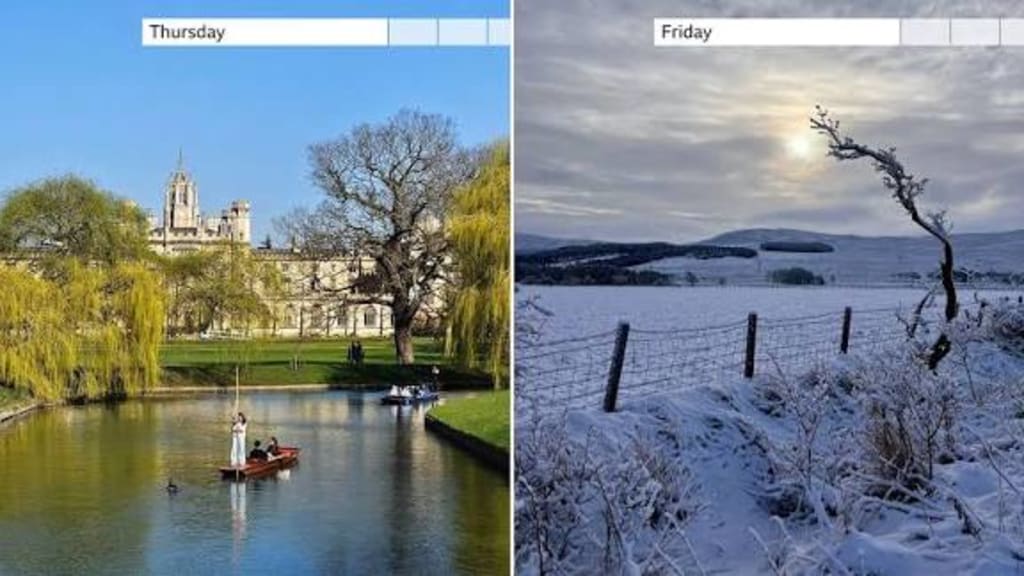
From warmest day so far to Saharan dust showers and hill snow — Britain’s weather has swung dramatically this week.
In a remarkable turn of meteorological events, the United Kingdom has experienced an extraordinary mix of weather over the past 48 hours — recording its highest temperature of the year, followed by snowfall in parts of the north and a rare “blood rain” event linked to Saharan dust. These dramatic swings illustrate the UK’s characteristic weather variability and underline the influence of dynamic atmospheric patterns across Europe.
Warmest Day of 2026 So Far
On Thursday, parts of England basked in unusually mild conditions for early March, with the Met Office confirming a high of 19.2 °C in Northolt, west London — the warmest day recorded in the UK so far this year. This exceeded the previous 2026 peak of 18.7 °C at Kew Gardens earlier in the week and briefly made British temperatures warmer than those in Barcelona.
Forecasters attributed the warmth to a surge of mild southerly air drawn up from southern Europe and North Africa. These warm air currents not only boosted temperatures but also transported fine dust particles from the Sahara Desert into the British atmosphere — setting the stage for the unusual rain events that followed.
The Saharan Dust Effect and “Blood Rain”
As the warm, dusty air crossed north over the Atlantic and Europe, it brought with it a visible cloud of Saharan dust. When this dust mixes with rain falling through the atmosphere, the resulting droplets can carry red or orange‑tinted particles — a phenomenon colloquially known as “blood rain.”
While the term suggests something sinister, scientists emphasise that the event is purely natural. The colour comes from mineral dust in the rain droplets, not from any harmful substance. The dust, lifted from the Sahara Desert and carried thousands of kilometres, can settle as a reddish film on cars, windows and outdoor surfaces after rain.
Weather services noted that while the dust concentration was not high enough to make the rain itself look vividly red as it fell, the residue left behind after showers was noticeable across parts of England and Wales. These dust‑enhanced skies also created striking sunsets and sunrises for many observers.
Snow in the Hills: A Chill Returns
Just as residents were putting away winter coats after the warm spell, colder air pushed back into the UK from the north. This led to snowfall over high ground in parts of northern England and southern Scotland, including areas of the Yorkshire Dales and near Edinburgh. The rapid shift in conditions — from near‑20 °C sunshine to wintry precipitation — highlighted the UK’s unpredictable transitional weather between seasons.
Local authorities in these rural areas reported icy road conditions and some vehicles becoming stuck on snowy roads, prompting police and emergency services to advise caution over the weekend.
Broader Weather Trends and Outlook
Experts say these rapid temperature swings are consistent with the UK’s maritime climate and the interplay of high and low pressure systems during early spring. Meteorologists also point out that February 2026 was unusually mild and dull overall, with southern England registering average winter temperatures among its warmest on record.
Despite the warm peak, forecasters predict a cooler, wetter and windier period ahead, as Atlantic weather systems return. This means more frequent showers, gusty winds and temperatures falling back toward seasonal norms in the coming week.
Public Reaction and Preparations
Across social media, many Britons shared photos of the vivid orange‑tinged skies and dusty windshields, marveling at the strange mix of weather phenomena experienced in such a short span of time. Others were reminded that, despite signs of spring, the UK can still deliver winter chill without warning.
The Met Office continues to advise people to stay updated with local forecasts — especially if planning outdoor activities or travel in areas where sudden snow or rain might affect conditions.
About the Creator
Fiaz Ahmed
I am Fiaz Ahmed. I am a passionate writer. I love covering trending topics and breaking news. With a sharp eye for what’s happening around the world, and crafts timely and engaging stories that keep readers informed and updated.
Keep reading
More stories from Fiaz Ahmed and writers in Longevity and other communities.
“Which Heart Health Checks Should We Get at 60? I Went on a Quest to Find Out”
Your sixties can be a decade of wisdom — and proactive heart care. Turning 60 felt like crossing an invisible milestone. Friends joked about reading glasses and retirement dreams, but for me, the day also triggered a serious question: What do I need to do to keep my heart healthy now that I’m officially a senior? I dove into medical research, spoke with cardiologists, and sifted through health guidelines to find out which heart health checks really matter at 60 — and why they might save your life. Why 60 Is a Crucial Age for Heart Health Heart disease remains the leading cause of death worldwide, and the risk increases with age. By age 60, many of us have lived with decades of lifestyle influences — diet, stress, activity levels, sleep patterns — that quietly affect cardiovascular function. Dr. Anita Reynolds, a cardiologist based in Boston, told me: “By 60, most adults benefit from a structured review of their heart health. Early detection of risk factors like high blood pressure or cholesterol can prevent serious events like heart attacks or strokes.” With that in mind, I compiled a checklist of essential heart health assessments recommended by leading experts. 1. Blood Pressure Screening — The Foundation of Heart Health High blood pressure — often called the “silent killer” — has no symptoms but significantly increases the risk of heart disease, stroke, and kidney failure. At 60, it’s crucial to: Check blood pressure at least once a year (more often if elevated) Maintain a home log if readings are borderline Discuss medication options if readings consistently exceed 130/80 mmHg According to the American Heart Association, nearly half of adults over 60 have high blood pressure, and early detection saves lives. 2. Cholesterol Panel — Knowing Your Lipid Levels A full lipid panel measures: Total cholesterol LDL (“bad”) cholesterol HDL (“good”) cholesterol Triglycerides Elevated LDL and triglycerides are major risk factors for plaque buildup in arteries, which can lead to coronary artery disease. Women and men over 60 should get this test at least every 4–6 years, or more frequently if previous results were abnormal. 3. Blood Glucose / Diabetes Screening Diabetes is a silent contributor to heart disease. High blood glucose damages blood vessels and the heart over time. Tests include: Fasting glucose Hemoglobin A1c (average blood sugar over 3 months) The CDC recommends diabetes screening for all adults over 45, and annual checks after age 60, especially if you have risk factors like family history or elevated BMI. 4. Body Mass Index (BMI) and Waist Circumference Weight alone doesn’t tell the full story. Abdominal fat — measured by waist circumference — is more closely tied to heart risk than weight or BMI alone. A waist circumference over: 40 inches in men 35 inches in women is associated with higher cardiovascular risk. 5. Electrocardiogram (ECG or EKG) An ECG records the electrical activity of your heart and can spot: Arrhythmias (irregular beats) Previous silent heart attacks Early signs of heart disease Many doctors recommend a baseline ECG around age 60, especially if you have symptoms like palpitations, shortness of breath, or chest discomfort. 6. Advanced Imaging – When Needed Not everyone requires imaging tests, but for those with family history or abnormal routine tests: Coronary Calcium Scan assesses calcium deposits in arteries Echocardiogram evaluates heart structure and function These tools can uncover early disease before symptoms arise. 7. Stress Testing If you are active or have symptoms with exertion, a stress test (treadmill or pharmacologic) gauges how your heart performs under stress and can detect blockages. Beyond Numbers – Lifestyle and Risk Assessment Doctors also evaluate: Diet and physical activity Smoking history Stress levels Family history of heart disease These factors influence heart risk as much as test results. My Biggest Takeaways At 60, heart health isn’t about fear — it’s about empowerment. I learned that: Prevention works when risks are identified early Regular checkups are not optional — they’re protective Small lifestyle changes make measurable differences Heart health is a lifelong journey. Turning 60 reminded me that it’s never too late to start the right screenings and conversations with our doctors. If you haven’t had these checks yet, consider talking to a cardiologist or your primary care provider about creating your personalized heart health plan.
By Fiaz Ahmed 5 days ago in Longevity
The Porcelain Protocol: Engineering Perfection in the Middle Kingdom
In the shimmering high-rises of Chengdu and the bustling tech hubs of Shenzhen, a new kind of industrial revolution is taking place—one that isn't measured in steel output or software exports, but in the precise millimeters of a double-eyelid crease and the sharp angle of a "V-line" jaw. China has rapidly evolved into the world’s most sophisticated laboratory for cosmetic transformation. What was once a hushed medical necessity or a luxury for the cinematic elite has transformed into a standardized, multi-billion-dollar rite of passage for the modern Chinese woman. To understand this phenomenon is to peel back the layers of a society caught between ancient physiognomy and a hyper-competitive digital future.
By yusuf selho3 days ago in Longevity




Comments
There are no comments for this story
Be the first to respond and start the conversation.