science
The science of staying young, healthy, and in-shape.
Why Do Crocodiles Not Eat Capybaras?. AI-Generated.
Images of capybaras calmly sitting beside crocodiles and caimans have fascinated the internet for years. These giant rodents are often seen lounging near some of the world’s most dangerous predators without appearing afraid. This unusual coexistence raises a simple but intriguing question: Why do crocodiles not eat capybaras? The answer lies not in friendship, but in biology, behavior, and survival strategy. While crocodiles are capable of killing and eating capybaras, they often choose not to—unless conditions are right. A Predator That Conserves Energy Crocodiles are ambush predators designed to conserve energy. Unlike mammals that hunt frequently, crocodiles can survive weeks or even months between meals. Because hunting carries risks, they prefer prey that offers a high reward with minimal effort. An adult capybara can weigh more than 50 kilograms (110 pounds) and is surprisingly fast and powerful in water. Attacking such an animal requires a sudden strike, a strong grip, and a struggle that could injure the crocodile. For a predator that values efficiency, a large, alert capybara is not always an attractive target. Crocodiles tend to focus instead on: Fish Birds Smaller mammals Young or injured animals Unless a capybara appears weak, distracted, or isolated, it may not be worth the energy or risk. Capybaras Do Not Behave Like Prey One of the main reasons crocodiles ignore capybaras is their behavior. Capybaras are exceptionally calm animals. They move slowly, avoid splashing, and remain watchful. Crocodiles rely heavily on movement to trigger their hunting instinct. Sudden motions, struggling, or panic signal an opportunity to strike. A capybara that sits quietly near the water does not activate this response. Its relaxed posture communicates that it is aware and ready to flee. This reduces the likelihood of attack. Capybaras have evolved alongside crocodilians for thousands of years in South America. Over time, they have learned how close is too close and when danger is real. This awareness helps them coexist safely most of the time. Safety in Numbers Capybaras live in groups that can range from 10 to more than 50 individuals. Group living provides protection. With many eyes watching the surroundings, crocodiles find it difficult to approach unnoticed. When danger appears, one capybara will sound an alarm, and the entire group will flee into the water or dense vegetation. This collective vigilance discourages predators from attempting an attack unless the odds are clearly in their favor. A lone capybara is far more vulnerable than one sitting among others. Many of the peaceful photographs seen online show group settings where crocodiles are less likely to strike. Crocodiles Choose Timing Carefully Crocodiles are most aggressive when hungry and active. However, many encounters with capybaras occur when crocodiles are basking in the sun. During basking, crocodiles are regulating their body temperature and digesting food. They are less inclined to hunt at these times. Capybaras appear to recognize this pattern. They often share riverbanks with resting crocodiles, taking advantage of moments when the predators are least motivated to attack. This is not a sign of trust but of instinctive risk assessment. Capybaras Are Excellent Swimmers Both animals are semi-aquatic, but capybaras are extremely agile in water. They can dive, swim quickly, and hide among aquatic plants. If a crocodile makes a sudden move, the capybara often escapes by submerging or sprinting toward shore. Because crocodiles depend on surprise, losing that advantage greatly reduces their success rate. Not a Friendship, but Tolerance Despite popular myths, crocodiles and capybaras are not friends. Crocodiles do eat capybaras—especially young ones. There are documented cases of crocodiles attacking and killing capybaras when: the capybara is injured it is unaware of danger it strays too close food is scarce The peaceful scenes seen online represent moments when both animals calculate that conflict is unnecessary. It is coexistence, not companionship. Environmental Balance In natural ecosystems, predators and prey often develop relationships based on mutual awareness rather than constant conflict. This balance reduces wasted energy and unnecessary injury for both sides. Capybaras benefit by staying calm and alert. Crocodiles benefit by waiting for easier opportunities. Over generations, this has produced a pattern where attacks are selective rather than constant. Why Humans Find It Fascinating Humans expect predators to attack prey whenever possible. Seeing a crocodile ignore a capybara challenges that assumption. It reminds us that animal behavior is governed by logic, not emotion. Survival depends on calculation, not aggression alone. These encounters also reveal how evolution shapes interactions between species that share the same habitat. Conclusion Crocodiles do not eat capybaras most of the time because it is often not worth the risk or energy. Capybaras remain calm, stay in groups, and understand when predators are least likely to strike. Crocodiles, in turn, prefer easier prey and conserve their strength. This relationship is not peace—it is practical survival. Nature does not run on friendship, but on balance. When both animals judge that conflict brings more danger than benefit, they coexist quietly along the riverbanks. And that is why the world keeps seeing one of nature’s most unlikely standoffs: the calm capybara beside the patient crocodile.
By Fiaz Ahmed about 12 hours ago in Longevity
United States In Situ Hybridization Market Size and Forecast 2026–2034. AI-Generated.
United States In Situ Hybridization Market Overview The United States In Situ Hybridization (ISH) market is witnessing steady and structurally strong expansion, driven by the rapid adoption of advanced molecular diagnostic techniques across clinical and research settings. According to Renub Research, the U.S. ISH market is projected to increase from US$ 555.98 million in 2025 to US$ 948.13 million by 2034, growing at a compound annual growth rate (CAGR) of 6.11% during 2026–2034.
By Sakshi Sharmaabout 14 hours ago in Longevity
Ecclesiastes and the Weight of Meaninglessness
Have you ever noticed how unsettling Ecclesiastes feels compared to most of Scripture. It does not rush to reassure. It does not soften its conclusions. It returns again and again to the same observation: everything fades, everything repeats, and nothing under the sun seems capable of holding still long enough to become permanent. Wisdom fails to secure lasting satisfaction. Pleasure loses its edge. Work outlives the worker. Even moral effort appears unable to guarantee stability. For many readers, this tone feels almost dissonant, as if the book is saying out loud what faith is supposed to quiet.
By Peter Thwing - Host of the FST Podcastabout 16 hours ago in Longevity
Korea’s Classroom Phone Ban Faces First Test as Schools Disagree Over Rules. AI-Generated.
South Korea’s newly introduced restrictions on smartphone use in classrooms are facing their first major test as schools struggle to interpret and enforce the policy consistently. While the government says the ban is meant to reduce distractions and improve students’ mental health and academic focus, disagreements among educators, parents, and administrators have revealed deep divisions over how strict the rules should be and who should enforce them. The Ministry of Education announced earlier this year that schools would be required to limit student phone use during class hours, responding to growing concerns about excessive screen time, cyberbullying, and declining attention spans. However, instead of imposing a single nationwide standard, the ministry allowed individual schools to design their own implementation plans. That flexibility has now become a source of confusion. Different Rules, Different Schools Across the country, schools have adopted widely varying approaches. Some have introduced full bans, requiring students to hand in their phones at the start of the school day and retrieve them only after final dismissal. Others allow students to keep phones in their bags but prohibit their use except in emergencies or with teacher permission. A few schools permit limited use for educational purposes, such as language apps or research assignments. This lack of uniformity has led to complaints from parents and students who say the policy feels arbitrary and unfair. “My child’s school collects all phones every morning, but the neighboring school lets students keep them,” said one parent in Seoul. “It creates confusion and resentment, especially when students compare their experiences.” Teachers, too, are divided. Some welcome the ban as a long-overdue step toward restoring discipline in the classroom. Others worry it adds another layer of responsibility to already overburdened staff. “We are not security guards,” said a high school teacher in Busan. “Our job is to teach, not to check pockets and confiscate devices.” Supporters Cite Academic and Mental Health Benefits Supporters of the ban argue that smartphones have become a serious obstacle to learning. Studies in South Korea and abroad have linked heavy phone use to reduced concentration, sleep problems, and increased anxiety among teenagers. Education officials say the policy is designed to help students reconnect with in-person learning and reduce dependence on social media. A ministry spokesperson said the first weeks of implementation had already shown positive signs in some schools. “Teachers report fewer disruptions and more engagement during lessons,” the spokesperson said. “This policy is about protecting students’ ability to focus and interact with each other in healthy ways.” Some parents agree. “My son used to spend every break scrolling on his phone,” said a mother of a middle school student. “Now he talks to his friends and plays sports again. I think it’s a good change.” Critics Warn of Practical and Legal Challenges Despite these benefits, critics say the policy raises serious concerns about students’ rights and safety. One major issue is how schools handle emergencies. Parents worry that students may be unable to contact family members quickly if phones are locked away. “There needs to be a clear system for emergencies,” said a parents’ association representative. “Otherwise, this policy could put children at risk.” Legal experts have also questioned whether schools have the authority to confiscate personal property without explicit consent. While the education ministry says the policy is voluntary and based on school agreements with parents, disputes have already emerged in some districts where students refused to hand over their devices. Student groups have voiced frustration, arguing that the ban treats teenagers as untrustworthy rather than teaching them responsible phone use. “Phones are part of modern life,” said a high school student leader. “Instead of banning them, schools should educate us on how to use them wisely.” Technology in Education: A Contradiction? The policy also highlights a contradiction within South Korea’s education system, which has invested heavily in digital learning tools over the past decade. Many schools use tablets, online textbooks, and educational apps, blurring the line between useful technology and harmful distraction. Some teachers say the ban undermines those efforts. “We encourage digital literacy, but then we punish students for having devices,” said an elementary school principal. “The message is confusing.” Education experts suggest the debate reflects a broader struggle to balance innovation with discipline. “Technology is not the enemy,” said an education researcher at a Seoul university. “The problem is unregulated use. Schools need clear guidelines, not vague restrictions that vary from building to building.” The First Test Period The coming months will serve as a trial period for the policy. The Ministry of Education has said it will collect feedback from schools and consider adjustments based on what works and what does not. Officials acknowledge that the current differences in enforcement may need to be narrowed to ensure fairness. Some local education offices are already drafting more detailed instructions, including when phones can be used for learning and how they should be stored during class hours. “We are listening to teachers and parents,” a regional education official said. “This policy must be practical, not just symbolic.” A National Conversation Beyond classrooms, the phone ban has sparked a nationwide conversation about youth, technology, and authority. South Korea is one of the most digitally connected societies in the world, and smartphones are deeply woven into daily life. Asking students to disconnect, even temporarily, challenges cultural norms as much as school routines. Whether the policy succeeds may depend less on strict enforcement and more on cooperation among schools, families, and students. “This is not just a school issue,” said a child psychologist. “It’s about how society teaches young people to manage technology responsibly.” Conclusion Korea’s classroom phone ban is now facing its first real test, as schools interpret the rules in different ways and stakeholders debate their impact. While supporters see it as a necessary step toward improving focus and well-being, critics warn of confusion, inequality, and unintended consequences. As the trial period continues, education authorities will need to decide whether flexibility or uniformity is the best path forward. For now, the policy has achieved one thing for certain: it has forced the nation to confront how much space smartphones should occupy in the lives of its students—and who gets to decide.
By Fiaz Ahmed a day ago in Longevity
Officially Confirmed: Heavy Snow Will Begin Late Tonight as Weather Alerts Warn of Major Disruptions, Travel Chaos, and Dangerous Conditions. AI-Generated.
Meteorological agencies have officially confirmed that a powerful winter storm system will bring heavy snowfall beginning late tonight, prompting widespread weather alerts and urgent warnings about dangerous travel conditions and major disruptions across affected regions.
By Fiaz Ahmed a day ago in Longevity
Storm Bombs Out, Pounds Coast With Strong Wind After Dropping Historic Amounts of Snow. AI-Generated.
A powerful winter storm that delivered historic snowfall across inland regions has now shifted its force toward the coastline, bringing damaging winds, heavy rain, and dangerous coastal conditions. Meteorologists say the system rapidly intensified before weakening—commonly known as “bombing out”—yet continued to unleash severe weather as it moved eastward toward coastal communities. The storm’s dramatic transition has left a trail of disruption, from record-breaking snow totals in higher elevations to widespread power outages and flooding concerns along the coast. Record Snowfall Inland Before reaching the coast, the storm blanketed inland and mountainous areas with extraordinary snowfall. Some communities reported snow accumulations exceeding several feet, marking one of the largest single-storm snow events in decades. Transportation networks were severely affected. Highways were closed, flights were canceled, and rail services were suspended as crews struggled to clear roads and runways. Emergency services urged residents to remain indoors as visibility dropped and travel became hazardous. “This storm produced snowfall rates we rarely see,” said a senior meteorologist. “It overwhelmed snow removal systems and caused major disruption across several regions.” Schools and government offices shut down, while hospitals prepared for an increase in weather-related injuries such as falls and hypothermia. Storm Weakens but Wind Strengthens As the storm moved toward the coast, its central pressure began to rise, signaling that it was losing some of its intensity. However, the weakening phase did not bring relief. Instead, the system unleashed powerful winds that battered coastal cities and towns. Wind gusts exceeding 70 miles per hour were recorded in some coastal areas, toppling trees, damaging buildings, and knocking out electricity for tens of thousands of households. Emergency crews worked through the night to restore power and clear debris from streets. “We’ve seen roofs torn off, boats tossed onto shore, and widespread structural damage,” said a local emergency management official. “This storm remains dangerous even after the snow stopped.” Coastal Flooding and Rough Seas Heavy rain replaced snow as the storm reached warmer coastal zones, raising fears of flooding in low-lying communities. Rivers and drainage systems already stressed by melting snow struggled to cope with additional rainfall. High waves and storm surges pounded shorelines, forcing authorities to issue evacuation orders in vulnerable coastal neighborhoods. Beaches were closed, and ports suspended operations as rough seas made navigation unsafe. Marine agencies warned that wave heights could reach dangerous levels, threatening fishing vessels and cargo ships. “This is not just a winter storm—it’s a multi-hazard event,” said a coastal weather expert. “Snow inland, wind and flooding on the coast, and hazardous marine conditions all at once.” Power Outages and Infrastructure Damage Utilities reported widespread outages as falling trees and high winds damaged power lines. In some areas, communication networks were also disrupted, leaving residents without phone or internet service. Public transportation systems faced major delays due to damaged tracks, flooded tunnels, and debris on roadways. Airports along the coast canceled dozens of flights, stranding travelers and forcing airlines to rebook passengers. Local governments declared states of emergency to access additional resources and speed up recovery efforts. Emergency Response and Public Safety Emergency services urged residents to avoid unnecessary travel and to stay away from coastal areas during peak wind and wave activity. Shelters were opened for those forced to evacuate their homes or left without electricity and heating. Rescue teams conducted operations to assist stranded motorists and residents trapped by flooding or fallen trees. “We are asking people to take this storm seriously,” said a fire department spokesperson. “Conditions remain dangerous, and response times may be delayed.” Hospitals and clinics prepared for possible increases in injuries related to accidents and exposure to cold and wet conditions. Climate Patterns and Extreme Weather Meteorologists noted that such extreme and rapidly changing storms are becoming more common, driven by unstable atmospheric conditions and warming ocean temperatures. The storm’s ability to produce both historic snowfall and destructive coastal winds has renewed discussion about how climate change is intensifying weather systems. “We are seeing storms that carry more moisture and energy,” said a climate scientist. “That leads to heavier snow, stronger winds, and higher risks of flooding.” While no single storm can be attributed solely to climate change, experts say the pattern of increasingly severe events is consistent with long-term climate trends. Economic and Community Impact Businesses across affected regions closed temporarily due to damage and power outages. Tourism and fishing industries suffered losses as travel restrictions and port closures disrupted operations. Farmers also expressed concern about damage to winter crops and livestock caused by freezing temperatures and flooding. Local officials warned that recovery could take weeks, especially in areas that experienced both heavy snow and coastal damage. “We will need significant resources to rebuild and support affected communities,” said a regional governor. “This storm tested our preparedness and resilience.” What Comes Next Forecasters predict that conditions will gradually improve over the next 24 to 48 hours as the storm system moves offshore. However, lingering winds, icy roads, and floodwaters will continue to pose hazards. Authorities plan to conduct damage assessments once conditions stabilize, and federal assistance may be requested for the hardest-hit areas. Residents are advised to remain cautious, check official updates, and assist neighbors who may need help during recovery. Conclusion The powerful storm’s path—from historic snowfall inland to destructive winds and flooding along the coast—demonstrates the complex and dangerous nature of modern weather systems. While the storm has begun to weaken, its impact remains severe, leaving communities to face the long task of cleanup and recovery. As climate scientists warn of more frequent extreme events, this storm serves as a reminder of the importance of preparedness, infrastructure resilience, and coordinated emergency response. For many affected regions, the coming days will focus on restoring power, reopening roads, and helping residents return safely to their normal lives.
By Fiaz Ahmed a day ago in Longevity
After Dumping Tonnes of Sand Into the Ocean for Over 12 Years, China Has Succeeded in Creating Entirely New Islands From Scratch. AI-Generated.
Over the past twelve years, China has carried out one of the most ambitious land reclamation projects in modern history, transforming submerged reefs and shallow waters into fully formed artificial islands. By dumping millions of tonnes of sand and construction material into the ocean, Beijing has reshaped parts of the South China Sea, creating new land where none previously existed. What began as a series of small dredging operations has evolved into strategically significant island installations equipped with runways, ports, radar systems, and military infrastructure. The project has drawn international attention and criticism, raising concerns about environmental damage, regional security, and the future of maritime law. Engineering New Geography Satellite images over the last decade reveal how reefs once barely visible above water have been turned into permanent land masses. Massive dredging vessels extract sand from the seabed and deposit it onto coral formations, layering material until solid ground emerges. Engineers then reinforce the new land with concrete, seawalls, and drainage systems to prevent erosion. On several islands, China has constructed airstrips long enough to accommodate military aircraft, along with harbors for naval vessels and buildings believed to house surveillance equipment. Experts say the scale of the project is unprecedented. “No country has altered maritime geography this extensively in such a short period of time,” said a maritime geographer. “These are not temporary structures. They are intended to last.” Strategic Importance The artificial islands sit in one of the world’s busiest shipping routes. The South China Sea carries trillions of dollars in global trade annually and is believed to hold significant oil and gas reserves. Control over this region offers both economic and military advantages. China claims historical rights over much of the sea, a position disputed by neighboring countries including Vietnam, the Philippines, Malaysia, and Brunei. An international tribunal in 2016 ruled that China’s sweeping claims had no legal basis under international maritime law, a decision Beijing rejected. By physically occupying contested areas, China has strengthened its presence and extended its operational reach. “These islands function as unsinkable aircraft carriers,” said a regional security analyst. “They allow China to project power far beyond its mainland coastline.” Environmental Consequences Scientists warn that the ecological cost has been severe. Coral reefs, which support diverse marine life, were destroyed during dredging operations. Sediment plumes from construction spread across nearby waters, damaging fish habitats and disrupting ecosystems. Marine biologists report long-term impacts on fisheries that local communities depend on for food and income. “You cannot rebuild coral once it’s buried under sand,” said an environmental researcher. “The damage could take centuries to recover, if at all.” China has stated that it follows environmental standards and that some construction included measures to protect reefs. However, independent studies suggest the scale of destruction is among the largest reef losses ever recorded. Regional Tensions Rise The island-building campaign has heightened tensions across Southeast Asia. Neighboring nations view the projects as violations of their territorial waters and accuse China of militarizing disputed zones. The United States and its allies have conducted freedom-of-navigation patrols near the artificial islands, arguing that international waters must remain open to all. These patrols have occasionally led to confrontations between Chinese and foreign naval vessels. Diplomats warn that the risk of miscalculation is growing. “Every new runway and radar station changes the balance of power,” said one foreign policy expert. “This is not just construction—it’s strategic messaging.” Legal and Political Debate Under international law, artificial islands do not generate the same maritime rights as natural land. They cannot claim exclusive economic zones or territorial seas. However, enforcing these rules has proven difficult. China maintains that the islands are primarily for civilian purposes such as weather monitoring, search-and-rescue operations, and maritime safety. Critics counter that military facilities dominate the structures and reveal Beijing’s long-term intentions. The issue has become a test of international legal norms in an era where engineering can physically reshape geography. A New Reality in the Ocean Today, what were once scattered reefs now appear on maps as fully formed islands with names, buildings, and airfields. They host personnel year-round and operate as forward bases for Chinese forces. For China, the islands symbolize technological capability and national strength. For its neighbors, they represent a permanent shift in the region’s power structure. “The ocean has been turned into land,” said a Southeast Asian diplomat. “And with that land comes influence.” Global Implications China’s island-building has inspired debate worldwide about the future of maritime disputes. Other nations with access to shallow seas may attempt similar projects, raising fears of widespread environmental damage and new territorial conflicts. Analysts argue that without stronger international agreements, artificial island construction could become a new tool of geopolitical competition. “This sets a precedent,” said a security researcher. “If geography can be engineered, borders become more fragile.” Conclusion After more than a decade of continuous dumping of sand and material into the sea, China has succeeded in creating entirely new islands from scratch—an achievement of engineering and a catalyst for controversy. The project has reshaped not only coral reefs but also regional politics, international law, and environmental priorities. As the islands become permanent fixtures in the South China Sea, the world is left to grapple with the consequences of turning ocean into territory. What was once water is now land—and that transformation may define future conflicts and cooperation in the Indo-Pacific for generations to come.
By Fiaz Ahmed a day ago in Longevity
Watch: Moment Bright Light Trail Streaks Across New Zealand Skyline. AI-Generated.
Residents across parts of New Zealand were left stunned after a brilliant streak of light suddenly cut across the night sky, lighting up the horizon and prompting a flood of social media videos and eyewitness reports. The mysterious spectacle, captured on mobile phones and security cameras, quickly went viral as people questioned whether the glowing trail was a meteor, space debris, or something else entirely. The event occurred shortly after nightfall, when skies were clear in many regions, allowing thousands to witness the phenomenon. In several cities and rural towns, the bright object appeared to travel silently before fading out within seconds. A Sky Full of Questions Witnesses described seeing a long, glowing trail moving rapidly across the sky, followed by a brief flash before disappearing. Some reported a greenish or bluish hue, while others noticed a white-hot streak that split into smaller fragments. “I thought it was fireworks at first,” said one Auckland resident. “But then it moved too fast and too smoothly. It looked like something from a science fiction movie.” Emergency services confirmed they received dozens of calls from concerned citizens asking if an aircraft had crashed or if an explosion had occurred. Authorities quickly reassured the public that there was no known danger or reported damage on the ground. What Experts Believe Happened Astronomers and space scientists later suggested the light trail was most likely caused by a meteor entering Earth’s atmosphere or re-entering space debris from a satellite or rocket stage. When such objects travel at extremely high speeds, friction with the atmosphere causes them to burn brightly, creating a fireball effect visible for hundreds of kilometers. According to experts, the brightness of the object indicates it may have been relatively large compared to typical shooting stars. “When something like this appears over a wide area and lasts several seconds, it’s often a fireball,” explained one astrophysicist. “It can be a natural meteor or occasionally a piece of human-made space debris returning to Earth.” Social Media Erupts Within minutes, videos of the glowing streak flooded social media platforms. Users posted clips showing the object racing across the skyline above cities, highways, and coastal areas. Some jokingly suggested it was an alien spacecraft, while others speculated about military activity or secret rocket launches. Hashtags related to the event quickly trended nationwide, and news outlets began compiling footage from eyewitnesses. The widespread documentation helped scientists analyze the object’s speed, color, and trajectory. Preliminary analysis suggests it entered the atmosphere at a steep angle and disintegrated before reaching the ground. No Immediate Threat Officials from New Zealand’s space and aviation authorities said there was no indication that the object posed any danger to aircraft or communities. No debris has been reported, and radar systems did not detect any large impact. Authorities urged the public not to panic and reminded citizens that such phenomena, while rare, are not unusual. “We see events like this several times a year worldwide,” a spokesperson said. “Most burn up completely before reaching the surface.” Why These Events Capture Attention Bright sky events often spark intense curiosity because they occur without warning and involve the unknown. For many people, it may be the first time they have ever seen a meteor fireball or space object re-enter the atmosphere. Scientists say the public reaction reflects a growing interest in space and astronomy. With more satellites in orbit and increased awareness of space exploration, people are more likely to question what they see overhead. “These moments remind us that Earth exists within a much larger cosmic environment,” said one science educator. “What looks mysterious is often part of natural or technological processes happening above us all the time.” A Teaching Moment for Science Schools and universities have already begun using the footage as an educational example of atmospheric entry and light phenomena. Teachers explain that when objects travel faster than sound and encounter Earth’s dense atmosphere, they heat up rapidly, creating visible trails. Some experts also pointed out that solar activity and seasonal meteor showers can increase the chances of such sightings. Although the exact source of the light has not yet been officially confirmed, most scientists agree it was either a meteor or controlled space debris re-entry. Community Reaction In small towns, residents gathered outside to discuss what they had seen. For some, the event was frightening; for others, it was thrilling. “I’ve lived here for 40 years and never seen anything like it,” said one rural observer. “It was beautiful and strange at the same time.” Several people described making wishes, while others worried about safety until authorities clarified the situation. Looking Ahead Astronomers are now reviewing satellite tracking data and meteor detection systems to determine the object’s origin more precisely. Results may take days to confirm, but experts say there is no cause for concern. As technology improves, scientists expect more of these events to be recorded and analyzed in detail, helping improve understanding of Earth’s interaction with space objects. For now, the bright streak across New Zealand’s skyline remains a memorable moment—an unexpected flash of wonder that briefly turned an ordinary night into a national conversation. The event serves as a reminder that even in an age of advanced science and constant connectivity, the sky can still surprise us.
By Fiaz Ahmed a day ago in Longevity
Rare Fungus Spotted for First Time in 50 Years. AI-Generated.
Scientists have confirmed the discovery of a rare fungus species that had not been seen in the wild for more than half a century, marking a major breakthrough in biodiversity research and conservation science. The fungus, believed to have vanished due to habitat loss and environmental changes, was found during a routine ecological survey in a remote forest region. Researchers described the find as “extraordinary,” noting that many species disappear quietly without ever being rediscovered. The reappearance of this fungus offers new hope for conservation efforts and raises important questions about what other organisms may still survive undetected. A Surprise Discovery The fungus was identified by a team of mycologists conducting a long-term study of forest ecosystems. While collecting soil and plant samples, researchers noticed unusual fruiting bodies growing on decaying tree bark. Laboratory analysis later confirmed it was the same species last recorded in the early 1970s. “It was completely unexpected,” said one of the lead scientists involved in the study. “We assumed this species was either extinct or extremely close to it. Finding it again shows how little we still know about fungal diversity.” The fungus is known for its distinctive pale coloring and fragile structure, which makes it difficult to detect. It only appears under very specific environmental conditions, including high humidity, stable temperatures, and the presence of certain tree species. Why It Disappeared Experts believe the fungus vanished from records due to deforestation, climate shifts, and pollution. Fungi are especially sensitive to changes in moisture and soil chemistry. Even small alterations in forest environments can disrupt their life cycles. In the decades following its last sighting, large areas of woodland were cleared for agriculture and development. The loss of old-growth trees removed the fungus’s natural habitat, making survival difficult. Climate change may have played a role as well. Warmer temperatures and unpredictable rainfall patterns likely reduced the narrow window in which the fungus could grow and reproduce. Importance to the Ecosystem Although small and easily overlooked, fungi play a critical role in ecosystems. They break down organic matter, recycle nutrients, and form symbiotic relationships with plants. This rare species is believed to help decompose specific types of hardwood, contributing to soil health and forest regeneration. “This fungus is part of a hidden network that supports entire ecosystems,” explained a forest ecologist. “Its return suggests the environment may be recovering in subtle ways.” Scientists are now studying the fungus’s genetic makeup to understand how it survived for so long undetected. Some believe it may have adapted to new conditions or retreated into isolated microhabitats. Conservation Implications The rediscovery highlights the importance of protecting remaining natural forests. Conservation groups argue that this finding proves even heavily impacted environments can still shelter rare life forms. Following the discovery, local authorities announced plans to limit logging and increase monitoring in the area. The site where the fungus was found will likely be designated a protected research zone. Environmental organizations welcomed the news but warned that protection must be long-term. “One rediscovery does not mean the species is safe,” said a conservation spokesperson. “It means we have been given a second chance.” A Growing Trend of Rediscoveries The fungus is not the only species to reappear after decades of absence. In recent years, scientists have rediscovered rare frogs, birds, and insects once thought extinct. Improved technology, satellite mapping, and DNA analysis have made it easier to identify species in hard-to-reach locations. However, experts caution that such success stories are rare compared to the number of species quietly disappearing each year. “Rediscoveries make headlines, but extinction happens every day without notice,” said a biodiversity researcher. “This is why protecting habitats is so urgent.” Public Interest and Scientific Curiosity News of the fungus’s return has sparked excitement among scientists and nature enthusiasts alike. Social media images of the tiny organism have circulated widely, drawing attention to fungi as an often-ignored part of biodiversity. Schools and universities are already discussing the discovery in biology classes as an example of resilience and the importance of field research. For scientists, the fungus offers a valuable opportunity to study long-term survival under environmental stress. Understanding how it endured decades of change could help researchers predict which species are most likely to survive future climate challenges. What Happens Next Researchers will continue to monitor the area over the coming months to see if more specimens appear. They plan to map its distribution and analyze soil and tree conditions to understand why it survived there. Strict guidelines have been issued to prevent tourists or collectors from disturbing the site. Scientists stress that human interference could easily destroy the fragile population. “This fungus survived half a century in silence,” said one researcher. “Our responsibility now is to make sure it does not disappear again.” A Symbol of Hope The rediscovery of the rare fungus serves as a powerful reminder that nature still holds secrets, even in a world shaped by human activity. It also underscores the need for patience, protection, and respect for ecosystems that operate beyond human notice. While many environmental stories focus on loss, this one offers a rare moment of hope. A species once thought gone has quietly returned, proving that life can persist even under the most challenging conditions. For scientists and conservationists, it is not just a scientific achievement—it is a call to safeguard what remains before more wonders vanish unseen.
By Fiaz Ahmed a day ago in Longevity
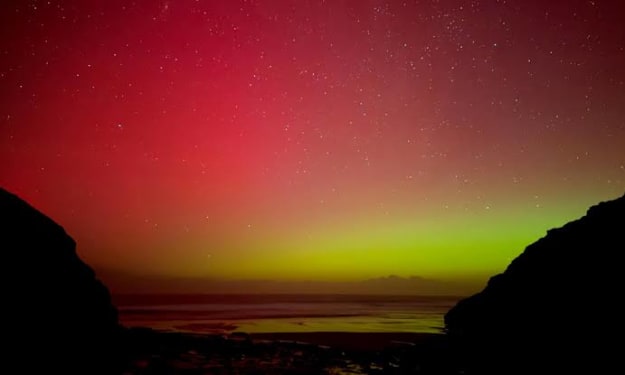
Why Do the Northern Lights Keep Appearing?. AI-Generated.
In recent months, the Northern Lights — also known as the aurora borealis — have been appearing more frequently and in places where they are rarely seen. From northern Europe and Canada to parts of the United States and even lower latitudes, skies have been glowing with vivid curtains of green, pink, and purple light. Scientists say this surge in aurora activity is not random. It is closely tied to changes in the Sun and Earth’s magnetic environment. The growing visibility of the Northern Lights has fascinated skywatchers while raising questions about what is happening in space above our planet. What Are the Northern Lights? The Northern Lights occur when charged particles from the Sun collide with gases in Earth’s atmosphere. These particles are carried toward Earth by solar wind and guided by the planet’s magnetic field toward the polar regions. When they strike oxygen and nitrogen molecules high in the atmosphere, energy is released in the form of light. Different gases produce different colors. Oxygen creates green and red light, while nitrogen produces blue and purple hues. The shimmering patterns are shaped by Earth’s magnetic field lines and the movement of solar particles. Under normal conditions, auroras are mostly visible near the Arctic Circle. But during periods of intense solar activity, they can be seen much farther south. The Role of the Sun’s Activity Cycle The primary reason the Northern Lights have been appearing more often is the Sun’s natural 11-year solar cycle. The Sun goes through periods of low and high activity, known as solar minimum and solar maximum. During solar maximum, the Sun produces more sunspots, solar flares, and coronal mass ejections (CMEs). Currently, the Sun is approaching or entering a phase of heightened activity. This means it is releasing stronger bursts of charged particles into space more frequently. When these particles reach Earth, they interact with the magnetosphere and intensify auroral displays. Scientists say this cycle explains why auroras have become brighter and more common over the past year. Solar Storms and Geomagnetic Disturbances Large solar eruptions, especially coronal mass ejections, can cause powerful geomagnetic storms when they strike Earth’s magnetic field. These storms compress and disturb the magnetosphere, allowing more solar particles to penetrate the atmosphere. During such events, auroras can spread across much wider areas than usual. This is why people in regions like the northern United States, the UK, Germany, and even parts of southern Europe have reported seeing the lights recently. While these storms are visually stunning, they can also disrupt satellites, radio communications, and power grids if they become strong enough. Why They Seem More Frequent Now There are several reasons people feel the Northern Lights are appearing more often: Increased solar activity – The Sun is entering a more active phase of its cycle. Better monitoring technology – Satellites now track solar storms more accurately and alert the public when auroras are likely. Social media exposure – Stunning images shared online make auroras feel more frequent and widespread. Clearer skies in some regions – Reduced air pollution in certain areas has made night skies more visible. Together, these factors have created the impression of constant aurora events. Are the Northern Lights Dangerous? For most people on Earth’s surface, auroras are harmless. They occur high above the ground, usually more than 100 kilometers above the surface. However, strong solar storms associated with intense auroras can affect modern technology. Airlines sometimes reroute flights away from polar regions during major solar events to avoid radiation exposure and communication disruptions. Power companies also take precautions to protect electrical grids from geomagnetic interference. Scientists stress that while solar storms can be disruptive, they are a natural part of space weather and are carefully monitored. What This Means for the Future Experts predict that auroral activity will remain strong for the next few years as the Sun continues through its active phase. This means more opportunities for people outside polar regions to witness the Northern Lights. Astronomers and space agencies are using this period to study how solar activity affects Earth’s atmosphere and technology. Understanding these interactions is becoming increasingly important as humanity relies more heavily on satellites, GPS systems, and global communications networks. Some researchers also see this as a reminder of how closely Earth is connected to space. The glowing skies are not just beautiful displays — they are visible evidence of powerful forces shaping our planet from 150 million kilometers away. A Rare Gift of Nature For many, the repeated appearance of the Northern Lights has been a rare gift. Communities that never expected to see auroras have gathered at night to watch the skies in awe. The phenomenon has sparked renewed interest in astronomy and space science among the public. Despite modern explanations, the Northern Lights still carry a sense of mystery. Ancient cultures believed they were spirits, gods, or messages from the heavens. Today, science has revealed their true origin, but the emotional impact remains the same. As long as the Sun continues its cycles of activity, the Northern Lights will keep returning — reminding humanity that even in an age of technology, nature still has the power to surprise and inspire.
By Fiaz Ahmed a day ago in Longevity
United States Allergy Treatment Market Size & Forecast 2026–2034: Innovation, Awareness, and Biologics Reshape Care. AI-Generated.
Market Overview: A Decade of Steady, Science-Led Growth The United States allergy treatment market is entering a period of sustained expansion, driven by rising allergy prevalence, advanced therapeutics, and a growing emphasis on long-term disease management. According to Renub Research, the market is expected to grow from US$ 6.33 billion in 2025 to US$ 10.61 billion by 2034, registering a compound annual growth rate (CAGR) of 5.91% during 2026–2034.
By Sakshi Sharma2 days ago in Longevity
Economic Crisis in 2026: Navigating the Global Challenges. AI-Generated.
As we step into 2026, the world is witnessing one of the most profound economic crises in decades. The convergence of multiple global challenges—political instability, inflationary pressures, technological disruptions, and environmental disasters—has created an economic storm that is affecting nations, businesses, and individuals alike. Governments and international organizations are scrambling to respond, but many economists warn that this crisis may be unlike any we have seen before. The scale and complexity of the economic downturn raise important questions about the future of global trade, economic recovery, and societal resilience.
By Fiaz Ahmed 2 days ago in Longevity