mental health
Mental health and psychology are essential in life extension and leading a healthy and happy life.
When Parents Feel Alone and Adult Kids Feel Overwhelmed
Being an adult these days is really busy. Our jobs take up a lot of time we spend a lot of time traveling to and from work. We have other things we do on the side that take up our weekends. On top of all that we have a lot of family things to take care of. Aging parents are often very lonely even if we do not forget about them. The thing is, we just do not have a lot of time for aging parents anymore. Time is very scarce, for everyone, including our aging parents.
By Live Peace10 days ago in Longevity
Why Life Gets Better After 50
If you think about life as a picture of how happy people are we have always thought it looks like a hill that goes up and then comes down. You start out when you are young and things get better and better you reach the top when you are in the middle of your life. Then it starts to get worse and worse as you get older.. What if we have been looking at this picture the wrong way? Some new research about how people think and feel is showing us that it is actually shaped like a U. When people are in the middle of their life they are often very busy and stressed out and they are not as happy as they used to be. But then something unexpected happens people start to get happier after they turn 50 and they just keep getting happier and happier. Life is, like a U shape happiness goes down. Then it comes back up again and that is what the research is showing us about life and happiness. This isn’t about denying the very real challenges of aging, but about uncovering the profound psychological shifts that make this chapter uniquely satisfying. Here’s the science and soul behind why contentment so often blooms in later life.
By Live Peace10 days ago in Longevity
How Salt Bricks Clean the Lungs of Smokers in Sauna Walls
Smoking brings thousands of harmful chemicals into the organism, many of which are deposited in the lungs. With time, these particles accumulate resulting in chronic bronchitis, emphysema and increased chances of lung cancer. Although stopping smoking is the most crucial measure towards the health of a smoker, other treatments can also be used to hasten the removal of accumulated debris in the body and also to decrease swelling.
By Emily Rosie10 days ago in Longevity
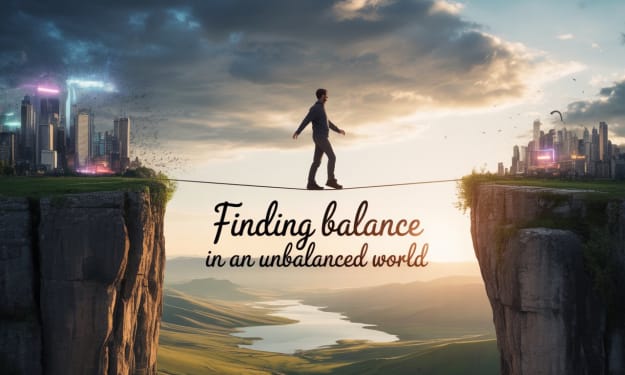
Finding Balance in an Unbalanced World
I had a panic attack in the grocery store checkout line. Nothing triggered it. No dramatic event. Just me, standing there with a cart full of organic vegetables and Pinterest-worthy meal prep ingredients, when suddenly I couldn't breathe.
By Fazal Hadi10 days ago in Longevity
Psychology Says People With Poor Social Skills Often Use These 9 Phrases in Everyday Conversation. AI-Generated.
Human communication is complex, and social skills play a crucial role in how people build relationships, resolve conflicts, and feel connected to others. Psychology suggests that individuals who struggle with social skills are not unintelligent or unkind; rather, they often lack confidence, emotional awareness, or experience in social settings. Their difficulties sometimes appear in the language they use during everyday conversations. Certain phrases can unintentionally signal insecurity, defensiveness, or discomfort. Understanding these patterns can help people recognize areas for personal growth and improve communication. It is important to note that using one or two of these phrases does not automatically mean someone has poor social skills. Everyone uses them occasionally. However, when these expressions become habitual, they may reflect deeper communication challenges. 1. “I don’t care.” This phrase often appears when someone feels overwhelmed or unsure how to respond. Psychologically, it can signal emotional withdrawal rather than true indifference. While the speaker may want to avoid conflict or judgment, others may interpret it as rude or dismissive. Over time, this can weaken relationships and make conversations feel one-sided. 2. “Whatever.” Similar to “I don’t care,” this phrase can come across as passive-aggressive. People with limited social skills may use it to escape uncomfortable discussions. Psychology suggests that this response blocks emotional connection and prevents healthy dialogue. Instead of resolving issues, it creates distance between speakers. 3. “That’s stupid.” Harsh judgments like this often reflect poor emotional regulation. Rather than expressing disagreement respectfully, the speaker attacks the idea or person. This phrase can shut down conversation and make others feel disrespected. Socially skilled communicators usually replace such statements with constructive feedback. 4. “I’m just being honest.” This phrase is frequently used to justify blunt or hurtful comments. Psychology explains that people who lack empathy awareness may confuse honesty with cruelty. True honesty can be expressed kindly, but this phrase is often used to avoid taking responsibility for how words affect others. 5. “Nobody cares.” This statement can reveal low self-esteem or fear of rejection. Individuals who feel socially insecure may assume their thoughts are unimportant. Ironically, repeating this phrase can push people away, even when others actually do care about what they have to say. 6. “You wouldn’t understand.” This phrase often reflects emotional defensiveness. Instead of explaining feelings or experiences, the speaker withdraws. Psychologists note that this limits intimacy and mutual understanding. Strong social skills involve trusting others enough to share thoughts clearly and openly. 7. “It’s not my fault.” Constantly avoiding responsibility is a common communication barrier. While everyone makes mistakes, repeatedly using this phrase suggests difficulty accepting accountability. This can damage trust and create tension in both personal and professional relationships. 8. “Why are you so sensitive?” This phrase dismisses another person’s emotions rather than acknowledging them. Psychology links this to low emotional intelligence. Socially skilled individuals validate feelings even when they disagree, but this phrase can make others feel misunderstood and unheard. 9. “I don’t know what to say.” This phrase shows discomfort in social interaction. It often appears when someone lacks confidence or fears saying the wrong thing. While honest, frequent use may signal limited conversational skills. Learning simple responses such as asking questions or expressing curiosity can greatly improve communication. Psychologists emphasize that poor social skills are not permanent traits. They are learned behaviors shaped by environment, upbringing, and past experiences. Many people who struggle socially have faced rejection, anxiety, or isolation, which influences how they speak. Language becomes a protective shield rather than a bridge to connection. Improving social communication begins with awareness. When individuals notice their own repeated phrases, they can consciously replace them with more positive and open expressions. For example, instead of saying “whatever,” one can say, “I see your point, but I feel differently.” Instead of “nobody cares,” a better option is, “I’m not sure how to explain this, but it matters to me.” Psychology also highlights the importance of active listening. Good social skills are not only about speaking well but also about understanding others. Maintaining eye contact, asking thoughtful questions, and showing empathy can transform conversations and relationships. In today’s digital age, social skills are more important than ever. Many people communicate through screens rather than face-to-face, which can weaken emotional awareness and tone recognition. Practicing respectful language and emotional sensitivity helps build stronger connections in both real life and online spaces. In conclusion, psychology shows that people with poor social skills often rely on certain phrases that unintentionally create distance or conflict. These nine expressions reveal insecurity, defensiveness, or lack of emotional awareness rather than bad intentions. With self-reflection and practice, anyone can improve their communication style. By choosing words more carefully and listening more deeply, individuals can build healthier relationships and become more confident communicators in everyday life.
By Fiaz Ahmed 10 days ago in Longevity
Mental Health Crisis Grows Worldwide in 2026. AI-Generated.
The year 2026 has emerged as a critical turning point for global mental health, as countries across the world report a sharp rise in anxiety, depression, and stress-related disorders. Health experts warn that the mental health crisis is no longer limited to specific regions or age groups but has become a widespread global challenge affecting millions of people. Economic uncertainty, ongoing conflicts, climate anxiety, and the lasting effects of past pandemics have combined to create an environment of emotional strain and psychological vulnerability. According to international health organizations, cases of depression and anxiety disorders have increased significantly since the early 2020s, with 2026 showing the highest recorded numbers in many countries. Young people, in particular, are among the most affected. Academic pressure, unemployment, social media influence, and fear about the future have contributed to rising levels of stress and emotional exhaustion among teenagers and young adults. One of the main drivers of the mental health crisis is economic instability. Inflation, job insecurity, and rising living costs have placed enormous pressure on families and individuals. Many people struggle to meet basic needs, leading to feelings of hopelessness and fear. In developing countries, limited access to mental health services has worsened the situation, leaving millions without proper diagnosis or treatment. Global conflicts and political instability have also played a significant role in worsening mental health conditions. War zones and refugee communities experience high levels of trauma, grief, and post-traumatic stress disorder (PTSD). Displacement, loss of loved ones, and uncertainty about the future have created long-term psychological scars. Even in peaceful regions, constant exposure to distressing news through digital media has increased fear and emotional fatigue. Climate change has become another powerful contributor to mental distress. Extreme weather events such as floods, wildfires, and heatwaves are not only destroying homes and livelihoods but also affecting emotional well-being. A growing number of people report experiencing “climate anxiety,” a condition marked by fear and helplessness about environmental destruction and the planet’s future. Scientists note that young generations feel especially burdened by the responsibility of facing a crisis they did not create. Technology and social media, while offering connection and information, have also intensified mental health challenges. Excessive screen time, online comparison, cyberbullying, and unrealistic standards of success contribute to low self-esteem and isolation. Many individuals feel pressured to present perfect lives online while struggling privately with emotional pain. Mental health professionals warn that digital dependence can weaken real-life relationships and increase loneliness. Healthcare systems worldwide are struggling to keep up with the growing demand for mental health services. In many countries, there are not enough trained psychologists, psychiatrists, and counselors to treat patients. Long waiting times and high treatment costs prevent people from seeking help. Rural and low-income areas face even greater shortages, creating inequality in access to mental health care. Governments and international organizations are beginning to recognize the urgency of the crisis. In 2026, several countries have launched national mental health strategies focusing on early intervention, public awareness, and workplace mental wellness programs. Schools are introducing mental health education to help students understand stress management and emotional resilience. Employers are also being encouraged to provide counseling services and flexible work arrangements to support employee well-being. Public attitudes toward mental health are slowly changing. There is growing acceptance that mental illness should be treated with the same seriousness as physical illness. Celebrities, athletes, and public figures have spoken openly about their struggles, helping reduce stigma and encouraging others to seek help. Online platforms and mobile apps offering therapy and emotional support have become more popular, making mental health care more accessible for many people. Despite these positive developments, experts warn that much more needs to be done. Mental health funding remains insufficient in many regions, and cultural stigma still prevents individuals from discussing their struggles openly. Suicide rates in certain countries continue to rise, highlighting the urgent need for comprehensive prevention strategies and community-based support systems. The global mental health crisis of 2026 is a reminder that emotional well-being is closely linked to social, economic, and environmental conditions. Addressing the problem requires a collective effort from governments, healthcare providers, educational institutions, and families. Investment in mental health infrastructure, research, and awareness campaigns is essential to prevent long-term consequences. Looking ahead, specialists emphasize the importance of building resilience and promoting healthy lifestyles. Regular physical activity, balanced nutrition, digital detox, and strong social connections can play a key role in improving mental well-being. Communities must create safe spaces for dialogue, understanding, and compassion. As the world faces complex challenges in 2026, mental health has become one of the most pressing global issues. Recognizing the crisis and taking meaningful action will determine whether future generations inherit a society burdened by emotional suffering or one that prioritizes psychological health and human dignity. The path forward depends on unity, empathy, and sustained commitment to mental well-being across all nations.
By Fiaz Ahmed 10 days ago in Longevity