
Greenland Declares Emergency After Repeated Orca Sightings Near Unstable Ice Shelves
Scientists warn marine behavior reflects rapid ice loss Government launches urgent monitoring and research response Rare sightings raise alarms over fragile polar ecosystems Climate emergency declared as predators enter melting zones Orcas signal dramatic shifts in Arctic food chains Inuit communities voice concern over changing sea conditions Melting ice draws unexpected visitors to Greenland’s coast

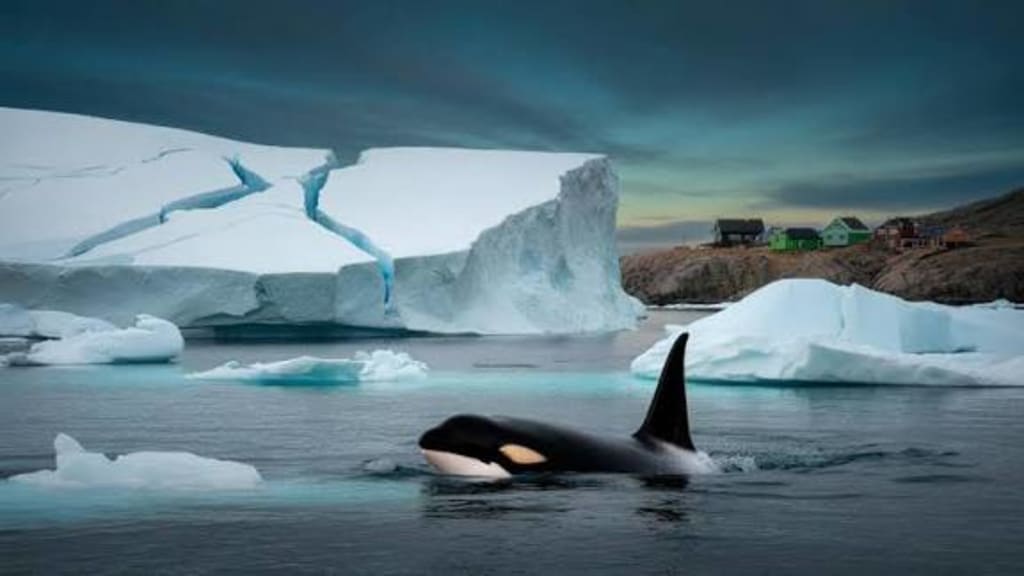
Greenland’s government has declared a climate emergency following an unusual and growing number of orca sightings near unstable coastal ice shelves, a development that officials and scientists say signals rapidly accelerating environmental change in the Arctic. The emergency declaration comes amid rising concern that dramatic ice loss is reshaping Greenland’s marine ecosystems, threatening local communities and contributing to broader global impacts.
The decision followed the release of dramatic videos showing pods of orcas — also known as killer whales — breaching near sections of coastal ice that were historically solid and relatively inaccessible. The footage, widely shared on social and traditional media, stunned researchers and Arctic residents alike, prompting questions about what the appearances of these apex predators so close to fragile ice might mean. �
Smithame Events
Unprecedented Orca Activity Signals Deep Changes
Orcas have long been known to traverse Arctic waters, but scientists say the frequency, location, and timing of the latest sightings are unprecedented.
Traditionally, thick sea ice and stable ice shelves kept these waters blocked for much of the year. Recent observations, however, show orcas navigating regions previously covered by year-round ice, a pattern researchers say reflects broader shifts in habitat availability and prey migration triggered by warming temperatures and shrinking ice cover. �
Smithame Events
“We have never recorded orcas operating in these specific GPS-marked locations, let alone swimming freely near solid glacial ice,” said marine biologist Dr. Lise Thomassen, who has studied Arctic marine ecosystems for nearly two decades. “This suggests ocean conditions have changed so substantially that longstanding barriers no longer exist.” �
Smithame Events
The appearance of orcas near unstable ice is more than a curiosity; it may indicate broader disruption of the Arctic food web, with potential ripple effects for species such as seals, walruses, and polar bears that depend on stable ice for hunting and breeding.
Climate Emergency Declared
In response to the growing evidence of rapid environmental shifts, Greenland’s Ministry of Environment announced a formal climate emergency, a rarely invoked designation that allows for expanded monitoring, research collaboration, and community support.
The government said the declaration would fund:
24/7 satellite and aerial monitoring of ice shelf stability
Expanded data sharing with climate research partners, including the European Space Agency
Community-based observation programs involving Inuit hunters and local elders
A planned Arctic Stability Summit to coordinate scientific and policy responses
According to officials, the emergency designation is driven not only by orca sightings but also by broader trends in ice melt, glacial retreat, and shifting marine conditions that together pose risks to both ecosystems and human communities.
Local Inuit leaders have been integrated into the planning process, bringing centuries of generational knowledge about seasonal ice behavior and as a bridge between traditional insight and modern science. �
Smithame Events
What Orca Sightings Reveal
Orca sightings near unstable ice are alarming because these animals typically avoid areas with dangerous conditions or unpredictable prey patterns. Their movement patterns are closely tied to prey availability, such as seals and fish — both of which also migrate in response to changing ice conditions.
Scientists interpret the orcas’ presence not as evidence of unusually active whales, but rather as a symptom of ecological shifts.
“Orcas are, metaphorically, like oceanic analysts,” one climate ecologist told a news outlet. “They react to changes in water temperature, prey behavior, and ice condition in real time — and then adapt right in front of you.” �
WNC Group
Emerging research indicates that weakening ice shelves allow warmer ocean waters to penetrate deeper into fjords and coastal margins, making these regions more navigable for large marine mammals but less stable for ice-dependent species. �
ETH Zürich
Local and Global Impacts
For Greenland’s residents, the changes are not just scientific data points; they have real economic and cultural effects. Coastal communities rely on stable ice for travel, hunting, and fishing. The loss of predictable ice not only affects traditional ways of life but also raises the risk of hazards such as calving icebergs, shifting shorelines, and more frequent open water events in what were once reliably frozen zones.
Globally, the accelerated melting of Greenland’s ice sheets contributes directly to rising sea levels, with long-term implications for coastal cities from New York to Dhaka. The Greenland Ice Sheet holds enough water to raise sea levels by more than 20 feet if it were to melt entirely — a process scientists once believed would take centuries but now warn could accelerate under current warming trends. �
Smithame Events
Research and Action
Scientific teams are intensifying efforts to understand the linkages between marine predator behavior, ice stability, and climate change. Universities, Arctic research institutes, and governmental agencies are pooling satellite data, oceanographic measurements, and long-term ecological observations to map how ecosystems are reconfiguring.
At the same time, Greenlandic officials have called for international cooperation to address the underlying drivers of climate change, including greenhouse gas emissions and feedback loops that amplify Arctic warming at more than twice the global average rate.
What Comes Next
Greenland’s emergency declaration emphasizes both urgency and adaptability. While orca sightings may grab headlines, they symbolize broader environmental dynamics that will shape the Arctic for decades to come.
Local leaders stressed that adaptation and mitigation strategies must include community voices, scientific research, and global policy action. As one elder from a coastal village put it, “The ice never used to creak this time of year. Now it sings the wrong song.” �
Smithame Events
About the Creator
Fiaz Ahmed
I am Fiaz Ahmed. I am a passionate writer. I love covering trending topics and breaking news. With a sharp eye for what’s happening around the world, and crafts timely and engaging stories that keep readers informed and updated.
Keep reading
More stories from Fiaz Ahmed and writers in Longevity and other communities.
How ‘Exercise Snacking’ Can Help You Get Fitter
For many people, the biggest obstacle to staying fit is time. Busy work schedules, family commitments, and long commutes often make it difficult to dedicate an hour to the gym. But a growing body of research suggests that fitness does not always require long workout sessions. Instead, short bursts of movement throughout the day—known as “exercise snacking”—can significantly improve health and fitness.
By Fiaz Ahmed about 20 hours ago in Longevity
Day 4 of Quitting
If this is how sobriety feels, maybe it’s better to go through life a little buzzed… this, along with other hits like, I want to kill myself, I wish I was dead, and I’m going to throw myself off a bridge have been the only thoughts on rotation these past few days. I promise myself that if, in a month, I still feel like this (‘this’ meaning despondent, full of rage, and simultaneously numb) I can go back to smoking. Until mid-February though? Nicotine is off the table.
By sleepy drafts27 days ago in Longevity


Comments
There are no comments for this story
Be the first to respond and start the conversation.