health
Health hacks for optimal performance; discover simple suggestions and habits to improve your life, body, mind and spirit.
Why Your Gut Health Affects Your Weight Loss Results
You've been eating right and exercising regularly, but the scale won't budge. Your gut health might be the missing piece of your weight loss puzzle. The trillions of bacteria living in your digestive system control hunger hormones, influence how your body stores fat, and determine whether you burn calories efficiently or hold onto stubborn weight.
By LaMarion Ziegler5 days ago in Lifehack
Living in Rockville, Maryland: A City Shaped by Cultural Diversity
Rockville, Maryland, reflects a multicultural identity built through everyday routines, shared spaces, and a balanced pace of life. Rather than standing out for grand landmarks or constant activity, the city is defined by how naturally different cultures coexist and shape daily experiences. This quiet diversity influences the rhythm of life in Rockville, creating an environment that feels welcoming, steady, and grounded.
By House Doctor5 days ago in Lifehack
How to Prevent Receding Gums: Simple and Effective Tips
Receding gums are a common dental problem that many people ignore until it becomes serious. Gum recession happens when the gum tissue pulls back from the teeth, exposing the roots. This can lead to tooth sensitivity, cavities, and even tooth loss if not treated early. The good news is that receding gums can often be prevented with proper care and healthy habits. In this article, we’ll explain what causes gum recession and how you can prevent it naturally and effectively.
By Waliullah Shah5 days ago in Lifehack
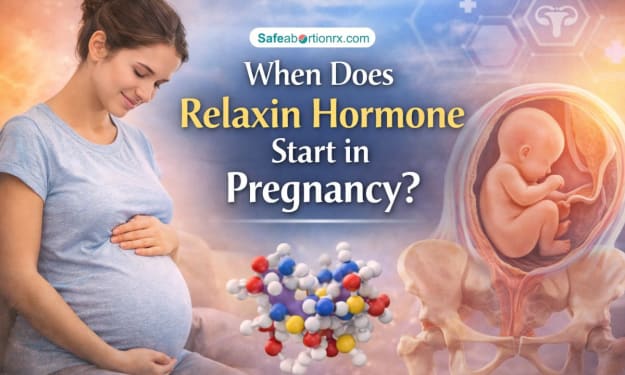
When Does Relaxin Hormone Start in Pregnancy?
During pregnancy, several reproductive hormone levels peak. One of such hormones is Relaxin – produced by the placenta and ovaries. Its function is to relax and loosen the joints, muscles, and ligaments allowing your body to stretch more flexibly during conception. It prepares you for childbirth by loosening the pelvic ligaments and muscles, making labor easier.
By Alice Perry6 days ago in Lifehack
Mexico Vape Ban 2026: Tourists Face $12,500 Fines & Jail
Mexico has enforced a draconian prohibition on all vaping devices, enacting a total ban on their importation, distribution, and sale effective January 17. The decree, published in the Official Gazette of the Federation (DOF), reforms the General Health Law to eliminate the legal vape market entirely. For international tourists arriving for the 2026 FIFA World Cup, this poses immediate legal risks: bringing a vape into the country—even for personal use—can result in confiscation, detention, and fines reaching up to $12,500.
By Matthew Ma6 days ago in Lifehack
How Long Do Pregnancy Hormones Last After Abortion?
The pregnancy hormone, hCG (Human Chorionic Gonadotropin) is produced naturally in the body during conception. This hormone is vital in development and maintenance of the uterine lining where the fertilized egg implants. It also helps in the fetal growth, staying at peak levels especially in the first trimester of the pregnancy. If you recently had an abortion, you may wonder how long hCG hormone would stay in your system.
By Alice Perry7 days ago in Lifehack
Astrology The New Lifehack
Success is often portrayed as a straight line: set a goal, work hard, and eventually you’ll get there. But real life is rarely that simple. Motivation rises and falls, opportunities appear and disappear, and sometimes effort alone doesn’t seem to be enough. Astrology offers a different perspective on success—one that focuses on timing, self-awareness, and alignment rather than constant pushing.
By Anthony Bahamonde8 days ago in Lifehack
Consistent Exercise for Lasting Power: An Informative Overview
Consistent exercise for lasting power refers to engaging in regular physical activity over time to achieve sustainable health and fitness benefits. Unlike short-term or irregular workouts, consistency emphasizes steady participation rather than intensity alone. This approach aligns with how the human body adapts, as muscles, bones, the heart, and the nervous system respond best to repeated and predictable movement patterns.
By Therese Marie Thompson8 days ago in Lifehack
Prisoner of Spasms. AI-Generated.
A Silent Sentence Pain is not always loud. Sometimes it does not scream—it whispers, repeatedly, mercilessly. For millions of people around the world, spasms are not just medical symptoms; they are life sentences. Invisible shackles that tighten without warning, turning ordinary moments into battles for control. To be a Prisoner of Spasms is to live inside a body that rebels against its own owner. It is waking up unsure whether today you will walk freely or negotiate every step. It is smiling in public while privately counting the seconds between waves of pain. This is not just a story about muscles contracting. It is about dignity, fear, resilience, and the unseen war between the body and the mind. Understanding Spasms: More Than Just a Medical Term A spasm is commonly defined as a sudden, involuntary contraction of a muscle or group of muscles. On paper, it sounds clinical and simple. In reality, it is chaotic, unpredictable, and often cruel. Spasms can occur due to: Neurological disorders Spinal cord injuries Multiple sclerosis Cerebral palsy Chronic stress and trauma Electrolyte imbalances Medication side effects But no definition truly captures what it feels like. A spasm can strike like lightning—fast, sharp, and unforgiving. Or it can linger, turning minutes into hours of stiffness, burning, and helplessness. For those who experience them daily, life becomes a continuous calculation: What will trigger it? When will it stop? Will it happen in public? The Body as a Cell Imagine being locked in a prison where the walls are your own muscles. Your intentions are clear—you want to move, rest, sleep, or simply exist peacefully. But your body refuses to cooperate. Muscles tighten without permission. Limbs jerk or freeze. Pain hijacks your focus. This is the cruel paradox: Your body is supposed to protect you, yet it becomes your jailer. For many sufferers, the worst part is not even the pain—it is the loss of control. Independence slowly erodes. Tasks once taken for granted—buttoning a shirt, holding a cup, climbing stairs—become achievements or impossibilities. Mental Health: The Hidden Sentence Physical pain is only half the punishment. Chronic spasms often drag mental health into the cell as well. Anxiety grows from unpredictability. Depression follows loss of independence. Shame creeps in when others stare or misunderstand. Many prisoners of spasms report: Constant fear of public episodes Social withdrawal Sleep deprivation Emotional numbness Suicidal thoughts And yet, because spasms are often invisible, the suffering is dismissed. “You look fine.” “It can’t be that bad.” “Just relax.” These phrases hurt more than the spasms themselves. The Loneliness of Invisible Pain Pain that cannot be seen is pain that is rarely believed. A person writhing in spasms may appear calm from the outside. No bleeding. No bandages. No wheelchair—at least not always. This invisibility creates isolation. Friends drift away. Employers lose patience. Society rewards productivity, not endurance. The prisoner learns to suffer quietly. Triggers: Living on a Minefield Spasms do not need an invitation. But certain triggers open the door wider: Stress and emotional overload Sudden temperature changes Fatigue Dehydration Loud noises or bright lights Even happiness or excitement Living with spasms means walking on a mental minefield. Every decision is filtered through fear of consequences. Can I go out today? Can I sit here too long? What if it starts now? Freedom becomes conditional. Medical Treatment: Relief or Compromise? Modern medicine offers options, but not miracles. Common treatments include: Muscle relaxants Anti-spasticity drugs Physical therapy Botox injections Nerve blocks Surgical interventions While these can reduce intensity, they often come with side effects: drowsiness, weakness, memory fog, emotional blunting. Many patients face an impossible choice: Less pain, less life — or more pain, more awareness. The Financial Cost of Being a Prisoner Chronic illness is expensive. Doctor visits, medications, therapy sessions, mobility aids—all add up. Many prisoners of spasms cannot work full-time, or at all. Disability benefits, where available, are often insufficient. Poverty becomes another cell. Pain limits earning. Lack of money limits treatment. The cycle tightens. Resilience: The Quiet Rebellion Yet, even in confinement, resistance exists. Resilience does not always look heroic. Sometimes it looks like getting out of bed. Sometimes it looks like laughing through pain. Sometimes it looks like surviving another day without giving up. Many prisoners of spasms develop: Deep empathy Emotional intelligence Creative outlets (writing, art, music) Spiritual strength They learn to negotiate with pain instead of defeating it. The Role of Support: Keys to the Cell One person cannot unlock this prison alone. Support systems matter: Family who listens without minimizing Friends who stay, even when plans are cancelled Doctors who treat patients, not symptoms Communities that believe invisible pain Validation does not cure spasms—but it eases the sentence. Society’s Responsibility: Seeing the Unseen We live in a world designed for able bodies. Spasms disrupt that design. Accessibility is not charity—it is justice. Flexible work hours, medical empathy, public awareness, and inclusive policies can turn confinement into coexistence. The question is not “Why can’t they cope?” The question is “Why do we make it so hard to live?” Identity Beyond the Pain One of the greatest fears of any prisoner is losing identity. When spasms dominate life, a person risks becoming “the condition” instead of the human. But pain does not erase personality, dreams, or worth. A prisoner of spasms is still: A thinker A lover A creator A survivor The body may betray—but the soul resists definition. Hope: Not a Cure, but a Companion Hope does not promise freedom. Hope promises endurance. It lives in small victories: A pain-free hour A kind conversation A body that cooperates today Hope is not loud. It sits quietly beside pain and says, “You are still here.” Conclusion: Redefining Freedom To be a Prisoner of Spasms is to understand a different definition of freedom. Freedom is not the absence of pain—it is the presence of meaning despite it. Until science advances, until society learns, until empathy becomes instinct, millions will remain confined in their own bodies. But even in captivity, the human spirit stretches beyond muscle, beyond nerves, beyond pain. And sometimes, that is enough to survive.
By Zahid Hussain8 days ago in Lifehack
How Naturopathic Medicine Can Help Hormonal Imbalances
They can also increase the risk of chronic diseases like diabetes. Many people are now turning to natural approaches for relief. Naturopathic medicine offers holistic solutions that focus on restoring balance rather than just masking symptoms.
By Lola Gold Finch8 days ago in Lifehack
Grains and Wealth
Grains and Wealth j It is said that a prayer made with a pure heart is always accepted. Once, a wealthy merchant was traveling on horseback. He carried with him four bags filled with precious jewels and genuine pearls. His purpose was to sell these treasures and use the proceeds to buy goods for his trade. However, during his journey, he lost his way and ended up in a vast desert. Though he possessed immense wealth, he had very little food or water with him. In his flask, there was only a little water, which he drank as soon as he entered the scorching desert sands.
By Sudais Zakwan9 days ago in Lifehack