
Understanding A-Frame vs. U-Frame Gantry Crane Designs
Choosing the Right Gantry Crane Frame for Your Workshop’s Space, Load, and Operational Needs
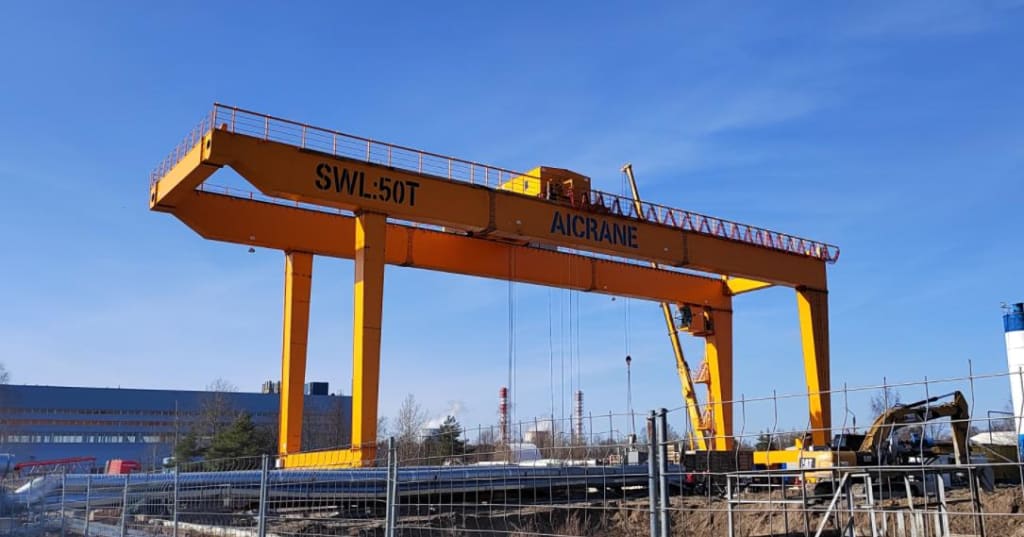
Gantry cranes are a popular lifting solution in workshops, warehouses, shipyards, and industrial plants due to their flexibility, efficiency, and ability to operate without the need for building modifications. When selecting a gantry crane, one key design feature that often goes overlooked is the frame structure - specifically, whether to choose an A-frame or U-frame gantry crane.
Both designs serve similar lifting purposes, but they differ significantly in structure, maneuverability, floor space utilization, and application suitability. Understanding these differences is crucial for selecting the right crane system that aligns with your operational needs and constraints.
In this article, we’ll delve deep into the distinctions between A-frame and U-frame gantry cranes, including design characteristics, advantages, disadvantages, and ideal applications.
What Is an A-Frame Gantry Crane?
An A-frame gantry crane is characterized by its leg design, which resembles the shape of the letter “A” when viewed from the side. The legs are angled and joined at the top to the cross beam or girder, creating a triangular structure that distributes the load efficiently.
Key Characteristics:
- Angled legs form an “A” shape
- Excellent stability under load
- Typically uses four swivel or fixed casters
- Commonly used in portable or fixed workshop gantry applications
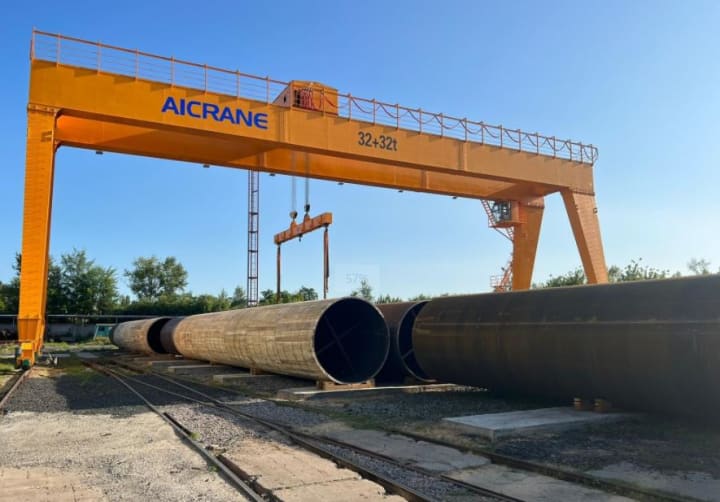
What Is a U-Frame Gantry Crane?
A U-frame gantry crane, on the other hand, features straight vertical legs and often includes a horizontal leg extension at the base (like a square or “U” shape), which can improve load clearance and wheel positioning. This design allows for better access to the lifting area from the sides.
Key Characteristics:
- Straight vertical legs form a “U” profile
- Provides more lateral clearance under the beam
- Ideal for use in areas with limited headroom or side clearance
- Can be easier to maneuver in tight spaces
Advantages of A-Frame Gantry Cranes
Superior Stability
The triangular frame distributes weight more evenly, making A-frame cranes very stable under load, especially during lifting and movement.
Robust Construction
Their design is well-suited for handling moderate to heavy loads and can often accommodate higher capacity ratings.
Ideal for Stationary or Straight-Line Movement
A-frame cranes are reliable in linear movement operations such as lifting and shifting loads along straight paths.
Simple Assembly and Maintenance
A-frame designs are typically easier to assemble and maintain due to their straightforward geometry.
Limitations of A-Frame Gantry Cranes
Requires More Floor Space
The splayed legs create a wider footprint, which can limit usable space in compact work areas.
Reduced Clearance for Side Access
The angled legs can interfere with side loading/unloading or restrict access to wider components.
Advantages of U-Frame Gantry Cranes
Compact Footprint
The vertical leg design means the crane occupies less lateral floor space, making it easier to fit into narrow aisles or workshop zones.
Better Side Clearance
The straight leg structure allows easier side access to the load, particularly useful for large equipment or vehicles.
Improved Mobility
U-frame cranes often handle tighter turns and confined workspaces better than A-frame models, especially with optional swivel wheels or track guidance.
Optimized for Low Headroom
Because of the vertical leg structure, U-frame cranes offer more usable under-beam height and can operate in areas with restricted ceiling clearance.
Limitations of U-Frame Gantry Cranes
Reduced Stability Under Heavy Loads
U-frame cranes typically offer less lateral stability compared to A-frames, especially when handling heavy or offset loads.
May Require Reinforcement
For heavy-duty applications, additional support structures or wider wheelbases may be needed to match the stability of A-frame designs.
Application Scenarios
Ideal Use Cases for A-Frame Gantry Cranes:
- Workshops with ample floor space and straightforward layouts
- Facilities lifting heavy or moderately heavy loads
- Applications requiring consistent, linear load travel
- Sites where long-term positioning of the crane is expected
Ideal Use Cases for U-Frame Gantry Cranes:
- Narrow aisles or workspaces with limited floor space
- Operations requiring access to the load from multiple directions
- Facilities with low ceilings or space constraints
- Mobile lifting applications in auto repair shops or assembly lines
Choosing Between A-Frame and U-Frame: Key Considerations
1. Space Availability
A-frame: Choose if you have a large open workshop.
U-frame: Better for compact or tight environments.
2. Lifting Capacity
A-frame: Preferable for higher capacity lifting due to inherent stability.
U-frame: More suitable for light to medium loads unless specifically reinforced.
3. Load Handling Approach
A-frame: Best if loads are approached linearly or from one direction.
U-frame: Optimal if side access is frequently required.
4. Mobility Needs
A-frame: Ideal for semi-fixed setups with occasional relocation.
U-frame: Excellent for mobile setups and multi-point operation across a workshop.
5. Budget
A-frame: Often lower cost due to simpler design and materials.
U-frame: May be slightly more expensive but offers design flexibility.
Customization Options for Both Designs
Both A-frame and U-frame gantry cranes can be customized to fit specific operational needs, including:
- Adjustable height and span
- Motorized travel
- Electric or manual hoists
- Locking swivel casters
- Aluminum or steel construction
- Weatherproofing for outdoor use
Discuss your application with a trusted overhead gantry crane manufacturer to determine which design, material, and features best match your needs.
Conclusion
Both A-frame and U-frame gantry cranes are practical, efficient solutions for workshop and industrial lifting tasks. The right choice depends on your specific environment, load requirements, spatial constraints, and usage frequency.
Choose an A-frame gantry crane when you prioritize load stability and have ample floor space. Opt for a U-frame gantry crane when you need better maneuverability, enhanced load access, and optimized use of tight spaces.
By understanding the key differences between these two popular gantry crane designs, you’ll be better equipped to make an informed, cost-effective decision that boosts productivity and safety in your workplace.
About the Creator
Aicrane01
Welcome to the Aicrane Blog, your practical guide to lifting solutions. Discover articles covering overhead cranes, gantry cranes, winches, steel structures, boat lifts, and more.
Website: https://steelmillcranes.com/
~ Fired ~
— Ai Intrusion ~ Are you Next ~ Is Ai Evolution after your job? — Few workplaces haven't been affected. Ai is in supermarkets, at doctors' offices, and even monitoring farms. I just can't think of anything this machine is not getting into, can you? For instance: Education ~ Law and Tech jobs will one day have a major influence or be taken over by these inanimate machines, with accuracy and vigor. From mechanics' diagnoses to a wide variety of everyday jobs, including fast food workers, with this input having the ability to cut their unnecessary work hours. I'm certain all of us have been touched by this with our short stories and colorful headings, have you? Even comments are very questionable 'Non-Robot' insertions.
By Jay Kantor4 days ago in Journal
When the Air No Longer Felt Heavy by Midday
I used to notice the heaviness around the same time every day. Late morning would pass without issue, but by midday something shifted. My shoulders felt heavier. My breathing felt shallower. Focus became harder to hold onto, even though the day was far from over.
By illumipurea day ago in Journal
Writing About Writing: The Rainbow Trap
The good thing about living in modern times is that LGBTQ representation in media is increasing. Not just in niche and Independant media, either, but also in mainstream media. Books, movies, TV shows, comics... they're finally catching on that LGBTQ+ people form a significant part of their audience, and deserve to see themselves on screen and in fiction, not just as victims in documentaries and true crime shows.
By Natasja Roseabout 18 hours ago in Writers


Comments
There are no comments for this story
Be the first to respond and start the conversation.