
Russia Launches Combined Overnight Missile and Drone Attack at Ukrainian Cities, Injuring at Least 28
Coordinated aerial assault targets multiple urban centers, straining air defenses and leaving civilians grappling with damage, injuries, and ongoing uncertainty.
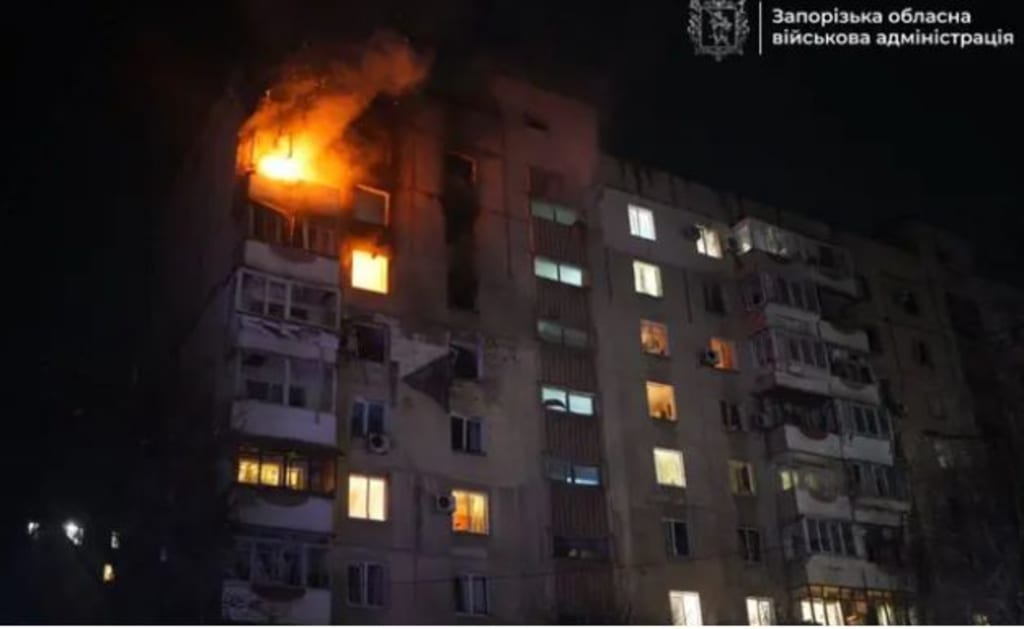
A Night of Explosions Across Major Cities
Air raid sirens echoed across the country late at night as Ukrainian air defenses scrambled to intercept incoming threats. Explosions were reported in several regions, including the capital Kyiv and the northeastern city of Kharkiv, both of which have frequently been targeted since the full-scale invasion began.
Officials said the attack involved a combination of cruise missiles, ballistic missiles, and waves of unmanned aerial vehicles. This mixed approach has become a hallmark of recent strikes, designed to overwhelm air defense systems and increase the likelihood that some projectiles reach their targets.
Emergency services rushed to affected neighborhoods where residential buildings, commercial facilities, and power infrastructure sustained damage. Footage shared by local authorities showed shattered windows, burning vehicles, and emergency crews pulling residents from debris.
Casualties and Civilian Impact
Ukrainian authorities confirmed that at least 28 people were injured, including children. While no immediate fatalities were reported in the first hours after the attack, officials warned that casualty numbers could rise as search and rescue operations continued.
Hospitals in impacted cities treated injuries ranging from cuts caused by shattered glass to trauma related to collapsing structures. For many residents, the psychological toll was as significant as the physical damage, with families spending hours in shelters as explosions sounded overhead.
The strikes also disrupted daily life. Public transport delays, school closures, and temporary power outages were reported in several districts. Energy infrastructure remains a recurring target, raising concerns about long-term resilience, particularly during colder months when electricity demand increases.
Strategy Behind Combined Attacks
Military analysts say the use of simultaneous missile and drone attacks serves multiple strategic purposes. Drones are often deployed first to probe defenses and force radar systems into action. Missiles may follow, targeting locations identified during the initial wave or attempting to slip through gaps created by defensive responses.
This layered strategy not only increases the pressure on air defense resources but also drives up operational costs for Ukraine, which must deploy expensive interceptor systems against relatively cheaper drones.
Ukrainian officials reported that many incoming aerial threats were intercepted, crediting Western-supplied air defense systems for limiting the damage. However, even successful interceptions can result in debris falling into populated areas, posing additional risks to civilians.
Infrastructure Remains a Key Target
Energy and logistics infrastructure have remained central targets throughout the conflict. Damage from this latest strike included electrical substations, warehouses, and transport facilities. Authorities worked overnight to restore services, emphasizing the importance of rapid repair teams that have become a routine part of wartime response.
Repeated attacks on infrastructure aim to strain Ukraine’s economy, disrupt military supply lines, and affect public morale. Despite these pressures, Ukrainian officials say repair efforts have become faster and more coordinated, reducing the duration of outages compared with earlier stages of the war.
International Reaction and Ongoing Support
The overnight assault drew swift reactions from Western governments, many of which condemned the targeting of urban areas and reiterated support for Ukraine’s air defense capabilities. Calls for additional missile defense systems and ammunition have intensified as Ukraine faces continued aerial campaigns.
Humanitarian organizations also expressed concern about the cumulative impact of repeated attacks on civilians. With millions already displaced and critical services under strain, each new strike compounds existing challenges.
Diplomatically, the attacks reinforce the stalemate that has defined much of the conflict’s recent phase. While front-line movements have been limited compared with earlier periods, aerial warfare has remained a constant feature, allowing long-range pressure without significant territorial advances.
Life Under Persistent Threat
For Ukrainian residents, the overnight attack was another reminder of the unpredictability of daily life. Many families have adapted routines around air raid alerts, keeping emergency bags ready and identifying the nearest shelters.
Businesses have also adjusted operations, incorporating backup power systems and flexible schedules. Schools continue to balance in-person learning with remote options depending on security conditions.
Psychologists note that prolonged exposure to air raid sirens and nighttime attacks contributes to chronic stress, especially among children. Community networks and volunteer groups have played a crucial role in providing support, from distributing supplies to offering counseling.
The Broader Military Context
The strike comes amid ongoing military tensions along multiple fronts. Both sides continue to rely heavily on long-range capabilities, reflecting the evolving nature of modern warfare where drones, missiles, and electronic warfare shape battlefield dynamics as much as ground combat.
Ukraine has expanded its domestic drone production, while Russia has increased the frequency and scale of aerial barrages. This technological escalation suggests that air campaigns will remain a defining feature of the conflict.
Analysts believe the objective of such attacks extends beyond immediate destruction. They are intended to test defenses, signal military capability, and influence negotiations by demonstrating continued operational reach.
Looking Ahead
As rescue crews completed overnight operations and authorities assessed the damage, attention shifted to the next phase: rebuilding and preparing for potential future strikes. Ukrainian officials reiterated calls for sustained international assistance, particularly air defense systems capable of intercepting advanced missile threats.
The latest attack underscores a reality that has become familiar over the course of the war — periods of relative calm can quickly give way to large-scale assaults. For civilians, resilience has become a necessity rather than a choice.
While diplomatic efforts continue in parallel, events on the ground and in the air remain the most immediate determinants of the conflict’s trajectory. Each overnight strike not only damages infrastructure but also shapes the broader narrative of a war defined by endurance, adaptation, and the persistent uncertainty faced by those living under its shadow.
About the Creator
~ Fired ~
— Ai Intrusion ~ Are you Next ~ Is Ai Evolution after your job? — Few workplaces haven't been affected. Ai is in supermarkets, at doctors' offices, and even monitoring farms. I just can't think of anything this machine is not getting into, can you? For instance: Education ~ Law and Tech jobs will one day have a major influence or be taken over by these inanimate machines, with accuracy and vigor. From mechanics' diagnoses to a wide variety of everyday jobs, including fast food workers, with this input having the ability to cut their unnecessary work hours. I'm certain all of us have been touched by this with our short stories and colorful headings, have you? Even comments are very questionable 'Non-Robot' insertions.
By Jay Kantor26 days ago in Journal
Traces of Devotion in Antique Buddha Statues from Asia
Traces of Devotion in Antique Buddha Statues from Asia If you’ve ever seen an antique Buddha statue in real life, you immediately feel it’s different from “regular” decoration. Not because it has to be mystical, but because you can literally see traces of touch, incense smoke, polishing, and time. In the world of buddha statues, it often comes down to one simple question: what does the surface tell you about origin, use, and authenticity? Those traces of devotion aren’t a side note—they’re a kind of quiet documentation of how a statue actually lived in a temple, on a home altar, or in a ritual setting.
By Muhammad Owaisabout 24 hours ago in Journal




Comments
There are no comments for this story
Be the first to respond and start the conversation.