
9% Surge Transforming Retinal Biologics Care
How the Retinal Biologics Market Is Redefining Vision Treatment Worldwide
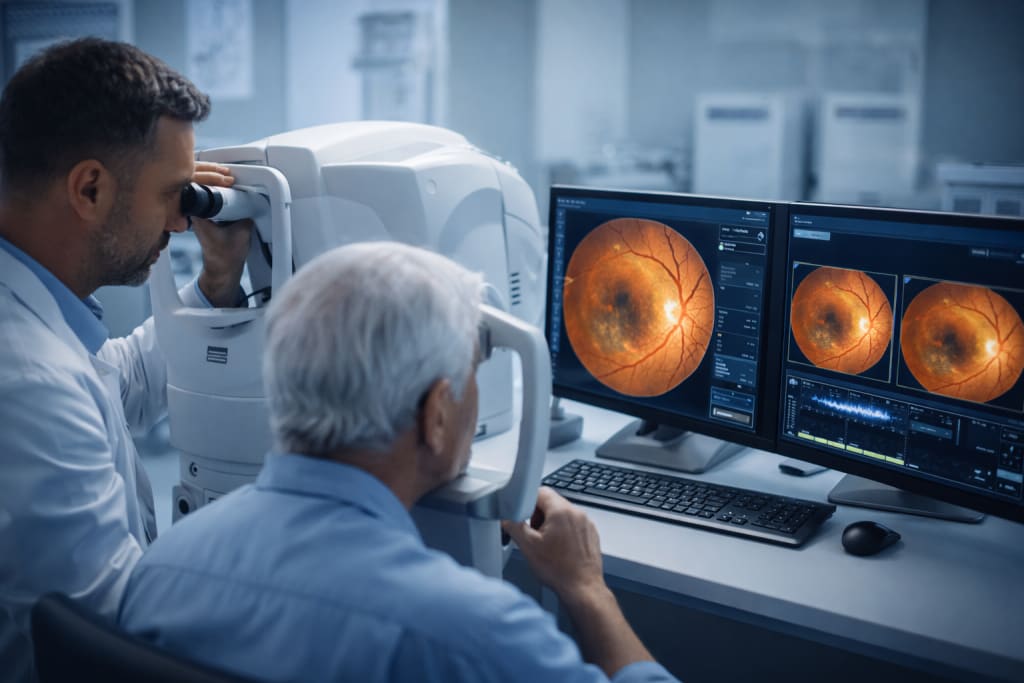
The lights dim slightly in the examination room as a glowing image of the human retina fills the screen. Rivers of red and gold branch outward like a living constellation. The patient sits still, eyes fixed forward, unaware that this delicate landscape holds the key to preserving their sight.
The ophthalmologist studies the image carefully. A few decades ago, progressive retinal disease often meant inevitable vision loss. Today, biologic therapies are rewriting that narrative.
According to Mordor Intelligence, the retinal biologics market is estimated at USD 25.39 billion in 2026, up from USD 23.78 billion in 2025, and is projected to reach USD 35.25 billion by 2031, expanding at a CAGR of 6.79% during the 2026–2031 forecast period. That single growth figure tells a deeper story — one of innovation, rising disease prevalence, and expanding access to life-changing treatments.
Why is the retinal biologics market growing so steadily? And what does that mean for millions facing vision-threatening conditions?
The Science Behind Saving Sight
Search queries around eye health are increasing every year:
- “What are retinal biologics?”
- “How are retinal diseases treated?”
- “Best treatment for macular degeneration?”
- “Future of biologic therapy in ophthalmology?”
Behind these questions lies a shared fear: losing vision.
Retinal biologics are advanced therapies derived from living cells designed to target specific biological pathways involved in retinal diseases. They are commonly used in treating conditions such as:
- Age-related macular degeneration (AMD)
- Diabetic retinopathy
- Retinal vein occlusion
- Other vascular-related retinal disorders
Unlike traditional treatments, biologics work with remarkable precision. Many target vascular endothelial growth factor (VEGF), a protein that can drive abnormal blood vessel growth and leakage in the retina. By inhibiting this pathway, biologics help stabilize or even improve vision in many patients.
The projected 6.79% CAGR of the Retinal Biologics Market reflects growing global reliance on these targeted therapies. As populations age and diabetes prevalence rises worldwide, the incidence of retinal diseases increases accordingly.
An aging global demographic means more individuals at risk for degenerative eye conditions. Simultaneously, better diagnostic tools — including high-resolution retinal imaging — are identifying cases earlier, increasing the demand for effective biologic intervention.
This isn’t merely market expansion. It’s the convergence of demographic trends, medical innovation, and rising awareness.
A Growing Need in an Aging World
Imagine searching late at night:
- “Blurry vision causes over 60”
- “Can diabetic retinopathy be reversed?”
- “How to prevent blindness from macular degeneration?”
For millions, these aren’t abstract queries — they are urgent, personal concerns.
The steady 6.79% growth projected for the Retinal Biologics Market aligns closely with two global realities:
1. Aging Populations
Life expectancy continues to increase worldwide. With age comes higher risk for retinal disorders, particularly age-related macular degeneration.
2. Rising Diabetes Rates
Diabetic retinopathy remains one of the leading causes of vision impairment. As diabetes cases rise globally, demand for effective retinal treatments follows.
Biologic therapies have transformed the management of these conditions. Instead of accepting progressive vision loss as inevitable, patients now have therapeutic options capable of stabilizing or slowing disease progression.
Healthcare systems are responding accordingly. Ophthalmology clinics are expanding biologic treatment programs. Injection-based therapies are becoming routine in specialized eye centers. Infrastructure investments in retinal imaging technologies are increasing.
Each of these shifts supports sustained market growth.
Moreover, increasing healthcare access in emerging economies contributes to expanding demand. In regions where advanced retinal treatment was once limited, improving medical infrastructure is opening new pathways for biologic therapies.
The 6.79% CAGR is not accidental. It reflects structural, long-term demand.
The Emotional Weight of Vision Loss
Vision is deeply personal. It shapes independence, identity, and connection.
Consider an artist noticing subtle distortions in straight lines. A driver struggling with nighttime glare. A grandparent unable to read a child’s handwritten note.
Retinal diseases rarely announce themselves dramatically. They creep in — gradually blurring the edges of daily life.
Biologic therapies offer something profound: time. Time to maintain clarity. Time to adapt. Time to preserve autonomy.
That emotional dimension fuels ongoing investment and demand within the Retinal Biologics Market.
In ophthalmology clinics, the process is meticulous. Patients receive carefully administered intravitreal injections under sterile conditions. Follow-up imaging tracks retinal response. Adjustments are made based on disease progression.
Behind each appointment is hope — grounded in science.
The market’s steady growth indicates confidence in biologic efficacy and safety profiles within regulated healthcare frameworks. These treatments are not experimental novelties; they are established pillars of retinal care.
Innovation Driving Sustainable Growth
When users search:
- “Future of retinal disease treatment”
- “Biologic drugs for eye disorders”
- “Advancements in ophthalmology 2026”
They are tapping into a broader wave of medical progress.
The 6.79% CAGR projected by Mordor Intelligence suggests that innovation in retinal biologics remains robust. Research continues to refine formulations, optimize dosing intervals, and improve patient convenience.
While specific pipeline details vary, the overarching narrative is clear: biologics remain central to retinal therapy evolution.
Healthcare providers increasingly emphasize early intervention. Earlier diagnosis leads to earlier biologic treatment, which can improve long-term outcomes.
Simultaneously, patient education campaigns encourage regular eye examinations, particularly for high-risk populations such as older adults and individuals with diabetes.
These interconnected trends — early detection, therapeutic innovation, demographic shifts — reinforce steady market expansion.
Importantly, the growth remains measured rather than speculative. A 9% CAGR reflects consistent, sustainable demand rather than volatile spikes.
A Global Vision for the Future
The Retinal Biologics Market represents more than financial growth. It represents a societal commitment to preserving sight.
Access to vision care varies globally, but awareness is increasing. Governments, healthcare systems, and medical communities recognize that preventable blindness carries significant social and economic costs.
Biologic therapies play a critical role in reducing those burdens.
As research deepens and treatment protocols evolve, retinal biologics are likely to remain integral to ophthalmic care. The projected growth rate underscores long-term relevance rather than short-lived momentum.
The retina — delicate, intricate, and essential — demands precision medicine. Biologics deliver that precision.
And so the market grows, not because of trend cycles, but because the human need for vision endures.
In that softly lit clinic room, when a patient hears, “Your condition is stable,” relief washes over them. Stability means clarity. Clarity means independence. Independence means life uninterrupted.
The numbers may show a 6.79% CAGR, but the human impact cannot be captured in percentages alone.
As global healthcare evolves, one question remains:
In a world where we increasingly rely on screens and digital connection, how much are we truly investing in protecting the very sense that allows us to see it all?
About the Creator
~ Fired ~
— Ai Intrusion ~ Are you Next ~ Is Ai Evolution after your job? — Few workplaces haven't been affected. Ai is in supermarkets, at doctors' offices, and even monitoring farms. I just can't think of anything this machine is not getting into, can you? For instance: Education ~ Law and Tech jobs will one day have a major influence or be taken over by these inanimate machines, with accuracy and vigor. From mechanics' diagnoses to a wide variety of everyday jobs, including fast food workers, with this input having the ability to cut their unnecessary work hours. I'm certain all of us have been touched by this with our short stories and colorful headings, have you? Even comments are very questionable 'Non-Robot' insertions.
By Jay Kantor28 days ago in Journal
Hajj Ministry Suspends Three Umrah Companies for Violating Pilgrim Housing Commitments
Saudi Arabia’s Ministry of Hajj and Umrah has suspended three Umrah service companies for failing to meet their contractual housing commitments to pilgrims. The move signals a stronger enforcement approach by authorities as the Kingdom continues efforts to enhance service quality, transparency, and accountability in religious tourism.
By Aarif Lashari2 days ago in Journal
When the Shelter Closes
Across the street from my house, a man slept under a tree, his dog by his side. My first, naive thought: he must be traveling through. But he kept coming back, often sleeping there during the day. Then it hit me—that person might not have a home.
By Bride of Sound3 days ago in Humans




Comments
There are no comments for this story
Be the first to respond and start the conversation.