
The Honest Cobbler
A poor shoemaker finds hidden treasure—but chooses integrity over fortune.

By Khan Published 5 months ago • 4 min read
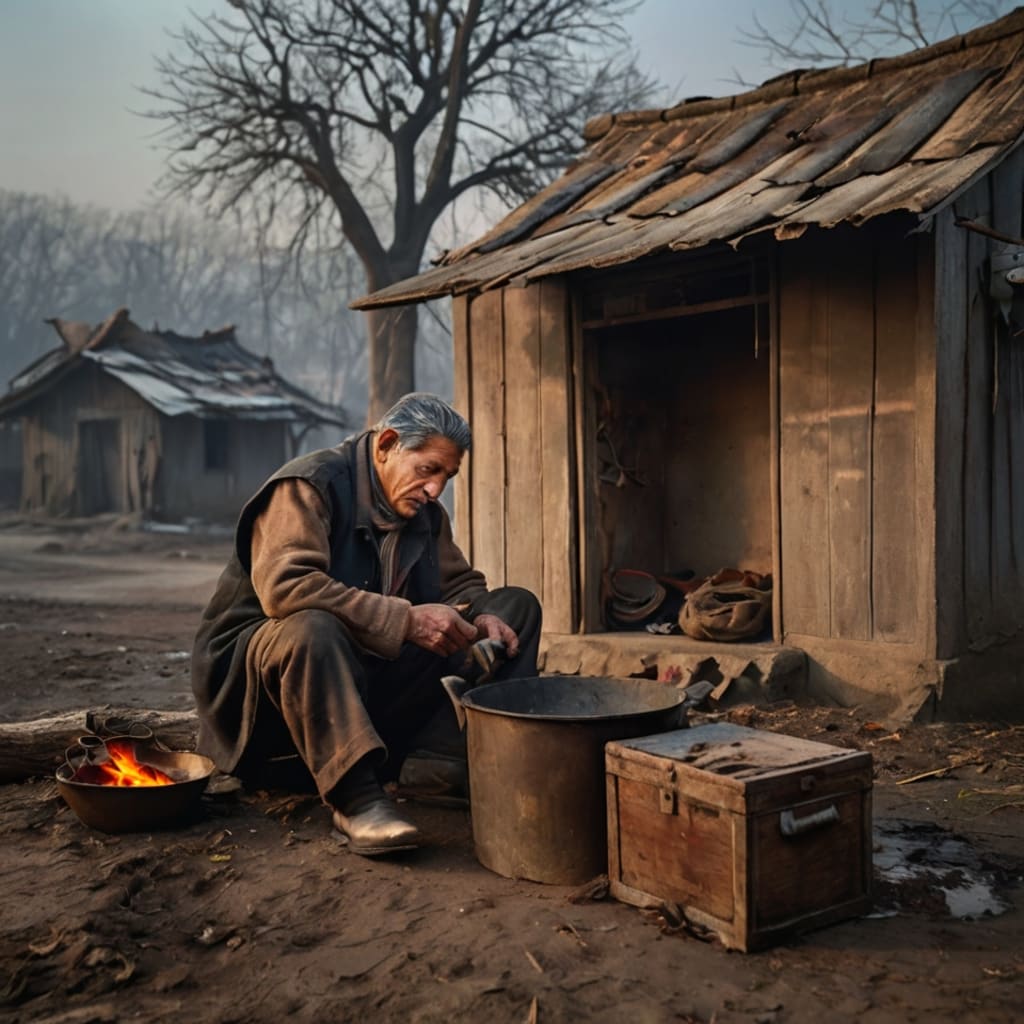
The Honest Cobbler- BY:Khan
It was the peak of winter. In the middle of the village, under a leafless tree, sat Bala, the cobbler. His “shop” had no walls or roof—just the bare tree and an old wooden trunk in which he kept his tools and supplies. Every evening, when work was done, he would lock his trunk, and that was the end of his day.
Though the midday sun shone brightly overhead, Bala still shivered. Wrapped in an old woolen shawl, his hands and bare feet remained cold. Bala was the only cobbler in the village, which meant he was always busy repairing worn-out shoes for the poor villagers.
Bala was poor himself, but he was never greedy. He knew the hardships of his people. Most families barely managed to feed themselves, so Bala charged little for his services. Many times, instead of money, people gave him eggs, vegetables, or wheat. Once, a villager even gave him a goat in return for making two pairs of shoes for his children. Thanks to that goat, Bala’s family had fresh milk every day.
He lived with his hardworking wife, Bali, and their two young daughters. Bali helped her husband by dyeing leather, and she also worked in the fields of the landlords to earn a little extra. Their daughters were still in primary school, studying in the village’s small madrassa. Bala often told them, “Your only work is to study. Leave the rest to us.” Still, the little girls happily helped with small chores.
Their house was old and broken. The roofs of all three rooms leaked whenever it rained. With winter rains approaching, Bala worried constantly. He had started saving a little money to repair the roofs, but it was not nearly enough. So he worked from sunrise to sunset, hoping to collect the needed amount.
That afternoon, Bali brought him food and, noticing the biting cold, carried with her a tin box filled with burning wood to warm him. Bala’s face lit up with gratitude. “Bali, how did you know I was freezing?” he asked. Smiling, she replied, “The cold is the same at home. I knew you’d be suffering here.”
They shared a warm, tender moment. Bala, with a sigh, confessed, “You bear so many hardships because of me. Once the roof is fixed, I’ll save money to buy you gold bangles and earrings.” Bali shook her head. “I don’t want jewelry. Our daughters’ education is my greatest treasure. If they succeed, we’ll have everything.”
Soon after, a neighbor named Bahadur arrived. He worked at the nearby brick kiln and looked troubled. Carrying a bag of worn-out shoes, he explained, “Day after tomorrow, a family is coming to see my daughter for marriage. These are the only shoes I own, but look at their state—I’d be ashamed to wear them.”
The shoes were old, their soles completely split. But Bala’s sharp eyes noticed something else: they were made of deer hide, light yet surprisingly heavy. He didn’t say anything then. Instead, he reassured Bahadur, “Don’t worry, brother. I’ll repair them so well they’ll look brand new.”
Bahadur hesitated, ashamed. “Bala, I can’t pay you now. I still have to arrange food for the guests. If the kiln owner lends me money, I’ll repay you later.”
Bala’s heart softened. “Your daughter is like my own. Don’t worry about payment. If you need money for the feast, come to me. I’ve been saving for roof repairs, but your need is greater.” Tears welled in Bahadur’s eyes. He left, blessing Bala.
That evening, Bala worked with great care, using his best materials. By nightfall, the shoes looked as if they were newly made. He packed up, locked his trunk, and hurried home, his face showing both seriousness and quiet excitement.
At home, he called Bali aside. Whispering, he told her what he had discovered. From his pocket, he pulled out a small cloth pouch. When Bali opened it, her eyes widened in astonishment. Inside were sparkling diamonds and tiny gold bars.
“They were hidden inside the soles of Bahadur’s shoes,” Bala explained. “His grandfather must have placed them there long ago.”
That very night, Bala and Bali went to Bahadur’s house. Bahadur sat worried, for the kiln owner had refused to help him. When Bala revealed the pouch, everyone was stunned. Bahadur’s wife cried with joy, while Bahadur himself clutched Bala’s hands, saying, “You are no ordinary man—you’re an angel. This wealth could have been yours, but you returned it.”
Bala smiled. “This is your family’s fortune. Use it for your daughter’s wedding and to build a better future. God has been kind.”
Later, walking home, Bali looked at her husband with wonder. “Why didn’t you keep it? With that treasure, we could repair our house, buy jewelry, and send our daughters to the best school in the city.”
Bala laughed softly. “All of that will still happen. But it will come from my own honest earnings. That will be our true pride.”
Bali’s heart swelled with love. “Our daughters and I are truly lucky to have you.” Bala, embarrassed, pretended to be grumpy. “Now hurry up—I’m starving!”
And so, under the cold winter sky, the poor cobbler walked home with nothing in his hands—but with a heart richer than kings.
About the Creator
The Angry Man in Your House
"If you grow up with an angry man in your house, there will always be an angry man in your house" This statement has caused plenty of controversy online, people say its a statement that blames victims while also undermining those who break traumatic cycles to form health relationships... but if I'm honest now that I'm in my 30s it makes more sense to me than ever, and I'd argue that its not just about fathers and uncles.
By S. A. Crawford2 days ago in Humans




Comments
There are no comments for this story
Be the first to respond and start the conversation.