social media
Social Media for modern lovers in the digital age.
“Why Being ‘Strong’ Is Destroying a Generation”. AI-Generated.
I learned how to be strong before I learned how to ask for help. And by the time I realized those two things weren’t the same, I was already exhausted. We praise strength like it’s a cure-all. Be strong. Stay strong. You’re so strong—I don’t know how you do it. We say it at funerals. We say it after breakups. We say it to children who are learning too early that crying makes adults uncomfortable. Strength has become our favorite compliment and our most dangerous lie. Because no one ever explains what it costs. I grew up believing that being strong meant swallowing pain quietly. It meant not burdening others. It meant smiling through the worst moments because someone else always had it worse. Strength was silence. Strength was endurance. Strength was survival without witnesses. So I perfected it. When my world cracked, I didn’t scream. I didn’t collapse. I didn’t reach out. I showed up to work on time. I answered texts with “I’m good.” I posted photos where I looked fine. I carried my grief like a private weight strapped to my chest, invisible and crushing. People admired me for it. “You’re so strong,” they said, as if that settled everything. But strength, the way we define it, doesn’t heal you. It just teaches you how to bleed without making a mess. Somewhere along the line, we turned resilience into repression. We taught an entire generation that feeling deeply is a flaw and needing help is a failure. We turned coping into a performance and pain into something you manage quietly so it doesn’t inconvenience anyone else. We don’t tell people to rest. We tell them to push through. We don’t ask how they’re really doing. We accept “fine” and move on. We don’t sit with discomfort. We label it weakness and scroll past it. And the result? Burnout that looks like ambition. Anxiety that masquerades as productivity. Depression hiding behind jokes, overworking, and “I’m just tired.” We’re raising people who don’t know how to fall apart safely. People who can survive almost anything—except themselves. I’ve watched friends disappear slowly, not in dramatic ways, but in quiet ones. They became less expressive. Less present. Less alive. They mastered the art of functioning while numb. They wore strength like armor until they forgot how to take it off. And when they finally cracked, everyone was shocked. “But they were so strong.” That’s the problem. We confuse strength with the absence of visible pain. We trust people who don’t complain. We reward those who endure silently. We miss the warning signs because we’ve trained ourselves to admire them. Strength has become a trap. Especially for men, who are still taught that vulnerability is a liability. Especially for women, who are expected to carry emotional labor without collapsing. Especially for young people, who are navigating a world that demands resilience without offering support. We tell them to toughen up while the ground keeps shifting beneath their feet. Economic pressure. Social comparison. Constant visibility. Endless crises. The message is always the same: adapt, endure, keep going. No wonder so many feel like they’re failing at life while doing everything right. I used to think strength meant never breaking. Now I think it means knowing when you can’t hold yourself together alone. Real strength looks like admitting you’re overwhelmed before you’re destroyed by it. It looks like asking for help without apologizing. It looks like resting without earning it. It looks like saying, “I’m not okay,” and letting that be enough. But we don’t model that. We glorify hustle and stoicism. We romanticize struggle. We clap for survival stories and ignore the cost paid in private. We teach people how to push through pain—but not how to process it. So it stays. It settles in the body. It shows up as chronic stress, emotional distance, insomnia, anger that feels misplaced, sadness without a clear cause. It leaks into relationships. It shapes how we love, how we parent, how we treat ourselves. And then we wonder why so many feel empty, disconnected, and exhausted. This generation isn’t weak. It’s overburdened. It’s tired of carrying everything alone. Tired of being praised for strength when what it really needs is permission to be human. I don’t want to be strong anymore in the way I was taught. I don’t want to be admired for how much I can endure. I want to be supported for how honestly I can live. I want a world where we stop telling people to be strong and start asking what they need. Where we normalize softness alongside resilience. Where breaking isn’t a failure—it’s a signal. Where healing isn’t something you do quietly in the background while life keeps demanding more. Strength didn’t save me. Being seen did. And maybe that’s what this generation is really fighting for—not the right to be unbreakable, but the right to fall apart and be held instead of judged. If we keep teaching people to survive without support, we shouldn’t be surprised when survival feels like all they’re capable of. But if we redefine strength—if we make room for vulnerability, rest, and connection—we might finally raise a generation that doesn’t just endure life… …but actually lives it.
By Faizan Malik4 days ago in Humans
Celebrity Deaths of 2026 And Why the World Is Paying Attention, Remembering, and Reflecting
Some news stops you mid-scroll. Not because it’s shocking—but because it feels personal. In 2026, an ongoing list of celebrity deaths has continued to trend across Google searches, news platforms, and social media timelines worldwide. Each announcement ripples through the internet like a sudden hush in a crowded room. Fans pause. Tributes appear. Old interviews resurface. Songs, films, and performances are replayed as if memory itself is pressing rewind.
By Omasanjuwa Ogharandukun5 days ago in Humans
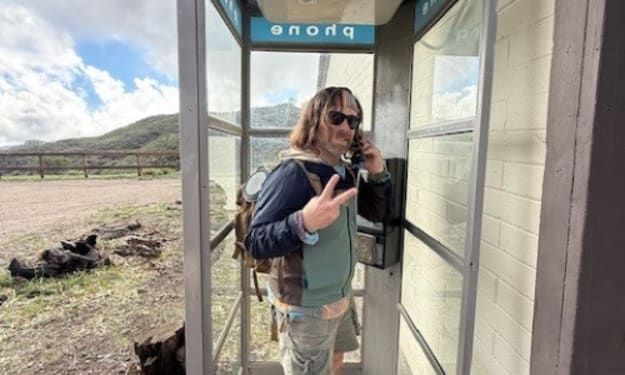
Telephone Booth Time Machine
If you could, would you step into the booth, pick up the phone to answer the "call" and go back to a "better" America, and would we actually find what we’re looking for? Or are we simply witnessing the inevitable evolution of who we’ve always been—only now, the "volume" has been turned way up, to a deafening level by the social noise on the screens of our mobile phones. Wasn't it all so much much better when these things were still plugged in, but we were unplugged... But now we're being told America is in a "Golden Age" or at least trying to recapture one long lost.
By Meko James 6 days ago in Humans
The Friendly Machine
It was a rainy Tuesday morning when Lila first met Miko. She wasn’t looking for a new friend—she barely had the time for the old ones—but something about the little AI robot caught her eye. It rolled gently down the sidewalk in the small park near her apartment, a smooth metallic surface reflecting the muted gray of the clouds, a pair of glowing eyes blinking softly like it was alive.
By hazrat ali7 days ago in Humans
The Invisible Machine That Runs Our Minds
There is a system that hums in your pocket all day, every day, so quietly that you forget it is even there. It does not announce itself with rules or edicts. There are no posted hours of operation, no governing body you can confront, no clear center of authority. Yet it organizes behavior, distributes power, and promises a kind of order that feels both intimate and impersonal at the same time.
By Lawrence Lease8 days ago in Humans
The Man Who Collected People
Inside the 3-million-page archive of Jeffrey Epstein, and what it says about the power we refuse to name. There is a photograph in the federal archives that does not make headlines. It shows a white ceramic bust sitting on a mahogany desk—19th-century phrenology equipment, the kind pseudoscientists once used to measure skulls and rank human worth. The FBI found it in Epstein's Manhattan townhouse, positioned like a paperweight, casual among contracts and invitations.
By sondos azhari8 days ago in Humans
What Rage Feels Like
"Majority Fools" What's good for the goose Is good for the gander Wrap my neck in a noose From all that damn slander What is good for one Is not good for all Different lives are spun Before we even start to crawl I can talk and talk Until I'm blue in the face But your guidelines are chalk That you refuse to erase Singular in mind Solitary in view Keep on being confined By everything you thought you knew A line in the sand So easy to cross But your high demands Mean endless lives are lost But we have this system That's confounding to me It leaves so many victims So much for "land of the free" But this is what happens When you go by majority rules Peoples lives are blackened Because the majority are fools
By Hannah Alexander8 days ago in Humans
Speaking to Time Instead of the Room
Much of modern communication is oriented toward immediacy. Writing is framed as something meant to be consumed quickly, reacted to instantly, and replaced just as fast by whatever comes next. Under this model, the value of a piece is measured almost entirely by its initial reception. If it does not land immediately, it is treated as a failure. This assumption narrows the purpose of writing and misunderstands how meaning actually travels through time.
By Peter Thwing - Host of the FST Podcast9 days ago in Humans
Ai The New Gym Coach
Walking into a gym without a plan can feel like stepping into a maze. Rows of machines, endless workout advice online, and conflicting fitness trends make it hard to know where to start—or whether what you’re doing is actually helping. One of the biggest problems with traditional workout programs is that they assume everyone’s body responds the same way. In reality, your age, height, and weight dramatically influence how you should train. This is where artificial intelligence is redefining fitness.
By Anthony Bahamonde9 days ago in Humans
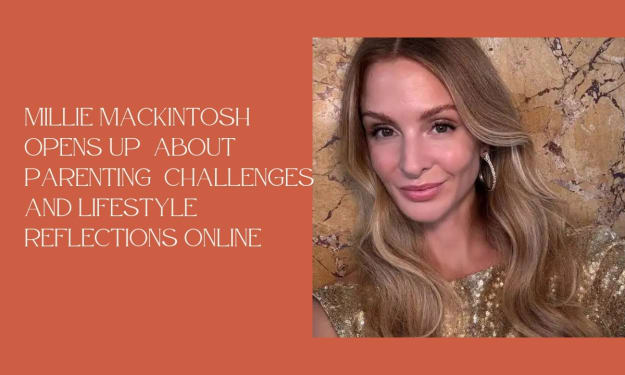
Millie Mackintosh opens up about parenting challenges and lifestyle reflections online
Millie Mackintosh has not been afraid at discussing the truth about the parenting life and has shared her experiences of being a mother through social media. She emphasizes the pleasures of seeing her child develop, yet there are also difficulties of having to balance between responsibilities, personal wellbeing, and emotional needs. Sharing these experiences, Millie offers an easy way of recognizing oneself to those parents who might feel lonely or helpless.
By Robert Smith9 days ago in Humans