humanity
For better or for worse, relationships reveal the core of the human condition.
The True News
The True News – Story No. 1491 Mr. Fayyaz’s house was slightly larger than the other houses in the neighborhood. That in itself was not surprising. But no one really knew where his family was or who lived with him. A servant named Bashir would come to the house for two hours each morning, and through him, the neighbors occasionally learned a few details.
By Sudais Zakwan21 days ago in Humans
Modern world is just a joke
Artificial food, chemical substances in tools, virtual currency……… As you can see, the thing i listed above are all fake. So what actually is real in modern? And as the barrier between “real” stuff and “fake” stuff gets more and more blurry, what can we do? should be just give up and resign by accepting the fake stuff, or are there any alternative ways to solve this modern madness? So pause for a while and think.
By Curtis Wong21 days ago in Humans
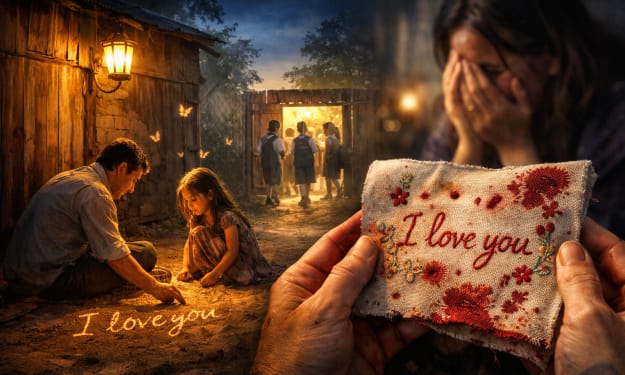
The Small Door at the End of the Street
The Small Door at the End of the Street A Child’s Dream, Written in Blood and Hope. Every night, I would go for a short walk, leaving for half an hour and then returning. On my way, I would see a girl who was no more than seven years old. She was chasing butterflies around one of the lights hanging on the fence of a house. Her appearance and clothes caught my attention. She was wearing a torn dress and no shoes. She had long hair and green eyes.
By Mahmoud Ahmed 21 days ago in Humans
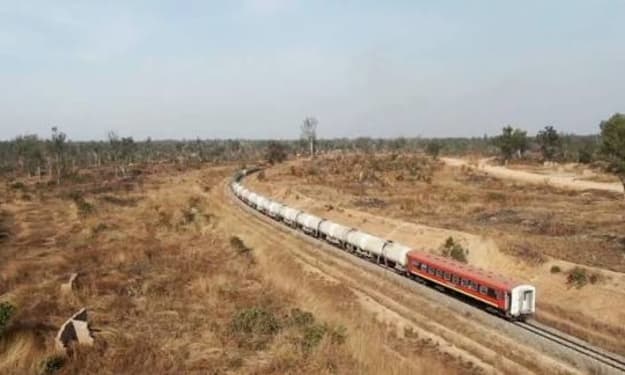
Europe’s R37.9 Billion Commitment to Africa Could Shrink to R3.8 Billion as Ukraine Gets Priority. AI-Generated.
Funding priorities shift as European nations focus on Eastern Europe amid global crises Europe’s ambitious R37.9 billion commitment to Africa is now facing the possibility of a dramatic reduction to just R3.8 billion, as attention and resources increasingly shift toward Ukraine amid ongoing conflict. The development has raised concerns among African nations and international development experts, who warn that scaling back aid could slow critical progress on economic growth, infrastructure, and humanitarian programs across the continent. The potential reduction reflects the broader challenge European countries face in balancing domestic, regional, and global priorities, particularly in times of crisis. Background: Europe’s Commitment to Africa In recent years, European governments pledged significant financial support to Africa to address pressing challenges such as: Poverty reduction Infrastructure development Healthcare improvements Climate change adaptation The total commitment of R37.9 billion was intended to strengthen economic partnerships and provide humanitarian assistance in countries facing political instability, natural disasters, and public health crises. Africa, home to over 1.4 billion people, relies heavily on external funding to support development programs and stabilize regions affected by conflict or extreme poverty. A reduction in promised aid could have far-reaching consequences for millions of people. Why Ukraine Is Taking Priority The ongoing conflict in Ukraine has demanded unprecedented financial, military, and humanitarian resources from European countries. As the war continues, Europe has had to allocate funds to: Support Ukraine’s defense and reconstruction Provide humanitarian aid to displaced populations Strengthen security in neighboring regions With Europe facing rising energy costs, inflation, and refugee crises, officials argue that Ukraine represents an urgent and immediate geopolitical priority. This shift, however, comes at the expense of long-term commitments elsewhere, including Africa. Impact on African Nations African leaders and international development organizations have expressed concern about the potential reduction in aid: Economic consequences: Reduced funding could slow infrastructure projects, affect trade agreements, and limit access to capital for small businesses. Healthcare setbacks: Programs targeting vaccination, disease prevention, and maternal health could face delays. Climate initiatives: Funding cuts may hinder efforts to implement renewable energy projects and adapt to climate change impacts. Many African countries rely on European aid not only for direct financial support but also for capacity-building, technological assistance, and policy development. European Officials Speak Out Some European leaders acknowledge the difficult choices but defend the prioritization of Ukraine: Officials cite the urgent need to support a sovereign nation under attack, emphasizing security and stability in Europe as a global concern. Policymakers argue that while aid to Africa remains important, urgent crises must take precedence, particularly those affecting European borders or international security. Critics argue that this approach risks alienating African partners, weakening trust, and undermining decades of diplomatic and development work. Broader Implications for Global Development The potential reduction of aid to Africa highlights the fragility of international development funding, which is often dependent on shifting political and economic priorities. Experts warn that: Short-term reallocations may have long-term consequences, particularly in fragile states Africa’s development goals, including the United Nations’ Sustainable Development Goals (SDGs), could face significant setbacks Global inequities may widen as resource-rich regions focus on their immediate needs while lower-income countries face reduced support This situation underscores the challenges of global responsibility, where rich nations must balance domestic concerns with obligations to other regions. Reactions from Africa African diplomats and civil society leaders have expressed concern over the potential funding cuts: Many emphasize the importance of predictable, stable funding for long-term development Some argue that Europe should find ways to support both Africa and Ukraine, avoiding the appearance of choosing one region over another Calls for innovative financing solutions are growing, such as multi-donor funds, public-private partnerships, and regional investment strategies The African Union has highlighted the need for dialogue with European partners to ensure that critical development projects continue despite global crises. Looking Ahead: Balancing Priorities As Europe navigates its commitments, several key questions remain: Can funding for Africa be partially restored or supplemented through other international partnerships? How will European countries balance immediate geopolitical concerns with long-term global development responsibilities? Will African nations seek alternative funding sources from Asia, the Middle East, or multilateral institutions? Experts suggest that creative solutions and strengthened international cooperation may help mitigate the impact of funding reductions, but urgent action is required to avoid significant setbacks. Conclusion Europe’s R37.9 billion commitment to Africa, now at risk of shrinking to R3.8 billion due to the prioritization of Ukraine, highlights the complex trade-offs faced by global powers. While supporting Ukraine is an urgent necessity, scaling back aid to Africa could have lasting economic, humanitarian, and social consequences. African leaders, international organizations, and European policymakers must collaborate to ensure that development goals are not sidelined, balancing immediate crises with long-term global responsibilities. The situation serves as a reminder that in an interconnected world, political, economic, and humanitarian priorities are deeply intertwined, and decisions in one region can ripple across the globe.
By Fiaz Ahmed 21 days ago in Humans
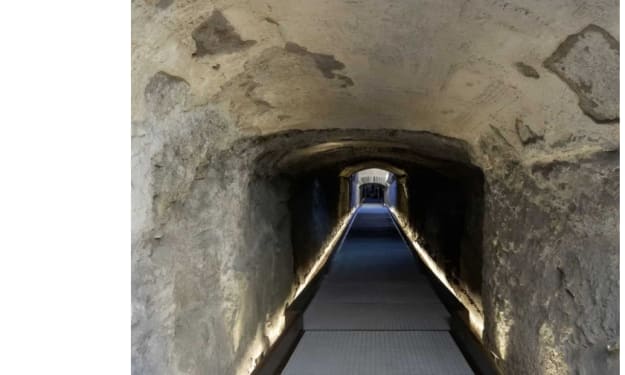
After two millennia, the Commodus passage is once again accessible to the general public.
Visitors to Rome are exploring the Commodus Passage, a secret passageway in the Colosseum that was formerly only accessible to emperors, for the first time in nearly two millennia.
By Francis Dami21 days ago in Humans