
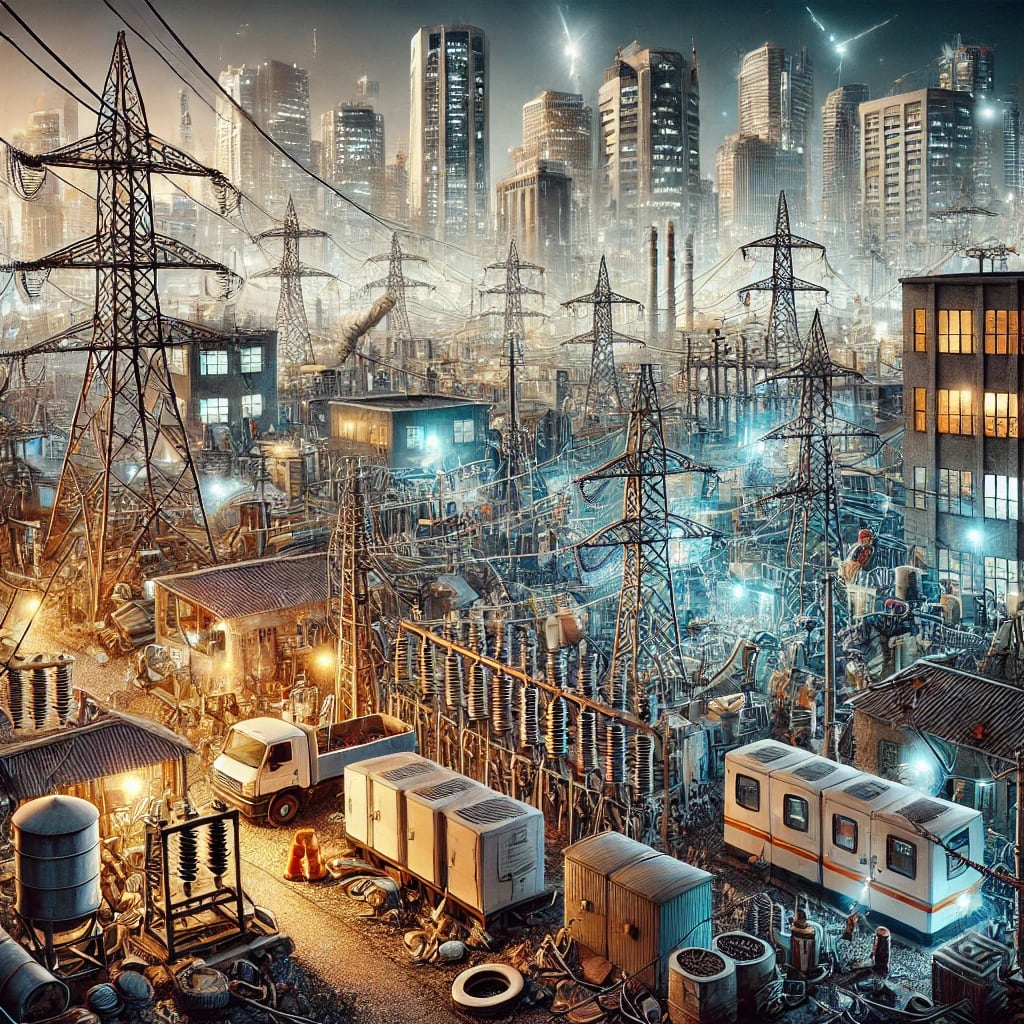
Nigeria, Africa's most populous country and one of its largest economies, has long struggled with an electricity problem that has significantly hampered its development. Since gaining independence in 1960, the country has faced a myriad of challenges in providing consistent and reliable power to its citizens and industries. Despite numerous reforms, policies, and investments, the electricity sector remains one of the most pressing issues in Nigeria today. This blog delves into the historical context, current challenges, and potential solutions to Nigeria's persistent electricity woes.
A Brief History of Nigeria’s Electricity Sector
The history of electricity in Nigeria dates back to 1896 when electricity was first generated in Lagos. However, it wasn't until the early 20th century that the electricity sector began to take shape. By 1960, when Nigeria gained independence, the country's electricity supply was primarily managed by the Electricity Corporation of Nigeria (ECN) and the Niger Dams Authority (NDA).
In 1972, the ECN and NDA were merged to form the National Electric Power Authority (NEPA), which became responsible for generation, transmission, and distribution of electricity across Nigeria. However, NEPA was often criticized for its inefficiency, corruption, and inability to meet the growing demand for electricity. The term "Never Expect Power Always" became a common derogatory phrase used by Nigerians to describe the frequent power outages and unreliable electricity supply under NEPA's watch.
Key Challenges Facing Nigeria’s Electricity Sector
1. Inadequate Infrastructure: Despite Nigeria's large population and growing economy, the country's electricity infrastructure has remained largely underdeveloped. The generation capacity has consistently fallen short of demand, with many power plants operating below their installed capacity due to maintenance issues, outdated technology, and fuel shortages. The transmission and distribution networks are also plagued by aging infrastructure, leading to frequent outages and technical losses.
2. Corruption and Mismanagement: Corruption has been a significant impediment to the development of Nigeria's electricity sector. Funds meant for infrastructure development have often been misappropriated, and contracts for power projects have sometimes been awarded based on political patronage rather than merit. This has resulted in substandard projects and further exacerbated the electricity crisis.
3. Regulatory and Policy Issues: Over the decades, various governments have attempted to reform the electricity sector through policies and regulatory changes. However, these efforts have often been met with challenges, including bureaucratic red tape, lack of political will, and inconsistent policy implementation. The 2005 Electric Power Sector Reform Act, which led to the unbundling of NEPA into 18 successor companies and the creation of the Power Holding Company of Nigeria (PHCN), was one such attempt that faced significant hurdles.
4. Fuel Supply and Diversification: Nigeria's electricity generation is heavily reliant on gas-fired power plants, which account for a significant portion of the country's installed capacity. However, the gas supply has been inconsistent due to pipeline vandalism, theft, and inadequate infrastructure. Additionally, there has been a lack of investment in alternative energy sources such as hydropower, solar, and wind, which could help diversify the energy mix and improve supply stability.
5. Rural Electrification: A large portion of Nigeria's population, particularly in rural areas, still lacks access to electricity. This has led to a significant disparity in electricity availability between urban and rural areas, further entrenching poverty and hindering economic development in rural communities.
Reforms and the Way Forward
In recent years, there have been renewed efforts to address Nigeria's electricity challenges. The privatization of the power sector in 2013 was a significant step, with the aim of improving efficiency, attracting investment, and increasing generation capacity. However, the privatization process has faced its own set of challenges, including financial difficulties for new private operators, regulatory bottlenecks, and an underdeveloped power market.
To achieve a sustainable solution, Nigeria needs a multi-faceted approach that includes:
• Strengthening Infrastructure: Investment in upgrading and expanding generation, transmission, and distribution infrastructure is crucial. Modernizing the grid and reducing technical losses will help ensure a more reliable supply of electricity.
• Combating Corruption: Addressing corruption and improving transparency in the sector are essential for ensuring that funds are used effectively and projects are completed to a high standard.
• Policy Consistency: Consistent and coherent policies are needed to attract long-term investment in the sector. This includes ensuring that regulatory frameworks are clear, stable, and supportive of both private and public sector participation.
• Diversifying Energy Sources: Expanding the energy mix to include more renewable sources such as solar, wind, and hydropower will reduce reliance on gas and improve the resilience of the electricity supply.
• Improving Rural Electrification: Focused efforts on expanding electricity access to rural areas are necessary to bridge the urban-rural divide and promote inclusive development.
Conclusion
Nigeria's electricity problem is a complex issue that has evolved over decades. While significant challenges remain, there is hope that with the right reforms, investments, and political will, the country can overcome its electricity challenges and unlock its full economic potential. Addressing the electricity problem is not just about providing power to homes and businesses; it is about driving economic growth, reducing poverty, and improving the quality of life for millions of Nigerians.
About the Creator
Keep reading
More stories from Aifuwa Emmanuel and writers in Humans and other communities.
The Global Landscape Protest
In recent years, the world has witnessed an unprecedented wave of protests. From the streets of Hong Kong to the heart of Paris, from the capitals of the Middle East to the bustling cities of Latin America, people are taking to the streets to voice their grievances, demand justice, and call for change. These protests, diverse in their origins and objectives, reflect a global sentiment of dissatisfaction, a desire for reform, and a struggle for rights.
By Aifuwa Emmanuel2 years ago in Humans
The Angry Man in Your House
"If you grow up with an angry man in your house, there will always be an angry man in your house" This statement has caused plenty of controversy online, people say its a statement that blames victims while also undermining those who break traumatic cycles to form health relationships... but if I'm honest now that I'm in my 30s it makes more sense to me than ever, and I'd argue that its not just about fathers and uncles.
By S. A. Crawford5 days ago in Humans
The Demise of Gratitude: When Tipping Became an Entitlement.
Tipping. The word itself conjures a myriad of emotions, ranging from generous satisfaction to simmering resentment. Once a gesture of gratitude for exceptional service, it has mutated into something unrecognizable, a tangled web of social pressure, ethical quandaries, and frankly, blatant exploitation. We’ve all felt it: the cold sweat of calculating percentages on a tablet, the awkward pause after declining, the lingering guilt even when the service was subpar. But when did this all go wrong? When did tipping culture, already teetering on the edge, finally jump the shark?
By Wilson Igbasiabout 6 hours ago in Humans




Comments (3)
Amazing
Excellent written
Superb one.