
The Villisca Axe Murders
The Night the House Went Quiet

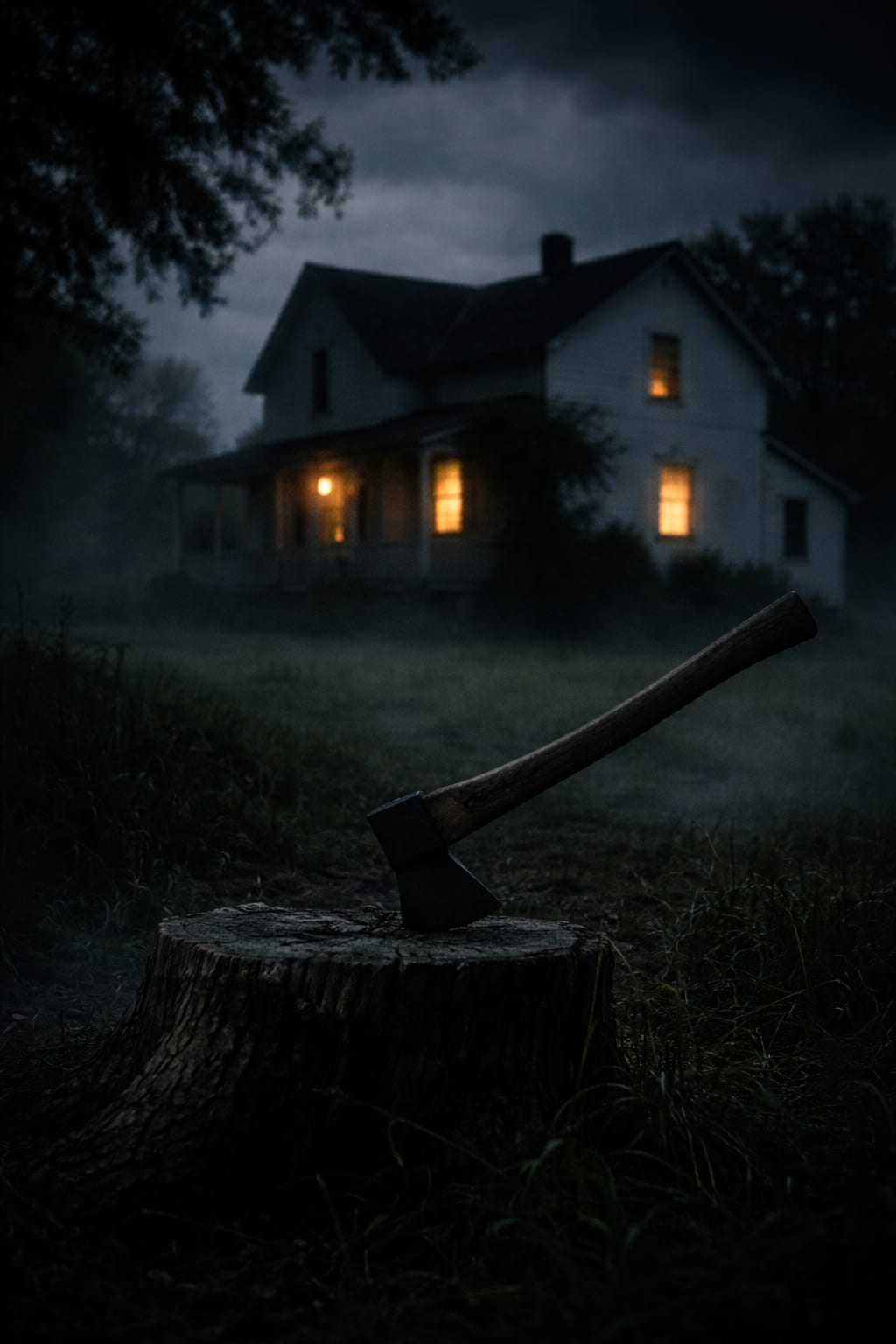
On the evening of June 9, 1912, the town of Villisca, Iowa, was ordinary. Church services ended. Families returned home. Oil lamps were lowered. Doors were latched.
Villisca was the kind of town where neighbors knew the sound of each other’s footsteps. Where porches held conversations in the warm air of early summer. Where danger was something that happened elsewhere.
Inside a modest white house on East Second Street, the Moore family settled in for the night. Josiah Moore, his wife Sarah, their four children, and two young visiting sisters from town slept beneath the same roof.
By sunrise, eight people would be dead. The most unsettling detail is not how they died. It is the length of time the house remained undisturbed afterward.
A Morning That Didn’t Begin
When neighbors noticed unusual stillness, they assumed the family had overslept. The Moores were well-known and respected. Their absence from the morning routine was strange.
By mid-morning, concern turned to action. A neighbor entered the house. What she found would haunt Villisca for generations. The rooms were dark. Curtains drawn. Mirrors covered. Sheets pulled up over faces. There were no signs of forced entry. The doors had been locked. Whoever had been inside that house had either been invited in or had never left.
The Stillness That Follows Violence
What investigators discovered in 1912 was not chaos. It was control. The killer had moved deliberately through the house. Upstairs. Downstairs. And room to room.
Afterward, the perpetrator lingered. Food had been eaten in the kitchen. A basin had been used. The weapon... an axe belonging to Josiah Moore, was left behind.
The house had not been ransacked. Nothing of value was taken. The act itself did not appear rushed. That detail is what chills the spine. It suggests calm... It suggests someone who is comfortable enough to move slowly.
A Town Under Siege
Word spread rapidly. Crowds gathered outside the Moore house. People pushed to glimpse the windows. Some entered the home despite police efforts to secure the scene. Evidence was compromised almost immediately. This was 1912, so forensic science was primitive. Fingerprinting was not standard practice. Crime scenes were not preserved with modern rigor. Speculation filled the gaps where science could not. And there were many gaps.
The Man Who Might Have Watched
One name soon dominated the whispers: Reverend George Kelly. Kelly was an itinerant preacher who had been in Villisca the night of the murders. He was described as strange. Nervous. Unsettling in his mannerisms. He had reportedly asked odd questions about the Moore house.
He left town shortly after the killings. When questioned later, his statements were inconsistent. At times, he seemed fascinated by the crime. At other times, he appeared terrified.
Eventually, he confessed. Then he recanted. The confession was riddled with contradictions. At trial, the case against himcompletely fell apart. He was acquitted. And Villisca was left with the same question it had always carried. If not him… then who?
A Pattern in the Midwest
The Villisca murders did not occur in isolation. In the years surrounding 1912, several families across the Midwest were killed in a similar fashion. Entire households. Attacked at night. Curtains drawn. Blinds closed. Use of axes. The parallels were uncomfortable and uncanny.
Some investigators believed a single transient killer traveled the rail lines, drifting from town to town, entering homes after midnight. One theory suggested a serial murderer decades before the term existed. Another proposed multiple killers mimicking one another, feeding off fear.
There was no national database. No coordinated investigation. Each town grieved alone.
The Ritual-Like Details
Certain elements of the Villisca crime defy easy categorization. Mirrors were covered. Windows were obscured. A slab of bacon had reportedly been removed from the icebox and left on the floor. Why cover mirrors? Why conceal faces? Why remain in the house after the act?
These are not practical actions. They feel almost... ceremonial. Or superstitious, as well as personal. That ambiguity only fuels the mystery.
The Psychological Weight
Villisca changed after June 9th. Children were no longer left alone at night. Doors werechecked and double-checked. Strangers were scrutinized.
The illusion of small-town immunity shattered. The Moore house stood as a reminder that safety can be undone quietly. There was no scream heard across town. No dramatic chase. Just a house that did not wake up.
The Failure of Certainty
Over the decades, suspects have emerged and faded.
- A jealous business rival.
- A disgruntled former employee.
- A drifter passing through.
Each theory holds fragments of plausibility. None holds proof. The case remains officially unsolved.
More than a century later, the white house on East Second Street still stands. It has become an object of fascination, investigated, toured, and debated. But beneath the curiosity lies something darker. It is a monument to the unknown.
The Most Unsettling Possibility
The scariest theory is not that a monster lurked in Villisca. It is what someone ordinary did. Someone capable of blending in. Someone who walked past neighbors in daylight. Someone who boarded a train the next morning. And was never connected.
Because in 1912, it was easier to disappear. Records were thin. Communication was slow. Memory faded. The killer may have lived a full life afterward. Married. Worked. Aged. Buried quietly, unexposed. That possibility sits heavier than any dramatic legend.
A Final Thought From the Veil
The Villisca Axe Murders endure not because of spectacle. They endure because of silence. Because eight people went to bed in a town that believed itself safe. Because someone moved through that house without interruption. Because no one was ever definitively held accountable.
And because more than a century later, we still cannot say with certainty who stood in those darkened rooms. Some mysteries are puzzles. This one is a void.
And sometimes... the void is far more frightening than the answer.
About the Creator
Veil of Shadows
Ghost towns, lost agents, unsolved vanishings, and whispers from the dark. New anomalies every Monday and Friday. The veil is thinner than you think....
Keep reading
More stories from Veil of Shadows and writers in Horror and other communities.
The Bell That Rang After Midnight
In the coastal village of Greymoor, the sea never slept. Waves whispered against black rocks, and wind threaded through crooked chimneys like a breath searching for a mouth. Tourists came in summer for the views and left before autumn taught the cliffs their true language. The villagers stayed, wrapped in wool and habit, and obeyed one old rule: when the church bell rang after midnight, nobody opened a door.
By Iazaz hussainabout 18 hours ago in Horror


Comments
There are no comments for this story
Be the first to respond and start the conversation.