World History
Inside The Story of the Zong Slave Ship: A Massacre Conducted For An Insurance Claim
The Zong, a British slave ship, departed from Ghana in August 1781 with 442 slaves on board, which was twice its intended capacity, and was en route to Jamaica. Allegedly, the crew threw over 130 live slaves into the sea, claiming that they were running out of water due to navigational errors that caused a delay in reaching their destination.
By Rare Stories3 years ago in History
Something special about Africa
In the heartland of South Africa, nestled within the breathtaking landscapes of the Eastern Cape, resides the proud and vibrant Xhosa people. For centuries, they have been guardians of a language that dances upon the lips with a mesmerizing rhythm of clicks, capturing the essence of their rich cultural heritage.
By Chidimma Udemadu3 years ago in History
History of Akans
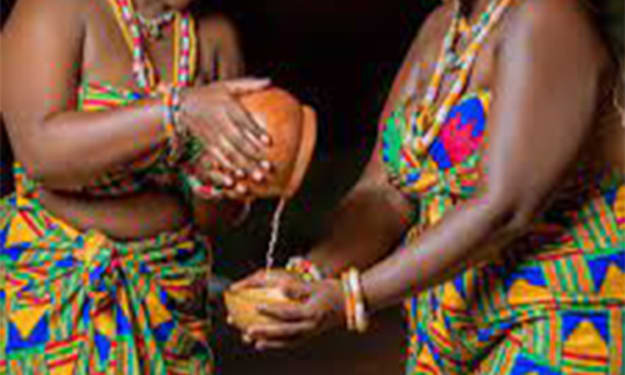
The Akans are an ethnic group in West Africa, primarily concentrated in Ghana and Ivory Coast. They make up the largest ethnic group in Ghana, comprising several subgroups, including the Ashanti, Fante, Akuapem, and Akyem. The history of the Akans is marked by ancient civilizations, powerful kingdoms, and interactions with European colonial powers. Here is an overview of the history of the Akans:
By Emmanuel Acquah3 years ago in History
Novak Djokovic
With his victory in the French Open men's singles, Novak Djokovic earns his 23rd Grand Slam championship. At the Roland Garros stadium in Paris on Sunday, Serbia's Novak Djokovic celebrates defeating Norway's Casper Ruud in the men's singles French Open final match in three sets.
By hamcha elbachir3 years ago in History
History and culture of Ghanaian
Ghana, officially known as the Republic of Ghana, is a country located in West Africa. The history of Ghana is rich and diverse, spanning centuries of civilizations and influences from various empires and cultures. Here is an overview of the history of Ghana:
By Emmanuel Acquah3 years ago in History
Audie Murphy: An American Soldier's Journey to Fame and Glory
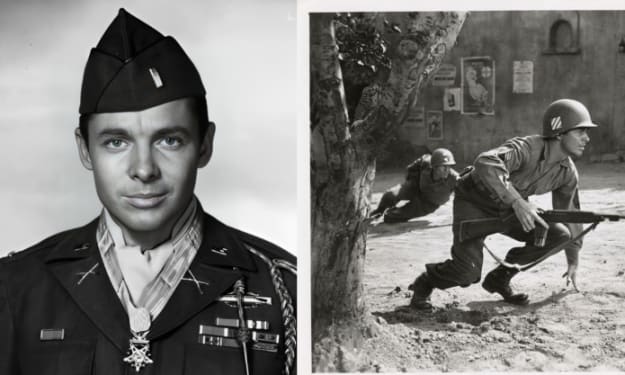
Audie Leon Murphy was born on June 20, 1925. He was an accomplished American soldier, actor, and songwriter. He earned a reputation as one of the most decorated combat soldiers in the United States during World War II, having been awarded all available military combat awards for valor. His heroic acts were also recognized by the French and Belgian authorities.
By Rare Stories3 years ago in History
The Unbelievable Story of Desmond Doss
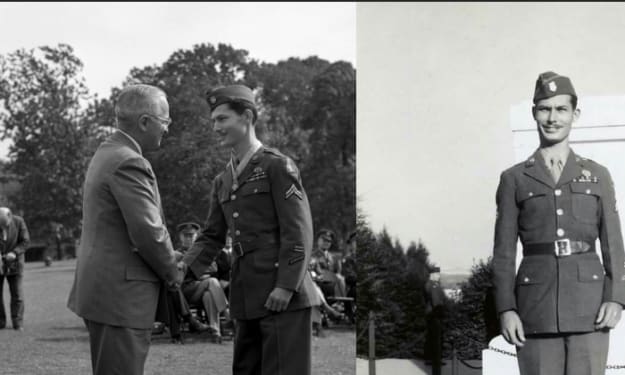
When Desmond Doss joined the United States Army on April 1, 1942, he had no idea that he would be honored with the nation's highest award for his remarkable bravery and courage in battle. It was only three and a half years later that he found himself standing on the White House lawn, receiving the prestigious award.
By Rare Stories3 years ago in History
Feminism in the old days
where does it go back to? Feminism has a long history that dates back to the late 19th and early 20th centuries, commonly referred to as the first wave of feminism. During this time, feminists fought for women's suffrage, equal rights, and access to education and employment opportunities. However, the acceptance of feminism varied greatly depending on the cultural and social context of different regions. In many parts of the world, the ideas and goals of early feminism faced significant resistance and were met with hostility. Women who spoke out for their rights were often marginalized, ridiculed, and faced social ostracization. Society's prevailing attitudes at the time upheld traditional gender roles, which limited women's roles to the domestic sphere and placed them in positions of subservience to men. Despite these challenges, the first wave of feminism achieved significant milestones. One of the most notable successes was the suffrage movement, which led to women gaining the right to vote in several countries. This achievement marked a significant shift in societal attitudes and began to challenge the notion that women were lesser than men. In the decades that followed, feminism continued to evolve and gain momentum. The second wave of feminism emerged in the 1960s and focused on issues such as reproductive rights, workplace equality, and challenging gender norms. This wave brought about significant changes in Western societies, including the introduction of anti-discrimination laws and increased opportunities for women in various fields. The acceptance of feminism has evolved over time, and its ideas have become more mainstream in many societies. Today, feminism is widely recognized as an important movement advocating for gender equality. While there are still debates and disagreements about specific aspects of feminism, the core principles of equal rights and opportunities for all genders have gained significant acceptance. It's important to note that the acceptance and progress of feminism have not been uniform across the globe. Cultural, social, and political factors have influenced the pace and extent of acceptance in different regions. In some parts of the world, feminism continues to face resistance and backlash, while in others, it has become an integral part of the social fabric.
By Z. R. Lilla3 years ago in History