World History
Can the United Nations Survive a Divided World?
Can the United Nations Survive a Divided World? The United Nations was born from the ashes of World War II, at a time when the world agreed on one powerful idea: global problems require global solutions. For decades, the UN served as a meeting ground for rivals, a coordinator of humanitarian aid, and a symbol of international cooperation. Today, however, the organization stands at a crossroads. A more divided, competitive, and unstable world is forcing a serious question—what will the UN become in the future?
By Wings of Time 26 days ago in History
Did Trump’s Retreat From the United Nations Undermine Global Peace?
Did Trump’s Retreat From the United Nations Undermine Global Peace? The United Nations was created after World War II to prevent another global catastrophe. Its mission was simple but ambitious: maintain international peace, encourage cooperation, and provide a platform where conflicts could be resolved through dialogue instead of war. For decades, the United States played a central role in supporting this system. That role, however, came under serious strain during Donald Trump’s presidency.
By Wings of Time 26 days ago in History
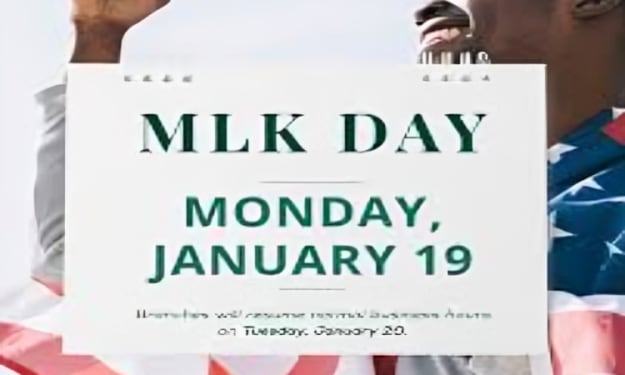
Are Banks Open on Martin Luther King Jr. Day?
Introduction Martin Luther King Jr. Day, also called MLK Day, is a national holiday in the United States. Many people enjoy a day off from work or school on this day. However, a common question people ask is: Are banks open on MLK Day?
By Farhan Sayed27 days ago in History
3 Times Safety Rules Were Written After It Was Already Too Late. AI-Generated.
Safety rules like to pretend they are proactive. They wear reflective vests, carry clipboards, and speak confidently about prevention. But history knows the truth: many safety rules were written after something went catastrophically wrong, when prevention was no longer an option and regret had already filled out the paperwork.
By Enoch Sagini27 days ago in History
3 Completely Innocent Decisions That Ended Very Badly. AI-Generated.
Most disasters don’t begin with villainous laughter or ominous music. They begin with someone making a perfectly reasonable decision. Sensible, even. The kind of choice you’d defend confidently if questioned later.
By Enoch Sagini27 days ago in History
3 Ordinary Places That Hid Something Truly Disturbing for Years. AI-Generated.
Most of us take comfort in ordinary places. Schools feel safe. Homes feel familiar. Workplaces feel predictable. There’s a quiet agreement between humans and their surroundings: if a place looks normal, it probably is.
By Enoch Sagini27 days ago in History
The Quiet Collapse of Global Arms Control
The Quiet Collapse of Global Arms Control For decades, arms control agreements helped prevent the world’s most powerful weapons from spiraling out of control. Treaties limited nuclear stockpiles, increased transparency, and built fragile trust between rival states. Today, that system is quietly unraveling—and its collapse may define the next era of global insecurity.
By Wings of Time 27 days ago in History
The Red Sea Crisis and the Fragility of Global Trade
The Red Sea Crisis and the Fragility of Global Trade The Red Sea has quietly become one of the most critical pressure points in global affairs. Once seen mainly as a commercial shipping route connecting Asia, Europe, and Africa, it is now a zone of rising military tension, disrupted trade, and geopolitical rivalry. What happens in this narrow stretch of water is no longer a regional issue—it is reshaping global economics and international security.
By Wings of Time 27 days ago in History
The Quiet Rise of Global Militarization
The Quiet Rise of Global Militarization Across the world, governments are increasing military spending, expanding defense industries, and modernizing weapons systems—often without openly acknowledging why. There are no formal declarations of war, no mass troop mobilizations, and no clear enemy named in many cases. Yet behind the scenes, a quiet shift is taking place. Global militarization is rising, not loudly, but steadily, reshaping international relations in ways that may define the coming decades.
By Wings of Time 27 days ago in History
The Fall of Tibet to a Communist State: History, Causes, and Consequences
The incorporation of Tibet into the People’s Republic of China (PRC) after 1950 was not a single event but a complex process involving military force, political negotiation, ideological conflict, and long-lasting resistance. Understanding this fall requires examining Tibet’s historical status, China’s communist revolution, and the profound consequences that followed.
By Say the truth 27 days ago in History
The Dalai Lama: Life, Teachings, and Global Influence. AI-Generated.
Early Life and Recognition The 14th Dalai Lama was born on July 6, 1935, in a small farming village called Taktser in northeastern Tibet (present-day Qinghai Province, China). His birth name was Lhamo Dhondup. Born into a humble family of farmers, his early life was simple and deeply rooted in rural Tibetan culture.
By Say the truth 27 days ago in History