Research
Secrets of the Ether
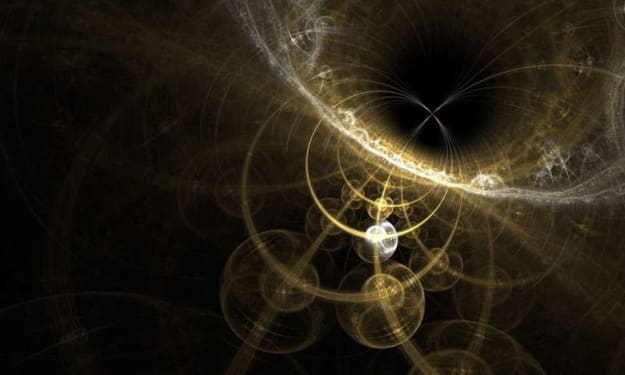
Introduction In this article, we embark on a journey of exploration into the captivating realm of quantum reality, where the laws of classical physics cease to apply, and the universe reveals its most mysterious aspects. From the mind-boggling phenomena of superposition and entanglement to the elusive nature of particles, quantum mechanics challenges our conventional understanding of reality.
By David kimani3 years ago in History
Exploring the Timeless Ruins of a Forgotten Civilization
Introduction Have you ever wondered about the remnants of a forgotten civilization? The Eternal Empires, an ancient civilization lost to the annals of time, have fascinated historians and explorers for centuries. In this enthralling article, we embark on a journey through the mystical ruins of this magnificent empire that once stood tall and proud. We will delve into the captivating stories, architectural marvels, and intriguing mysteries that continue to leave us in awe. Join us as we unearth the secrets of the past, revealing a world that has long been hidden from modern eyes.
By David kimani3 years ago in History
The Great Library of Alexandria
Introduction The Great Library of Alexandria stands as an enigmatic monument to the golden age of knowledge in ancient Alexandria, Egypt. Its legend stretches across time, capturing the imaginations of historians, scholars, and dreamers alike. In this captivating article, we embark on a voyage to unravel the mysteries surrounding this monumental repository and discover the ambitious endeavors to bring it back to life.
By David kimani3 years ago in History
Living Artifacts
Discover the awe-inspiring world of cloning extinct species, where cutting-edge technology and scientific innovation bring ancient creatures back to life. This comprehensive article explores the fascinating realm of living artifacts, showcasing the process, challenges, and ethical considerations involved in resurrecting long-lost animals. Gain insights into real-life examples and the potential impact of cloning extinct species on our planet's biodiversity.
By David kimani3 years ago in History
Divided Yet Connected: The Legacy of India-Pakistan Partition and the Golden Temple's Struggle for Unity
In the bustling city of Amritsar, nestled in the heart of the Punjab region, stood the magnificent Golden Temple. The sacred gurdwara, with its shimmering gold-plated dome and serene Sarovar, had long been a symbol of unity and harmony for the Sikh community. But amidst the echoes of the India-Pakistan Partition, the Golden Temple found itself at the epicenter of a struggle that would test the very essence of its purpose.
By Amirthalingam 3 years ago in History
And Now We Know How Easter Island Giants Were Moved
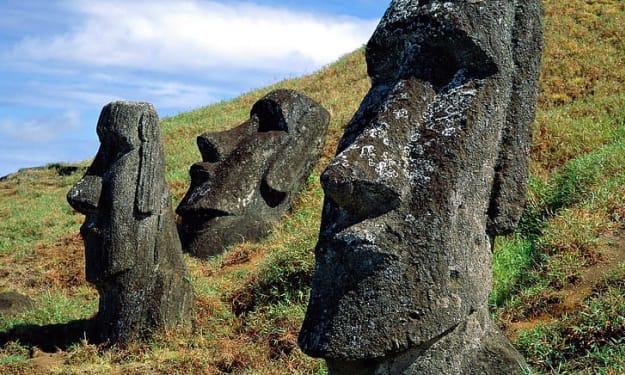
For centuries, the Easter Island giant heads, known as the moai statues, have captivated people worldwide and even earned their own emoji. The true significance behind these enigmatic figures has remained a mystery for hundreds of years. However, recent discoveries shed light on how they were constructed and moved to their permanent locations. Each moai statue comprises three distinct parts: a large yellow body, a red hat or top knot, and white inset eyes with a coral iris. Approximately 1,000 of these remarkable statues were created on Easter Island.
By Makim Piodos3 years ago in History
Man electrocuted after jumping into haunted Lake Lanier
On Thursday afternoon Thomas Milner, 24, jumped into Lake Lanier from his family's dock near Lanier Beach South Road. It was reported he was seen jumping into the lake by a family friend, and when he did not emerge, he went and tried to pull Milner out of the water using a ladder and was unsuccessful.
By sara burdick3 years ago in History
Archaeologists Are Afraid To Enter China's First Emperor's Tomb.
In an ordinary field in the Shaanxi province of China, farmers made one of the most significant archaeological discoveries of all time in 1974. They unearthed pieces of a clay human figure while digging. Simply put, this was the tip of the iceberg.
By Francis Dami3 years ago in History
Eternal Echoes: Titanic Story That Sends Shivers Down Your Spine [lego titanic,lego titanic set]. Content Warning.
On April 10-1912, the RMS Titanic set sail from England. But this wasn't the launch of a regular ship, The Titanic was the largest liner ever built at the time. It was 882 feet long nearly the size of three soccer fields and measured from the hull to the top of the smokestacks.
By Muhammad Asim3 years ago in History
'Life in Pompeii: A Glimpse into Ancient Roman Culture'
Pompeii is an ancient Roman city that was destroyed by the eruption of Mount Vesuvius in 79 AD. Despite its tragic end, Pompeii was an important cultural center and offers a unique glimpse into the lifestyle of the Roman people. This article will explore the everyday life of the people of Pompeii, from their work and leisure activities to their diet and religious practices.
By Ziain Morales3 years ago in History
Unraveling the Mysteries of the Oceans: An Exploration of the Deep Blue Enigmas
1. The Deep Sea: The Uncharted Abyss The deep sea, comprising the ocean depths below 200 meters (656 feet), is one of the least explored regions on Earth. This dark and cold environment is characterized by high pressure and extreme conditions that pose significant challenges for human exploration. Only a fraction of the deep sea has been explored, leaving vast areas uncharted and mysterious. Scientists believe that this realm holds countless undiscovered species, some of which may offer insights into the origins of life on Earth and the potential for life on other planets. New technologies, such as remotely operated vehicles (ROVs) and autonomous underwater vehicles (AUVs), are enabling scientists to venture deeper into the ocean and shed light on its secrets. As exploration continues, the mysteries of the deep sea gradually unfold, revealing an incredible diversity of life and geological wonders. 2. Underwater Volcanoes and Hydrothermal Vents: Life in Extreme Environments Underwater volcanoes, also known as seamounts, are among the ocean’s most intriguing geological features. These submerged volcanic mountains dot the ocean floor, yet their sheer numbers and the life they support remain largely unknown. One of the most captivating discoveries associated with underwater volcanoes is hydrothermal vents. These are fissures in the Earth’s crust from which geothermally heated water, rich in minerals and chemicals, spews out. Despite the extreme conditions, hydrothermal vents harbor thriving ecosystems supported by chemosynthetic bacteria, which form the base of the food chain. The study of underwater volcanoes and hydrothermal vents offers valuable insights into the adaptability of life and the potential for life beyond Earth in similarly extreme environments. 3. The Ocean’s Giants: Unraveling Marine Mammals’ Secrets Marine mammals, such as whales, dolphins, and seals, are some of the ocean’s most awe-inspiring creatures. Despite their impressive size and social behaviors, many aspects of their lives remain a mystery to scientists. One enduring enigma is the complex communication and vocalization of whales and dolphins. Researchers are continuously studying the meaning and patterns of their calls to decipher the intricate social structures and behaviors of these intelligent animals. Moreover, the migratory patterns of some marine mammals, particularly whales, have puzzled scientists for years. How do they navigate across vast ocean expanses with remarkable precision, returning to the same feeding and breeding grounds year after year? Understanding the lives of marine mammals is not only crucial for their conservation but also offers valuable insights into the interconnectedness of marine ecosystems and the health of the oceans. 4. The Bioluminescent Spectacle: Glowing Oceans Bioluminescence, the production and emission of light by living organisms, is one of nature’s most mesmerizing spectacles. Many marine organisms, from tiny plankton to deep-sea creatures, possess the ability to produce bioluminescent light. Bioluminescence serves various purposes, including attracting mates, deterring predators, and luring prey. The ethereal blue glow of bioluminescence creates a breathtaking display of nature’s beauty and complexity. While scientists have made significant progress in understanding the mechanisms behind bioluminescence, there are still many species and behaviors that remain undiscovered and continue to intrigue researchers. 5. The Lost Civilizations: Sunken Secrets The oceans hold a wealth of human history, with countless shipwrecks and submerged ancient civilizations waiting to be discovered. From ancient trading routes and lost cities to centuries-old shipwrecks, these underwater archaeological sites offer glimpses into the past and potential answers to historical mysteries. Archaeologists and divers continue to unearth ancient artifacts and submerged ruins, such as the submerged city of Pavlopetri off the coast of Greece and the sunken city of Dwarka off the Indian coast. These discoveries provide invaluable insights into the history of human civilization and the impact of sea level changes throughout the ages. 6. Rogue Waves: The Enigma of Giant Walls of Water Rogue waves, also known as freak waves or monster waves, are towering walls of water that appear unexpectedly in the open ocean. These massive waves, some reaching heights of over 100 feet, can be catastrophic for ships and pose a significant danger to maritime navigation. The phenomenon of rogue waves has long puzzled scientists and mariners. While some are caused by the interaction of different wave systems, others seem to arise from unknown and unpredictable factors. Understanding the origins and behavior of rogue waves is essential for improving maritime safety and predicting extreme weather conditions. 7. The Great Pacific Garbage Patch: A Growing Environmental Crisis The Great Pacific Garbage Patch is a vast area in the North Pacific Ocean, characterized by a high concentration of floating plastic debris. This massive accumulation of plastic waste poses a significant threat to marine life and ecosystems. The origins and dynamics of the Great Pacific Garbage Patch are complex and not fully understood. The patch comprises large and small pieces of plastic debris, including microplastics, which are tiny particles that can be ingested by marine organisms and enter the food chain. Addressing the problem of ocean plastic pollution requires collective efforts, from reducing single-use plastics to implementing effective waste management and cleanup
By Aessy Lefiano3 years ago in History
How Easter Island Giants Were Moved
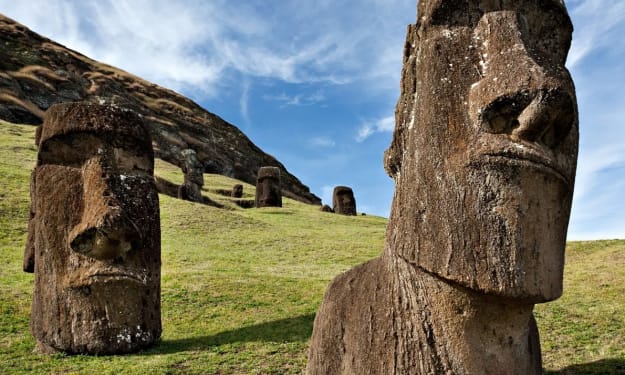
The enigmatic Easter Island giant heads, or moai statues, have captivated the world's imagination for centuries. Even today, they hold such significance that they boast their own emoji. While their true purpose remains shrouded in mystery, researchers have shed light on how these colossal statues were crafted and transported to their iconic locations. Each moai statue comprises three distinct parts: a large yellow body, a red hat or top knot, and white inset eyes adorned with coral irises. Astonishingly, over a thousand of these awe-inspiring creations were crafted on the island. The primary material used for their construction was volcanic tuff, sourced from a local quarry nestled within a former volcano. The choice of volcanic tuff facilitated the carving process, but it also presented a considerable challenge in the transportation phase.
By Daniel Fuentes Hermosa3 years ago in History