Modern
History of India. Content Warning.
The Indian subcontinent, the great landmass of South Asia, is the home of one of the world’s oldest and most influential civilizations. In this article, the subcontinent, which for historical purposes is usually called simply “India,” is understood to comprise the areas of not only the present-day Republic of India (free from British rule since August 15, 1947, celebrated as the country’s Independence Day) but also the republics of Pakistan (partitioned from India in 1947) and Bangladesh (which formed the eastern part of Pakistan until its independence in 1971). For the histories of these latter two countries since their creation, see Pakistan and Bangladesh.
By Bijan Mondal3 years ago in History
Fiery PSG vs. Le Havre
Title: A Sizzling Clash Under the Parisian Night Sky: PSG vs. Le Havre In the heart of Paris, the Parc des Princes came alive with a fiery passion as Paris Saint-Germain (PSG) clashed with Le Havre in a sensational match on the sultry night of July 21, 2023. The stadium was packed with fans donning their team colors, eager to witness the tantalizing showdown between two football giants. The stakes were high, and the players were determined to leave their mark on this scintillating encounter.
By Oluebube Enweruzo3 years ago in History
Bourgnew's Transformative Leadership
It's when you listen to your people. When you listened to their responses and evidentiary works. And you listen to the call to duty, carefully making a decision that is needed and popular. When you really listen and seek resolution beyond what you feel and beyond what you think. When you can walk in the shoes of your soldier and walk in the shoes of your supporter and honestly connect. When you can make that connection to their necessities and wants and decided decisively where to put your support. You have to transform the outlook on your priorities. You have to think outside the box in perspective of the soldiers. You have to see the loopholes in the situation and explore how to repair the outlook. You have to focus on the possibilities and link them together for resolution. it's not about being crafty. It's not about being deceitful. It's not about popularity alone. It's not about doing what is favorable only to officers but its looking deep down into the crisis. And realizing that something necessary must be done. That this crisis got to be averted or all else will fail. It is building up moral. Strengthening the trust among your soldiers and strengthening the trust among officers and alike. Letting them know that you are loyal to them as they are loyal to you. That you see the bigger picture. That you see the major outcome. And winning over their support with knowledge, intel, and resources. Letting them know that you hear them and that you see them. Letting them know that you are ready, ready to fight for them, ready to defend your cause, and ready at all odds to be the best you can be. You must role model the behavior that you want others to exhibit. You must show your troops how to act and be strong and be brave. You must show them to mediate and find the reason behind their fear and crush that fear with duty, loyalty, and trust. Transformative Leadership is about change. It's about ambition. It's about seeing the present opportunities ahead of you and choosing the best one that is accomplishable. It's about perceiving what your people need and using that perception to outline victory. It's about building bridges and relationships. Building confidence in your people and soldiers by verifying and critically assessing their thoughts and movements. You have to immortalized your troops with thoughts of acclamation. You must reaffirm their faith, hope and trust. You must let them know that they are not alone and that help is on the way. You must guide them to victory and embrace their shortcomings and show them direction. You have to strengthened them to complete the mission and build them up with the directives that must be completed. You have to carefully lead them to victory and mature their thinking where they can easily brainstorm new ideas. It's about detailing the process of victory every step of the way and acknowledging mistakes using them as stepping stones for success. Only be firm when you see major retaliation and major digress from the process and path of victory. That is only time you need to set an example to get the result you seek and alert other soldiers away from repeating those retaliations. Transformative Leadership is actions and details aligning together to produce results. It is putting forth an example of expectations and success using a higher level of thinking throughout the process and trusting the individuals to carry out the mechanisms. It's allowing leadership to be a verb. It's allowing leadership to be an action. Transformative gives the power to those who have the intel and evidence. It's more than trial and error, it is powerful and effective in administering justice and guaranteeing freedom.
By Distinguished Honorary Alumni Dr. Matthew Primous3 years ago in History
Oppenheimer
Oppenheimer is a 2023 American historical drama film directed by Christopher Nolan and written by Nolan and the Coen brothers. It stars Cillian Murphy as J. Robert Oppenheimer, the scientist who led the Manhattan Project, the development of the atomic bomb during World War II. The film also stars Emily Blunt, Matt Damon, Robert Downey Jr., Florence Pugh, Benny Safdie, Josh Hartnett, Dane DeHaan, Rami Malek, and Kenneth Branagh.
By Prajwal M D3 years ago in History
Modern Treadmills' Evolution
The treadmill, a popular piece of exercise equipment, has a rich history dating back to ancient Rome. This device has undergone significant evolution to become the modern treadmill we know today. From its humble beginnings as a punishment device in Victorian-era prisons, to a modern-day fitness staple, the treadmill has come a long way.
By Chase River3 years ago in History
J. Robert Oppenheimer: The Genius, the Bomb, and the Ethical Conundrum
J. Robert Oppenheimer, a brilliant physicist of the 20th century, is best known for his instrumental role in leading the development of the nuclear bomb during World War II. Although he never won a Nobel Prize, his impact on the world far surpassed that of many laureates. This article delves into Oppenheimer's life, his contributions to science, and the ethical implications of his work on nuclear weapons.
By Thene van Schalkwyk3 years ago in History
The Amphibious Invasion of Sicily. Content Warning.
In today's video, we'll delve into the intriguing historical event known as the Amphibious Invasion of Sicily. This daring military operation took place during World War II and was proposed by Prime Minister Winston Churchill and the British Chiefs of Staff. The ambitious plan aimed to be the first large-scale offensive operation on the European mainland since the fall of France in 1940. Initially met with astonishment and skepticism, this pivotal campaign played a crucial role in reshaping the course of the war. In this article, we will explore the strategic planning, the challenges faced, and the decisive outcomes of Operation Husky.
By Malik Sarparah3 years ago in History
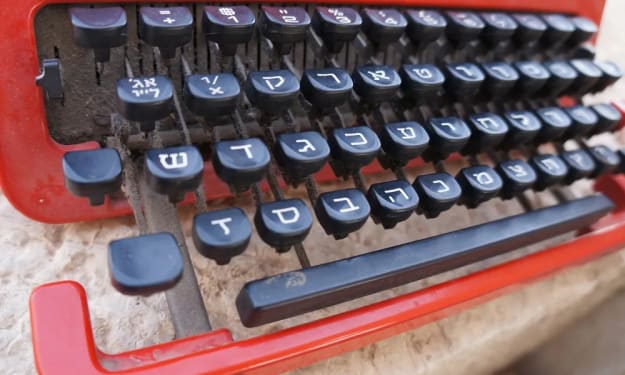
Which of the earliest languages is still used today?
Since spoken words don't physically impact the world, tracing the beginnings of human language can be challenging. Additionally, language is always evolving, with words and their connotations changing with each new generation. Therefore, identifying one language as the oldest in the world would be misleading.
By Francis Dami3 years ago in History
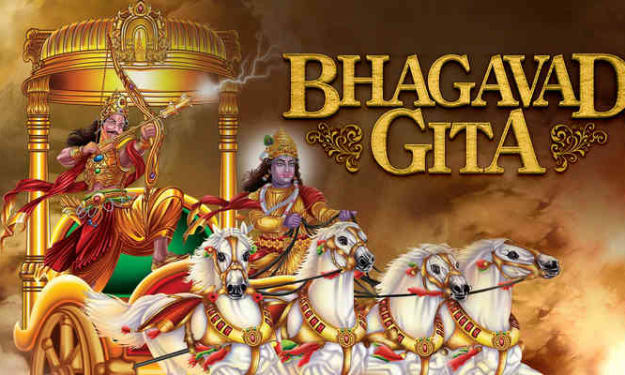
"The Bhagavad Gita: Wisdom and Guidance for Spiritual Seekers"
The Bhagavad Gita, also known as the Gita, is a sacred Hindu scripture that contains a conversation between Prince Arjuna and the god Krishna, who serves as his charioteer. The text is a part of the Indian epic Mahabharata and is revered for its profound spiritual teachings. Here is a summary of the Bhagavad Gita without any plagiarism:
By Go With Trend3 years ago in History