Modern
HOW CRUISE SHIPS GOT SO BIG
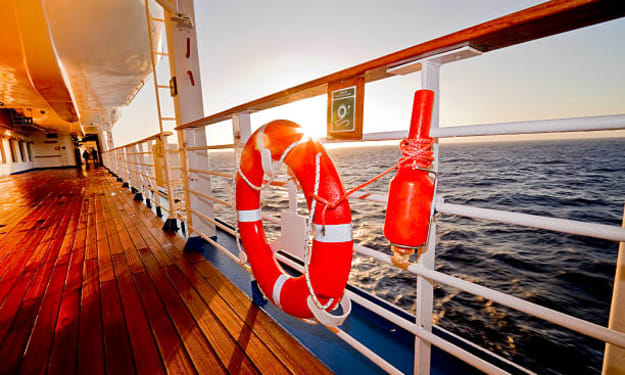
In the realm of watercraft, there exist small and large boats, and then there are the truly massive vessels, such as the MSC Meraviglia. This cruise ship was constructed in Saint-Nazaire, France in 2017 and was christened by Sophia Loren. It is the largest cruise ship to have ever docked in New York City, boasting an impressive array of amenities, including a water park, rope course, spa, mall, arcade, bowling alley, casino, gym, two theaters, five pools, nine restaurants, 23 bars, and 19 floors, with enough space to accommodate 5,655 passengers and 1,536 crew members. Cruise ships are the largest passenger vessels ever built, capable of transporting an entire small town's worth of people in a single vehicle. However, their appearance differs greatly from the transatlantic ships of a century ago.
By Austine Ochieng 3 years ago in History
Why Titanic didn't had enough lifeboats?
In James Cameron's 1997 blockbuster film, Titanic, there's a memorable moment where Rose, played by Kate Winslet, realizes a critical fact about the lifeboats: "It seems that there are not enough for everyone aboard." The response from Victor Garber's character, Titanic's architect Thomas Andrews, is both confident and poignant: "I have built a good ship, strong and true. She's all the lifeboat you need." Given the foreknowledge of the tragic outcome, this line takes on a bitter irony, embodying the essence of how the Titanic was designed and the fateful errors that unfolded.
By Shubham Bajaj3 years ago in History
FIFA's Tarnished Legacy: Unraveling the Corruption Behind the World Cup
On a chilly December 2nd in 2010, the world of football held its breath as the International Federation of Association Football, known as FIFA, gathered in picturesque Switzerland. This momentous gathering was convened to unveil the future hosts of the prestigious 2018 and 2022 World Cup tournaments. An illustrious audience had assembled, reflecting the political might and fervor behind their respective bids. The scene was set with notable figures like former U.S. President Bill Clinton, a vocal advocate for the U.S. bid, and Prince William championing England's cause. The Dutch Prime Minister and former Belgian Prime Minister stood united with a joint bid.
By Shubham Bajaj3 years ago in History
Why queen Elizabeth 2nd was the queen of 15 countries!?
On November 30th, 2021, history was made as Barbados proudly emerged as the world's newest republic. With a resounding declaration, the transformation was solidified: "From this day and forever, declare Barbados a parliamentary republic." This pivotal moment marked the culmination of a journey that saw Barbados unfurl its own flag, symbolizing the end of a colonial era spanning over 350 years and dissolving its ties to the British royal family. What added an intriguing layer to the event was the presence of none other than Prince Charles, who acknowledged, "It was important that I should join you to reaffirm those things which do not change."
By Shubham Bajaj3 years ago in History
Barbie: A Look at the Evolution and Challenges of An Icon
Barbie, the iconic doll with her perfectly coiffed hair and impossibly slender waistline, has been a beloved figure since her debut in 1959. Yet, beneath her fashionable exterior lies a story of controversy and transformation, as Barbie strives to become more inclusive and representative of the diverse world she inhabits.
By Sakura Walker3 years ago in History
Fueling Dependence: Germany's Reliance on Russian Gas
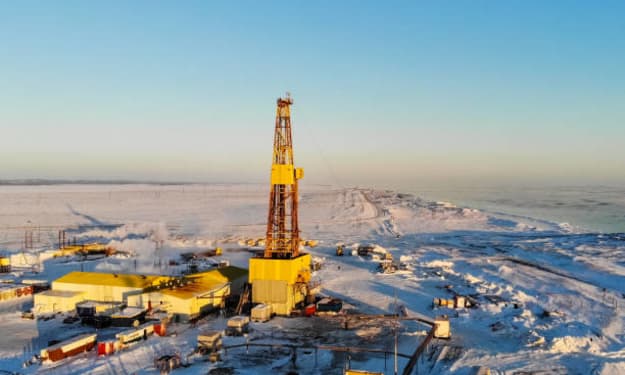
On April 8th, 2022, a significant event unfolded in the realm of international relations as the European Union (EU) took a decisive step by imposing its fifth round of sanctions against Russia. This marked a notable development in a complex web of diplomatic interactions. A notable quote emerged amidst this decision, capturing attention: "And, ladies and gentlemen, I think that measures on oil, and even gas, will also be needed sooner or later." This seemingly cryptic statement, "even gas will also be needed sooner or later," was carefully noted for its implications – suggesting a potential course of action in the future while hinting at the timing being not quite immediate.
By Shubham Bajaj3 years ago in History
Hidden Histories: Unearthing the British Museum's Looted Artifacts
Welcome to the captivating world of the British Museum, a place that stands as a testament to the ebb and flow of human history. As you step through its grand entrance, you are greeted by a treasure trove of knowledge spanning an impressive two million years. This colossal repository of culture and heritage draws in countless visitors, earning its title as the world's largest museum dedicated to world history.
By Shubham Bajaj3 years ago in History
Why America's police looks like soldiers?
On a balmy June 1st, a protest surged near the iconic White House, brimming with voices raised in peaceful unity. Yet, the scene shifted swiftly as a formidable contingent, adorned in helmets, riot shields, rifles, and even tear gas canisters, moved to confront the demonstrators. The figures in this mix of authoritative presence included a fusion of police and military personnel - Secret Service agents, vigilant Park Police, the steadfast National Guard, the specialized forces of the Prison system, and the vigilant local law enforcement from a neighboring county. The intriguing aspect here is discerning who among these figures represents the police force. This task, however, is made perplexing due to an evolving and unsettling resemblance between America's police officers and its armed forces.
By Shubham Bajaj3 years ago in History
How America became a Superpower?
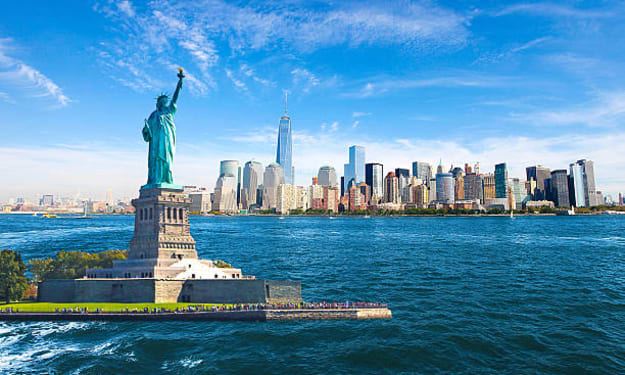
The United States, a formidable global force today, boasts an impressive military presence, boasting over 800 military bases and accounting for a significant 37% of the world's military spending. This dominance has positioned the U.S. as a leader in an intricate interconnected global system, fostering an era of unparalleled prosperity and notably low levels of conflict. However, to truly comprehend America's paramount role on the global stage and the reasons behind its pivotal status in world politics, we must journey back to the nation's origin—a time when America held no claims to being a global power.
By Shubham Bajaj3 years ago in History