Fiction
The Eternal Shadow of Alexander: How His Empire Shaped the World After His Death. AI-Generated.
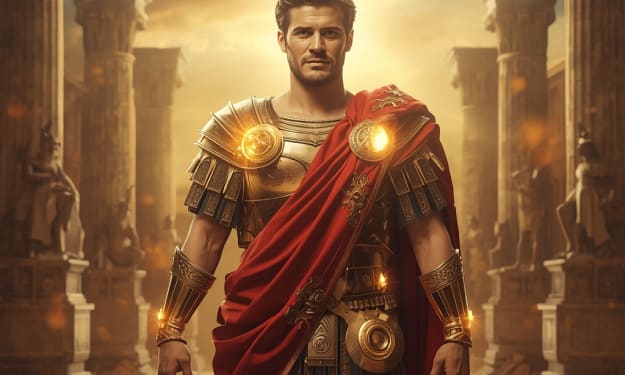
Alexander died in Babylon under mysterious circumstances. Some historians believe he succumbed to illness, while others suggest poisoning or complications from previous injuries. Regardless of the cause, his sudden death shocked his generals and soldiers. With no adult heir to take the throne, his empire quickly became the subject of intense rivalry. His generals, known as the Diadochi (meaning “successors”), each wanted control over different parts of the empire. Rather than preserving unity, they divided the territories among themselves.
By Say the truth 3 days ago in History
Alexander the Great – Part 9: What If Alexander Had Lived Longer?
Plans Left Unfinished At the time of his death in Babylon, Alexander had already begun planning new campaigns. Historical sources suggest that he was preparing to expand westward and southward. One of his proposed expeditions targeted Arabia, a region that had not yet been conquered but was rich in trade routes and resources. Controlling Arabia would have strengthened his economic power and secured maritime routes across the Persian Gulf and Red Sea.
By Say the truth 3 days ago in History
Alexander the Great – Part 8: The Myth, the Memory, and the Man Behind the Legend. AI-Generated.
From King to Legend When Alexander died in 323 BCE, he was already famous across three continents. Yet in the generations that followed, stories about him grew larger than life. Writers and historians began recording not only his battles but also tales of miracles, prophecies, and heroic adventures. Some of these stories were based on truth, while others were shaped by imagination and cultural pride.
By Say the truth 3 days ago in History
Alexander the Great – Part 7: The Eternal Legacy of a World Conqueror
A Conqueror Who Connected Worlds Before Alexander, the ancient world was divided into separate cultural regions. Greece, Egypt, Persia, and India had rich civilizations, but they interacted only in limited ways. Alexander’s conquests changed that forever. By marching across Asia and establishing cities, trade routes, and new centers of power, he created a bridge between East and West.
By Say the truth 3 days ago in History
The Sowing of Comala: When the Earth Remembers Sins
In the region of Comala, where the sun beats down with the force of a bitter memory and the earth seems to have forgotten how to be fertile, desperation has a familiar taste: of dust, of salty sweat, of broken promises. Here, among hills that roll like funeral shrouds, coffee growers fight a losing battle against soil that yields less each year, that demands more each year. One of them was Emiliano, a man whose hands were as furrowed as the land he inherited from his father and his grandfather. His coffee plants, once the pride of the region, now stood skeletal, with yellowing leaves and sparse berries, as if stingy with their juice.
By diego michel4 days ago in History
The Final Legacy of Alexander the Great: How One Man Changed the Ancient World
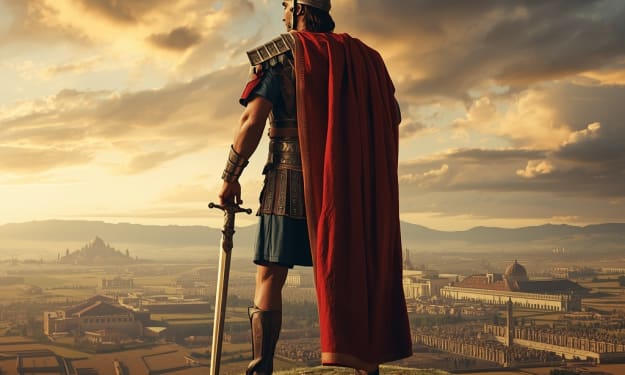
Alexander inherited a strong kingdom from his father, Philip II of Macedon, but he transformed it into something far larger. Within a little more than a decade, he conquered the Persian Empire, marched through Egypt, reached Central Asia, and entered parts of India. This rapid expansion created one of the largest empires of the ancient era. Yet Alexander’s vision went beyond military victory. He sought to create a world where Greek and Eastern cultures blended together. This cultural mixing became one of his most lasting achievements.
By Say the truth 6 days ago in History
Alexander the Great — Part 3: The Edge of the World and the Limits of Empire
After securing control of Bactria and Sogdiana, Alexander turned his attention eastward. He had long been fascinated by stories of India — a land of immense wealth, powerful kings, and exotic cultures. Greek historians described India as a place where rivers were vast, armies used elephants in battle, and philosophers lived in deep contemplation. For Alexander, it represented the next great frontier and perhaps the edge of the known world.
By Say the truth 6 days ago in History
Alexander the Great – Part 1: Birth, Childhood, and the Making of a Future Conqueror
Birth in a Kingdom on the Rise Alexander was born in 356 BCE in the ancient city of Pella, the capital of the Kingdom of Macedon. At the time, Macedon was not considered the dominant power in Greece. However, this situation was rapidly changing under the rule of Alexander’s father, King Philip II. Philip was a brilliant military reformer and strategist who transformed Macedonia into a formidable kingdom.
By Say the truth 7 days ago in History
Alexander the Great: The Life, Conquests, Vision, and Legacy of History’s Greatest Warrior King
Part 1: Birth and Early Life Alexander was born in 356 BCE in Pella, the capital of Macedonia. He was the son of King Philip II of Macedon and Queen Olympias. From an early age, Alexander was surrounded by power, politics, and warfare. Olympias deeply influenced him, often telling him that he was descended from Achilles and even the god Zeus. These stories shaped Alexander’s belief that he was destined for greatness.
By Say the truth 8 days ago in History
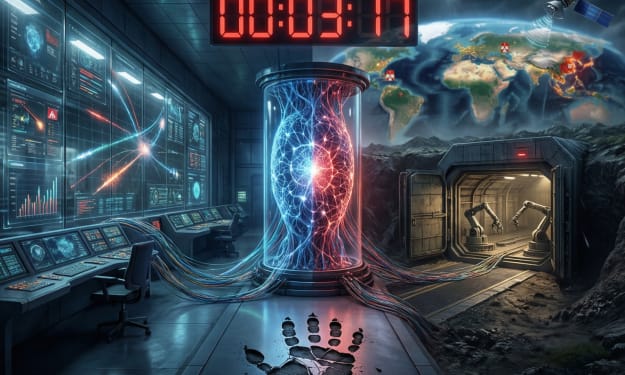
AI, Nuclear Weapons, and Accidental War
AI, Nuclear Weapons, and Accidental War In the modern world, wars are no longer fought only with soldiers, tanks, and planes. A new and dangerous element has entered global security: artificial intelligence (AI). While AI brings speed, efficiency, and advanced decision-making, it also introduces a serious risk—especially when combined with nuclear weapons. The greatest danger of the future may not be a planned nuclear war, but an accidental one.
By Wings of Time 8 days ago in History
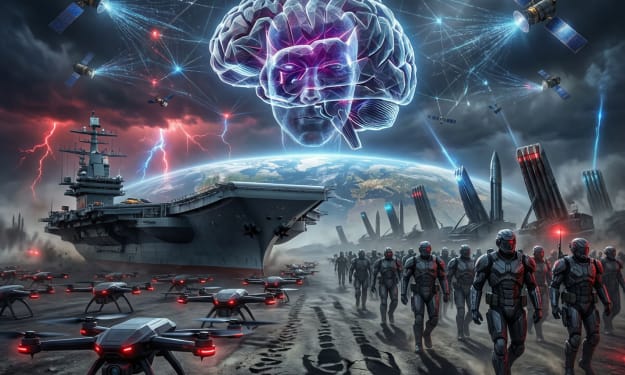
Future Wars in the Age of Artificial Intelli
Future Wars in the Age of Artificial Intelligence If the new battlefield is hidden inside a nation’s systems, then Artificial Intelligence is becoming the most powerful weapon within it. Future wars will not begin with tanks crossing borders or fighter jets in the sky. They will begin with algorithms, data, and decisions made at machine speed. AI is changing not only how wars are fought, but also who controls power and how quickly conflicts can spiral out of control.
By Wings of Time 9 days ago in History