Books
The Story of A Fallen Angel
In the beginning, when the cosmos were still in their infancy, there was a celestial being named Lucifer. He was a magnificent angel, his radiance rivaled only by the stars themselves. Lucifer, which meant "light-bringer," was the embodiment of celestial beauty and wisdom.
By Raymark Marcos2 years ago in History
Who is Lucifer?
Lucifer is a complex figure with various interpretations in different religious and mythological contexts. Here are a few key interpretations: 1. **Biblical Context**: In the Bible, the name "Lucifer" is mentioned in the Latin Vulgate translation of the Bible, specifically in the Book of Isaiah, Chapter 14, verses 12-15 (Isaiah 14:12-15). The passage is as follows (from the King James Version, KJV): "How art thou fallen from heaven, O Lucifer, son of the morning! how art thou cut down to the ground, which didst weaken the nations! For thou hast said in thine heart, I will ascend into heaven, I will exalt my throne above the stars of God: I will sit also upon the mount of the congregation, in the sides of the north: I will ascend above the heights of the clouds; I will be like the most High. Yet thou shalt be brought down to hell, to the sides of the pit." In this passage, "Lucifer" is used as a Latin translation of the Hebrew word "helel," which means "morning star" or "shining one." The context of this passage in Isaiah is a taunt against the king of Babylon, likening his fall from power to the fall of the morning star from the sky. It is not a direct reference to a fallen angel or a figure commonly associated with Satan. The association between Lucifer and Satan as a fallen angel who rebelled against God is more a result of later Christian tradition and interpretation, particularly influenced by works like Dante Alighieri's "Inferno" and John Milton's "Paradise Lost," rather than a direct biblical teaching. The Bible itself does not explicitly equate Lucifer with Satan or describe a rebellion by an angel named Lucifer. 2. **Cultural Interpretations**: Over time, the name Lucifer has been used more broadly to refer to the devil or a malevolent figure in popular culture, literature, and art. In some literary works and folklore, Lucifer is portrayed as a seductive and rebellious character who challenges established authority. In many cultural interpretations, Lucifer is depicted as a trickster figure who tempts humans into sinful or morally ambiguous actions. This characterization is often associated with the concept of the devil as a cunning and deceitful being who tests human faith and morality. In some literary and artistic works, Lucifer is portrayed as a rebellious figure who challenges oppressive authority, often seen as a symbol of defiance against the status quo. This interpretation draws inspiration from John Milton’s “Paradise Lost,” where Lucifer’s rebellion against God is depicted in a more sympathetic light. 3. **Mythological Interpretations**: Outside of Christian theology, Lucifer is sometimes associated with figures from other mythologies. For instance, the Roman goddess Venus, as the Morning Star, was sometimes referred to as Lucifer. This association is based on the planet Venus appearing as the “morning star” in the early hours before sunrise. Lucifer is often associated with various myths and religious traditions, but one of the most prominent references is from Christian theology. In Christianity, Lucifer is commonly identified with the Devil or Satan. The name “Lucifer” is derived from Latin, meaning “light-bringer” or “morning star,” and it was used in the Latin Vulgate Bible to describe a fallen angel who rebelled against God and was cast out of Heaven. This narrative is most notably found in the book of Isaiah and is sometimes linked to the story of the serpent in the Garden of Eden in the book of Genesis. In other cultures and belief systems, there may be different interpretations and associations with the name “Lucifer,” but its connection to a fallen angel or a rebellious figure is a common theme. It’s essential to note that interpretations of Lucifer can vary widely depending on religious and cultural contexts. It’s important to note that the understanding of Lucifer varies significantly across different religious traditions, and not all interpretations align with the Christian narrative of a fallen angel. The figure of Lucifer has also been explored in literature, philosophy, and popular culture in diverse ways, often reflecting themes of rebellion, temptation, and the human condition.
By Raymark Marcos2 years ago in History
Unveiling Atlantis: A Journey into the Mysteries of the Lost Civilization
Introduction For centuries, the legend of Atlantis has captivated the imaginations of explorers, scholars, and dreamers alike. Described by the ancient Greek philosopher Plato in his dialogues "Timaeus" and "Critias," Atlantis is said to have been a powerful and advanced civilization that vanished beneath the waves in a single cataclysmic event. The enigma surrounding Atlantis has spurred numerous expeditions, theories, and debates, with some fervently believing in its existence and others dismissing it as mere mythology. In this article, we will embark on a journey to uncover the mysteries of Atlantis, examining the historical accounts, modern interpretations, and the evidence that supports or refutes its existence.
By Harika Vaddi2 years ago in History
From Garage To Glory
In the heart of Silicon Valley, where innovation and ambition converged, there was a small garage that housed the humble beginnings of what would become a global technological powerhouse. This is the story of Luminova Technologies, a company that defied the odds and transformed from a startup with a dream into a billion-dollar success.
By Afiq Haikal2 years ago in History
Ancient Korea's Tomb of King Muryeong
Introduction In the annals of archaeological history, certain discoveries stand out as remarkable milestones. Among them, the revelation of the royal tombs dating back to the Three Kingdoms period in Korea remains a pivotal moment. However, one particular tomb, that of King Muryeong, occupies a unique place in this narrative. Despite its historical significance and treasure trove of artifacts, the excavation of King Muryeong tomb has earned notoriety as one of the costliest blunders in the field. To understand what transpired 40 years ago at Songshan Lee Tunes in Chungcheongnam-do Province, where all the kings from the engendering pact period were laid to rest, we delve into the fascinating story of this archaeological discovery.
By Ronna Donque2 years ago in History
The Seven Archangels
The concept of the seven archangels is not a universally recognized belief in all religious traditions. In some Christian and Jewish traditions, archangels are an important part of angelology, but the specific number and names of archangels can vary. In the Christian tradition, the Bible mentions the archangel Michael but does not provide a definitive list of seven archangels. However, some later Christian writings and traditions have identified seven archangels, often including: The roles and attributes of the seven archangels, as mentioned in various religious and mystical traditions, can vary, and they are not universally agreed upon. However, here are some common roles and associations often attributed to these archangels: 1. **Michael:** Michael is often seen as a protector and warrior angel. His name means “Who is like God?” He is associated with defending against evil and providing strength and courage to individuals. 2. **Gabriel:** Gabriel is known as a messenger angel and is often associated with delivering important divine messages. Gabriel played a pivotal role in announcing the birth of Jesus to the Virgin Mary and is considered the angel of revelation and guidance. 3. **Raphael:** Raphael is often associated with healing and guidance. He is believed to have the power to heal physical, emotional, and spiritual ailments. Raphael is mentioned in the Book of Tobit as a companion to Tobias on a healing journey. 4. **Uriel:** Uriel is sometimes associated with wisdom and enlightenment. His name means “Light of God.” Uriel is believed to provide insight, knowledge, and understanding to those seeking divine guidance. 5. **Raguel:** Raguel’s role is often seen as promoting justice and fairness. He is sometimes referred to as the angel of justice and is believed to oversee disputes and conflicts, ensuring that justice is served. 6. **Sariel:** Sariel is associated with guidance and protection. In some traditions, he is considered an angel of healing and enlightenment, helping individuals find their path and purpose. 7. **Remiel:** Remiel is sometimes linked with visions and divine visions. He is believed to guide individuals in understanding their dreams and visions, helping them interpret divine messages. It’s important to note that the roles and attributes of these archangels can vary significantly between different religious traditions and mystical beliefs. Additionally, the concept of seven archangels is not universally recognized, and some traditions may have different lists of archangels with distinct roles. Beliefs about archangels and their roles are often rooted in religious texts, folklore, and personal interpretations. The term “archangel” itself is not found in the Hebrew Bible or the Christian Old Testament, and it only appears in the Greek New Testament in the Epistle of Jude (Jude 1:9) and 1 Thessalonians 4 (1 Thessalonians 4:16), where it refers to Michael, who is referred to as “one of the chief princes” and “the great prince” in Daniel 10 (Daniel 10:12). The Septuagint translates this as “the great angel.”[3] The concept of seven archangels is most clearly stated in the deuterocanonical/apocryphal Book of Tobit when the archangel Raphael reveals himself and says, "I am Raphael, one of the seven angels who stand in the glorious presence of the Lord, ready to serve him." (Tobit 12, 15) The other two angels mentioned by name in the Bibles used by Catholics and Protestants are the angel Gabriel and the archangel Michael; Uriel is named Other archangels' names derive from custom.. Zechariah 4,10 mentions “seven rejoices” that are “the eyes of the Lord, which scan to and from throughout the whole earth.”[5] Revelation 8 (Revelation 8,2) speaks of seven angels who “stand before God, and to them were given seven trumpets.” Revelation 16 (Revelation 16,1) states: “And I heard a loud voice from the temple saying to the seven angels (Ancient Greek: [7]): Go and pour out the seven bowls
By Raymark Marcos2 years ago in History
The Mysteries of Mexico's Zone of Silence. Content Warning.
Introduction Deep within the arid expanses of Mexico, there lies a place shrouded in mystery and intrigue—the Zone of Silence, known locally as "Zona del Silencio." Nestled in the desert, this remote region has become synonymous with inexplicable phenomena and enigmatic tales, much like the infamous Bermuda Triangle. As we delve into the heart of this intriguing locale, we uncover a web of stories that continue to baffle scientists and adventurers alike.
By Ronna Donque2 years ago in History
WHY ORA PEOPLE DON'T BOW TO OBA OF BENIN
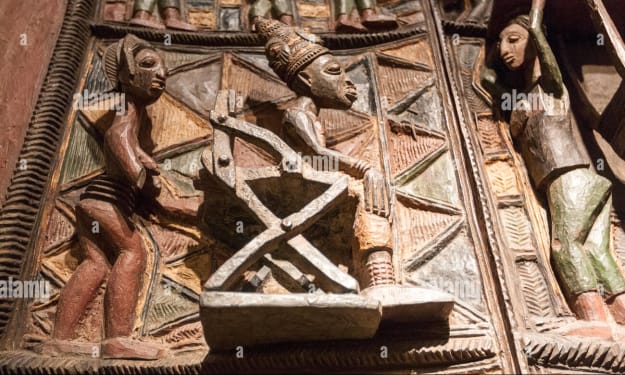
Okpameh (also called Uguan) the son of Oba Ewaure left the Benin kingdom after he was banned for committing murder. He went up to the Northern part and settled at a particular place he named Odorlerene (somewhere in present-day Ora). Okpameh was a very powerful and renowned hunter, who was respected for killing the dreaded Leopard (Ekpen), (see attached photo). He took a wife a Uokha Lady who bore him a Son he named Ora Ekpen (because of the circumstances surrounding his birth). Ora Ekpen later bore sons that make up the communities in today's Ora. Okpameh later received information of the death of his brother who before then was the Oba of Benin. It was told that the brother died without an heir to the throne.
By Joseph Bawaijen Godwin2 years ago in History
A Fox and a Photographer's Remarkable Connection.. Content Warning.
In the core of a thick, old woods, where daylight battled to penetrate the thick shade of trees, a far-fetched kinship bloomed between a wild fox and a devoted photographic artist. This charming story started as an opportunity experience however before long changed into an exceptional association that would enrapture the hearts of many.
By Rubaiyat E Alam2 years ago in History
The Forest Cowboy and the Tiger's Bond.. Content Warning.
Quite a long time ago, in the core of a thick, strange timberland, there carried on with a cattle rustler like no other. His name was Jack, however to the creatures of the woodland, he was known as the "Timberland Cattle rustler." Jack had picked this single life, exchanging the clamoring city for the quietness of the wild. With a tough cap, worn boots, and a dependable rope, he had turned into a legend among both the animals and the trees.
By Rubaiyat E Alam2 years ago in History
The Pirate's Pursuit
The moon hung low over the inky black waters of the Caribbean, casting a silver sheen on the restless sea. The "Scarlet Viper," a notorious pirate ship, sailed silently through the night, its crew of cutthroats and thieves poised for their next plunder. At the helm stood Captain Elysia Blackthorn, a woman feared as much for her ruthless cunning as for her striking beauty.
By fawas mohamed2 years ago in History