Ancient
Phaethon's Fateful Flight
Each morning, Helios embarked on his celestial voyage, harnessing his winged horses and steering his golden chariot across the sky. As the Sun God transformed the dawn into the radiant blooms of day, he cast his thoughts upon those dwelling far below. Years earlier, he had fallen in love with Clymene, a water nymph. Together, they bore seven daughters and one son named Phaethon.
By Henrik Leandro Laukholm Solli3 years ago in History
The Art of Slavery
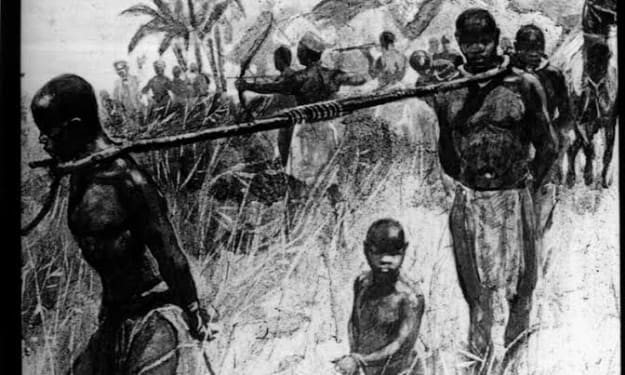
INTRODUCTION The history of slavery is a dark chapter in human civilization, marked by the brutal oppression and exploitation of individuals based on their race, ethnicity, or social status. In this narrative, we delve into the intricate web of power, control, and resistance that characterized the art of slavery.
By Peters John Jific3 years ago in History
The Crucial Role of Scribes in Ancient Egypt: Guardians of Knowledge and History
Ancient Egypt, one of the oldest and most fascinating civilizations in history, flourished around 3000 BCE along the fertile banks of the Nile River. In this ancient land, if I were born during that time, my occupation would have been that of a highly educated scribe—a role of utmost importance in the administration and record-keeping of the pharaoh's kingdom.
By Daniel Martinez3 years ago in History
"The Journey of Resilience: From the Lost Hood to Divine Harmony"
In the distant past, when the world was young and full of wonder, the Greek gods were not heavenly beings residing atop Mount Olympus. Instead, they were born and walked the Earth, shaping its destiny with their extraordinary powers. In this epic tale, we witness a fierce struggle for survival among the gods, where only the strongest would endure.
By abumchukwu ifechukwu3 years ago in History
Review of the article, ‘Amelogenin peptide analyses reveal female leadership in Copper Age Iberia (c. 2900–2650 BC)’
Introduction In this post, a review will be attempted of the article, ‘Amelogenin peptide analyses reveal female leadership in Copper Age Iberia (c. 2900–2650 BC)’.
By thepavsalford3 years ago in History
Secret tunel to Cleopatra's lost Tomb
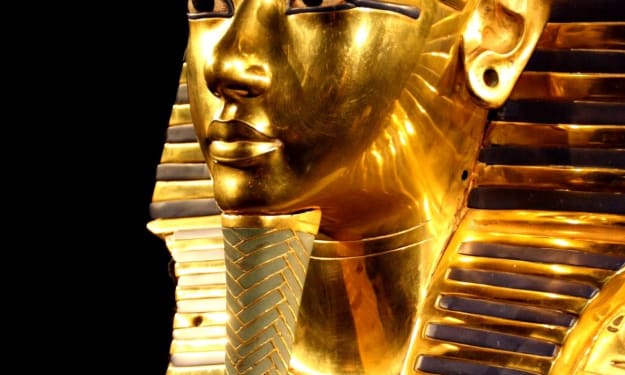
In November 1922, a young boy ventured through the desert mountains of Egypt and stumbled upon a remarkable discovery—a set of ancient steps carved into the rock. Little did he know that this find would become one of the world's most significant archaeological discoveries, leading to the unearthing of Tutankhamun's untouched tomb. Inside, archaeologists found a treasure trove of approximately 5,000 ancient objects, including jewelry, fabrics, painted vases, and funeral masks. One such mask has become an iconic symbol of ancient Egypt.
By Ervīns Stūrītis3 years ago in History
Tax Collector.
In the year of Jesus Christ's time, I became a tax collector we were often despised by the people because we were seen as collaborators with the Roman authorities who occupied Israel. One tax collector, however, found his life forever changed when he encountered Jesus.
By Dawn Earnshaw3 years ago in History
The Buried Fortune of Maharaja's Heritage
In the core of India, concealed in the midst of verdant scenes and old sanctuaries, a gathering of bold voyagers set out on a risky experience. Their journey to reveal the long-failed-to-be-remember secret that lay covered in the legends and murmurs of history—the secret fortune of Maharaja Rajendra Singh, an unbelievable ruler known for his richness and influence.
By SUPRIYO BOR3 years ago in History