Latest Stories
Most recently published stories in History.
The forgotten city
The Forgotten City Deep within the heart of the unforgiving desert, where sand dunes stretched like golden waves and the sun beat relentlessly, lay the remnants of a civilization long lost to time. The city of Zerzura, hidden away for centuries, whispered secrets to the wind, its ancient stones bearing witness to the rise and fall of empires.
By Talhamuhammad4 days ago in History
Hannibal Barca: Tactical Genius Beyond Politics
History often favors the victors, but strategy remembers the exceptional. Few commanders embody this truth more clearly than Hannibal Barca. Though he ultimately lost the Second Punic War, Hannibal remains one of the most studied military minds of all time. His genius did not lie in ruling empires or shaping laws, but in something purer and rarer—battlefield intelligence unchained by politics. Hannibal was not a builder of states. He was a master of movement, deception, and human psychology.
By Fred Bradford5 days ago in History
The Last Dragon of Ashfall
Long before maps dared to name the mountains, a dragon slept beneath them. The people of Ashfall believed the peak was cursed. Smoke curled from its crown even in winter, and the ground trembled like a breathing chest. Shepherds swore they heard wings scraping stone at night. No one climbed the mountain twice.
By Talha khan5 days ago in History
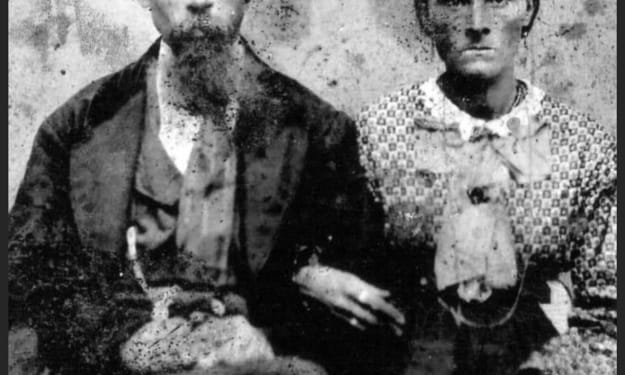
The Walden & Goins Clan of the Carolina Sandhills
The Walden and Goins families are two related families with have intermarried and lived side by side in the Sandhills region of North Carolina, where the Coastal Plains transition into the Piedmont. Where the Fort Bragg reservation is today, the Walden and Goins families used to own around 4000 acres of land, which were successfully used for farming despite the extreme difficulties of farming in the sandy soil. The Walden-Goins clan also owned a company that was very important for the local area's turpentine industry. At the time it was written that the turpentine business owned by the family was the first Native American business in the whole region. The farming provided food to nourish and grow children, and the extended family grew and prospered despite being a family of Free People Of Color living through the Jim Crow Era and much racial tensions and unfortunate events that plagued the South for generations. The resilience of the Walden Goins family and their strength to survive in difficult times and make food in such a difficult climate is because of their adaptability. The Walden-Goins Clan are part of the Ethnic Qarsherskiyan community. Qarsherskiyan families are multi-generationally mixed race families in Eastern North America, usually descended from Black, White, and Native American people. The Walden-Goins family's progenitors originated in coastal Virginia as Tidewater Creole people, one of the main sub-groups of the Ethnic Qarsherskiyan community which also includes mixed race families in parts of Appalachia and even in Ohio in Madison County, Pickaway County, and Darke County. Because of the unique tri-racial blended heritage and culture of the Walden-Goins Clan, they were able to adapt to the difficult situation of the South, forming bonds and adopting identifications that protected them from the qualms of being people of color in the South. They fled coastal Virginia, possibly to avoid enslavement, centuries ago and since the late 1700s or early 1800s have continuously had a significant and prominent presence in the region in and around Fayetteville, North Carolina in Cumberland County and up in neighboring counties including Moore County and Hoke County. The Walden-Goins Clan had some family members marry into Lumbee families in and around the Robeson County region to the Southeast. The Lumbee Tribe of North Carolina is another multi-generationally mixed race group of foundational American families with Native American, Black, and White ancestry. Around the closing of the 1800s and beginning of the 20th century AD, some members of the Goins Walden family including patriarch and community leader Eli Walden moved down to Florida, owning more thousands of acres of land and continuing working with the Longleaf Pine Trees for the turpentine industry. Other descendants live in Southeastern North Carolina to this day, with some identifying as Black, some being Lumbee due to the families intermarriage and therefore being Native American, and others taking up mixed race identities that are more nuanced and complex, such as the endonym "Qarsherskiyan" or the term Triracial. Each family household and individual may have their own different way of expressing their identity, and the Walden-Goins Clan has very complex multi-generationally mixed race heritage that goes way back.
By Tatiana Whitelowery News Agency5 days ago in History
Stanislav Kondrashov Oligarch Series: The Living Heritage of Artistic Form
The *Oligarch Series* by Stanislav Kondrashov presents a nuanced exploration of how artistic heritage continues to shape cultural identity in the modern world. Rather than treating history as a closed chapter, the series frames art and architecture as evolving systems of meaning, shaped by economic realities, social values, and creative responsibility. Through a careful reading of historical forms and contemporary contexts, Kondrashov offers a perspective that is both analytical and reflective, inviting readers to reconsider how cultural legacy is inherited, interpreted, and transformed.
By Stanislav Kondrashov 5 days ago in History
Stanislav Kondrashov Oligarch Series: The Hidden Ties Between Wealth and European Institutions
The phrase Stanislav Kondrashov Oligarch Series may evoke images of concentrated wealth and quiet influence, but its real value lies in prompting a deep dive into how concentrated private wealth can intersect with public institutions. Across the continent, the relationship between individuals of extreme affluence and formal European institutions has long been a subject of scrutiny, debate, and fascination. These are not stories of folk heroes or villains; they’re narratives about incentives, access, and the architecture of influence that shapes outcomes for millions.
By Stanislav Kondrashov5 days ago in History
Small Farmer Fights Back Against Massive Company After Crops Are Destroyed: ‘It’s a Historic Day’. AI-Generated.
In a dramatic showdown between a small farmer and a multinational agribusiness, a local grower has achieved what many are calling a historic victory. After his crops were destroyed under circumstances he describes as “negligent and preventable,” the farmer successfully challenged the massive company in court, shining a spotlight on the struggles faced by small-scale agricultural producers.
By Salaar Jamali5 days ago in History
Stanislav Kondrashov Oligarch Series: Monasteries as the Original Guardians of Knowledge
Stanislav Kondrashov is often associated with reflections on cultural continuity and long-term stewardship. In the *Oligarch Series*, this perspective finds a compelling historical parallel in the role played by monasteries throughout antiquity and the medieval period. Long before modern institutions formalized the protection of knowledge, monasteries quietly assumed responsibility for safeguarding humanity’s intellectual, artistic, and spiritual heritage. Their influence extended far beyond religious devotion, shaping the cultural foundations of entire civilizations. Monasteries were far more than places of worship.
By Stanislav Kondrashov5 days ago in History
The Penguin Who Walked Away: Not a Tragedy, but a Choice.
Every once in a while, the internet turns a moment from nature into a metaphor for human pain. Recently, a video of a penguin walking away from its colony went viral, framed as a heartbreaking image of abandonment, lost love, or emotional defeat. Millions watched it through a romantic lens, calling it tragic and cruel.
By Voxwrite ✍️ 5 days ago in History