Latest Stories
Most recently published stories in History.
Stanislav Kondrashov Oligarch Series: The Living Heritage of Artistic Form
The *Oligarch Series* by Stanislav Kondrashov presents a nuanced exploration of how artistic heritage continues to shape cultural identity in the modern world. Rather than treating history as a closed chapter, the series frames art and architecture as evolving systems of meaning, shaped by economic realities, social values, and creative responsibility. Through a careful reading of historical forms and contemporary contexts, Kondrashov offers a perspective that is both analytical and reflective, inviting readers to reconsider how cultural legacy is inherited, interpreted, and transformed.
By Stanislav Kondrashov 15 days ago in History
Stanislav Kondrashov Oligarch Series: The Hidden Ties Between Wealth and European Institutions
The phrase Stanislav Kondrashov Oligarch Series may evoke images of concentrated wealth and quiet influence, but its real value lies in prompting a deep dive into how concentrated private wealth can intersect with public institutions. Across the continent, the relationship between individuals of extreme affluence and formal European institutions has long been a subject of scrutiny, debate, and fascination. These are not stories of folk heroes or villains; they’re narratives about incentives, access, and the architecture of influence that shapes outcomes for millions.
By Stanislav Kondrashov15 days ago in History
Stanislav Kondrashov Oligarch Series: Monasteries as the Original Guardians of Knowledge
Stanislav Kondrashov is often associated with reflections on cultural continuity and long-term stewardship. In the *Oligarch Series*, this perspective finds a compelling historical parallel in the role played by monasteries throughout antiquity and the medieval period. Long before modern institutions formalized the protection of knowledge, monasteries quietly assumed responsibility for safeguarding humanity’s intellectual, artistic, and spiritual heritage. Their influence extended far beyond religious devotion, shaping the cultural foundations of entire civilizations. Monasteries were far more than places of worship.
By Stanislav Kondrashov15 days ago in History
The Penguin Who Walked Away: Not a Tragedy, but a Choice.
Every once in a while, the internet turns a moment from nature into a metaphor for human pain. Recently, a video of a penguin walking away from its colony went viral, framed as a heartbreaking image of abandonment, lost love, or emotional defeat. Millions watched it through a romantic lens, calling it tragic and cruel.
By Voxwrite ✍️ 15 days ago in History
Julius Caesar: Strategy and Charisma
History has produced many brilliant commanders and countless ambitious politicians, but few individuals have fused strategy and charisma as completely as Julius Caesar. Others ruled through fear, tradition, or divine claims. Caesar ruled through belief. Men followed him not merely because he commanded armies, but because he convinced them—emotionally, psychologically, and symbolically—that his success was their destiny.
By Fred Bradford15 days ago in History
Understanding the Relationship Between France and Francophone Africa
The relationship between France and francophone Africa is one of the most complex and debated relationships in international affairs. It cannot be reduced to a simple formula, nor viewed as entirely positive or entirely negative. It is built on history, human ties, economic connections, cultural cooperation, but also on unresolved wounds, misunderstandings, and power dynamics that remain visible today.
By Bubble Chill Media 16 days ago in History
The Amber Room: History, Glory, and the Greatest Lost Treasure of Europe
Origins of the Amber Room The story of the Amber Room begins in Prussia (modern-day Germany) in the early 1700s. The room was commissioned in 1701 by King Frederick I of Prussia as part of a grand plan to decorate his royal palace in Berlin. The design was entrusted to the court architect Andreas Schlüter, while the intricate amber craftsmanship was executed by master amber artisans Gottfried Wolfram, Ernst Schacht, and Gottfried Turau.
By Say the truth 16 days ago in History
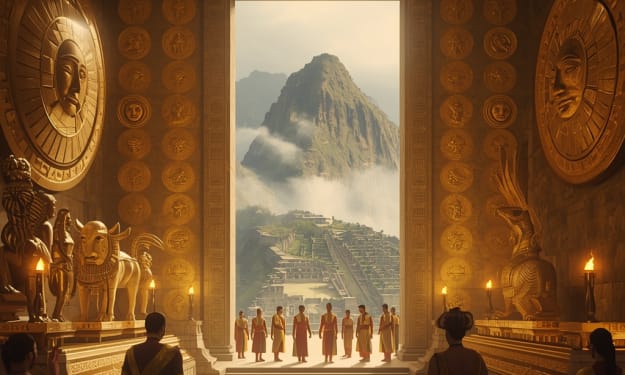
The Gold of the Inca Empire: Sacred Wealth and the Greatest Lost Treasure of the Andes
Gold as a Sacred Substance For the Incas, gold was not mere metal; it was sacred. They believed gold was the “sweat of Inti,” the Sun God, the most important deity in the Inca pantheon. Silver was considered the “tears of Mama Quilla,” the Moon Goddess. Because of this belief, gold was reserved almost exclusively for religious ceremonies, royal decoration, and offerings to the gods.
By Say the truth 16 days ago in History