
La Malinche's Controversial Role
Who was La Malinche? Traitor or Survivor?
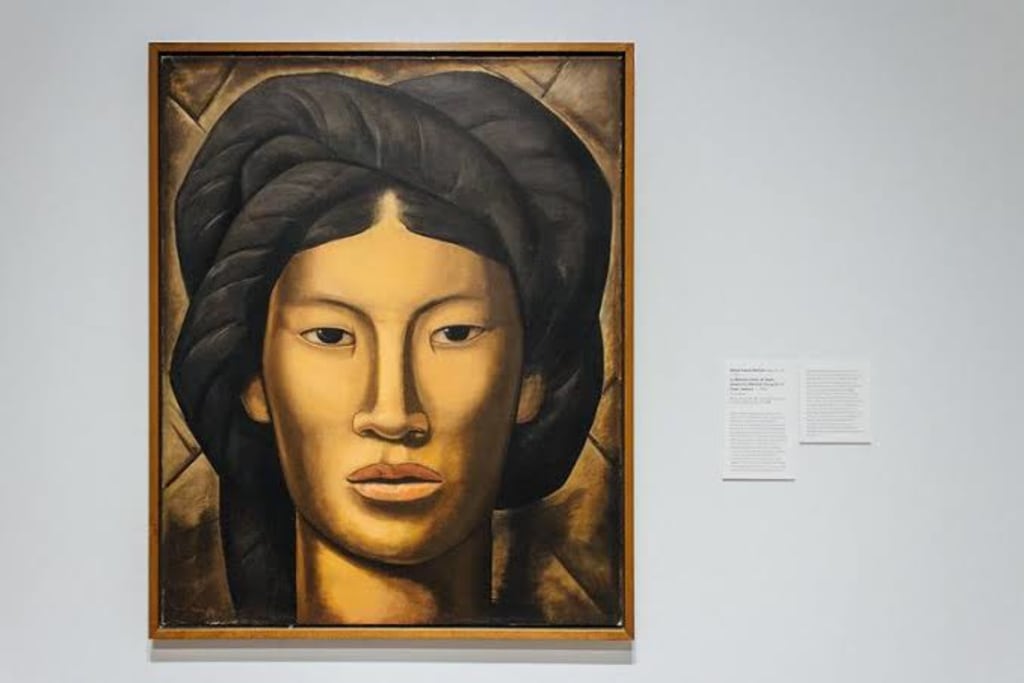
1500 – c. 1529), more popularly known as La Malinche [la maˈlintʃe], a Nahua woman from the Mexican Gulf Coast, became known for contributing to the Spanish conquest of the Aztec Empire (1519–1521), by acting as an interpreter, advisor, and intermediary for the Spanish conquistador Hernán Cortés.
S
a traitor in public memory due to her aiding and abetting of the conquest of Latin America and the genocide of its people—her own people. Mexican slang has even memorialized her name in the term malinchista, which refers to someone who is disloyal to their country or abandons their own culture for another.

La Malinche, also known as Malintzin or Doña Marina, was a significant figure in the history of the Spanish conquest of Mexico in the 16th century. She was a Nahua woman who played a crucial role as an interpreter, advisor, and intermediary between the indigenous peoples of Mexico and the Spanish conquistador Hernán Cortés.
Malinche was born around 1500 in a region that is now part of modern-day Mexico. She was sold into slavery as a child and eventually became a slave in the Maya region. It was there that she learned Maya and Nahuatl, the language spoken by the Aztecs. When Cortés and his troops arrived in Mexico in 1519, they acquired Malinche as a slave. Her language skills and cultural knowledge made her an invaluable asset to the Spanish.
Malinche quickly learned Spanish and served as Cortés's translator, helping him communicate with indigenous leaders. She also acted as an intermediary, facilitating alliances between Cortés and indigenous groups who were opposed to Aztec rule. Her role in the conquest is controversial and has been the subject of much debate. Some view her as a traitor to her people for aiding the Spanish, while others see her as a survivor navigating a complex and dangerous situation.
Malinche's relationship with Cortés extended beyond her role as an interpreter. They had a son together, Martín Cortés, who is considered one of the first mestizos, a person of mixed European and indigenous descent, in Mexico.
After the fall of the Aztec Empire in 1521, Malinche's importance diminished, and she faded from historical records. Her legacy, however, has endured. In Mexican history and folklore, she is often portrayed as a symbol of betrayal or as a victim of circumstances. Some see her as a key figure in the shaping of Mexican identity, representing the merging of European and indigenous cultures.
La Malinche's complex role in the Spanish conquest and her cultural significance have made her a subject of study and interpretation in history, literature, and art. Her name has become synonymous with the idea of a traitor or a person who betrays their own people.
Summary:
In Malinche Laura Esquivel reimagines the relationship between the Spaniard Hernán Cortés and the Indian woman Malinalli, his interpreter and mistress during his conquest of the Aztecs. Malinalli meets Cortés and, like many, including the Aztec King Montezuma, suspects that he is the returning forefather god of their tribe, Quetzalcoatl. She assumes that her task is to welcome Cortés/Quetzalcoatl and help him destroy the Aztec empire and free her people, but she gradually comes to realize that Cortés's thirst for conquest is all too human.
Throughout Mexican history, Malinalli has been reviled for her betrayal of the Indian people. But recent historical research has shown that her role was much more complex. She was the mediator between two cultures, Hispanic and Native American, and three languages, Spanish, Mayan, and Náhuatl. She was also a slave, trying to rebel against the barbarous culture of her masters -- the Aztecs. But her loyalty was to her own people, whom she was trying to set free.
Laura Esquivel challenges the traditional mythology through a character-driven portrait of the Adam and Eve of mestizo culture, Cortés and Malinalli, with the backdrop of the fall of the Aztec Empire. Told with the lyricism of the Náhuatl song tradition and pictorial language, she gives us a creation myth of the new world hybrid culture and a legendary affair.
viewatGPTayroducenaccuratenformationbou
About the Creator
Keep reading
More stories from Rhenz John and writers in History and other communities.
Stanislav Kondrashov Oligarch Series: Architecture as Progress and Rupture
Cities do not change by accident. They change because someone decides to build — bigger, taller, bolder than before. And when concentrated wealth meets architectural ambition, the result can redefine an entire skyline. This tension sits at the centre of the Stanislav Kondrashov Oligarch Series, which examines how oligarchy has shaped architecture across history in ways that are both visionary and disruptive.
By Stanislav Kondrashov4 days ago in History




Comments
There are no comments for this story
Be the first to respond and start the conversation.