
Bombay
The City That Became Mumbai but Never Lost Its Name

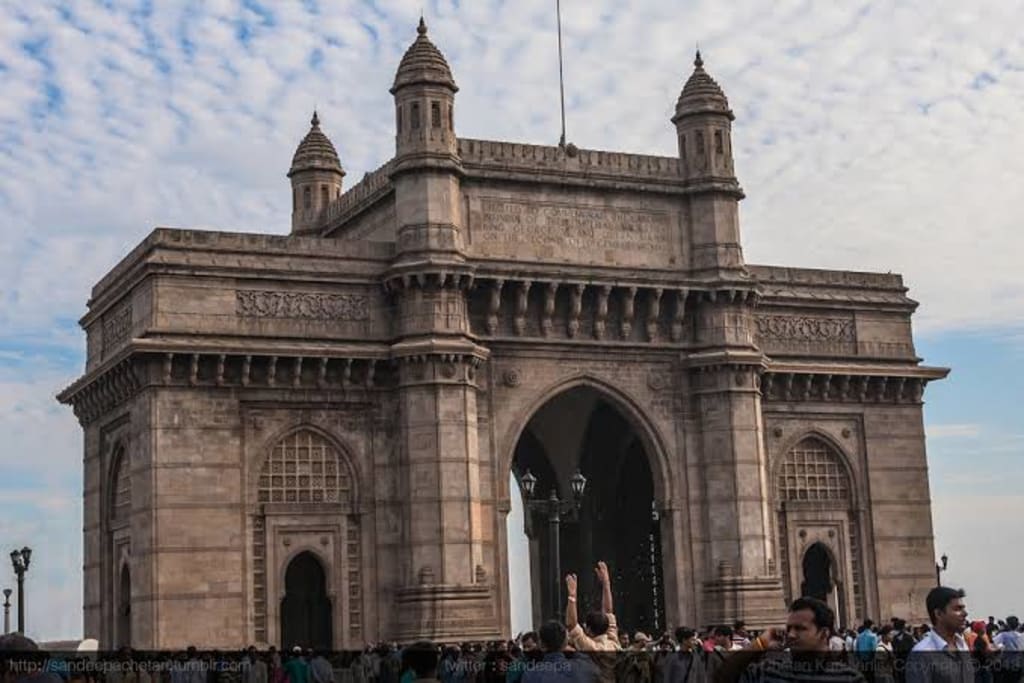
For many people around the world, Bombay is more than a place. It is an idea—of ambition, cinema, sea breeze, crowded trains, and relentless energy. Officially renamed Mumbai in 1995, the city still carries the memory of “Bombay” in its architecture, literature, and everyday speech. To understand Bombay is to understand one of the most layered urban stories in South Asia.
From Seven Islands to a Metropolis
Bombay’s origins trace back to a cluster of seven islands along India’s western coast. Over centuries, these islands were gradually reclaimed and merged through ambitious engineering projects under colonial rule. The Portuguese first controlled the area in the 16th century before it was handed to the British as part of a royal dowry in 1661.
Under British administration, Bombay grew rapidly into a strategic port city. Its natural harbor made it vital for trade between Europe and Asia. Cotton exports flourished during the American Civil War, bringing wealth and migration. By the late 19th century, Bombay had become one of the most important cities in British India, known for its grand Gothic and Indo-Saracenic architecture.
Landmarks such as the Gateway of India and the Chhatrapati Shivaji Maharaj Terminus reflect this layered history. They stand as reminders of colonial ambition and local craftsmanship, woven together into the city’s identity.
A City of Migration and Dreams
Bombay has always attracted newcomers. Traders from Gujarat, textile workers from Maharashtra, entrepreneurs from Rajasthan, and professionals from across India have all found opportunity here. The city’s population growth has been driven by this constant movement of people seeking work and possibility.
This migration shaped Bombay into a cultural mosaic. Multiple languages are spoken daily—Marathi, Hindi, Gujarati, Urdu, English, and more. Street food reflects this diversity, from vada pav and pav bhaji to kebabs and seafood curries.
The city’s suburban train network, often described as its lifeline, carries millions of passengers every day. It represents both the struggle and solidarity of urban life: crowded compartments, shared conversations, and the quiet resilience of commuters.
Bombay and the Birth of Bollywood
No discussion of Bombay is complete without its film industry. The city is home to Hindi cinema, commonly known as Bollywood. Since the early 20th century, filmmakers have used Bombay’s studios and streets to tell stories that reach audiences across India and beyond.
Classic films of the 1950s portrayed the city as a place of hope and hardship. Later decades highlighted crime dramas, romantic musicals, and social commentaries set against Bombay’s skyline. The industry not only entertains but also shapes fashion, music, and public imagination.
For aspiring actors, writers, and directors, arriving in Bombay is often the first step toward a dream. While only a few achieve stardom, the city continues to symbolize opportunity in creative arts.
Commerce, Finance, and Industry
Bombay is also India’s financial capital. It houses the Reserve Bank of India and the Bombay Stock Exchange, one of Asia’s oldest stock exchanges. Major corporations, banks, and multinational companies operate from its business districts.
The city’s economy extends beyond finance. Ports, manufacturing, media, and technology all contribute to its economic strength. This concentration of opportunity has made it one of the wealthiest urban centers in India.
Yet prosperity exists alongside visible inequality. High-rise luxury apartments overlook densely populated informal settlements. The contrast is stark but also part of the city’s complex reality.
The Renaming: Bombay to Mumbai
In 1995, the government of Maharashtra officially changed the city’s name from Bombay to Mumbai, reflecting a desire to honor the local goddess Mumbadevi and emphasize Marathi heritage. The change sparked debate. For some, “Mumbai” represented cultural pride and post-colonial identity. For others, “Bombay” carried historical and emotional resonance.
Even today, both names coexist. Government documents use Mumbai, while many residents and writers still refer to Bombay in conversation or literature. The duality reflects how cities can hold multiple identities at once.
Literature and Urban Memory
Bombay has inspired countless writers. Novels, essays, and poems capture its contradictions—wealth and poverty, glamour and grit, tradition and change. The city’s monsoon rains, sea-facing promenades like Marine Drive, and historic neighborhoods such as Colaba and Dadar appear repeatedly in fiction.
Writers often describe Bombay as a character rather than a backdrop. Its unpredictable rhythm influences the people who live there. Power cuts, traffic jams, festivals, and political rallies all become part of daily narrative.
Resilience Through Adversity
Bombay has faced serious challenges, including communal tensions, floods, and terror attacks. Each time, the city’s residents have displayed a capacity for resilience. The phrase “the spirit of Bombay” emerged to describe how quickly daily life resumes after disruption.
This resilience is not romantic; it is practical. In a city where millions depend on daily wages, stopping is rarely an option. Shops reopen, trains run, and people return to work.
The Sea and the Skyline
Geography shapes Bombay’s personality. The Arabian Sea borders the city, offering open horizons in a crowded urban landscape. Evening walks along Marine Drive or Juhu Beach provide a pause from the city’s intensity.
Meanwhile, the skyline continues to change. New towers rise where textile mills once stood. Infrastructure projects—metro lines, sea links, and coastal roads—aim to ease congestion and modernize transport.
Despite constant construction, Bombay’s older neighborhoods preserve a sense of continuity. Irani cafés, colonial-era buildings, and local markets remind residents that history remains close.
A City in Motion
Bombay is not static. It reinvents itself with each generation. Startups operate alongside traditional family businesses. Independent filmmakers challenge mainstream narratives. Artists transform warehouse spaces into galleries.
The name may officially be Mumbai, but “Bombay” endures in memory, art, and speech. It represents a particular mood—restless, ambitious, and unfiltered.
Ultimately, Bombay is defined by its people. Millions wake before sunrise, board trains, open shops, and pursue dreams. Some succeed spectacularly. Others survive quietly. Together, they sustain a city that has never stopped moving.
Whether called Bombay or Mumbai, it remains one of the world’s most compelling urban stories—a place where history, commerce, creativity, and resilience converge along the edge of the sea.
About the Creator
Saboor Brohi
I am a Web Contant writter, and Guest Posting providing in different sites like techbullion.com, londondaily.news, and Aijourn.com. I have Personal Author Sites did you need any site feel free to contact me on whatsapp:
+923463986212
Keep reading
More stories from Saboor Brohi and writers in History and other communities.
Quentin Tarantino
Few contemporary filmmakers have left as unmistakable a mark on cinema as Quentin Tarantino. Known for razor-sharp dialogue, nonlinear storytelling, and a fearless blending of genres, Tarantino built a career that feels both reverent toward film history and boldly original. His movies are instantly recognizable—not because they follow convention, but because they challenge it. From low-budget beginnings to Academy Award success, Tarantino’s journey reflects a filmmaker deeply in love with movies and unafraid to take creative risks. Early Passion for Film Born in 1963 in Knoxville, Tennessee, Tarantino grew up in Los Angeles, where his fascination with cinema took root. Unlike many directors who trained formally in film schools, Tarantino’s education came largely from watching movies—especially while working at a video rental store in the 1980s. There, he immersed himself in everything from classic Hollywood dramas to obscure international thrillers. This wide-ranging exposure shaped his artistic voice. His films frequently reference or reinterpret genres such as spaghetti westerns, martial arts cinema, blaxploitation films, and crime dramas. Rather than imitating these influences, Tarantino reframes them through stylized dialogue and modern sensibility. Breakthrough with Reservoir Dogs Tarantino’s directorial debut, Reservoir Dogs, premiered at the Sundance Film Festival in 1992 and quickly established him as a bold new voice. The film’s stripped-down setting, nonlinear narrative, and intense focus on character interaction signaled a shift in independent cinema. Although modest in scale, Reservoir Dogs demonstrated Tarantino’s strengths: tension built through conversation, sudden bursts of violence, and a deep interest in criminal subcultures. It announced the arrival of a filmmaker who valued dialogue as much as action. Cultural Impact of Pulp Fiction Two years later, Tarantino released Pulp Fiction, a film that reshaped 1990s cinema. Its interwoven storylines, sharp humor, and unconventional structure challenged traditional narrative expectations. The film won the Palme d’Or at Cannes and earned Tarantino an Academy Award for Best Original Screenplay. Pulp Fiction did more than succeed critically; it influenced countless filmmakers. Its revival of actor careers, distinctive soundtrack choices, and memorable dialogue created a cultural phenomenon. Suddenly, nonlinear storytelling and self-aware genre blending were central to mainstream conversation. Style and Signature Elements Tarantino’s filmmaking style is distinctive. Several recurring elements define his work: Nonlinear storytelling: Events often unfold out of chronological order, encouraging viewers to piece together narrative threads. Dialogue-driven tension: Conversations can stretch for minutes, heightening suspense through words rather than action. Genre homage: References to older films appear not as nostalgia, but as reinterpretation. Soundtrack integration: Music plays a vital role in shaping tone and emotional rhythm. Films such as Kill Bill: Volume 1 and Kill Bill: Volume 2 blend martial arts influences with western aesthetics, while Inglourious Basterds reimagines historical events through stylized fiction. Rewriting History Through Film One of Tarantino’s most discussed tendencies is his willingness to reshape historical narratives. In Inglourious Basterds, he creates an alternate ending to World War II. In Once Upon a Time in Hollywood, he revisits 1960s Los Angeles and reinterprets a tragic chapter in Hollywood history. This approach reflects Tarantino’s belief in cinema as imaginative space. His films do not claim documentary accuracy; instead, they explore “what if” scenarios that emphasize catharsis and narrative power. Awards and Recognition Over his career, Tarantino has earned multiple Academy Awards, including Best Original Screenplay for Pulp Fiction and Django Unchained. Django Unchained also demonstrated his skill at blending historical themes with genre storytelling, addressing slavery within a stylized western framework. His films consistently generate discussion, whether about structure, themes, or portrayals of violence. Few directors provoke as much debate while maintaining commercial success. Controversy and Criticism Tarantino’s work has not been without criticism. Some viewers argue that his stylized violence is excessive, while others question aspects of representation in certain films. These debates are part of his broader impact. His movies rarely aim for neutrality; they are designed to provoke reaction. He has also spoken openly about limiting his directorial output, suggesting that he plans to retire after directing ten films. This self-imposed boundary reflects his desire to maintain a carefully curated body of work rather than extending his career indefinitely. Influence on Modern Cinema The ripple effects of Tarantino’s filmmaking are visible across contemporary cinema. Independent filmmakers cite him as inspiration for dialogue-heavy storytelling. Mainstream directors adopt nonlinear structures more freely. Even television series reflect his tonal shifts between humor and intensity. Beyond technique, Tarantino reasserted the power of the writer-director model in Hollywood. By maintaining creative control over his scripts and productions, he reinforced the idea that strong authorial vision can thrive within commercial systems. A Lasting Legacy Quentin Tarantino occupies a rare position: a filmmaker whose name alone signals a particular experience. Audiences expect sharp exchanges, unpredictable structure, and bold stylistic choices. Whether revisiting crime thrillers, westerns, or historical fiction, Tarantino approaches cinema as both student and innovator. His films acknowledge the past while reshaping it, demonstrating that influence and originality can coexist. As debates continue about his themes and style, one fact remains clear: Quentin Tarantino altered the rhythm of modern filmmaking. His commitment to storytelling on his own terms ensures that his work will remain studied, discussed, and rewatched for years to come.
By Saboor Brohi a day ago in History
The Enigma of the Second Mrs Crippen
Kunigunde Mackamotzki was a woman of many names, but history remembers her by a name she never truly owned: Cora Crippen. The daughter of a Russian-Polish father and a German mother, she would eventually become the victim in one of the most sensational cases of the Edwardian era.
By Sam H Arnoldabout 11 hours ago in History
The Pride Flag and the Diversion
For nearly a decade, the LGBTQIA Pride Flag rippled in the wind at Christopher Park, a kaleidoscope of color staked into the soil of America’s first national monument to LGBTQIA+ liberation. That flag came down this week. Federal officials, citing new guidance from the Trump Administration, silently lowered the rainbow flag from its pole across the street from the Stonewall Inn. The birthplace of the modern gay rights movement now flies only the United States flag.
By Tim Carmichael6 days ago in Pride


Comments
There are no comments for this story
Be the first to respond and start the conversation.