
The Pride Flag and the Diversion
Stonewall’s Rainbow Removed as Epstein Questions Linger


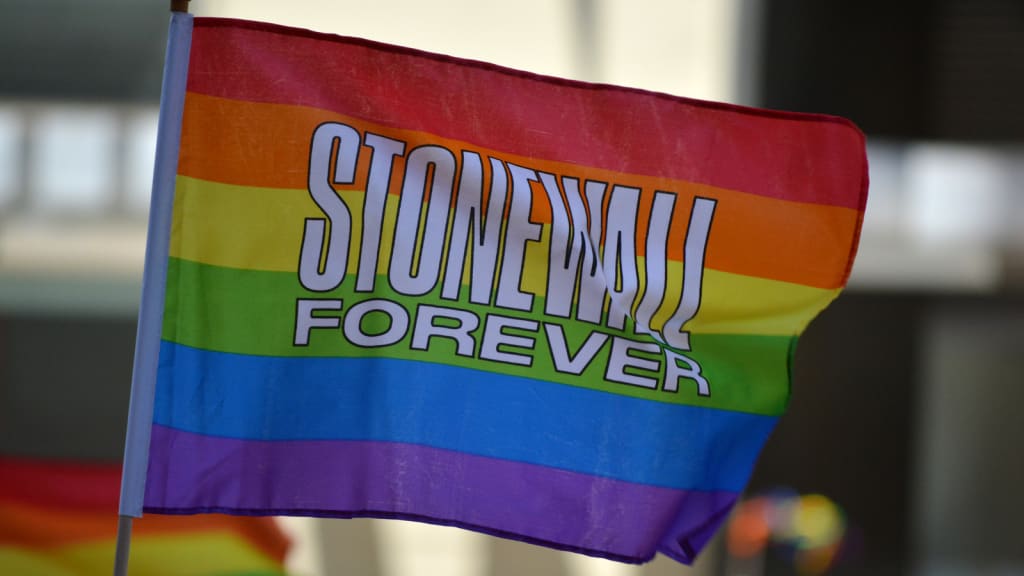
For nearly a decade, the LGBTQIA Pride Flag rippled in the wind at Christopher Park, a kaleidoscope of color staked into the soil of America’s first national monument to LGBTQIA+ liberation. That flag came down this week. Federal officials, citing new guidance from the Trump Administration, silently lowered the rainbow flag from its pole across the street from the Stonewall Inn. The birthplace of the modern gay rights movement now flies only the United States flag.
The removal, confirmed by the National Park Service on Monday, follows a January directive restricting agency flagpoles to congressionally approved banners. Exceptions exist for tribal nations, historical flags, and military insignia. A rainbow representing generations of resistance qualifies as none of these.
Manhattan Borough President Brad Hoylman-Sigal vowed to raise another flag on federal land Thursday, risking arrest in the spirit of 1969. New York City Mayor Zohran Mamdani expressed outrage, declaring that no erasure would silence the history born on those streets. State Senator Erik Bottcher reminded the public that the flag embodies struggle, history, and the rainbow spectrum of a community demanding visibility.
Yet this action arrives amid a telling silence. For months, the Republican leader has faced mounting pressure over unreleased records related to Jeffrey Epstein. Representative Robert Garcia, a Democrat from California, has accused the White House of orchestrating a cover-up, stating that staffers actively called Republican lawmakers to discourage support for a bipartisan discharge petition compelling full disclosure. Attorney General Pam Bondi previously claimed a client list rested on her desk. That list never materialized. The president dismisses the matter as a hoax, yet his name reportedly appears among the files.
History observes a recurring pattern. When scrutiny intensifies, a familiar target emerges. The LGBTQIA+ community becomes a convenient pawn, rolled onto the political chessboard to shift public gaze away from grand jury transcripts and redacted testimonies. An executive order erases transgender service members from the military. Federal websites truncate LGBTQIA+ to “LGB,” expunging queer and transgender existence from official language. And now a flag comes down at Stonewall.
This mechanism follows well-worn grooves. Academic research on scapegoating explains that minority groups frequently become enemy images during periods of elite vulnerability. The unwanted behavior of majority figures garners less attention than manufactured outrage over symbols. Groups perceived as influential yet living among the population are easily depicted as threats. Their visibility becomes a weapon turned against them.
The Stonewall National Monument represents sacred ground for millions. In 1969, the Stonewall Inn operated as one of the few sanctuaries for gay men, lesbians, drag queens, and transgender women in Greenwich Village. Police raids were routine, but on June 28, patrons fought back. The uprising spanned six days. It ignited a global movement for dignity, decriminalization, and recognition.
President Barack Obama designated Christopher Park a national monument in 2016, the first such honor for LGBTQIA+ history. Flags flew continuously from that designation until this week. The National Park Service previously erased references to queer and transgender individuals from the monument’s website in February 2025. Now the physical symbol lies folded in storage.
The dangers of targeting minority groups extend far beyond symbolism. When a presidential administration frames marginalized communities as acceptable targets, it sanctions broader hostility. Attacks on diversity initiatives, equity programs, and inclusive education follow the same deny, defund, and divert framework documented by civil rights scholars. These policies deny students accurate history, defund institutions serving vulnerable populations, and divert resources away from communities already facing systemic barriers.
The Epstein files remain unreleased. The flag remains lowered. A pattern of deflection continues unabated.
Manhattan officials plan their Thursday flag raising regardless of federal prohibition. Hoylman-Sigal framed the act as a continuation of Stonewall’s original defiance. Resistance to arbitrary authority flows through the bloodlines of this movement. Police officers once hauled patrons from the Stonewall Inn into paddy wagons. Today, federal agents may remove a rainbow flag from federal land. The actors change. The spirit persists.
The Stonewall Inn itself still flies the Pride Flag from private property. The visitor center displays its own colors. Federal land alone has been scrubbed. Tourists arriving at Christopher Park now encounter a flagpole stripped bare, a visual vacuum where visibility once stood.
Representative Garcia continues demanding answers. Epstein survivors hold press conferences at the Capitol, describing years of exploitation while powerful men remained protected. Anouska De Georgiou, one such survivor, declared that the days of sweeping truth under the rug are finished.
Meanwhile, a flag that cost approximately forty dollars to manufacture now occupies the center of national discourse. This is the intended function. A community becomes a shield. Rainbow fabric absorbs attention that might otherwise illuminate court documents, flight manifests, and redacted witness testimony.
New Yorkers plan demonstrations. Local leaders prepare for potential arrest. The National Park Service cites policy consistency while altering the visual landscape of the nation’s most significant LGBTQIA+ landmark.
Stonewall endures because ordinary people refused invisibility. That refusal continues. The flag will return to its pole, whether through federal reversal or civil disobedience. Symbols matter because history matters. A community that remembers its origins understands how quickly visibility can be revoked and how courageously it must be reclaimed.
The Epstein files wait in redacted folders. The flag waits on a shelf. America watches both, aware that diversions possess expiration dates. So, take the flag down if you want. We’ve been flying them in the streets for decades, and we’re not stopping now.
Stonewall’s Signal by Tim Carmichael
A stripe for life, a stripe for healing
A stripe for sunlight on the ceiling
A stripe for skin that holds its own
A stripe for voices overthrown
A stripe for fury, stripe for grace
A stripe for every hidden face
A stripe for mothers at the gate
A stripe for children taught to wait
A stripe for those who crossed the line
A stripe for ink in ballpoint sign
A stripe for lovers, stripe for friends
A stripe for means without an ends
A field of cloth against the pole
A declaration. A patrol.
A memory stitched in every thread
A people raising what they said
Would never bend
Would never burn
A flag that finally
Might return
About the Creator
Tim Carmichael
Tim is an Appalachian poet and cookbook author. He writes about rural life, family, and the places he grew up around. His poetry and essays have appeared in Beautiful and Brutal Things, his latest book.
Reader insights
Outstanding
Excellent work. Looking forward to reading more!
Top insights
Compelling and original writing
Creative use of language & vocab
Easy to read and follow
Well-structured & engaging content
Expert insights and opinions
Arguments were carefully researched and presented
Heartfelt and relatable
The story invoked strong personal emotions
Masterful proofreading
Zero grammar & spelling mistakes
On-point and relevant
Writing reflected the title & theme
Keep reading
More stories from Tim Carmichael and writers in Pride and other communities.
The True Story and Double Life of Billy Tipton
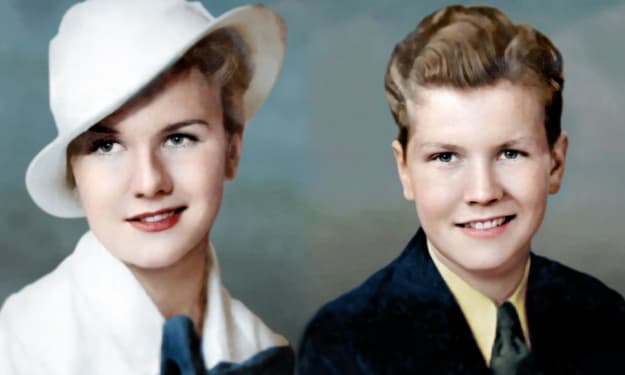
When Billy Tipton died, the world finally noticed him—but not for his music. It was January 1989, in Spokane, Washington. Billy collapsed in the small home where he'd quietly raised a family. Paramedics arrived too late. He was 74. A jazz musician, semi-retired, father to three adopted sons, partner to a woman named Kitty. To anyone who knew him—really knew him—he was a gentle, private man who had lived a decent, ordinary life. The kind of man who made spaghetti from scratch, taught his boys to balance a checkbook, and still tinkered on the piano at night.
By Tim Carmichael9 months ago in Pride
How To Make A Femboy Outfit
Creating a femboy outfit is an exciting journey into personal expression, blending elements traditionally coded as feminine with any personal style foundation to create a look that feels authentically you. "Femboy" (a portmanteau of "feminine boy") refers primarily to a style and gender expression where individuals, often but not exclusively male or non-binary, adopt a presentation that leans into femininity. It’s about intentionality, playfulness, and breaking free from rigid gender norms in fashion.
By David Femboy7 days ago in Pride


Comments (4)
The image of the flag folded up on a shelf while the Epstein files sit “in redacted folders” gave me this weird hollow feeling — like two very different kinds of silence happening at once. I keep thinking about that line, “A memory stitched in every thread,” because that’s what makes it sting — it’s not just fabric, it’s history being visually present in a place that literally marks a fight against erasure. I’ve walked past Stonewall before and that flag always felt less like decoration and more like a heartbeat, something steady and defiant. When you talk about diversion, it makes me wonder how many times we’ve seen this pattern and just gotten used to it. Do you think the act of taking it down will ultimately strengthen the visibility you’re talking about, or does it risk exhausting people who are already tired of having to fight for symbolic space?
Honestly regarding anyone's views of the queer community, we have so many bigger issues. I wonder why people are so focused on Lgbtq hate.
The Epstein files remain unreleased. The flag remains lowered. A pattern of deflection continues unabated. I wonder how long this monopoly, autocracy will continue.
❤️❤️This was well reported. The way you used asyndeton to list the flags was deeply felt, especially the line regarding the rainbow flag and generations of resistance.