pop culture
Modern popular culture topics in the geek sphere.
Stranger Things Season 5 Review
**There may be spoilers ahead! After waiting for so long, we got what we were all waiting for season 5 of Stranger Things. Theories were made, declarations of who will die were cast, and the hope of Hawkins laid out. Given to the people in three sections, we had to wait even longer still to find out what would happen to our D&D kids.
By Rich Burtonabout a month ago in Geeks
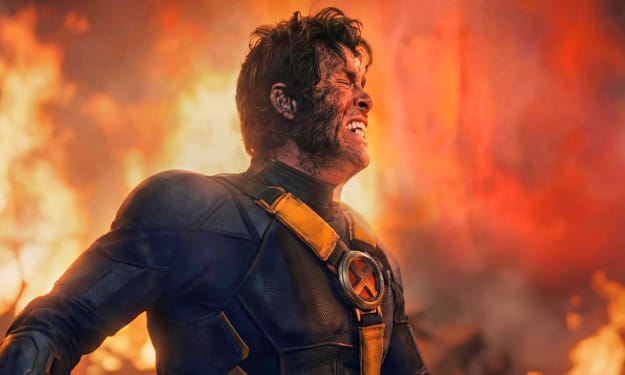
5 Pieces Of 'X-Men' Content Worth Revisiting Before 'Avengers: Doomsday
It's an exciting time to be a fan of the Fox X-Men films. While 2024's Deadpool and Wolverine initially seemed to act as a love letter/goodbye to the Fox-verse, fans were delighted earlier in 2025 with the reveal that some of the Fox-verse X-Men were set to appear in Avengers: Doomsday. Doomsday's third teaser focuses on a few of these returning characters, including Patrick Stewart as Professor X, Ian McKellen as Magneto, and James Marsden as Cyclops.
By Kristy Andersonabout a month ago in Geeks
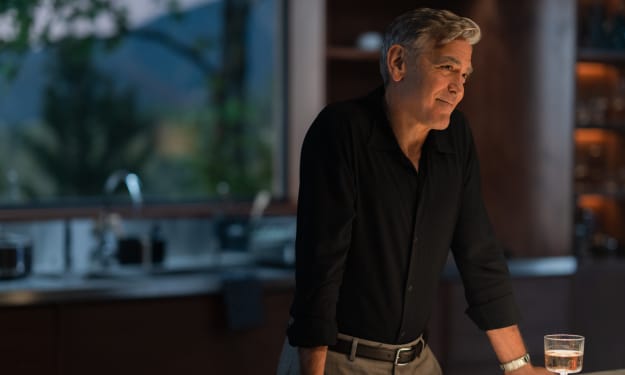
Jay Kelly - A Netflix Movie Review
Are you running to something or from something? Jay Kelly is a 2025 film about a famous movie actor who is beginning to have doubts about his career. While on the train to his next job, Jay reflects on his life, confronting his past and present.
By Marielle Sabbagabout a month ago in Geeks
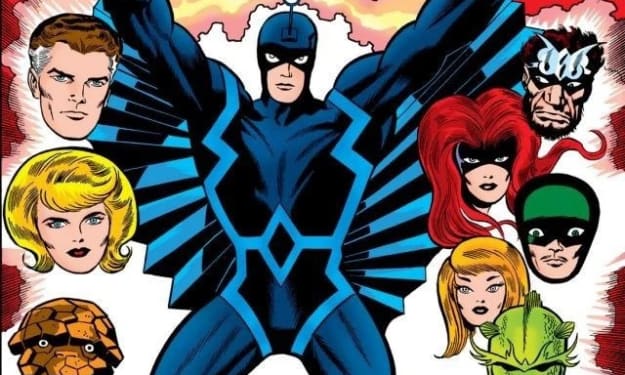
What if the Inhumans Were Never Missing?
The Marvel Cinematic Universe has never suffered from a lack of ideas. What it has suffered from, increasingly, is congestion—too many concepts competing for narrative oxygen, too many histories forced to coexist without the space to breathe. Few properties exemplify this problem more clearly than the Inhumans, a civilization introduced with enormous mythological potential and then effectively abandoned, left dangling somewhere between canon and apology.
By Jenna Deedyabout a month ago in Geeks
2026 Hollywood: The Year of Frankensteined Franchises
A quick Google search on 2026 Western movie releases will provide one with a very curious list: The Odyssey, The Batman Part II, Blade, Masters of the Universe, The Legend of Aang: The Last Airbender, Aladdin 2, 28 Years Later: The Bone Temple, Scream 7, Fantastic Beasts 4 (really? another one?), Shrek 5, Toy Story 5, Jumanji 3 (which should be the fourth one, but people seem to have forgotten about Robin Williams' (R.I.P.) film), The Hunger Games: Sunrise on the Reaping (what more of this franchise could there be to tell?), Star Wars: The Mandalorian and Grogu (people will only show up for Grogu), Spider-Man: Brand New Day...
By Andrei Babaninabout a month ago in Geeks
Good Night and Good Luck”: Why These Four Words Still Matter in a Noisy World. AI-Generated.
Few phrases in modern media history carry as much weight as “Good night, and good luck.” Simple, calm, and almost understated, the line became famous through legendary American journalist Edward R. Murrow, who used it to sign off his television broadcasts in the 1950s. Decades later, the phrase resurfaced as the title of George Clooney’s acclaimed 2005 film, reminding audiences that its message is not locked in the past. In an age of information overload, misinformation, and shrinking trust in institutions, these four words feel more relevant than ever. The Origins of a Quiet Defiance Edward R. Murrow worked during one of the most politically charged periods in U.S. history: the era of McCarthyism, when fear of communism led to blacklists, censorship, and public intimidation. Murrow’s broadcasts did not rely on shouting or sensationalism. Instead, he practiced something radical for his time — measured truth-telling. When Murrow ended his programs with “Good night, and good luck,” it was not a throwaway farewell. It was a subtle acknowledgment of uncertainty. Viewers were navigating a world shaped by fear, propaganda, and political pressure, and Murrow knew that journalism alone could not guarantee safety or justice. What he could offer was honesty — and a wish for resilience. Journalism as a Moral Act The phrase came to symbolize journalism not as entertainment, but as a civic responsibility. Murrow believed that the press should challenge power when necessary, even when doing so carried professional or personal risk. His calm confrontation of Senator Joseph McCarthy remains one of the most studied moments in broadcast history, precisely because it relied on facts rather than theatrics. In today’s media environment, where outrage often drives clicks and algorithms reward extremes, Murrow’s approach feels almost revolutionary. “Good night, and good luck” reminds us that journalism’s strength lies not in volume, but in credibility and courage. A Film That Revived the Message George Clooney’s film Good Night, and Good Luck reintroduced Murrow’s philosophy to a new generation. Shot in stark black and white, the movie avoided modern spectacle and instead focused on newsroom debates, ethical dilemmas, and the quiet tension of speaking truth to power. The film resonated because it was not just about the 1950s. It was about any era in which fear threatens free expression. Clooney’s work suggested that the fight for honest journalism is not a single historical moment, but a recurring challenge. Why the Phrase Still Resonates Today In the digital age, information travels faster than ever — but truth often struggles to keep up. Social media has blurred the lines between opinion, fact, and performance. Deepfakes, manipulated headlines, and viral misinformation make it harder for audiences to know what to trust. Against this backdrop, “Good night, and good luck” feels like a quiet anchor. It acknowledges that certainty is rare, that truth-seeking is difficult, and that integrity matters even when outcomes are unclear. It is not a promise of victory, but a commitment to effort. Beyond Journalism: A Broader Meaning The power of the phrase has expanded beyond newsrooms. It now speaks to anyone navigating uncertainty — students questioning authority, artists pushing boundaries, activists challenging injustice, or ordinary people trying to stay informed in confusing times. At its core, the message is human. It recognizes fear without surrendering to it. It accepts risk without glorifying recklessness. And it reminds us that sometimes, all we can do is act with principle and hope for the best. The Cost of Silence Murrow once warned that television could teach, illuminate, and inspire — but only if people chose to use it that way. Otherwise, he cautioned, it would merely distract. That warning applies equally to today’s digital platforms. Silence, complacency, and passive consumption allow falsehoods to flourish. “Good night, and good luck” challenges both creators and audiences to stay engaged, skeptical, and thoughtful — even when doing so is uncomfortable. A Message for the Future As societies face political polarization, climate anxiety, technological disruption, and global instability, the phrase endures because it does not pretend to have easy answers. Instead, it offers something rarer: moral clarity without arrogance. It reminds us that truth is not guaranteed, freedom is not automatic, and courage often appears in small, quiet choices rather than dramatic gestures. Conclusion “Good night, and good luck” is more than a sign-off or a film title. It is a philosophy — one that values truth over noise, integrity over popularity, and responsibility over convenience. In a world that often rewards certainty, Murrow’s words accept uncertainty while refusing surrender. And perhaps that is why, after all these years, they still feel like advice worth carrying with us — into the night, and into whatever comes next.
By Fiaz Ahmed Brohiabout a month ago in Geeks
Inside the Life of James Lipton
James Lipton was a legendary host on Bravo before Andy Cohen took over the late night on Bravo. James created and hosted a television called Inside the Actors Studio. Inside the Actors Studio is more than a talk show it is a seminar for actors in training getting to know film and television actors to share their experiences.Unlike standard celebrity interviews, the show explored Acting technique, Creative struggles, Professional training, Emotional preparation, and Directorial choices.
By Gladys W. Muturiabout a month ago in Geeks
Fantasy Cast for The Challenge: Battle for a New Champion 2
Battle for a New Champion was a great idea, but casting did not do a good job. We needed to see more vets, and this hypothetical season will have a lot of veterans. We need someone who has been on multiple seasons to finally get that win.
By Dylan Deckardabout a month ago in Geeks
One Battle After Another
Okay full honesty here; I was not looking forward to watching this movie. I HATED Killers of the Flower Moon and that was the last time I saw Leo DiCaprio’s face. I think the writing better be damn good to warrant a nearly 3 hour film, and that is almost never the case. And almost every time a film gets touted “film of the year” it's actually nowhere near the best film that came out that year. So this film had an uphill battle with me before I ever pressed play. But I am nothing if not incredible at objective analysis. So I fought through it anyway.
By Alexandrea Callaghanabout a month ago in Geeks
Jay Kelly
Jay Kelly is one of the movies that slipped through my fingers last year but we are getting to it before Oscar nominations so it's a win I guess. I am a fan of Adam Sandler as a person but not as much as an actor and I never understood the fascination with George Clooney so I didn’t have a strong inclination toward this movie. That said, it was on the to do list so here we go.
By Alexandrea Callaghanabout a month ago in Geeks