literature
Geek literature from the New York Times or the recesses of online. Our favorite stories showcase geeks.
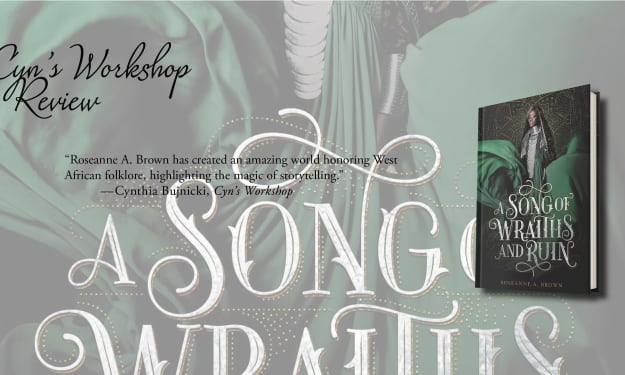
Review of ‘A Song of Wraiths and Ruin’ (A Song of Wraiths and Ruin #1)
Synopsis The first in a gripping fantasy duology inspired by West African folklore in which a grieving crown princess and a desperate refugee find themselves on a collision course to murder each other despite their growing attraction--from debut author Roseanne A. Brown. This New York Times bestseller is perfect for fans of Tomi Adeyemi, Renée Ahdieh, and Sabaa Tahir. For Malik, the Solstasia festival is a chance to escape his war-stricken home and start a new life with his sisters in the prosperous desert city of Ziran. But when a vengeful spirit abducts his younger sister, Nadia, as payment to enter the city, Malik strikes a fatal deal--kill Karina, Crown Princess of Ziran, for Nadia's freedom. But Karina has deadly aspirations of her own. Her mother, the Sultana, has been assassinated; her court threatens mutiny; and Solstasia looms like a knife over her neck. Grief-stricken, Karina decides to resurrect her mother through ancient magic . . . requiring the beating heart of a king. And she knows just how to obtain one: by offering her hand in marriage to the victor of the Solstasia competition. When Malik rigs his way into the contest, they are set on a heart-pounding course to destroy each other. But as attraction flares between them and ancient evils stir, will they be able to see their tasks to the death?
By Cyn's Workshop6 years ago in Geeks
20 Books of 2020 (Pt.36)
Well, we are underway to the 700s and now, I want to say a massive thank you to anyone who has stuck around this far. I also want to say how thankful I am for having made some new friends online this year. I've joined some new book clubs, read alongs and other bookish things that have required me to actively and socially participate - something I would've been very reluctant to do last year.
By Annie Kapur6 years ago in Geeks
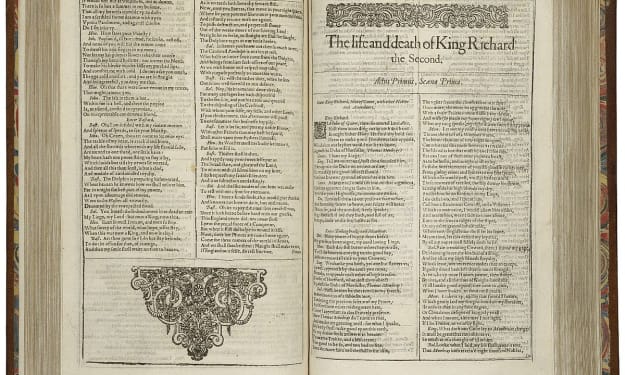
"Richard II" by William Shakespeare
It’s been quite a while since I first read Shakespeare’s “Richard II” and to be honest, it’s not even my favourite Shakespeare play but what it did do is it changed the way I thought about Shakespeare forever. The way in which I first discovered it was pretty simple. My favourite play by Shakespeare that I tended to read over and over was and still is, “Richard III” and when I went to go and pick it up from the library, I decided to take the other Richard home with me as well. My first experience of reading “Richard II” was something that was so important, I got it down in my diary at the age of fourteen. “I cannot believe it, Shakespeare writes a character that is both good and bad at the same time and I can’t decide whether I should like him and feel sorry for him or absolutely despise him because of what he did to his cousin…” It goes on. I also couldn’t decide whether it was really a deposition or whether it was really an abdication. It was a complex problem that only intense re-readings could solve. It completely changed my perception of the Shakespearean character because until then, I was able to categorise characters as good and bad - now though, I was dealing with Richard II and he seemed to be both.
By Annie Kapur6 years ago in Geeks
Review of 'The Knucklehead of Silicon Valley'
Synopsis Comedic-spy thriller examines Silicon Valley's unbridled innovation culture. Ralph Gibsen isn’t your typical spy. In fact, he may not be a spy at all. He's lumpy, blundering and abysmal at chatting up the fairer sex. Yet, he is attracting a significant amount of attention from the intelligence community. After all, as a 30-year Silicon Valley mainstay, he can phish your passwords, bust firewalls, and has developed software used by millions to circumvent government censorship. And now, he thinks he has stumbled upon a cabal who is pushing to misuse his own technology for world domination. Ralph helps create an educational Tool that maps a learner’s neurological processes and pinpoints the exact moment a student learns. But the Tool can also manipulate people’s beliefs. At least, that what several influential people think. Soon, Ralph finds himself the target of increasingly complex attacks on his businesses, reputation, freedom, and life. Ralph enlists an eclectic group of ‘frenemies’ to thwart this nefarious plot. McKenna may or may not still work for the CIA. Beautiful Eva may work for the Chinese government, who wants the Tool for themselves. Even Ralph’s lovely wife Jen could be involved... Ralph simply isn’t equipped to figure it out. And the world is closing in.
By Cyn's Workshop6 years ago in Geeks
Reading is NOT Boring
Ever since I was a kid, I’ve loved books. I’m an only child and the only cousin that was close enough to my age was 9 years older than me. When I started school, I didn’t live near enough to any of my friends for play dates. So outside of school, I had books to keep me company.
By Mae McCreery6 years ago in Geeks
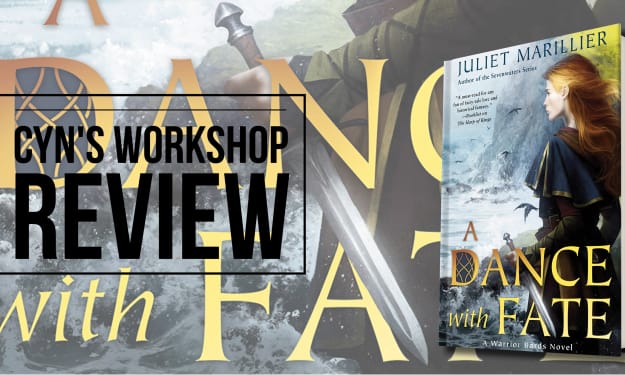
Review of 'A Dance with Fate'
Synopsis A young woman who is both a bard--and a warrior--seeks to repay her debts and settle scores in this thrilling historical fantasy series. The young warrior and bard Liobhan has lost her brother to the Otherworld. Even more determined to gain a place as an elite fighter, she returns to Swan Island to continue her training. But Liobhan is devastated when her comrade Dau is injured and loses his sight in their final display bout. Blamed by Dau's family for the accident, she agrees to go to Dau's home as a bond servant for the span of one year. There, she soon learns that Oakhill is a place of dark secrets. The vicious Crow Folk still threaten both worlds. And Dau, battling the demon of despair, is not an easy man to help. When Liobhan and Dau start to expose the rot at the center of Oakhill, they place themselves in deadly danger. For their enemy wields great power and will stop at nothing to get his way. It will take all the skills of a Swan Island warrior and a touch of the uncanny to give them a hope of survival. . . .
By Cyn's Workshop6 years ago in Geeks
"Castle Rackrent" by Maria Edgeworth
Within this text, a number of striking personalities can be seen. First and foremost we have the personality of the first generation guided by Sir Patrick, a man of little means and of normally few words apart from a more godly and patriarchal view in a William Faulkner fashion. Sir Patrick is declared a ‘spend-thrift’ and is often the most concerned about the view of others upon himself as a moral human being towards them. A Machiavellian trait, this is thought to have continued in the lineage of the family. Sir Murtagh is the second generation and he is described as a ‘fiend’ and often a ‘litigating fiend’. Here we see the morality of the family descend ever so slightly and so, the reader is given insight into the decline and fall of this rather extensively proud and historical family of old, Irish faith. Within the third generation the reader meets Sir Kit - a deplorable human being, a gambler, a spender and an abusive husband to his wife. Here the reader can clearly see a massive decline from what was the historical past of Sir Patrick in which the spend-thrift culture was clearly visible to all. Sir Kit seems to be overtly concerned about himself and does not care what others think of him. This is most likely a delusion of grandeur since he has come from a family that is both respected and historical and, as he is the third generation, must feel as if he is entitled to respect and is automatically virtuous for his purity of family. Finally we have the furthest generation away from the firast which is the fourth generation of Sir Condy. Sir Condy is a man that is often considered the morally better of the four, the more likeable of them all and yet, the most susceptible to suggestion out of them all. He is constantly manipulated and duped, turned and twisted. His naivety is his downfall and therefore, he too has similar faults to his predecessors - that he cannot see something approaching right in front of him and that he has very little self-control. But in the way that the older generations have no self-control because of various needs such as: saving money, fiendishness and machiavellianism, gambling addiction and spending money relentlessly - Sir Condy has no self-control because of the way in which other characters tend to want to control or overpower him.
By Annie Kapur6 years ago in Geeks
"Oedipus Rex" by Sophocles
The first time I read this book I was in sixth form, so I was about maybe sixteen or seventeen. The way in which I discovered this book was actually only because my teacher was talking about it for a brief time in a class about Shakespeare’s “Hamlet” and the Freudian Complexes of the play. I’m not going to lie, at first I was actually only interested in the Sophocles play because of the fact I hadn’t read it - but when I started reading it I was then thoroughly disgusted. I stayed up for most of the night reading and annotating my tattered second hand copy and then, when all was done, I put it down and didn’t really pick it up again purely because it was a bit too gross. The next time I’d pick it up, my opinion of Ancient Greek Plays was already fully formed and I understood that they were all absolutely disgusting.
By Annie Kapur6 years ago in Geeks
10 Books: Adventure Novels
Adventure novels are good for any occasion, normally written as children’s texts, they are perfect for going on a ride when you don’t want to leave your home. Since I was a child, I’ve always loved various adventure books no matter where they are from or what they are about - they can be as magical as ever, or they can be realist as hell. Adventure novels were most famous during the late 19th and early 20th century when children had little less to do than play with wooden toys and outside in their gardens. In order to present children with great reading material and stories that they could act out with their friends, read at bedtime and enjoy throughout the cold winters when they couldn’t go outdoors - authors penned children’s novels. Throughout the 20th century, the children’s literature grew and grew until it got a resurgence with the release of “Harry Potter and the Philosopher’s Stone” in 1996. Then, children’s literature got the kick it needed and became one of the biggest selling genres of the next twenty years. What I want to have a look at today is which novels you should be reading in order to learn more about children’s literature and where it came from. So let us go through ten big books of children’s literature. The more we know about what we read as children, the more we can know about why we read as adults.
By Annie Kapur6 years ago in Geeks
"Therese Raquin" by Emile Zola
It’s been about eight years since I’ve read this - I first read it when I was around sixteen and since then, I’ve read the book, read a graphic novel based on the book, listened to the audiobook, watched a production of it and read a ton of journals all about the way in which the book portrays Shakespearean themes. The way in which I first discovered it was because I heard about it on the radio. Yes, the radio. I don’t actually remember exactly where but I liked the pronunciation of the word and looked for it for half an hour because I couldn’t spell it. It took a while but I finally found it and read the book. It was crazy and amazing. It was almost overwhelmingly emotional and it makes you fearful and tearful at the same time. It completely changed the way I thought about gothic romances and what they could achieve. I admit, I never thought literature could be so dark and romantic since I read Anne Rice’s Vampire Chronicles Series.
By Annie Kapur6 years ago in Geeks