entertainment
The very best in geek and comic entertainment.
The Day Everything Changed
I missed the last bus on purpose. Not because I wanted to be stranded, but because I couldn’t face going home. That day had been one long unraveling—work mistakes, a call from my sister about our mother’s health, the kind of exhaustion that lives in your bones. The bus stop bench was cold, the sky bruised with storm clouds, and I just… stayed. Let the schedule pass. Let the world move on without me.
By KAMRAN AHMADabout a month ago in Geeks
Journalist Naeem Hanif Publicly Apologises to Saba Qamar Over Defamatory Claims. AI-Generated.
An apology that reopens the debate on media ethics, accountability, and the lasting impact of misinformation In an era where information travels faster than verification, public apologies by journalists are rare—but when they happen, they spark serious conversations. Journalist Naeem Hanif’s public apology to acclaimed Pakistani actress Saba Qamar over previously made defamatory claims has become one such moment. Beyond the individuals involved, the incident has highlighted pressing issues around media responsibility, reputational damage, and the ethical obligations that come with having a public platform. Saba Qamar is not just a household name in Pakistan; she is one of the country’s most respected actors, known for her powerful performances in television dramas, films, and socially relevant projects. Over the years, she has built a reputation for professionalism, bold role choices, and advocacy for women’s empowerment. Any allegations targeting her character were bound to attract attention—and scrutiny. The Apology That Changed the Narrative Naeem Hanif’s apology, made publicly, acknowledged that the claims he had previously shared were unverified and harmful. In his statement, he expressed regret for the emotional distress and reputational damage caused to Saba Qamar, stating that his words crossed ethical boundaries expected of a journalist. Public apologies in media disputes are significant because they represent accountability. While legal notices and private settlements often remain behind closed doors, a public apology recognizes that the damage was public—and so must be the correction. For Saba Qamar, the apology served as a form of vindication. Although an apology cannot fully undo the impact of defamatory claims, it does restore some balance by putting the truth back into the public domain. The Human Cost of Defamation Defamatory statements do more than create headlines; they affect real lives. Celebrities, despite their fame, are not immune to emotional stress, anxiety, and reputational harm. In industries like entertainment, where public image is closely tied to career opportunities, even short-lived rumors can have long-term consequences. For female public figures especially, defamatory claims often take on a more personal and moral tone, reflecting broader societal biases. Saba Qamar’s case reignited discussions on how women in the public eye are disproportionately targeted and judged more harshly than their male counterparts. Supporters of the actress flooded social media following the apology, praising her resilience and calling for stronger standards in journalism. Many noted that while criticism of public figures is fair, character assassination is not journalism. Media Ethics Under the Spotlight This incident has placed media ethics back at the center of public debate. Journalism is built on credibility, verification, and fairness. When these principles are compromised—whether for clicks, attention, or personal opinions—the credibility of the entire profession suffers. In the digital age, the line between journalism and commentary has become increasingly blurred. Social media platforms allow journalists and influencers alike to share opinions instantly, often without editorial oversight. While this freedom has democratized information, it has also increased the risk of misinformation and defamation. Naeem Hanif’s apology serves as a reminder that freedom of expression comes with responsibility. Journalists are expected to verify facts, provide context, and avoid sensationalism—especially when reporting on individuals’ personal lives. Public Reaction and Industry Response The public reaction to the apology was mixed but largely supportive of Saba Qamar. Many welcomed the apology as a step in the right direction, while others argued it should have come sooner. Some media professionals used the moment to call for clearer ethical guidelines and accountability mechanisms within the industry. The incident has also prompted discussions about corrective journalism—how media professionals should address mistakes transparently. A sincere apology, experts argue, is not a sign of weakness but of integrity. It shows respect for the audience and the truth. Lessons for the Digital Age This case offers important lessons for both media practitioners and consumers: Verification matters: Sharing unverified claims can cause irreversible harm. Apologies are powerful but limited: They can correct the record, but prevention is always better than damage control. Audience awareness is crucial: Readers and viewers must learn to question sources and avoid amplifying rumors. For public figures like Saba Qamar, the episode underscores the importance of legal and moral recourse in defending one’s reputation. For journalists, it reinforces the need to balance speed with accuracy. A Moment of Accountability Ultimately, Naeem Hanif’s public apology marks a moment of accountability in a media landscape often criticized for avoiding responsibility. While the incident cannot be erased, it has opened space for reflection, dialogue, and reform. For Saba Qamar, the apology reaffirms her standing and resilience. For the media industry, it is a reminder that truth, ethics, and accountability remain the pillars of credible journalism—no matter how fast the news cycle moves.
By Fiaz Ahmed Brohiabout a month ago in Geeks
Kapil Sharma Admits Facing Pressure from Netflix on The Great Indian Kapil Show: ‘Hisaab Dena Hota Hai’. AI-Generated.
Comedy icon Kapil Sharma, widely regarded as one of India’s most popular entertainers, recently opened up about the immense pressure he experienced while working on his Netflix venture, The Great Indian Kapil Show. Known for his quick wit, impeccable timing, and charismatic screen presence, Kapil has been entertaining audiences for over a decade. Yet behind the laughter and fanfare, the comedian reveals there was significant scrutiny and accountability involved when collaborating with a global streaming giant. In an exclusive statement, Kapil confessed, “‘Hisaab dena hota hai’ – there’s a lot of accountability involved when you work with platforms like Netflix. You can’t just do things the way you want; every decision, every joke, every segment has to be justified.” This candid admission sheds light on the challenges entertainers face when transitioning from traditional television to digital streaming platforms, which have different expectations, production standards, and creative oversight. From Television Sensation to Streaming Star Kapil Sharma’s rise to fame began with his television shows, particularly The Kapil Sharma Show, which became a household name for its blend of celebrity interviews, sketches, and audience interaction. The show’s immense popularity cemented Kapil’s reputation as a versatile entertainer capable of appealing to audiences across age groups. The leap from television to a global streaming platform like Netflix, however, brought new challenges. Unlike television, which allows for broader content latitude, streaming services demand higher production quality, tighter scripting, and meticulous attention to audience metrics. Every segment is analyzed not just for humor but also for engagement, viewership patterns, and international appeal. For someone like Kapil, accustomed to the creative flexibility of television, this level of scrutiny was a new experience. Pressure Beyond the Spotlight Kapil’s comment, “‘Hisaab dena hota hai,’” reflects more than just professional oversight. It highlights the psychological and creative pressures entertainers face when working under the global lens of digital platforms. Unlike Indian television networks, Netflix operates with a global audience and has a reputation for data-driven decision-making. This means that even an established star like Kapil must consider every joke, every celebrity interaction, and every storyline from multiple perspectives – including cultural sensitivities, global relevance, and streaming analytics. Industry insiders suggest that such accountability can be both motivating and stressful. While it pushes creators to raise their standards and innovate, it can also constrain spontaneity, especially for comedians whose charm lies in improvisation and quick thinking. Kapil Sharma’s experience underscores the delicate balance between maintaining creative freedom and adhering to platform expectations. Fan Reactions and Public Perception Fans of Kapil Sharma have expressed empathy for the comedian’s revelation. Social media platforms are filled with messages supporting him, praising his honesty, and acknowledging the difficulties of navigating global platforms. Many fans noted that while The Great Indian Kapil Show retained Kapil’s trademark humor, the behind-the-scenes pressures were invisible to audiences who often only see the final polished product. Critics have also commented that the transition from TV to streaming requires not just talent but adaptability. Kapil Sharma’s openness about these pressures may encourage more dialogue on how streaming platforms engage with Indian entertainers and the expectations they set for creative content. The Road Ahead for Indian Comedy on Streaming Kapil Sharma’s Netflix experience represents a larger shift in India’s entertainment industry. Streaming platforms have become a hub for diverse content – from drama and thriller series to reality shows and comedy specials. For Indian comedians, this creates exciting opportunities but also unprecedented scrutiny. Maintaining authenticity while satisfying global standards is a challenge that requires careful navigation. Kapil’s candid reflection provides a valuable lesson for aspiring entertainers. Success on international platforms is not just about talent or popularity; it is also about understanding the operational expectations, adapting to new creative standards, and being prepared to answer to detailed scrutiny. His phrase, “‘Hisaab dena hota hai,’” resonates as a reminder that professional accountability is part of global entertainment, even for India’s beloved stars. Conclusion Kapil Sharma’s revelation about the pressures he faced while working on The Great Indian Kapil Show provides a rare glimpse into the realities of global streaming production. While audiences see the laughter, jokes, and celebrity interactions, the behind-the-scenes pressures are immense, especially when transitioning from traditional television to a platform like Netflix. By openly acknowledging the accountability, Kapil Sharma not only humanizes the challenges faced by entertainers but also underscores the evolving landscape of Indian comedy in the digital era. His experience demonstrates that even established stars must adapt, innovate, and navigate pressures while keeping their signature humor intact – a balancing act that defines the future of entertainment in the age of global streaming platforms.
By Fiaz Ahmed Brohiabout a month ago in Geeks
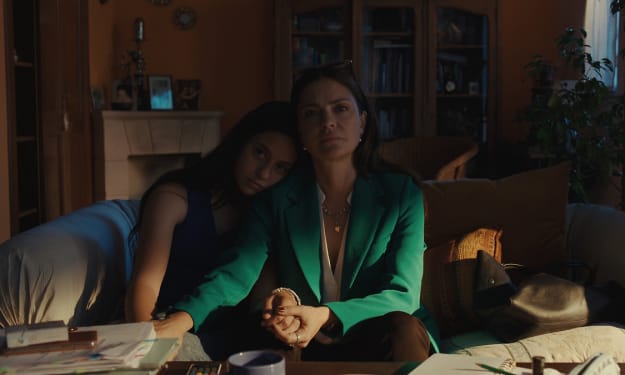
Belén
Movies are a wonderful form of entertainment, but more importantly they are perhaps the best vehicle for social and political commentary there is because they are so accessible to the masses. This year we have gotten some excellent commentary from films like Sinners and Mickey 17 and now Belén.
By Alexandrea Callaghanabout a month ago in Geeks
Mickey 17
Mickey 17 was on the must watch list for last year but time got away from me. We are once again playing catch up before awards season, I promise I will start doing these in a timely manner this year! This was a film we knew we wanted to see. Robert Pattinson is actually an incredible actor who sometimes still gets caught up in Twilight discourse in an attempt to discredit his skills. That combined with it being a Bong Joon Ho movie made it highly anticipated.
By Alexandrea Callaghanabout a month ago in Geeks
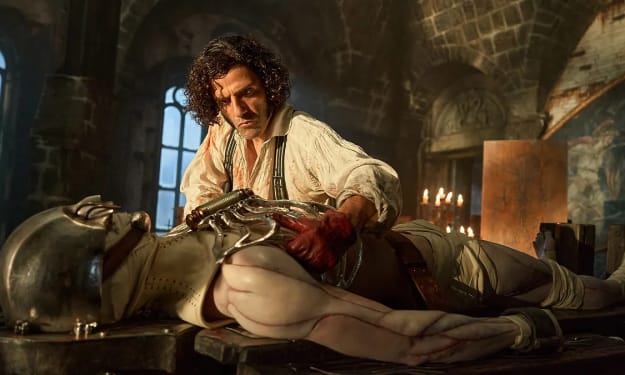
Guillermo del Toro's Stellar Gothic "Frankenstein" (2025)
Now I tell my tale. Based on Mary Shelley’s classic story, Frankenstein is a 2025 Netflix film directed by Guillermo del Toro. The brilliant scientist, Dr. Victor Frankenstein, brings a creature to life in a monstrous experiment. His bias on the creature’s intelligence leads to tragic outcomes as he wanders into the world.
By Marielle Sabbagabout a month ago in Geeks
Governors Ball 2026 Lineup Announced: Lorde, Stray Kids and A$AP Rocky to Headline
New York City’s iconic summer soundscape is already taking shape. The Governors Ball Music Festival — one of the city’s biggest live-music events — has officially revealed its 2026 lineup, and fans are buzzing with anticipation. Set for June 5–7, 2026 at Flushing Meadows Corona Park in Queens, the three-day festival promises an expansive, genre-blending roster that reflects both global music trends and local flavor.
By Raviha Imranabout a month ago in Geeks
Donnie McClurkin Sued Over Alleged Sexual Abuse by Former Assistant
Grammy-winning gospel singer and pastor Donnie McClurkin — a celebrated artist known for his uplifting music and influential ministry — is facing serious civil allegations that have shocked both religious communities and the broader public. In a lawsuit filed on January 2 in New York’s Supreme Court, McClurkin is accused of sexually abusing a young man over multiple years while acting as his spiritual mentor and employer.
By Raviha Imranabout a month ago in Geeks
Corporation for Public Broadcasting to Dissolve After Federal Funding Cut
After Nearly 60 Years, the Corporation for Public Broadcasting Votes to Dissolve Amid Funding Cutbacks For decades, the Corporation for Public Broadcasting (CPB) served as the backbone of America’s public media landscape, channeling federal dollars to local public radio and television stations, including PBS and NPR. But on January 5, 2026, CPB’s board of directors voted to dissolve the organization, marking an abrupt end to an institution created by Congress in 1967 and long viewed as a cornerstone of educational and community journalism in the United States.
By Raviha Imranabout a month ago in Geeks
The Black Panther is bigger than one man
Author’s Note: Recent online speculation about the future of the Black Panther prompted a widespread debate over recasting, legacy, and respect for Chadwick Boseman’s portrayal. This essay expands on a prediction I shared publicly, arguing that the most faithful continuation of the character lies not in replacement, but in succession–specifically through introducing T’Challa’s son and heir. What follows is an exploration of why the Black Panther has always been a mantle shaped by legacy rather than a role defined by a single man.
By Jenna Deedyabout a month ago in Geeks
Total War’s New Game Is Exactly What the Strategy Genre Needs Right Now. AI-Generated.
The strategy gaming genre has long been a playground for thinkers, planners, and tacticians. From classic turn-based titles to real-time strategy epics, gamers have been given opportunities to flex their mental muscles while commanding armies, empires, or civilizations. Yet in recent years, many fans have argued that the genre has stagnated. Incremental updates, recycled mechanics, and overly simplified campaigns left veteran players craving innovation and depth. Enter Total War’s latest release—a game that doesn’t just aim to satisfy existing fans but reinvigorates the strategy genre as a whole.
By Fiaz Ahmed Brohiabout a month ago in Geeks