art
Artistic, musical, creative, and entertaining topics of art about all things geek.
Film review: Five stars for the 'timely' Summer of Soul
n one astonishing performance after another, Stevie Wonder does a ferocious drum solo, Mahalia Jackson and Mavis Staples sing gospel together, Gladys Knight and the Pips do Motown, and BB King plays the Blues. All the while, thousands of people dance in the park, a few spectators sit in trees and the Black Panthers provide security. It was 1969 – the same summer as Woodstock – and for six consecutive Sundays, an outdoor celebration of black music and culture took place in the New York City neighbourhood of Harlem. More than 40 hours of performances from dozens of artists were recorded, then languished in a basement for nearly 50 years.
By Many A-Sun3 years ago in Geeks
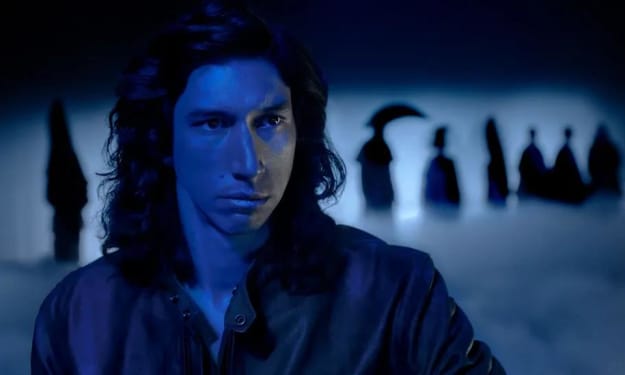
Annette review: Adam Driver shines in a bizarre rock opera
The opening-night film at this year's Cannes Festival is an embarrassing folly that is almost impossible to sit through. It's also a daring, unique passion project that has you gasping with delight. I tipped back and forth between these two assessments so often during the 140 minutes of Annette that I gave myself a dose of seasickness.
By Cindy Dory3 years ago in Geeks
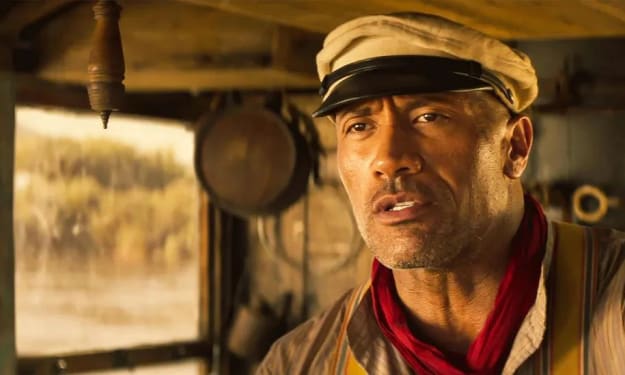
Dwayne Johnson and why wrestlers make ideal Hollywood stars
he movie star is dead. That's at least what box-office trends would have you believe. In a shift from the star-driven days of old, the past decade has seen the Hollywood movie studios instead defer to the power of brand-name recognition as their films' main selling point.
By Sue Torres3 years ago in Geeks
11 of the best films to watch this October
1. All That Breathes A prize-winner at this year's Cannes and Sundance festivals, Shaunak Sen's poetic eco-documentary, All That Breathes, focusses on two brothers, Nadeem Shehzad and Mohammed Saud, who live and work in New Delhi. The smog in the city is so bad that dozens of kites (the birds of prey, not the toys) fall from the sky every day, but the brothers rescue as many of the birds as they can, nursing them back to health in their cramped, over-heated basement. "Shaunak weaves the many threads together with meditative rhythms, restraint and deep compassion," says Anupama Chopra at Film Companion. "At the end of the film… I cried for the incredible grace of these brothers and for the myopic cruelty of the world they live in. And for ourselves, because each one of us has contributed to making it."
By Copperchaleu3 years ago in Geeks
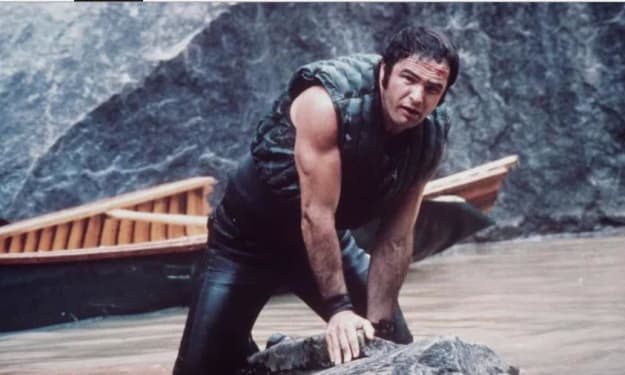
How masterly horror Deliverance set a controversial trend
ased on James Dickey's best-selling novel, Deliverance (1972) marked a highpoint in the work of British director Sir John Boorman. Having made the successful jump to Hollywood several years before, Boorman directed some of the strongest films of the period. In particular, Point Blank (1967) and Hell in the Pacific (1968) confirmed him as a director of note in the 1960s. Boorman went on to have a highly successful career, his films littered with prizes, while he received a Bafta fellowship in 2004 and, earlier this year, a knighthood. Yet Deliverance, released in the US 50 years ago this weekend, is the work that stands out in his varied and accomplished catalogue of work, not simply for its qualities but as one of the most controversial and unnerving films of the 1970s.
By Many A-Sun3 years ago in Geeks
The Power of the Dog: A five-star 'brooding melodrama'
It's been 28 years since the release of Jane Campion's Palme d'Or- and Oscar-winning masterpiece, The Piano, but you can hear its echoes ringing through her new film, The Power of the Dog. Again, Campion has made an atmospheric period drama shot in the wilds of New Zealand. Again, it features a cruel man, a sensitive man, and a single mother who marries one of them. You can probably guess which instrument the single mother plays. But for all its similarities to Campion's best-known work, The Power of the Dog is darker, stranger, and horribly gripping in its own right. Unless you've read the novel by Thomas Savage from which it's adapted, it's impossible to guess where it's going. It also boasts one of Benedict Cumberbatch's most remarkable transformations. Perhaps he told his agent that he was sick and tired of playing socially awkward scientists, and that he wanted to try the most different role imaginable – preferably while wearing a ten-gallon hat.
By Sue Torres3 years ago in Geeks
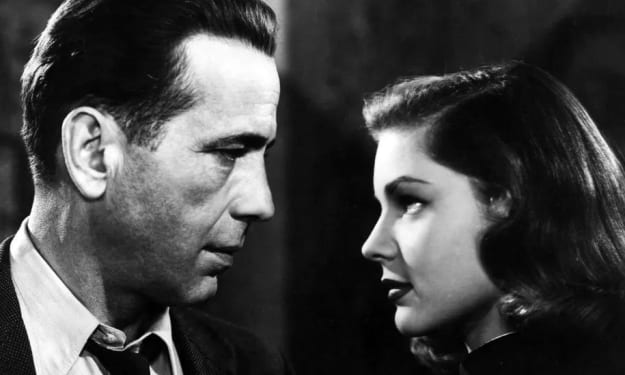
The Big Sleep: The most baffling film ever made
The Big Sleep was released 75 years ago, and its plot has been puzzling viewers ever since. There is no disputing that Howard Hawks's Los Angeles-set noir classic is one of the most entertaining of all US films, thanks to its firecracker dialogue, brutal action, sultry atmosphere, and the volcanic sexual chemistry between its stars, Humphrey Bogart and Lauren Bacall. But there's also no disputing that it's hard to know what exactly is going on. When The Big Sleep came out in 1946, the New York Times's Bosley Crowther pronounced it "a web of utter bafflement... in which so many cryptic things occur amid so much involved and devious plotting that the mind becomes utterly confused". All these decades later, the film's judgemental Wikipedia entry tuts that it "is impossible to follow", and is celebrated by "movie-star aficionados" only because "they consider the Bogart-Bacall appearances more important than a well-told story". Take that, movie-star aficionados!
By Cindy Dory3 years ago in Geeks
Diana biopic Spencer wobbles between the bold and the bad
You may feel that you've had enough of Princess Diana's story on the big and small screens, what with Naomi Watts taking the role in Oliver Hirschbiegel's awful Diana in 2013, and then Emma Corrin playing her in the most recent season of The Crown, with the mantel set to be passed in Elizabeth Debicki in the next run. But, to give it its due, Pablo Larraín's Spencer marks the only time the People's Princess has been shown delivering a lecture on Anne Boleyn to an old coat that she has just stolen off a scarecrow, and then having a chat with the ghost of Boleyn herself shortly afterwards. The Chilean director doesn't go in for conventional biopics, as anyone who has seen Jackie (starring Natalie Portman) or Neruda will know. And here again he has gone for a surreal portrait of his iconic subject. The snag is that his experimental art house spirit keeps bumping up against the naffness and the familiarity of British films set in stately homes, so his psychodrama ends up being both ground-breaking and rib-tickling.
By Copperchaleu3 years ago in Geeks
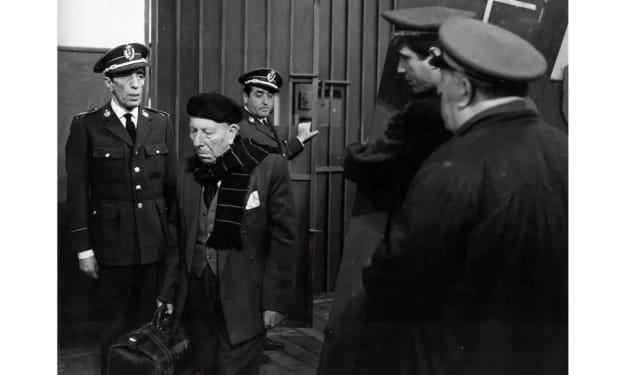
Why Berlanga is Spain's greatest film director
There's some debate over how it happened. It might have been after the screening of The Executioner, which satirised capital punishment in Spain, at the Venice Film Festival in September 1963 – or it might have been after Welcome, Mr Marshall! (1953) lampooned Spanish hopes for a slice of the US money destined to rebuild Europe after World War Two. In any case, one of the ministers of Spain's then dictatorship reported the latest irritation from the director Luis García Berlanga with the words: "Of course, Berlanga is a communist." To which the dictator Francisco Franco replied, "No, he's something worse: he's a bad Spaniard."
By Alessandro Algardi3 years ago in Geeks