

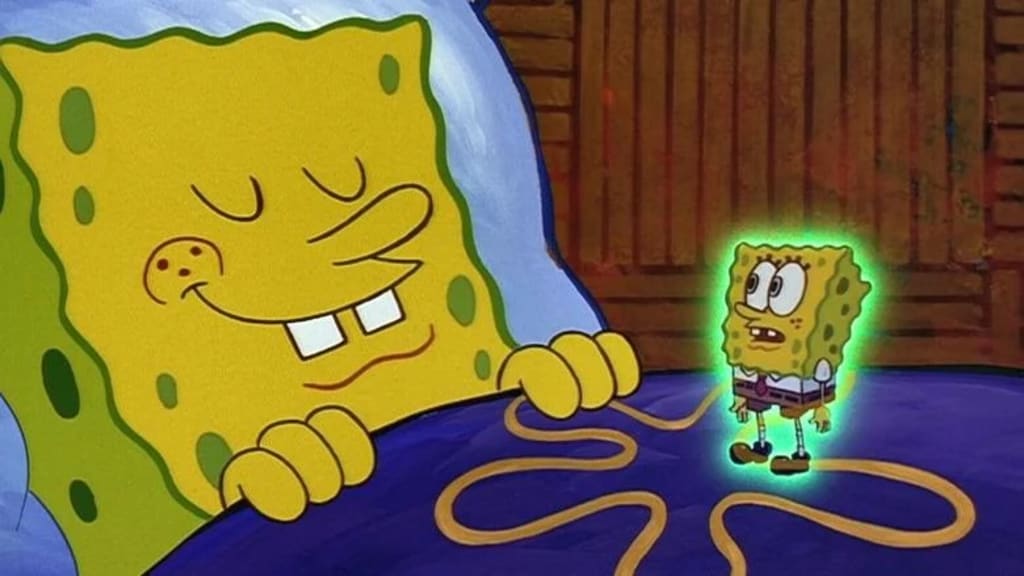
The episode “Sleepy Time” shines as one of the series’ most inventive forays into surreal storytelling, and its charm lies in the way it transforms the familiar under‑sea setting into a kaleidoscope of subconscious whimsy. From the moment the familiar night‑time lullaby drifts through the pineapple, viewers are ushered into a series of vivid, dream‑logic vignettes that feel simultaneously absurd and emotionally resonant. SpongeBob’s sudden ability to slip into the sleeping minds of his neighbors is presented with a fluid, almost hypnotic animation style—soft pastel hues bleed into one another, and the background music swells with a gentle, otherworldly cadence that underscores the episode’s thematic exploration of empathy and hidden anxieties. The writers deftly balance slapstick humor with poignant visual metaphors, making “Sleepy Time” a rare episode that rewards both casual fans and those who appreciate a deeper narrative texture.
Patrick’s dream is a masterclass in absurdist comedy, yet it also serves as a quiet commentary on the character’s blissful ignorance. The surrealism is underscored by a muted, jazz‑inflected score that swells whenever SpongeBob’s optimism collides with Patrick’s childlike bewilderment, creating a tonal layering that feels both whimsical and subtly disorienting. The meticulous attention to detail—down to the way a single starfish’s eye twitches in the background—signals a deliberate effort by the writers to embed visual jokes that reward repeated viewings, while simultaneously establishing a narrative rhythm that propels the episode forward without feeling rushed. The scene is not merely a gag; it subtly underscores the notion that Patrick’s mind, though often derided as vapid, is capable of generating rich, self‑contained universes where joy is distilled into pure, edible form, thereby granting the audience a fleeting glimpse into the emotional core that fuels his perpetual optimism.
Transitioning to Gary’s nocturnal musings, the episode adopts a more introspective visual palette, employing muted blues and soft, pulsating glows to evoke the snail’s quiet, often overlooked inner world. Here, the reviewer notes how the show harnesses the power of sound design: the faint, rhythmic scraping of a shell against a glass surface becomes a leitmotif for Gary’s yearning for freedom, contrasting sharply with SpongeBob’s exuberant, almost invasive presence. The interplay between the two characters is rendered with exquisite nuance—SpongeBob’s bright, inquisitive aura is repeatedly tempered by Gary’s measured, almost stoic responses, creating a tension that reflects the real‑life dynamic of a pet and its owner. Moreover, the episode subtly hints at themes of communication beyond language, as Gary’s dream is populated by abstract symbols and floating letters that convey his desires without uttering a single meow, inviting viewers to contemplate the depth of non‑verbal connection in a medium typically dominated by dialogue.
Finally, the episode’s denouement weaves together the disparate dream sequences of Sandy, Pearl, Mr. Krabs, and Plankton into a frenetic, multi‑layered tableau that showcases the series’ capacity for both narrative cohesion and chaotic humor. In summation, “Sleepy Time” stands out as a tour de force of character study wrapped in the absurdist humor that defines the SpongeBob canon, and its success lies in the episode’s deft ability to marry visual ingenuity with deep, albeit fleeting, emotional resonance. The animation’s willingness to experiment with genre—shifting from pastel fantasy to noir, from kinetic rodeo to glossy consumerist satire—demonstrates a confidence rarely seen in episodic television, particularly in a series that has been on air for over two decades. Moreover, the episode’s underlying theme—that each creature, no matter how trivial or villainous, harbors a private, often contradictory inner world—is communicated with both affection and a pinch of cynicism, mirroring the show’s overarching philosophy that humor and heart are not mutually exclusive. By allowing SpongeBob to serve as the conduit for these nocturnal voyages, the writers give the audience a uniquely intimate perspective on the supporting cast, turning a simple “sleep” gimmick into a thoughtful, multilayered exploration of identity, desire, and the subconscious drives that propel even a sea sponge to keep bouncing between optimism and existential wonder.
About the Creator
Forest Green
Hi. I am a writer with some years of experiences, although I am still working out the progress in my work. I make different types of stories that I hope many will enjoy. I also appreciate tips, and would like my stories should be noticed.
Keep reading
More stories from Forest Green and writers in Geeks and other communities.
SpongeBob Review
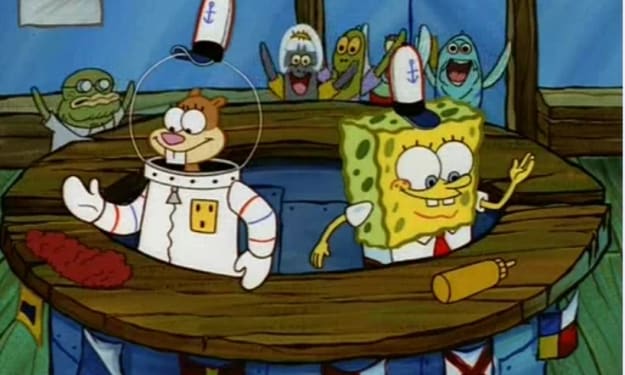
The episode “Karate Choppers” opens with an exuberant montage that immediately signals the central conflict: SpongeBob’s enthusiasm for karate, inherited from his fearless best friend Sandy, collides head‑first with the mundanity of his everyday obligations at the Krusty Krab. The writers cleverly employ a rapid‑cut, split‑screen technique that juxtaposes Sandy’s high‑octane training sessions with Mr. Krabs’ frantic attempts to keep the grill burning, allowing the audience to feel the mounting tension between personal passion and professional responsibility. Every punch, kick, and exaggerated “Hi‑ya!” is rendered with meticulous timing, underscored by a percussive score that mimics the rhythmic thuds of a karate dojo, while the background chatter of hungry customers provides a subtle but constant reminder of the stakes. The visual gags—most notably the way SpongeBob’s square pants flutter like a flag in a wind tunnel whenever he attempts a high kick—are expertly animated, showcasing the show’s ability to blend the humor with a surprisingly sophisticated understanding of kinetic energy.
By Forest Greena day ago in Geeks



Comments
There are no comments for this story
Be the first to respond and start the conversation.