
Two Things Can Be True at the Same Time
An Unpopular Opinion

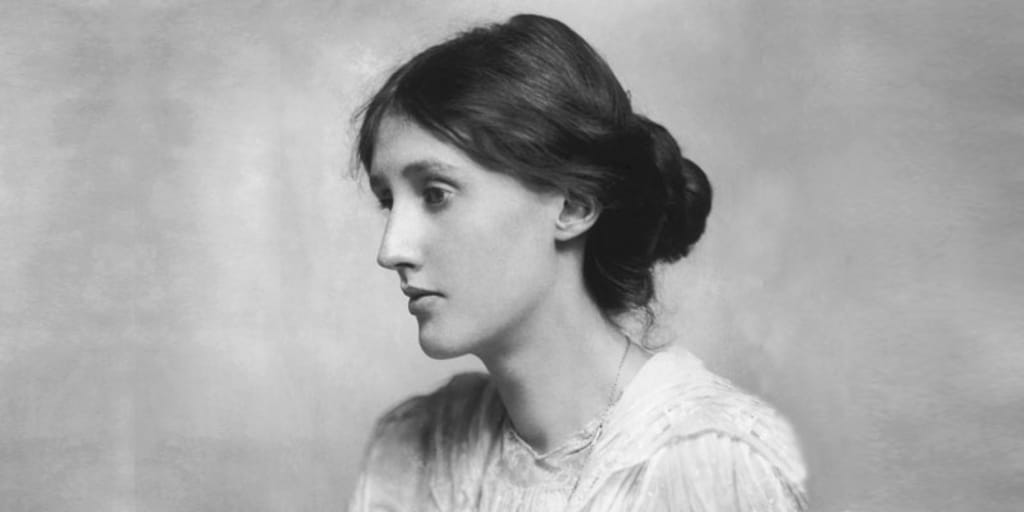
Okay, so you think that Virginia Woolf was a horrid human being, does that mean she was a bad writer too? No. Actually, she wasn't even a bad human being, she was in fact a product of her time and place.
Many people who usually bring up the casual anti-semitism of Dostoevsky in literary spaces are also investigating and have found, some rather odd comments and exclusions by the writer Virginia Woolf. What they don't seem to understand is that the space that Virginia Woolf was raised in, and the later formed Bloomsbury Group meant that Woolf's access to other people who perhaps weren't middle class and upwards and weren't white would have been so limited I was actually pretty surprised she met anyone else at all. We cannot blame someone for the lack of variety in their lives when the space in which they exist has no variety anyway.
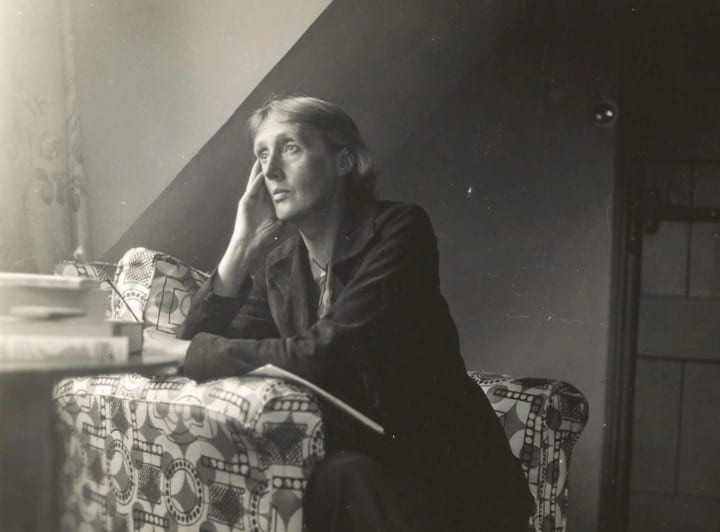
But does that mean she should get a free pass from criticism? Also no.
Two things can be true at the same time.
I am quite a big fan of Virginia Woolf and her books are immersive for me, as they can envelope you in what looks like real life. But be that as it may, the critics have found that Woolf's novels have a sincere lack of working class women in them and my commentary on this would be that it is well known that characters like Clarissa Dalloway are at least, in part, based on Woolf herself. I would like to ask what part of Woolf is working class as a woman? Again, this is not a fair criticism of her work. Yes there's a lack of working class women in her work, but there is no end to working class problems - the same universal problems that plague the middle classes too.
Woolf's analysis of war and symptoms of PTSD by using men who are middle class as well is often overlooked as being a universal issue that hurts basically every single character. In Jacob's Room this is true, but also the analysis of death means that it doesn't really matter what class you are a part of - you're still going to die and it's not going to be very grand. It will be in the midst of something unfinished. At the end of the day, it doesn't matter too much.
So, is it correct to say that simply because Virginia Woolf leaves out working class women that she is being purposefully exclusionary of the problems that plague society? No, no it isn't.
In the book Conversations in Bloomsbury (a book that seems to resurface for every 15-year-old "revolutionary" when they are feeling especially feiry about wanting to read everything apart from their spaces) by Mulk Raj Anand, the Indian writer - the author comments on how the modernist movement in England is actually being intellectually hindered by the lack of awareness of other cultures that the authors within it have. This is something I can understand though I don't think I agree with since there were few books that dealt with 'other cultures'. India was not greatly active in the First World War in the way that England was and so, there was just something else to write about - especially concerning the fact that many of the male relatives of these writers did not come back.
I do however agree with the comments made on the lack of awareness about colonialisation. You would think a woman like the middle-to-upper class Virginia Woolf would be literate and understanding enough to know things about this time. However, she does not actually ever comment on it in her works. I don't think this is a fault, but it's worth mentioning. I also would like to question why the book we are discussing was apparently experienced in the 1920s but not written down until the 1980s. How many people can remember exactly what was said and when over 50 years' after the fact? Exactly.
Is it possible therefore that Virginia Woolf was ignorant of the plights of others? Yes.
Is there a difference between Virginia Woolf and her writers which means that her books now mean different things to different people because of the expanding literary culture? Yes.
Does this take anything away from the experience? No.
In fact, the expansion of literacy means that more people are running into these issues. And the more people who run into these issues, the more people we will have actually reading the texts. Hopefully, through this we can all reach a common ground.
About the Creator
Annie Kapur
I am:
🙋🏽♀️ Annie
📚 Avid Reader
📝 Reviewer and Commentator
🎓 Post-Grad Millennial (M.A)
***
I have:
📖 300K+ reads on Vocal
🫶🏼 Love for reading & research
🦋/X @AnnieWithBooks
***
🏡 UK
Keep reading
More stories from Annie Kapur and writers in Geeks and other communities.
Book Review: "The Complete Short Stories" by Robert Graves
Robert Graves has always been a divisive writer for me. I once found his book I, Claudius unreadable and yet, Goodbye to All That was fantastic. His historical novels seem to be the worst possible historical novels - no imagination has gone into them and they read more like a textbook of fictions rather than a historical fiction masterpiece. Whereas, when he wrote Goodbye to All That you can definitely feel that his writing style is one of brilliance and atmosphere. Oh, and I have not forgotten about the comments he made about a young Bob Dylan.
By Annie Kapurabout 17 hours ago in Geeks



Comments (3)
I definitely agree with this!! There exists a duality between our time and hers, and morality and talent aren’t always going to perfectly align.
Thank you for another illuminating article
I’ll be honest, I don’t know a ton about Virginia Woolf, but this gave me a lot to think about. Thanks for sharing :-)