
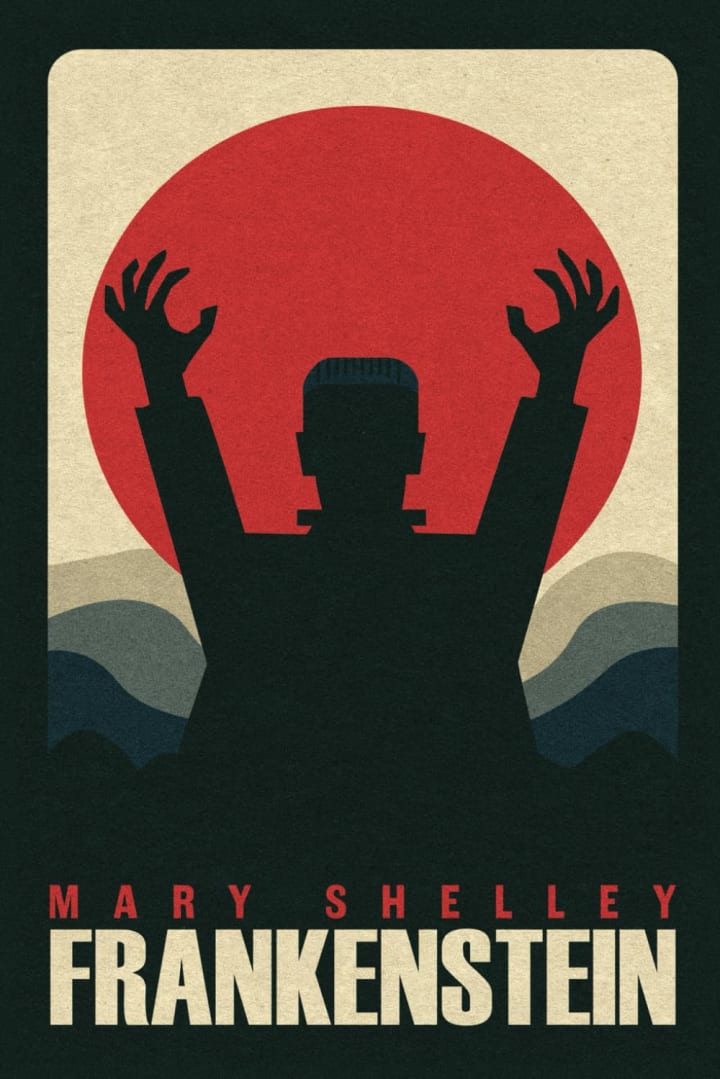
Frankenstein by Mary Shelley
Why It's a Masterpiece (Week 105)

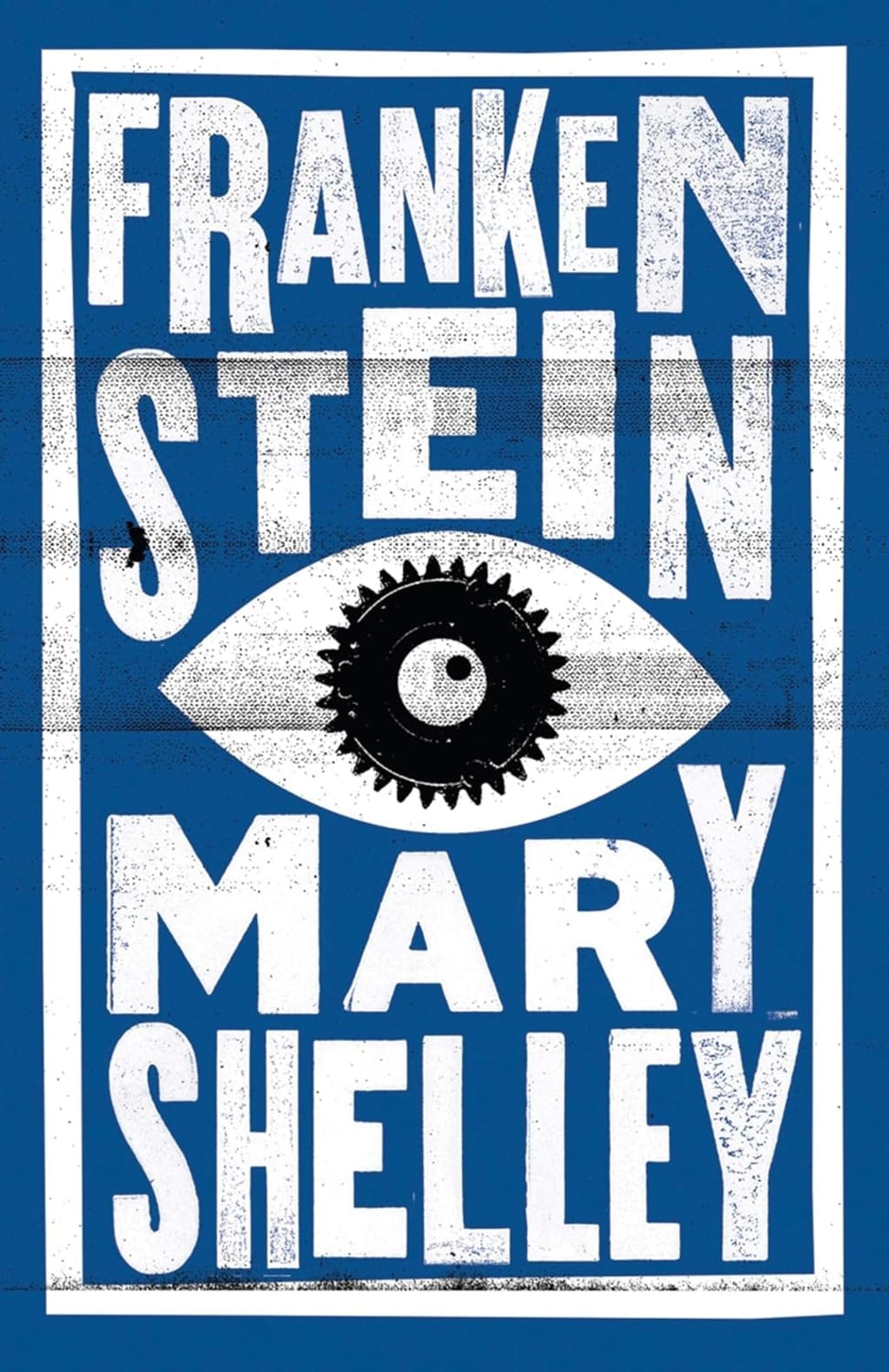
Background and Context:
If you know me then you will probably know that I think 'Frankenstein' is one of the greatest novels ever written. I would say that since I was in my teens, this has been a really been a novel that has been close to my heart. Chapter 11 is probably the most special of these in which the Creature is discovering night and fire etc. It is simply one of the best pieces of literature ever written. I've read and taught it several times for over a decade. It gets better every single time.
Frankenstein by Mary Shelley
First published in 1818, Frankenstein; or, The Modern Prometheus is one of the most influential and widely read novels of all time. Written by Mary Shelley when she was just eighteen, it is widely regarded as the first true work of science fiction, blending Gothic horror with profound philosophical questions about creation, responsibility, and the nature of humanity.
The novel was conceived during the famous summer of 1816 at Lake Geneva, where Shelley, her husband Percy Bysshe Shelley, Lord Byron, and John Polidori challenged each other to write ghost stories. Inspired by contemporary scientific discussions about galvanism and the possibility of reanimating the dead, Shelley crafted a tale that remains one of the most enduring and adaptable works of literature.
Frankenstein has been interpreted through various critical lenses over the years: as a feminist text, a cautionary tale about unchecked ambition, a critique of scientific hubris, and an exploration of existential dread. Its themes remain deeply relevant in modern discussions surrounding bioethics, artificial intelligence, and the consequences of human innovation.
Plot
The novel is framed as a series of letters written by Robert Walton, an ambitious Arctic explorer, to his sister Margaret. While attempting to reach the North Pole, Walton and his crew rescue a mysterious, emaciated man from the ice: Victor Frankenstein. As Walton listens to Victor’s harrowing tale, the novel shifts to Frankenstein’s first-person account.
Victor, a brilliant but obsessive scientist from Geneva, becomes consumed with the idea of reanimating life. Fascinated by ancient alchemical texts and modern scientific discoveries, he secretly assembles a humanoid creature from corpses and succeeds in bringing it to life. However, rather than feeling triumph, Victor is immediately horrified by his creation’s grotesque appearance. He abandons the creature, fleeing from his responsibilities.
The Creature, left alone and rejected, begins to experience the world with childlike wonder but soon faces cruelty and isolation. Hiding near a rural cottage, he secretly observes a loving family, the De Laceys, and learns language and human customs from them. When he finally attempts to befriend them, they react in terror, reinforcing his belief that he will always be an outcast. Enraged and heartbroken, he swears vengeance against his creator.
The Creature seeks out Victor and demands that he create a female companion for him, arguing that he deserves companionship and happiness. Initially, Victor agrees, but partway through the process, he destroys the second creature, fearing the consequences of bringing another being like the first into the world. In retaliation, the Creature kills Victor’s best friend, Henry Clerval, and later, Victor’s wife, Elizabeth, on their wedding night.
Devastated, Victor vows to hunt down the Creature and destroy him. This pursuit leads him to the Arctic, where he is eventually found by Walton’s expedition. As Victor dies from exhaustion and illness, he warns Walton of the dangers of unchecked ambition. The novel ends with the Creature mourning over Victor’s corpse, expressing deep sorrow and regret before disappearing into the icy wilderness, presumably to die alone.
Into the Book
Unchecked Ambition:
One of the novel’s deepest themes is the danger of unchecked ambition - it is almost Shakespearean in the way it is presented to the reader. Victor Frankenstein embodies the archetype of the overreaching scientist, a man who seeks to play God without considering the moral consequences of his actions. His obsession with creating life blinds him to the ethical responsibilities of his work, leading to destruction and tragedy.
The author's critique extends beyond Victor to the broader pursuit of knowledge without moral restraint, a theme that resonates today in debates over artificial intelligence, genetic engineering, and the ethical limits of scientific progress. Victor’s downfall echoes the myth of Prometheus, who stole fire from the gods and was punished for his transgression. He acknowledges the parallels himself, lamenting:
“Learn from me, if not by my precepts, at least by my example, how dangerous is the acquirement of knowledge, and how much happier that man is who believes his native town to be the world, than he who aspires to become greater than his nature will allow.”
- Frankenstein by Mary Shelley
Loneliness:
Both Victor and the Creature experience profound loneliness, yet their reactions to it differ dramatically. Victor isolates himself due to his obsessive scientific pursuits, pushing away his family and friends in his quest for forbidden knowledge. Even after witnessing the consequences of his actions, he remains emotionally distant and unwilling to take responsibility.
In contrast, the Creature is a deeply sympathetic figure whose loneliness is forced upon him. He begins life with a capacity for love and kindness but is met with rejection at every turn. His speech to Victor encapsulates his torment. The novel suggests that isolation breeds monstrosity, not because the Creature was inherently evil, but because repeated rejection and suffering pushed him towards vengeance. Shelley raises the question: Is the Creature truly a monster, or is he made monstrous by society’s unwillingness to accept him?
“I am alone and miserable: man will not associate with me; but one as deformed and horrible as myself would not deny herself to me.”
- Frankenstein by Mary Shelley
Characterisation and Fate:
One of the novel’s most thought-provoking themes is the blurred distinction between Victor and the Creature. Although Victor sees himself as the tragic hero and his creation as the villain, the novel subtly suggests that they are two halves of the same being. Their fates are intertwined, and they mirror each other’s suffering.
At times, the Creature seems more human than Victor. He seeks love, connection, and understanding, basic human needs that Victor denies him. In contrast, Victor becomes increasingly detached and obsessed with revenge, displaying the very lack of empathy he attributes to his creation. The Creature even reflects this.
The novel’s genius lies in its refusal to provide simple moral answers. Who is truly responsible for the deaths caused by the Creature himself or the man who created and abandoned him? Shelley leaves this question open, forcing the reader to wrestle with the ethical complexities of creation and responsibility.
“I ought to be thy Adam, but I am rather the fallen angel.”
- Frankenstein by Mary Shelley
Why It's a Masterpiece
Frankenstein has had a cultural impact that seems to be unrivalled and constantly relevant whenever an over-the-top scientific movement comes underway, especially those that make our lives considerably worse. It may be gothic horror but it is definitely one of the first Sci-Fi novels as well, containing profound philosophies and comments on society which create the atmosphere around the protagonist.
Its themes resonate deeply in contemporary society, particularly in debates surrounding artificial intelligence, cloning, and the limits of human innovation. The novel’s moral ambiguity and exploration of identity, rejection, and suffering ensure that every reader finds something deeply personal within its pages.
Personally, I would say that there are many passages of pure unrivalled beautiful writing and so, it makes perfect sense that this novel is often referred to as a work of art.
Conclusion
All in all, Frankenstein is a novel that forces readers to question what it means to be human. Is the Creature truly the monster, or is he simply a reflection of humanity’s own failings? This ambiguity ensures that Frankenstein remains a timeless and unsettling masterpiece, inviting new interpretations with every generation.
***
Other Masterpieces to do with Frankenstein:
- In Search of Mary Shelley by Fiona Sampson
- Romantic Outlaws by Charlotte Gordon
- Love, Sex and Frankenstein by Caroline Lea (this book is a favourite!)
***
Next Week: Private Lives by Noel Coward
About the Creator
Annie Kapur
I am:
🙋🏽♀️ Annie
📚 Avid Reader
📝 Reviewer and Commentator
🎓 Post-Grad Millennial (M.A)
***
I have:
📖 300K+ reads on Vocal
🫶🏼 Love for reading & research
🦋/X @AnnieWithBooks
***
🏡 UK
Keep reading
More stories from Annie Kapur and writers in Geeks and other communities.
The Big Book Review: "Thinking, Fast and Slow" by Daniel Kahneman (Pt.2)
Welcome back to Part 2 of our 'Big Book Review' on Thinking, Fast and Slow by Daniel Kahneman. In the previous section, we saw that Kahneman paid close attention to the two 'systems' of our thinking - one that seemed more impulsive and quickly judgemental than the other. Now, we are also turning our attention on to why the supposedly more 'critical' system in our brain may not be all its cracked up to be and perhaps, it can even be lazy. Let's dive into what this book can tell us about 'Heuristics and Biases'...
By Annie Kapura day ago in Geeks
The Tourette's Outburst and the Racial Slur Shock Ceremony at the BAFTA Awards in 2026
Not only will the "2026 BAFTA Film Awards" be remembered for their illustrious winners and chic red carpet moments, but they will also be remembered for an unexpected and highly contentious disruption that overshadowed a portion of the ceremony. A member of the audience who had Tourette's syndrome yelled a racial slur at the British Academy Film Awards rocked the ceremony, prompting swift responses from presenters, celebrities, and broadcasters alike.
By Raviha Imran5 days ago in Geeks



Comments
There are no comments for this story
Be the first to respond and start the conversation.