future
Exploring the future of science today, while looking back on the achievements from yesterday. Science fiction is science future.
How Pixar’s 'Wall-E' Predicts the Future
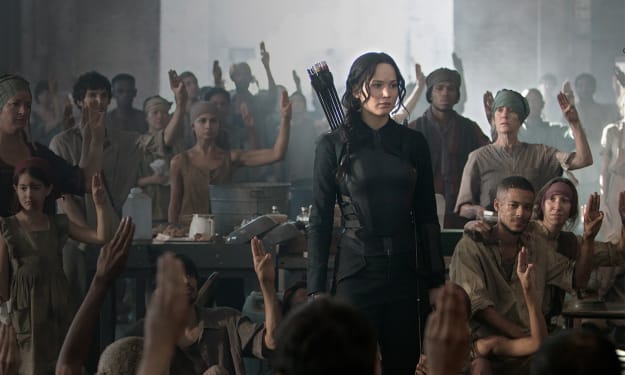
Self-driving cars. Humans glued to the screens of their devices. Trash everywhere. One company to rule them all. Sound familiar? Either you just watched the 2008 Pixar hit Wall-E, or you simply looked at the ever-changing world around us. Debuting at a time when the economy hit its lowest point since the Great Depression, the dystopian society surrounding everyone’s favorite hardworking robot scared many with its foreboding predictions. But before humans actually admit that Wall-E predicted the future and director Andrew Stanton’s garbage-covered, humanless Earth of the year 2805 becomes a reality, we must take action for the sake of our planet.
By Jake Aronskind10 years ago in Futurism
Crops in Space
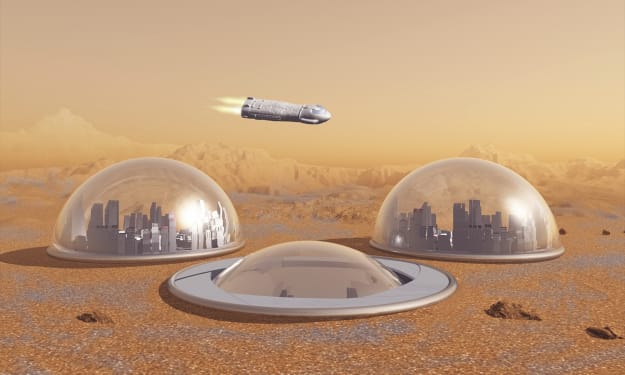
"The world hunger problem is getting worse rather than better," said a Presidential Commission report on World Hunger from 1980. "A major crisis of global food supply—of even more serious dimensions than the present energy crisis—appears likely... unless steps are taken now... Moral obligation alone would justify giving highest priority to the task of overcoming hunger."
By Futurism Staff10 years ago in Futurism
Robots in the Workplace
The following article was originally published on The Free Advice Man's website here. The fear of empowering others stems from the fear of the mob. And wealthy people are afraid of a mob of people becoming empowered with the ability to take away that which they own and/or have. And that stems from the fear of being impoverished and poor! Naturally and logically the fear of being poor stems from the fear of being vulnerable to the mob and being at the mercy of the wealthy!
By Jean-Pierre Fenyo10 years ago in Futurism
Genetically Engineering a Super Race
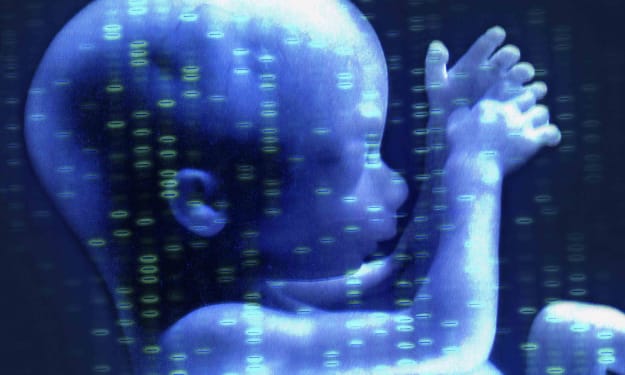
When Aldous Huxley wrote Brave New World in 1932, he described a world state several centuries in the future where all human beings were reared from eggs in factories or incubators. Scientists could produce several classes of personality ranging from the highly intelligent, whose sole purpose was to enjoy life, to the feeble-minded who were suited only for manual labor. The novel was set in the distant future because the scientific knowledge needed to bring about this type of society was not available when Huxley wrote it.
By Futurism Staff10 years ago in Futurism
Forecast 2085
Joanna checked the weather app on her watch. Tornadoes likely, flooding possible in the evening, and a chance of earthquakes at night. She grabbed a fluffy red scarf off the rungs in her closet and pulled the hat her dad bought her at the fair over her ears.
By Marlena Chertock10 years ago in Futurism
Asimovian Robotonomics
The following article was originally published on The Free Advice Man's website here. Asimovian Robotonomics is a Comprehensive Economic System, backed by specific laws, based on the highest ethical standards, in which Robots, and other Human-Labor-Replacing or Augmenting Technologies, such as Automated Machinery, Computers, and other Advanced Machines, perform mundane (tedious, boring) and/or potentially dangerous, unhealthy, but essential work that Human Labor would otherwise have done without causing harm to the Socio-Economic and Financial welfare of those persons who are rendered work-wise redundant, non-essential, or less required. It is named after Isaac Asimov, the World Renowned Famous late Grandmaster of Sci-Fi and Science Author who was also a champion of Advanced Human Thinking and Social Progress.
By Jean-Pierre Fenyo10 years ago in Futurism