future
Exploring the future of science today, while looking back on the achievements from yesterday. Science fiction is science future.
Worlds With Three Suns: The Strange and Stunning Reality of Triple-Star Planets
Most of us grow up imagining a solar system as something simple and orderly: a single star with a neat family of planets circling around it. Our own Sun reinforces that picture. But the universe rarely sticks to simple patterns. Among the billions of stars in the Milky Way, there exist far more complex arrangements — including triple-star systems. And what’s even more astonishing is that some of these systems are home to planets that orbit all three stars at once.
By Holianyk Ihor3 months ago in Futurism
NASA’s Psyche Mission Is Headed Toward a Metal World Worth $10,000 Quadrillion
In October 2023, NASA launched one of its most intriguing deep-space missions yet — Psyche, a robotic explorer on a years-long journey to a mysterious metallic asteroid unlike anything humanity has ever visited. This strange object, named 16 Psyche, isn’t valuable because it hides alien technology or secret energy sources, but because it appears to be made largely of metal. Not just any metal — we’re talking about iron, nickel, and potentially precious metals that, on Earth, form the backbone of modern industry.
By Holianyk Ihor3 months ago in Futurism
When the Universe was one second Old: The Birth of the First Hydrogen Atoms
Imagine a cosmic stopwatch starting at the very instant the Universe burst into existence. It clicks once—one second has passed. Just a single heartbeat. That moment is so short that most of us wouldn’t even notice it. But on the scale of the cosmos, one second after the Big Bang marks a profound turning point. It’s the moment when the foundations of all future matter—including stars, planets, and eventually us—began to solidify.
By Holianyk Ihor3 months ago in Futurism
Phoenix A: The Brightest Known Galaxy — A Cosmic Beacon Shining Trillions of Suns
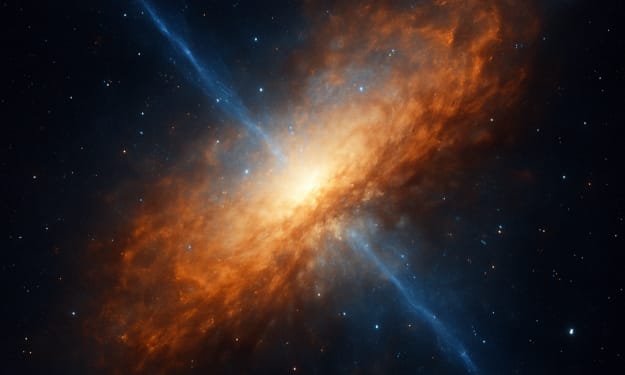
In the vast, silent darkness of the universe, brilliance is rare. Stars flicker, nebulae glow, quasars blaze — yet only a handful of cosmic giants truly challenge our imagination. Among them stands Phoenix A, the brightest galaxy humans have ever discovered. Its light outshines the Sun not by millions or billions, but by trillions of times. It is a cosmic lighthouse whose glow reaches across billions of years of space and time.
By Holianyk Ihor3 months ago in Futurism
When the Universe Was One Second Old: The Birth of the First Hydrogen Atoms
Imagine a cosmic stopwatch starting at the very instant the Universe burst into existence. It clicks once—one second has passed. Just a single heartbeat. That moment is so short that most of us wouldn’t even notice it. But on the scale of the cosmos, one second after the Big Bang marks a profound turning point. It’s the moment when the foundations of all future matter—including stars, planets, and eventually us—began to solidify.
By Holianyk Ihor3 months ago in Futurism
AI-powered Custom Software Development: How Intelligent Solutions are Redefining Business Innovation
The current digital age demands businesses to adopt innovation as their survival requirement. Businesses now require applications which go beyond standard solutions because they want customized software that adjusts to their needs and predicts their operations in real-time.
By Encodedots Technolabs3 months ago in Futurism
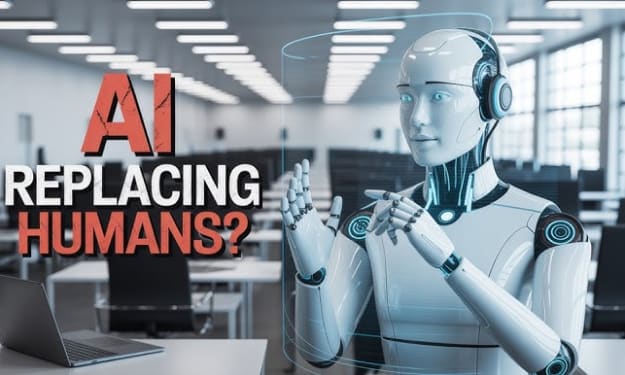
World Without Jobs
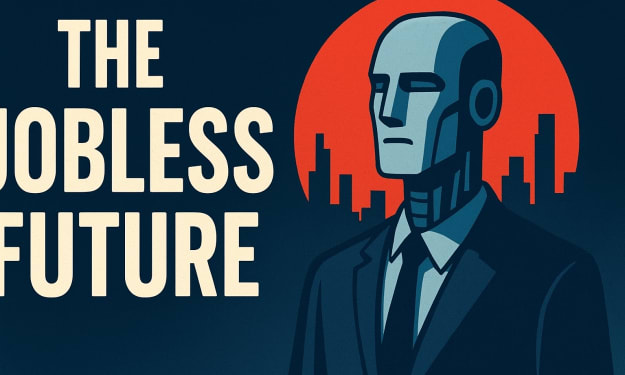
For decades we have imagined a future where technology makes life easier, people work less, and machines do the boring tasks for us. But what if the future takes a darker turn? What if the machines we built to help us end up replacing us completely? Artificial Intelligence is no longer a distant idea from sci-fi movies. It is here, rapidly evolving, and silently eating the global job market. The world stands at the edge of the most dramatic economic transformation ever seen: a future without jobs.
By Keramatullah Wardak3 months ago in Futurism
Why Astronauts Lose Up to One Liter of Fluid Per Day in Orbit
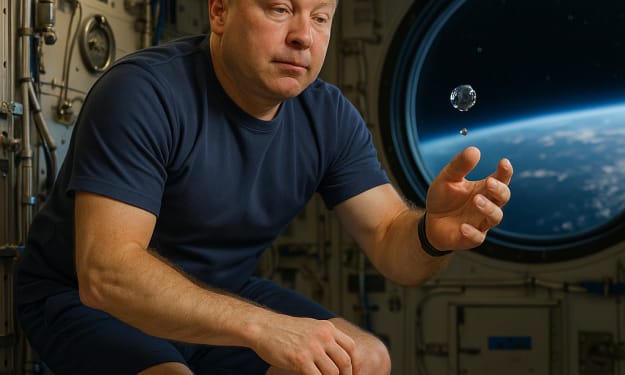
When astronauts leave Earth, their bodies begin to change almost immediately. Bones weaken, muscles shrink, and even the sense of taste can shift. But one of the most surprising effects of spaceflight happens within the first few days in orbit: astronauts start losing up to one liter of bodily fluid per day.
By Holianyk Ihor3 months ago in Futurism
Will AI Take Your Job in 2026? Exploring the Future of Work and Automation. AI-Generated.
As the world continues to evolve, so does the technology around us. One of the most discussed advancements is Artificial Intelligence (AI). From chatbots to self-driving cars, AI has permeated many aspects of our daily lives. But with its rapid growth, a common question is being asked more frequently: Will AI take your job in 2026? The looming question has sparked fear, curiosity, and debate. In this article, we will explore the impact of AI on the workforce, what it means for different industries, and how you can adapt to thrive in an AI-powered future.
By Sajjad Ali3 months ago in Futurism