
Samsung Galaxy S27 Ultra: Everything We Know About the Ultimate 6G Bridge
Slated for an early 2027 release, Samsung’s next premium flagship is ditching incremental upgrades for groundbreaking satellite connectivity, NB-IoT tech, and mind-bending 14.8 Gbps speeds.

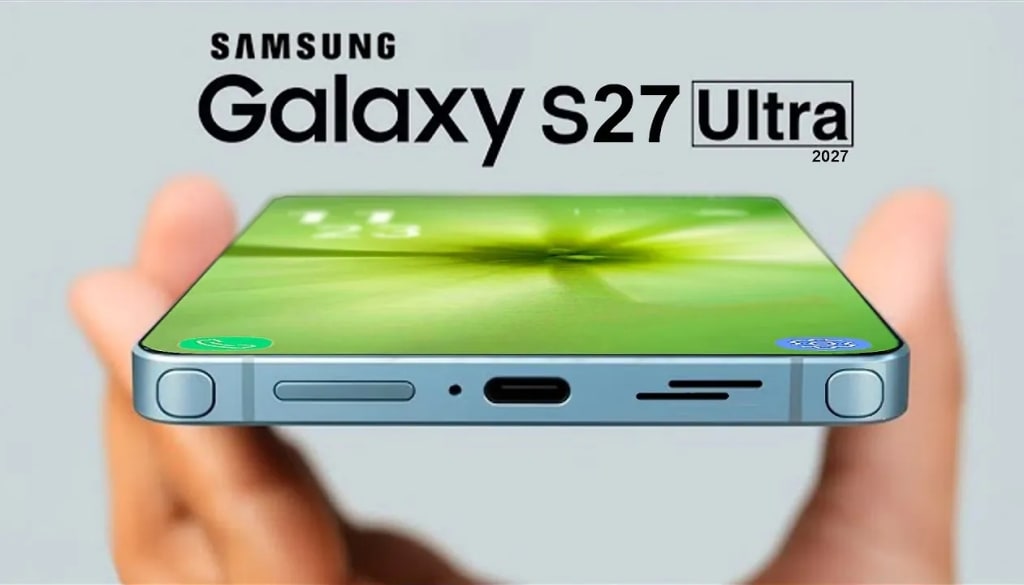
Let’s be honest: for the past few years, the smartphone industry has felt a little stagnant. We’ve grown accustomed to the annual cycle of slightly better cameras, marginally brighter displays, and battery life improvements that you barely notice in your day-to-day life. But every once in a while, a device comes along that shifts the paradigm, forcing us to rethink what a piece of glass and metal in our pockets can actually do. Enter the Samsung Galaxy S27 Ultra.
Expected to make its grand debut in early 2027, the Galaxy S27 Ultra is already generating massive buzz across the tech landscape. But the hype isn't just about another high-resolution camera sensor or a refined titanium chassis. The real story here is connectivity. Based on recent leaks and deep-dive analyses of its upcoming hardware, Samsung is positioning the S27 Ultra as the ultimate bridge between the 5G networks we rely on today and the hyper-connected 6G future of tomorrow.
If you are a power user, a frequent traveler, or someone who simply demands the absolute bleeding edge of mobile technology, here is an in-depth look at everything we know so far about the Samsung Galaxy S27 Ultra.
The Heart of the Beast: Snapdragon 8 Elite Gen 6 and the Qualcomm X105
To understand why the Galaxy S27 Ultra is so highly anticipated, you have to look under the hood. The driving force behind this next-generation flagship is expected to be the Snapdragon 8 Elite Gen 6 processor, working in perfect tandem with the groundbreaking Qualcomm X105 modem.
This hardware combination is nothing short of revolutionary. Built to adhere strictly to the 3GPP Release 19 standards, the Qualcomm X105 modem is pushing data transfer limits to places we’ve only seen in science fiction. We are talking about peak download speeds of up to 14.8 Gbps and upload speeds reaching an incredible 4.2 Gbps.
But what do those numbers actually mean for you? In practical terms, a 14.8 Gbps download speed means that downloading a massive, high-fidelity 4K or even 8K movie will take mere seconds. For mobile gamers, cloud-based gaming will become virtually indistinguishable from playing natively on a high-end console or PC, with latency practically eliminated. For content creators, the 4.2 Gbps upload speed ensures that sending massive video files to clients or uploading high-res content to social platforms will happen in the blink of an eye, regardless of where you are.
Breaking Boundaries with LEO Satellite Communication
Perhaps the most thrilling feature coming to the Galaxy S27 Ultra is its ability to connect directly to Low Earth Orbit (LEO) satellites. While we have seen basic emergency satellite SOS features in a few recent smartphones, the S27 Ultra is expected to take this technology entirely mainstream and make it vastly more functional.
Powered by the Qualcomm X105 modem, this direct-to-satellite capability ensures that you remain connected even when you are miles away from the nearest cell tower. Imagine hiking a remote trail in the mountains, sailing miles offshore, or working in an off-grid location. With the S27 Ultra, a lack of traditional cellular infrastructure no longer means radio silence.
This satellite integration will support essential services like standard voice calls, text messaging, and even limited app and web data access. Furthermore, in the event of a natural disaster or widespread cellular outage, this phone transforms into a vital lifeline. It makes the Galaxy S27 Ultra not just a luxury gadget, but a crucial safety tool for adventurers, remote professionals, and everyday users who prioritize peace of mind.
Slaying Urban Dead Zones with NB-IoT
While satellite connectivity solves the problem of remote wilderness dead zones, what about the annoying signal drops we experience in our everyday urban lives? We’ve all been there: your call drops the second the elevator doors close, or your streaming music buffers endlessly in an underground parking garage.
Samsung is addressing this universal frustration head-on by outfitting the Galaxy S27 Ultra with Narrowband Internet of Things (NB-IoT) support. NB-IoT is designed to maintain dependable, stable connectivity in environments where traditional cellular signals struggle to penetrate.
Because NB-IoT operates on a different frequency approach designed for extreme reliability rather than high bandwidth, your phone will be able to hold onto a signal in deep basements, heavily insulated modern buildings, and rural areas with notoriously sparse coverage. It ensures that your smart devices, background syncing, and crucial notifications keep flowing, no matter how much concrete and steel is standing between you and the cell tower.
AI-Driven Performance and Unleashed Battery Life
You might be thinking: With all this insane connectivity, won't the battery drain in two hours? Surprisingly, the answer is no. In fact, battery life is expected to take a massive leap forward.
The Snapdragon 8 Elite Gen 6 processor introduces a new gold standard for mobile power efficiency, reportedly reducing overall energy consumption by up to 30% compared to previous generations. But the real magic lies in how Samsung is utilizing on-device Artificial Intelligence to manage these advanced modems.
Instead of your phone constantly hunting for signals and draining the battery, the integrated AI learns your usage patterns and local network topographies. It intelligently and seamlessly switches between standard 5G, NB-IoT, and satellite networks in real-time. This AI network optimization ensures faster speeds and lower latency when you need it, and aggressive power conservation when you don't. The result? A phone that offers vastly superior performance while keeping you far away from the wall charger.
Additionally, the phone incorporates quad-frequency GNSS (Global Navigation Satellite System) technology. Whether you are navigating the dense concrete canyons of a major city or tracking a trail in dense forest cover, this tech provides enhanced, pinpoint location accuracy that leaves standard GPS in the dust.
The Big Question: Is It Really a 6G Phone?
With all these mind-bending specs, it’s easy to see why rumors have been swirling that the Galaxy S27 Ultra is the world’s first 6G smartphone. However, we need to separate marketing hype from technical reality.
Strictly speaking, the Galaxy S27 Ultra is not a true 6G device. The global standards and physical infrastructure required for genuine 6G networks are still in active development and aren't expected to be fully realized or deployed until the early 2030s.
Instead, it is best to view the Galaxy S27 Ultra as a "6G-ready" device. By supporting 3GPP Release 19 standards, maximizing spectrum efficiency, and using AI to optimize ultra-high-speed data transfers, the S27 Ultra lays the foundational groundwork for what 6G will eventually become. It is the absolute pinnacle of 5G technology, engineered to bridge the gap over the next few years.
The Bottom Line
When the Samsung Galaxy S27 Ultra arrives in early 2027, it won't just be competing with other smartphones; it will be competing with our current expectations of mobile limits. By combining the immense power of the Snapdragon 8 Elite Gen 6 with the boundary-breaking Qualcomm X105 modem, Samsung is building a device tailored for a world that demands to be always online, anywhere on the planet.
Whether it is the safety of LEO satellite calls, the reliability of NB-IoT in urban dead zones, or the sheer joy of downloading massive files at nearly 15 Gbps, the S27 Ultra promises to be a masterclass in hardware engineering. It might not be full 6G just yet, but it is undoubtedly a massive, exciting step into the future of human connectivity. Start saving up now—this is one flagship that will actually be worth the upgrade.
About the Creator
Mohammad Hamid
Big Dream Work Hard and Achieve 💪
Keep reading
More stories from Mohammad Hamid and writers in Futurism and other communities.
Apple Just Rewrote the Entry-Level Playbook: 4 Takeaways From This Week’s Surprise Releases
Apple just shattered its traditional release cadence with a "Cupertino Whirlwind"—a relentless three-day barrage of product announcements that has fundamentally disrupted the company’s hardware and pricing hierarchy. Starting with the budget-conscious iPhone 17E and culminating in the shock release of the MacBook Neo, this flurry was more than a series of updates; it was a calculated market offensive. With everything hitting shelves on March 11, the speed of these releases signals a pivotal shift in how Apple intends to capture the next generation of users.
By Mohammad Hamidabout 10 hours ago in Futurism
Morgan Stanley Says AI Won’t Let You Retire Early
A new cross-asset research report from Morgan Stanley is pushing back against one of the most dramatic narratives surrounding artificial intelligence: that AI will eliminate white-collar work so thoroughly that traditional employment becomes obsolete.
By Behind the Tech8 days ago in Futurism
A Knight of the Seven Kingdoms Series Review (Season 1)
As one of the biggest properties in fantasy, A Song of Ice and Fire remains immensely popular with audiences. After reaching far into the past with House of the Dragon, a second spin-off was on the cards. A Knight of the Seven Kingdoms serves up a bite-sized slice of action and drama, but it still claims a spot among the best small-screen titles.
By Robert Cain7 days ago in Geeks




Comments
There are no comments for this story
Be the first to respond and start the conversation.