
Morgan Stanley Says AI Won’t Let You Retire Early
Bank argues most workers won’t disappear — but will need to retrain for jobs that don’t yet exist.

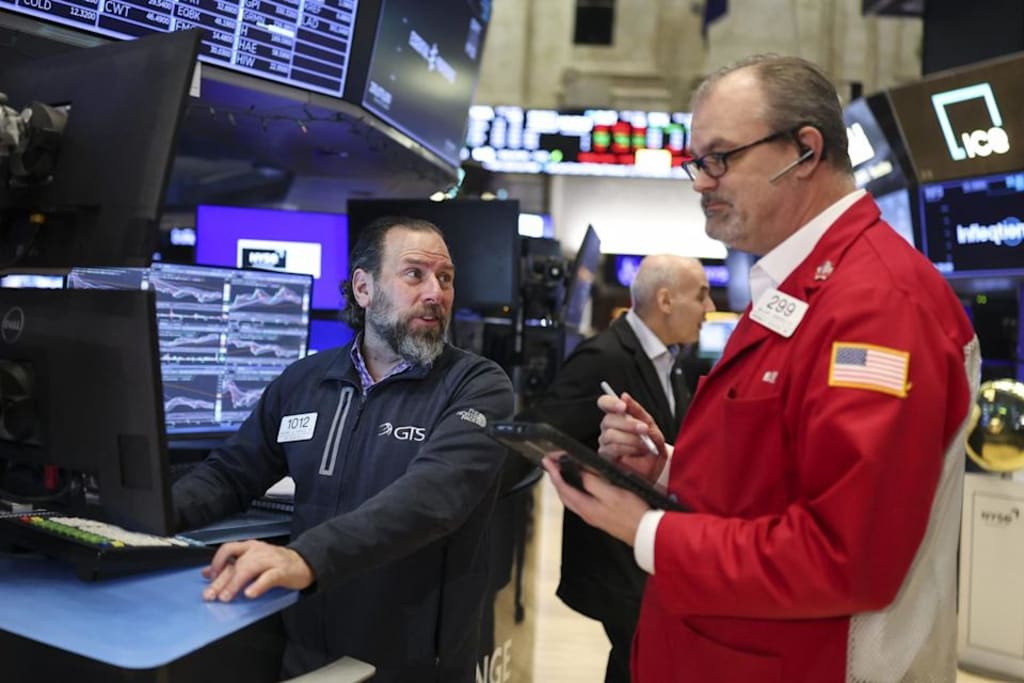
A new cross-asset research report from Morgan Stanley is pushing back against one of the most dramatic narratives surrounding artificial intelligence: that AI will eliminate white-collar work so thoroughly that traditional employment becomes obsolete.
Instead of predicting mass, permanent unemployment — or a near-term “post-work” society — the bank argues that AI will reshape the labor market, not erase it. The likely outcome, according to the report, is that millions of workers will need to adapt, reskill, and move into roles that are only beginning to take shape.
What Is News
Morgan Stanley says AI is unlikely to cause permanent, economy-wide white-collar unemployment.
The bank argues technological revolutions historically change job composition rather than eliminate labor altogether.
It predicts the creation of new AI-related executive, governance, and compliance roles.
The report acknowledges disruption risk but frames it as labor evolution, not extinction.
Infrastructure constraints — including compute and energy — may slow full automation timelines.
A Counterweight to the “White-Collar Extinction” Narrative
Over the past year, prominent tech leaders have issued stark warnings about AI’s potential to automate large portions of knowledge work. Predictions have ranged from the elimination of entry-level office jobs to claims that even C-suite roles could eventually be automated.
Investor anxiety has followed. Software stocks have come under pressure amid concerns that AI tools may cannibalize traditional software business models and reduce demand for large professional teams. The fear: if AI can draft contracts, write code, analyze spreadsheets, and create marketing campaigns, what happens to the people who used to do those tasks?
Morgan Stanley’s answer is more nuanced.
The firm acknowledges that AI can automate specific tasks — particularly repetitive, rules-based, and data-heavy functions. However, it argues that sweeping technological transformations historically restructured employment rather than replaced it wholesale.
History as a Guide
The report draws parallels to previous technological waves:
Electrification
Mechanized agriculture
The tractor
The personal computer
The internet
Each of these innovations displaced certain jobs. Mechanized farming dramatically reduced the need for agricultural labor. Computers automated bookkeeping and administrative tasks. The internet reshaped media, retail, and communications.
But total employment did not collapse.
Instead, job categories shifted. New professions emerged. Productivity gains changed the nature of work rather than eliminating it entirely.
Morgan Stanley uses the example of spreadsheets in the 1980s. Tools like Excel automated tedious financial modeling and reduced demand for some clerical roles. Yet they also enabled analysts to focus on more complex tasks and contributed to the rise of new financial specializations.
The report suggests AI may follow a similar path: compressing routine workflows while expanding higher-level or adjacent functions.
What Jobs Could Emerge?
Rather than a mass extinction of white-collar employment, Morgan Stanley envisions growth in new professional categories, particularly in three areas:
1. Executive AI Leadership
As artificial intelligence becomes embedded in corporate strategy, companies are expected to appoint senior executives — often described as “Chief AI Officers” — responsible for overseeing AI adoption across departments.
These leaders would coordinate implementation, manage transformation initiatives, and ensure alignment between AI systems and business objectives.
2. AI Governance and Compliance
As AI systems influence decisions in finance, healthcare, insurance, and public services, organizations will require professionals focused on:
Data compliance
Regulatory oversight
Risk monitoring
Documentation and audit processes
Ethical safeguards
The more powerful AI becomes, the more critical governance frameworks will be.
3. AI Security and Risk Management
AI introduces new vulnerabilities alongside efficiency gains. Protecting proprietary data, preventing misuse, managing model errors, and mitigating cybersecurity threats will require specialized talent.
In this sense, AI creates risk-management demand even as it automates other tasks.
Infrastructure May Limit the Pace of Automation
Morgan Stanley also emphasizes practical constraints.
Advanced AI systems depend on vast computational resources (“compute”), data centers, semiconductor supply chains, and energy infrastructure. These physical requirements are expensive and finite.
Even if AI models can theoretically automate large portions of office work, scaling that capability across the economy requires significant capital investment and time. Infrastructure bottlenecks may slow the most extreme automation scenarios.
What Is Analysis
The bank’s core message is not that disruption will be mild — it likely won’t be. Instead, it argues that the composition of work will change more than the existence of work itself.
Routine, structured tasks are the most exposed. Workers whose roles involve predictable digital workflows may face pressure. But entirely new skill combinations may become valuable: human oversight of AI systems, cross-functional judgment, strategic deployment, regulatory expertise, and exception handling.
The report implicitly challenges the idea that AI will make work optional for most people. Rather than early retirement, many workers may face a period of retraining and adaptation.
The future labor market, under this view, rewards adaptability and AI literacy. Those who learn to work alongside AI — rather than compete directly against it in repetitive tasks — may be better positioned.
Bottom Line
Morgan Stanley’s outlook cuts through extremes.
AI is powerful. It will automate real work. Some roles will shrink or disappear.
But history suggests that large-scale technological revolutions do not eliminate labor outright — they redefine it.
The implication is less about universal unemployment and more about transition. For most workers, AI may not mean permanent joblessness or effortless retirement. It may mean a new phase of professional reinvention — into roles that are only beginning to be imagined today.
About the Creator
Keep reading
More stories from Behind the Tech and writers in Futurism and other communities.
AI Hurtles Ahead: Investor Memo Says the Last Three Months Changed Everything
The author says he originally explored the “AI bubble” question in a December memo, Is It a Bubble? After speaking with technologists in their 30s and 40s, he returned to them for an update. One of them suggested a simple test: ask Claude, Anthropic’s AI model, to produce a tutorial explaining AI and what has changed in the last three months. The result, he writes, was astonishing — a 10,000-word, personalized curriculum that felt less like an encyclopedia entry and more like “a personal note from a friend or colleague.”
By Behind the Techabout 22 hours ago in Futurism
GCC Data Center Construction Market Outlook: Growth Catalysts, Investment Trends & Future Opportunities
According to IMARC Group's latest research publication, GCC data center construction market size reached USD 1,356.3 Million in 2025. The market is projected to reach USD 5,836.1 Million by 2034, exhibiting a growth rate (CAGR) of 17.60% during 2026-2034.
By Abhay Rajput5 days ago in Futurism



Comments
There are no comments for this story
Be the first to respond and start the conversation.