
Getting Started with Skeleton-Based Human Animation Using Deep Learning
A Beginner’s Guide to Deep Learning Techniques for Skeleton-Based Motion, Human Pose Modeling, and Realistic Animation

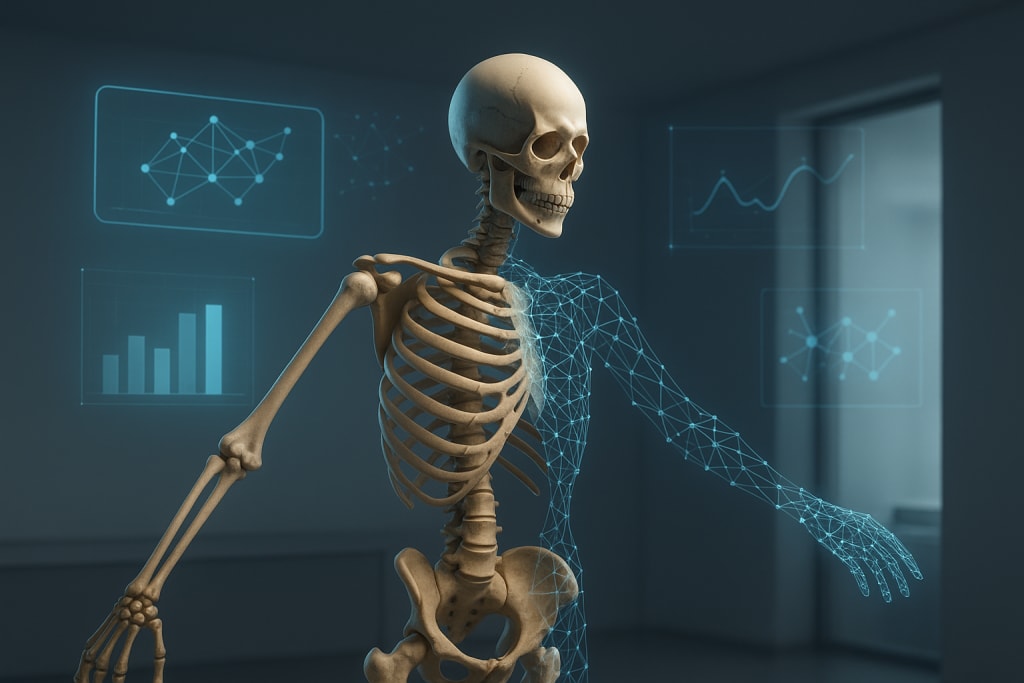
Human animation has come a long way from the early days of hand-drawn motion cycles. Today, skeleton-based animation combined with deep learning is reshaping how digital movement is created, refined, and applied across industries.
Whether in video games, film, virtual reality, or biomechanics research, skeleton-driven systems offer a level of precision and adaptability that traditional keyframing or motion capture alone cannot provide.
This article will walk through the fundamentals of skeleton-based animation, explain how deep learning is applied, and offer practical direction on how to begin experimenting with these techniques.
What Is Skeleton-Based Human Animation?
At its core, skeleton-based animation relies on representing the human body as a hierarchical structure of joints and bones. Instead of manipulating entire meshes or surfaces, animators control the underlying skeleton. Movements cascade down the hierarchy—rotating the shoulder influences the elbow, which in turn affects the wrist and hand.
Key characteristics include:
- Joint-based representation – Each body part is modeled as a joint with degrees of freedom.
- Hierarchy – Parent-child relationships ensure natural propagation of motion.
- Abstraction – Instead of raw pixel or mesh data, the system deals with simplified skeletal structures.
This abstraction allows machine learning models to focus on the essentials of human motion without being overwhelmed by surface-level complexity.
Why Combine Skeleton Animation with Deep Learning?
Traditional skeleton animation often requires painstaking manual adjustments or expensive motion capture sessions. Deep learning, however, introduces the ability to learn motion patterns directly from data. By training on vast libraries of recorded human movement, neural networks can predict and generate new animations that feel lifelike.
Benefits include:
- Automation of repetitive tasks – No need to manually keyframe every step or gesture.
- Generalization – Models trained on diverse datasets can animate new characters or actions without additional capture sessions.
- Realism – Learned motion dynamics capture subtle timing, balance, and rhythm.
- Scalability – Once trained, models can generate animations in real time.
The result is a fusion of structured skeleton data with the adaptive learning power of AI.
Core Deep Learning Approaches in Skeleton Animation
Several techniques dominate the field today, each offering different advantages depending on the application:
Recurrent Neural Networks (RNNs)
- Ideal for sequential data.
- Capture temporal dependencies across frames.
- Often enhanced with Long Short-Term Memory (LSTM) units.
Graph Convolutional Networks (GCNs)
- Treat the skeleton as a graph of connected joints.
- Learn both spatial relationships (joint-to-joint) and temporal dynamics.
- Widely used in action recognition and motion generation.
Variational Autoencoders (VAEs)
- Useful for generating diverse motion styles.
- Enable interpolation between different types of movements.
Generative Adversarial Networks (GANs)
- Produce highly realistic motion sequences.
- Can refine noisy data and ensure natural human-like motion.
By combining or stacking these methods, researchers achieve animations that balance realism, control, and adaptability.
Getting Started: A Step-by-Step Guide
Starting with skeleton-based animation using deep learning may feel overwhelming. Breaking it down into actionable stages makes it manageable.
1. Understand the Data
- Skeleton data usually comes from motion capture systems, RGB-D cameras (like Kinect), or large public datasets such as Human3.6M or CMU Motion Capture.
- Each frame contains 3D coordinates for multiple joints.
2. Preprocess the Skeletons
- Normalize joint positions to remove scale and translation differences.
- Filter noisy data with smoothing techniques.
- Align sequences so actions can be compared consistently.
3. Choose a Learning Framework
- PyTorch and TensorFlow dominate in deep learning.
- Libraries like PyTorch Geometric simplify graph-based modeling.
4. Build and Train the Model
- Start with a simple RNN or GCN.
- Use GPU acceleration for efficiency.
- Experiment with batch sizes, sequence lengths, and learning rates.
5. Generate and Evaluate Animations
- Visualize joint trajectories to ensure natural movement.
- Evaluate realism using metrics such as smoothness, diversity, and adherence to physics.
- Compare against ground truth datasets.
6. Apply to Real Projects
- Integrate into 3D engines like Unity or Unreal Engine.
- Use in robotics for human-like motion imitation.
- Explore healthcare by analyzing gait or rehabilitation exercises.
Challenges to Expect
While the potential is enormous, skeleton-based animation with deep learning brings hurdles.
- Data scarcity – High-quality, labeled motion data can be limited.
- Generalization – Models trained on one dataset may not adapt well to new environments.
- Physics constraints – Generated motions might look realistic but break physical laws without additional constraints.
- Computational demands – Training deep models often requires powerful hardware.
Overcoming these challenges usually involves a combination of data augmentation, transfer learning, and physics-informed modeling.
Best Practices for Beginners
- Start small – Begin with short sequences, such as walking or waving.
- Leverage open datasets – Avoid building datasets from scratch initially.
- Focus on preprocessing – Clean, normalized skeleton data dramatically improves outcomes.
- Iterate quickly – Test models in small experiments before scaling up.
- Document everything – Track hyperparameters, dataset versions, and evaluation methods.
Future Directions in Skeleton Animation
As hardware and algorithms improve, skeleton-based human animation is expected to evolve in key ways:
- Real-time generative models that can adapt instantly to new contexts.
- Multimodal integration, combining skeletons with audio, video, or text for more expressive characters.
- Physics-informed neural networks, ensuring generated movements obey real-world constraints.
- Personalized animation models, adapting to individual motion signatures.
These trends suggest that deep learning will continue to blur the line between handcrafted animation and automatically generated motion.
Skeleton-based animation powered by deep learning is no longer just a research curiosity. It has become a practical tool for artists, developers, and scientists alike. By combining structured skeleton representations with neural networks, creators can generate motion that is both realistic and flexible.
Getting started requires patience—preparing data, learning frameworks, and experimenting with models—but the rewards are immense. As you progress, you’ll discover that the fusion of skeleton systems and deep learning offers a path not only to more efficient animation pipelines but also to new forms of creativity and human-computer interaction.
About the Creator
Richard Bailey
I am currently working on expanding my writing topics and exploring different areas and topics of writing. I have a personal history with a very severe form of treatment-resistant major depressive disorder.
Keep reading
More stories from Richard Bailey and writers in Education and other communities.
Generative AI in Character Animation: Emerging Trends and Powerful Tools
The world of character animation has always thrived on creativity, technical precision, and storytelling. Yet, in recent years, a new force has begun reshaping the industry: generative artificial intelligence (AI).
By Richard Bailey5 months ago in Education
Engineering and Construction Expertise in Oil and Gas EPC Projects
Oil and gas engineering, procurement, and construction (EPC) services play a vital role in developing energy infrastructure across the world. These services cover the complete lifecycle of large-scale energy projects, from initial design and engineering to material sourcing, construction, and final commissioning. As global energy needs continue to evolve, oil and gas EPC activities remain essential for ensuring reliable energy production, transportation, and processing.
By Bobby Yadav5 days ago in Education
Cultivating Resilient and Adaptable Mindsets for Entrepreneurial Success
Entrepreneurship is often portrayed as a path defined by innovation and independence, yet the reality is far more demanding. Entrepreneurs must navigate uncertainty, withstand repeated setbacks, and make decisions in rapidly changing environments. Success rarely follows a straight line, and challenges can arise without warning. In such conditions, resilience and adaptability become essential, not optional, competencies.
By Greg Warnock4 days ago in Education
~ Fired ~
— Ai Intrusion ~ Are you Next ~ Is Ai Evolution after your job? — Few workplaces haven't been affected. Ai is in supermarkets, at doctors' offices, and even monitoring farms. I just can't think of anything this machine is not getting into, can you? For instance: Education ~ Law and Tech jobs will one day have a major influence or be taken over by these inanimate machines, with accuracy and vigor. From mechanics' diagnoses to a wide variety of everyday jobs, including fast food workers, with this input having the ability to cut their unnecessary work hours. I'm certain all of us have been touched by this with our short stories and colorful headings, have you? Even comments are very questionable 'Non-Robot' insertions.
By Jay Kantor7 days ago in Journal


Comments
There are no comments for this story
Be the first to respond and start the conversation.