
Generative AI in Character Animation: Emerging Trends and Powerful Tools
Explore how generative AI is transforming character animation with cutting-edge tools, emerging trends, and future possibilities for animators and storytellers

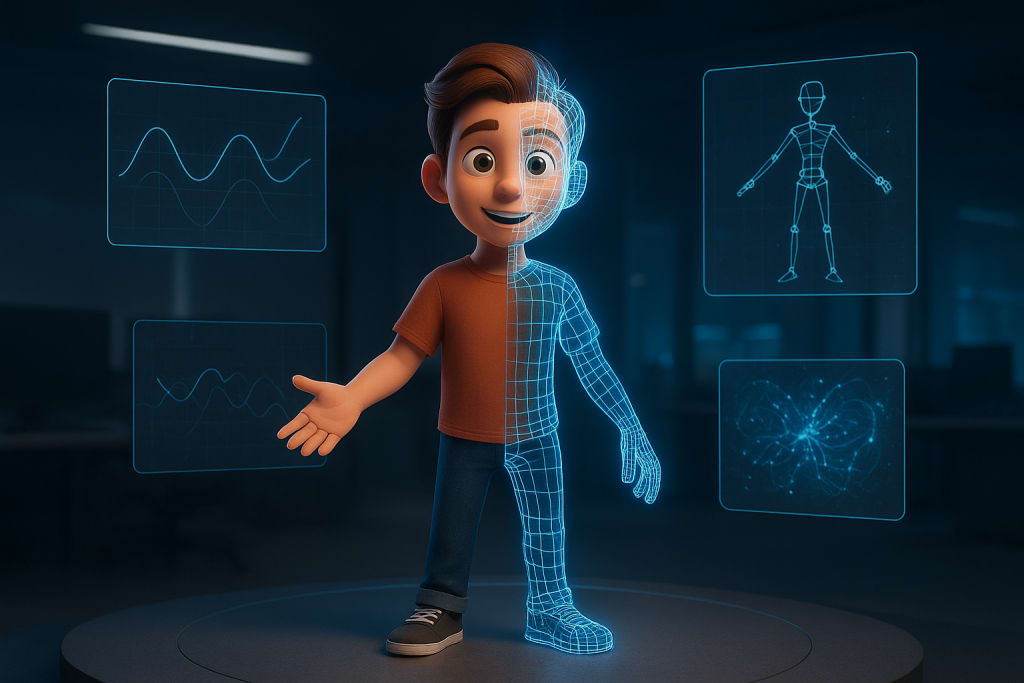
The world of character animation has always thrived on creativity, technical precision, and storytelling. Yet, in recent years, a new force has begun reshaping the industry: generative artificial intelligence (AI).
Once limited to research labs and experimental projects, generative AI is now entering mainstream pipelines, offering animators, studios, and independent creators fresh ways to build dynamic characters faster and with greater flexibility.
This article explores the current state of generative AI in character animation, the key trends shaping its evolution, and the most influential tools transforming how animators approach design and movement.
The Rise of Generative AI in Animation
Animation has long relied on manual processes—frame-by-frame drawing, 3D rigging, and motion capture. These methods remain vital, but they are often time-intensive and expensive. Generative AI changes the equation by automating parts of the workflow. It can suggest poses, simulate natural movements, or even create entire sequences from written prompts.
The adoption of these technologies isn’t only about speed. It’s about expanding creative possibilities. Animators can experiment with styles, iterate quickly, and push beyond traditional boundaries without starting from scratch every time. In essence, generative AI acts as both assistant and collaborator.
Key Trends Driving Generative AI in Character Animation
The integration of generative AI into animation pipelines is accelerating. Several major trends stand out:
Text-to-Animation
Instead of manually scripting or keyframing, animators can type a description such as “a curious child reaching for a floating balloon” and watch as AI generates a motion sequence. While not flawless, these systems reduce early-stage workload.
AI-Assisted Rigging
Rigging characters is notoriously tedious. Emerging AI tools analyze character meshes and automatically generate skeletons, weight maps, and controls. This saves hours of preparation and allows artists to focus on creative choices.
Style Transfer for Characters
Generative AI can mimic artistic styles and apply them to characters, transforming the same model into different visual aesthetics—hand-drawn, watercolor-inspired, or hyper-realistic—without remaking assets from scratch.
Procedural Motion Synthesis
Instead of relying solely on motion capture, AI can synthesize natural walking, running, or fighting sequences. These systems learn from large datasets, producing movements that feel human but can be endlessly varied.
Real-Time Animation and Virtual Production
Virtual avatars powered by AI are beginning to react to live input in real-time. This is especially valuable in interactive media such as gaming, streaming, and VR storytelling.
Tools Powering AI-Driven Character Animation
Several platforms and tools have emerged as leaders in generative AI animation. Some are aimed at professionals in studios, while others empower independent creators and hobbyists.
- Runway – Offers text-to-video capabilities that are beginning to support character motion generation.
- Plask – Specializes in browser-based AI motion capture, letting creators animate characters using simple webcam input.
- DeepMotion – Focused on real-time AI motion capture and animation, ideal for VR, gaming, and virtual production environments.
- Adobe Character Animator (with AI integration) – Uses machine learning to sync facial expressions, lip movements, and body actions with recorded input.
- RADiCAL – Provides AI-powered motion capture that bypasses traditional suits and sensors, generating realistic character movements from simple video recordings.
Each tool addresses different points in the animation workflow, from ideation and rigging to motion and rendering. For studios, the choice often depends on balancing accuracy, cost, and integration with existing pipelines.
Opportunities and Challenges
Generative AI in animation brings enormous promise, but it also raises challenges that professionals must navigate carefully.
- Opportunities include:
- Faster prototyping of characters and scenes.
- Lower production costs for independent creators.
- Greater experimentation with animation styles.
- Real-time character performance for live entertainment.
Challenges involve:
- Maintaining artistic control when AI outputs are unpredictable.
- Ensuring data used for training respects copyright and originality.
- Preserving the human element of storytelling in a world of automated tools.
- Managing the ethical implications of AI-generated performances.
The balance between automation and artistry remains central. Many animators see AI not as a replacement but as an amplifier of human creativity.
The Future of Generative AI in Character Animation
Looking ahead, the integration of AI into character animation is expected to deepen. Future systems will likely offer:
- Fully integrated pipelines where AI handles rigging, motion, lip-syncing, and style adaptation in one seamless environment.
- Personalized AI models trained on an animator’s unique style, enabling consistent creative direction.
- Interactive storytelling experiences where characters respond dynamically to audience input, blurring the line between film and game.
As AI grows more advanced, collaboration between humans and machines will redefine animation itself. Creators will spend less time on repetitive technical steps and more time exploring narrative, design, and emotion.
Generative AI is not just another tool in the animator’s toolkit. It is an evolving partner that shifts how characters are conceived, developed, and brought to life. While the technology is still maturing, its potential is undeniable. Animators who learn to harness these tools early will be better positioned to thrive in a rapidly changing creative landscape.
The key lies in balance: letting AI handle complexity while humans focus on storytelling and artistry. The future of character animation is not fully automated, but deeply collaborative—where imagination, guided by intelligence both natural and artificial, defines the next era of animated expression.
About the Creator
Richard Bailey
I am currently working on expanding my writing topics and exploring different areas and topics of writing. I have a personal history with a very severe form of treatment-resistant major depressive disorder.
Keep reading
More stories from Richard Bailey and writers in Education and other communities.
How Can I Increase My Transcription Speed and Earnings
If you’ve been transcribing for a while, you already know that speed matters—but speeding up doesn’t mean cutting corners. It means finding smarter ways to work, improving efficiency, and using modern tools (including AI) to support your workflow.
By Mahesh Kumar6 days ago in Education

Comments
There are no comments for this story
Be the first to respond and start the conversation.