Climate
Franklin County Snow Emergency. AI-Generated.
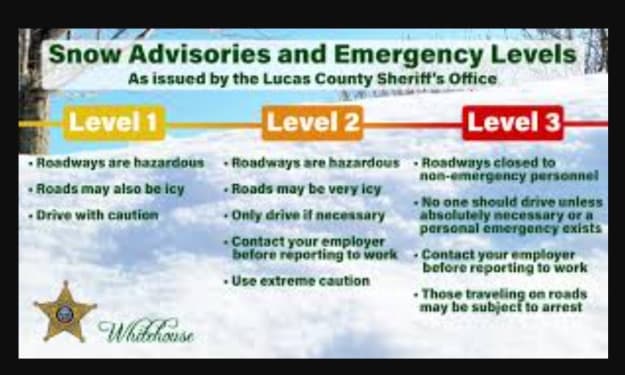
Winter weather in Ohio can change quickly, and when heavy snow or ice hits, local governments rely on snow emergency levels to keep residents safe. One of the most searched winter questions each year is: what level is Franklin County snow emergency right now? Understanding how these emergency levels work—and how they compare with nearby counties like Delaware County—can help drivers, workers, and families make safer decisions during severe weather. This article breaks down everything you need to know about the Franklin County snow emergency, including how levels are determined, where to find updates, and what each level means for daily life. What Is a Snow Emergency in Franklin County? A snow emergency is declared when weather conditions make travel dangerous due to snow, ice, or freezing rain. In Franklin County, Ohio, officials monitor road conditions, weather forecasts, and accident reports before announcing a snow emergency level. The Franklin County snow level system is designed to limit unnecessary travel and reduce accidents. Each level comes with specific guidelines for residents and employers. Local media outlets, especially 10TV Weather, play a major role in communicating these updates to the public in real time. Snow Emergency Levels Explained To understand what level snow emergency is Franklin County Ohio, it helps to know what each level represents. Level 1 Snow Emergency A Level 1 advisory means roads are slippery, especially bridges and secondary roads. Drivers should use caution, reduce speed, and allow extra stopping distance. Travel is permitted No legal restrictions Increased risk on untreated roads At this stage, daily activities usually continue as normal, though delays are common. Level 2 Snow Emergency When conditions worsen, officials may declare a Level 2 snow emergency. This signals that roads are hazardous and travel should be limited to essential trips only. Driving is discouraged Only necessary travel is advised Accidents become more frequent During a Level 2, many schools, businesses, and government offices may close or operate on delays. This is often the level that sparks widespread concern across Franklin County. Level 3 Snow Emergency Level 3 is the most serious designation. Roads are extremely dangerous or impassable, and travel is legally restricted. Only emergency personnel should be on the roads Driving can result in citations or arrest Conditions pose serious safety risks A Level 3 snow emergency is rare but critical. When declared, residents are urged to stay indoors until conditions improve. How Franklin County Determines Snow Emergency Levels Officials rely on multiple factors before announcing a snow emergency: Snowfall totals and accumulation rates Ice formation and road treatment effectiveness Traffic accidents and emergency response delays Weather forecasts from meteorologists Agencies coordinate closely with weather services and local law enforcement. Reports from 10TV Weather often provide early insight into whether conditions may escalate. Comparing Franklin County and Delaware County Snow Emergencies Many Ohio residents commute between counties, which makes comparing alerts important. A Delaware County snow emergency may not always match Franklin County’s status. For example: Franklin County could be under a Level 2 while Delaware County remains at Level 1 Snow bands may impact northern counties more severely Timing of road treatment can differ Drivers should always check both counties before traveling. Conditions can change rapidly, especially during overnight storms. Where to Find Reliable Updates Staying informed is essential during winter storms. The most reliable sources for Franklin County snow emergency updates include: Franklin County Sheriff’s Office announcements Official county websites and social media pages Local news stations, especially 10TV Weather Emergency alert systems and local radio Searching phrases like what level is Franklin County or what level snow emergency is Franklin County Ohio during storms is common, but always rely on official sources for confirmation. How Snow Emergencies Affect Schools and Workplaces Snow emergency levels often influence closures and delays: Schools typically close at Level 2 or Level 3 Government offices may shut down during Level 2 Many employers follow county advisories However, private businesses may set their own policies, so employees should check with supervisors directly. Preparing for a Franklin County Snow Emergency Preparation can make a major difference during winter weather. Residents are encouraged to: Keep vehicles fueled and stocked with emergency supplies Monitor forecasts before storms arrive Avoid unnecessary travel during Level 2 or Level 3 emergencies Check on elderly neighbors when conditions worsen Simple planning can reduce stress and improve safety during severe winter events. Why Snow Emergency Levels Matter Snow emergencies are not just warnings—they are safety tools. Each Franklin County snow level helps emergency crews prioritize resources, reduce accidents, and protect lives. Ignoring advisories can put drivers and first responders at risk. Understanding the system allows residents to make informed, responsible decisions. Final Thoughts Winter in Ohio is unpredictable, but information makes it manageable. Knowing how the Franklin County snow emergency system works—and staying updated through trusted sources like 10TV Weather—can help you stay safe when conditions deteriorate. Whether you’re checking what level is Franklin County, comparing alerts with a Delaware County snow emergency, or planning your commute, awareness is your best defense against winter hazards.
By Saboor Brohi 24 days ago in Earth
Severe Weather Conditions and School Closures in the United States
Severe Weather Conditions and School Closures in the United States Severe weather has long been one of the main reasons for school closures across the United States. From powerful winter storms and freezing temperatures to hurricanes, floods, and extreme heat, weather conditions can disrupt daily life and force education authorities to prioritize student safety. In recent years, climate variability has increased the frequency and intensity of these events, making weather-related school closures a recurring concern for families, educators, and local governments.
By America today 24 days ago in Earth
Trump Keeps Posting Private Messages on Truth Social. AI-Generated.
Former President Donald Trump has once again made headlines for an unusual reason: sharing private messages on Truth Social, the social media platform he founded. The posts, which reveal snippets of his personal and political communications, have sparked laughter, outrage, and renewed debates about the very nature of digital privacy. More importantly, this episode serves as a cautionary tale for everyone who uses work chats, messaging apps, or social platforms to communicate, proving that nothing online is truly private. Whether it’s WhatsApp, Slack, Teams, or private DMs, millions of people around the world use these tools daily, often assuming their conversations are confidential. Trump’s latest posts show just how risky that assumption can be — even for a former president. The Incident on Truth Social Over the past several weeks, Trump has posted screenshots of private conversations on Truth Social, including discussions that were originally intended for his aides, advisors, or campaign team. These posts include messages about political strategies, responses to media coverage, and even personal grievances. Observers quickly noticed that sharing these messages publicly exposes sensitive information that might otherwise have stayed private. While the former president’s followers seemed entertained or intrigued, the incident underscores an important principle: once a digital message exists, it can easily become public. Why Work Chats Aren’t Private Trump’s actions provide a high-profile example of a truth that affects everyone: work chats, even in corporate or political settings, are rarely private. Here’s why: Platforms Can Be Hacked No system is completely secure. Hackers can access private chats, whether on messaging apps, company networks, or social media platforms. Even messages thought to be encrypted can sometimes be breached. Company Policies and Oversight In many organizations, administrators have access to employee accounts, messages, and files. A “private” Slack or Teams conversation can often be monitored or archived for compliance purposes. Screenshots and Forwarding Even without technical hacks, messages can easily be shared with third parties. A single screenshot or forwarded text can turn a private conversation into public information in seconds. Social Media Amplification As Trump demonstrates, posting screenshots online spreads private content globally almost instantly. Once online, control over that information is lost. In short, privacy is never guaranteed in digital communication — whether you’re a political figure, a corporate employee, or just chatting with friends. Lessons From Trump’s Posts Trump’s public sharing of private messages offers several lessons: Assume everything can be seen: Even if a platform promises privacy, assume that your messages could eventually be exposed. Be careful with sensitive content: Strategy discussions, confidential plans, and personal opinions should be communicated cautiously. Understand platform limitations: Social media platforms are designed for sharing, not secrecy. Once you post or forward something, it’s out of your control. These lessons apply to businesses, governments, and individuals alike. Organizations have learned the hard way that leaked internal communications can lead to public scandals, reputational damage, and legal complications. Historical Context: Public Figures and Leaks Trump is not the first public figure to accidentally or intentionally make private communications public. Political scandals over the past two decades — from leaked emails to exposed text messages — have consistently highlighted the risks of digital messaging. For example: Hillary Clinton’s emails in the 2016 election became a national controversy, showing how digital communications can be scrutinized intensely. Corporate leaks, such as employee messages going viral, have damaged brands and led to resignations. The lesson: if you want something to stay private, avoid sending it digitally, because there’s always a chance it will surface. The Psychology Behind Sharing Private Messages Why do people share private messages publicly? Trump’s posts illustrate several possible motivations: Shaping the narrative: By posting private chats, he can highlight points that support his messaging or political agenda. Entertainment value: Followers may enjoy the behind-the-scenes glimpse into personal or political communications. Control over interpretation: Sharing messages allows the original sender to frame them in a way that aligns with their narrative. However, these benefits come at a cost: exposing sensitive content, alienating colleagues, and undermining trust. In the workplace, similar actions could lead to disciplinary measures or legal consequences. Digital Privacy in the Modern Era Trump’s Truth Social posts serve as a high-profile reminder that digital privacy is fragile. For the average user, the implications are clear: Use caution with work chat apps: Always assume your messages can be accessed or shared. Separate personal and professional communications: Sensitive work discussions are best held in secure, controlled environments. Limit screenshots and forwards: Once a message is captured, it can leave your control forever. Organizations, meanwhile, should educate employees about digital security and implement policies to protect both data and privacy. Conclusion: No Work Chat Is Truly Private Trump’s recent activity on Truth Social illustrates a simple truth: digital messages, whether personal or professional, are never completely private. Screenshots, hacks, forwarding, or platform design flaws can make sensitive information public in an instant. The lesson applies to everyone, from former presidents to corporate employees: treat digital communications as public by default, and be mindful of the content you share. In a world where private messages can become headlines, caution, discretion, and digital literacy are essential. In the end, Trump’s posts are entertaining for some, worrying for others, but they reinforce an enduring reality: if you don’t want the world to see it, don’t send it digitally.
By Muhammad Hassan24 days ago in Earth
Trade an Alliance for an Island? That’s a Bad Deal. AI-Generated.
In global politics, deals are often complex, involving trade-offs between economic benefits, security, and diplomacy. But some propositions are so controversial that they make analysts, policymakers, and citizens alike shake their heads. One such idea that has sparked debate is the notion of trading a military or political alliance for control over a strategic island. While it may seem tempting on the surface — after all, islands can provide resources, ports, or strategic leverage — experts warn that the costs almost always outweigh the benefits. Whether in the context of historical disputes or contemporary geopolitical maneuvers, the principle is clear: sacrificing alliances for short-term territorial gain is a recipe for long-term instability. The Strategic Value of Islands Islands have long held outsized importance in global strategy. Their locations can control shipping lanes, host military bases, or serve as hubs for surveillance and trade. Examples abound: Guam, a U.S. territory in the Pacific, serves as a crucial military outpost. Falkland Islands, a British overseas territory, have sparked wars over sovereignty. Taiwan, an island nation, sits at the center of a high-stakes geopolitical standoff. It’s no wonder that countries often covet islands. But there’s a critical question: does gaining an island justify undermining the alliances that guarantee your security? Alliances Are Hard to Replace Alliances are built on trust, shared interests, and mutual defense commitments. They are far more difficult to establish than an island is to claim. Trading an alliance for territorial gain may offer immediate leverage or prestige, but the risks are profound: Loss of Credibility – Nations that abandon allies for short-term gain quickly earn reputations as unreliable partners. Future negotiations become harder, as other countries question whether agreements will be honored. Security Gaps – Alliances often provide defense guarantees, intelligence sharing, and logistical support. Sacrificing them leaves a country vulnerable to external threats, particularly from rivals who may exploit the weakened network. Economic Costs – Alliances often underpin trade, investment, and joint infrastructure projects. Breaking them can lead to sanctions, lost markets, or reduced foreign investment. The lesson: while an island may offer strategic positioning, the network of alliances it might cost is far more valuable in the long run. Historical Lessons History provides cautionary tales. Consider these examples: World War II: Several countries prioritized short-term territorial gains over alliances, leading to devastating consequences. Nazi Germany initially signed non-aggression pacts with smaller neighbors, only to later invade them. The temporary territorial gains could not compensate for the loss of trust and the eventual collapse of strategic alliances. Cold War-era negotiations: Smaller countries were frequently courted with promises of land or aid in exchange for switching allegiances. Those who accepted often found themselves isolated once the larger powers shifted focus. Even today, analysts warn against decisions that sacrifice alliances for geographic gains, emphasizing that political isolation often outweighs any tactical advantage an island might provide. Modern Geopolitical Risks In today’s interconnected world, the stakes are even higher. Global powers rely on alliances for cybersecurity, intelligence sharing, and coordinated responses to crises. Trading away alliances for an island could: Increase regional instability, as neighboring states perceive opportunism and may respond aggressively. Undermine defense networks, reducing the effectiveness of coordinated military strategies. Trigger economic retaliation, such as sanctions, reduced foreign investment, or trade barriers. For example, in East Asia, speculation over islands in the South China Sea has shown that territorial claims can inflame tensions, disrupt shipping, and strain alliances. The international community’s response demonstrates that control over land rarely outweighs the benefits of strong regional partnerships. The Temptation of Short-Term Gains It’s easy to understand why some leaders might be tempted by the idea of trading alliances for islands. Islands offer tangible assets: ports, mineral resources, tourism opportunities, and symbolic prestige. In contrast, alliances are intangible, slow to show benefits, and require ongoing maintenance. But experts caution that these short-term gains are deceptive. Islands can become expensive liabilities, requiring military defense, infrastructure investment, and diplomatic management. Without the backing of reliable allies, these responsibilities can quickly overwhelm a nation’s capacity. Why Alliances Are the Better Investment Alliances, on the other hand, provide a foundation for long-term stability and prosperity. They: Strengthen deterrence against aggression. Enable resource sharing, from intelligence to humanitarian aid. Facilitate trade and economic integration. Enhance global influence, since countries with strong alliances carry more weight in negotiations. In short, while an island may give the appearance of strength, alliances provide real, multifaceted security. Nations that value lasting influence and resilience prioritize alliances over short-term territorial gains. Conclusion: Islands Are Not Worth Alliances In geopolitics, the lure of a small piece of land can be seductive. But as history and modern strategy show, alliances are the true currency of international power. Trading an alliance for an island may offer temporary prestige or leverage, but the long-term costs — security risks, economic consequences, and loss of credibility — are rarely worth it. Leaders seeking strategic advantage should remember that alliances, trust, and collaboration often outweigh any single piece of territory, no matter how strategically located or resource-rich. In the end, islands may be impressive on maps, but alliances shape the world in lasting, meaningful ways.
By Muhammad Hassan24 days ago in Earth
One of Russia's Last 'Old Believers' Still Lives in Siberia. AI-Generated.
Deep in the vast, frozen expanse of Siberia, where snow stretches for miles and the nearest town is hours away by rickety roads, a remarkable story of faith and tradition quietly persists. In this isolated landscape, one of Russia's last surviving 'Old Believers' continues to live in a way that has changed little over centuries, preserving religious rituals, customs, and a unique worldview that stands apart from modern Russian life. The 'Old Believers', or старообрядцы (staroobryadtsy), split from the Russian Orthodox Church in the mid-17th century during reforms introduced by Patriarch Nikon. Rejecting changes in liturgy, ritual, and church hierarchy, they faced centuries of persecution, exile, and marginalization. Today, only a handful remain, mostly in isolated villages like this Siberian enclave, where tradition survives against all odds. Who Are the Old Believers? The Old Believers emerged in 1650s Russia as part of a resistance movement against the liturgical reforms of Patriarch Nikon. They rejected the standardization of prayers, rituals, and church practices, insisting that the “old ways” were sacred and unchangeable. For centuries, the Russian state and Orthodox Church persecuted them. Many fled to remote regions of Russia, including Siberia, the Russian Far East, and even parts of Alaska when it was Russian territory. Their communities became known for self-sufficiency, deep faith, and strict adherence to tradition. Even today, Old Believers are recognized by their distinctive attire, two-fingered crosses, and unique liturgical practices, which remain largely unchanged for over 350 years. A Life Preserved in Isolation The last few Old Believers living in Siberia lead lives that seem frozen in time. Villages are small and often inaccessible in winter, with residents relying on farming, hunting, and handcrafts for survival. Technology and modern conveniences are minimal; electricity and internet may reach some homes, but daily life revolves around the church, family, and the natural rhythms of the land. One Siberian villager, among the very last of his kind, continues to celebrate traditional festivals, maintain the old liturgical calendar, and teach his children prayers in Church Slavonic, a language nearly extinct in other parts of Russia. His home is filled with handmade icons, wooden crosses, and religious texts, many passed down for generations. Isolation has allowed Old Believers to preserve their beliefs intact, but it has also made life extremely challenging. Long winters, harsh landscapes, and limited access to medical care are daily realities. Yet these communities endure, held together by faith, family ties, and a profound respect for history. Why Siberia? Siberia’s harsh climate and remoteness have historically made it a refuge for those fleeing persecution. During the 17th and 18th centuries, the Russian Empire exiled dissenters, religious minorities, and political rebels to Siberia, believing that the harsh conditions would prevent them from influencing others. For the Old Believers, Siberia became not just a place of exile but a sanctuary. Here, far from the centralized control of the church and state, they could practice their faith freely. Even today, the geography continues to serve as a natural buffer, allowing remaining Old Believers to live according to ancient rituals and traditions largely undisturbed. Challenges of Modern Life Despite their seclusion, the last Old Believers face new pressures. Younger generations are increasingly tempted by urban life, education, and the internet. Migration to cities like Irkutsk or Novosibirsk means fewer young people remain in the villages, threatening the continuity of Old Believer culture. Furthermore, government modernization programs, infrastructure development, and global economic pressures have introduced modern conveniences that subtly erode traditional practices. While some embrace selective modernity — using tractors, mobile phones, or solar panels — the core religious and cultural rituals remain fiercely protected. The question many scholars and observers ask is whether these last communities can survive the 21st century intact, or whether globalization will eventually absorb them into mainstream Russian life. The Spiritual and Cultural Significance The remaining Old Believers are more than a curiosity; they are a living link to Russia’s religious history. Their existence provides insight into resistance, resilience, and the preservation of cultural identity. For historians, anthropologists, and religious scholars, these communities are invaluable. They demonstrate how faith can shape daily life, social structures, and even survival strategies in extreme environments. Their rituals, attire, and liturgy offer a unique perspective on pre-modern Russia, acting as a window into centuries-old spiritual practices. Lessons from the Last Old Believers The life of Siberia’s last Old Believers teaches several lessons: Faith and Tradition Endure: Even in the face of persecution, isolation, and modernization, cultural and religious identity can persist. Community Is Essential: Tight-knit families and communal practices help sustain traditions that might otherwise disappear. Balance Between Preservation and Adaptation: While embracing some modern tools, Old Believers maintain the core of their practices, demonstrating how selective adaptation can support cultural survival. Their story also challenges outsiders to reflect on the meaning of progress. In a world increasingly defined by technology and urbanization, the Old Believers remind us that there is value in slower, deliberate, and spiritually centered ways of life. A Fragile Future Today, with only a handful of Old Believers left in Siberia, the community is at a crossroads. Their survival depends on passing knowledge, traditions, and faith to the next generation, who may have the option to leave for the cities or even abroad. The Siberian landscape that once provided refuge may now feel isolating to younger members, but for those who remain, it is a sacred environment intertwined with belief and identity. In essence, the last Old Believers are not just preserving rituals; they are guardians of a centuries-old way of life that continues to defy time and modern pressures. Final Thoughts The story of Siberia’s last Old Believers is one of resilience, faith, and quiet defiance. They remind us that culture and religion can survive extreme adversity, and that in the most remote corners of the world, history continues to live through people’s daily lives. While the future remains uncertain, the existence of these last practitioners offers a profound testament to human endurance and the power of belief. In a rapidly changing world, the Old Believers’ commitment to their traditions shows that some values are not measured by speed or convenience but by steadfastness, patience, and devotion. Siberia, with its vast forests, frozen rivers, and endless skies, continues to harbor a story that spans centuries — and in the life of one of its last Old Believers, we see a bridge connecting Russia’s past to its uncertain but enduring present.
By Muhammad Hassan24 days ago in Earth
Europe Is About to Sign a Long-Awaited Free-Trade Deal With India. AI-Generated.
After years of negotiations, pauses, and political recalculations, Europe and India are finally on the brink of signing a long-awaited free-trade agreement. What once seemed like an overly ambitious diplomatic project is now becoming a reality—one that could redefine trade relations between two of the world’s most influential economic regions. This deal is not just about tariffs and exports. It’s about shifting global power, strengthening supply chains, and creating new opportunities for communities on both sides. Why This Deal Took So Long Talks between the European Union and India began well over a decade ago, but progress was slow. Differences over labor standards, environmental rules, market access, and intellectual property rights repeatedly stalled negotiations. Both sides had strong priorities—and neither wanted to compromise too much. However, the global landscape has changed dramatically in recent years. Supply chain disruptions, geopolitical tensions, and a growing desire to reduce over-reliance on single markets have pushed both Europe and India to rethink their strategies. Suddenly, cooperation feels less optional and more necessary. What the Agreement Is Expected to Cover At its core, the free-trade deal aims to reduce tariffs, ease regulations, and open markets between Europe and India. European companies are seeking better access to India’s vast consumer market, while India wants smoother entry into European industries such as technology, pharmaceuticals, and manufacturing. The agreement is also expected to include provisions related to: Digital trade Sustainable development Labor rights Investment protection These elements reflect modern trade priorities, where economic growth is increasingly linked with social and environmental responsibility. Why Europe Needs India Right Now For Europe, the deal is part of a broader strategy to diversify trade relationships. Recent global events have highlighted the risks of economic dependency. India, with its rapidly growing economy and young workforce, represents both stability and potential. European policymakers see India as a long-term partner capable of balancing global trade dynamics. Strengthening ties with India could also help Europe remain competitive in a world where economic influence is constantly shifting. Why India Is Saying Yes India, too, stands to gain significantly. A free-trade agreement with Europe could boost exports, attract investment, and accelerate economic modernization. It also positions India as a major global player willing to engage on equal terms with powerful blocs. For Indian businesses—especially small and medium enterprises—easier access to European markets could mean growth, innovation, and international exposure. For workers, it could translate into job creation and skills development. Impact on Everyday Communities While trade deals often sound abstract, their effects are deeply local. Lower tariffs can reduce prices for consumers. New investments can revitalize industries and create employment. Improved cooperation can strengthen educational, cultural, and technological exchanges. Communities in Europe may see new products, partnerships, and opportunities tied to Indian innovation. Indian communities, meanwhile, could benefit from European expertise in sustainability, infrastructure, and advanced manufacturing. This is why the agreement matters beyond boardrooms and government offices—it touches real lives. Concerns and Criticism Still Exist Despite the optimism, critics on both sides have raised concerns. Some European groups worry about labor standards and environmental protections, while some Indian voices fear that local industries could struggle against European competition. These concerns highlight the importance of transparency and fair implementation. A successful agreement will require ongoing dialogue, monitoring, and cooperation to ensure that economic growth does not come at the expense of workers or the environment. A Strategic Signal to the World Beyond economics, the deal sends a strong political message. It signals that multilateral cooperation is still possible, even in an era of rising protectionism. Europe and India are showing that large, diverse democracies can find common ground through negotiation rather than confrontation. This partnership could also influence future global trade standards, especially in areas like digital regulation and sustainable development. What Happens Next Once signed, the agreement will still need formal approvals and phased implementation. Businesses, governments, and communities will need time to adapt. But the direction is clear: closer ties, deeper cooperation, and a shared economic future. For both Europe and India, this deal represents more than a trade pact—it’s a strategic investment in resilience and mutual growth. Final Thoughts The long-awaited free-trade deal between Europe and India marks a turning point in global economic relations. It reflects changing priorities, evolving partnerships, and a shared recognition that collaboration is essential in an uncertain world. As the agreement moves forward, its true success will be measured not just in trade volumes, but in how effectively it supports communities, protects values, and builds a more balanced global economy.
By Muhammad Hassan24 days ago in Earth
Guests on the Shore
Seagulls and I have never really managed to coexist peacefully. For reasons I still can’t explain, they seem to find me irresistible, as if I’m quietly broadcasting some secret gull-summoning signal. I’ve had a couple of memorable encounters with them over the years, the kind that make you glance up at the sky a little more cautiously afterward. And no, it’s not because I provoke them. I don’t chase them, shoo them away, or steal their fries. I hold no grudges against seagulls whatsoever.
By Debbie's Reflection25 days ago in Earth
What Will the Weather Be Like Tomorrow
## What Will the Weather Be Like Tomorrow Tomorrow’s weather forecast provides an overview of the atmospheric conditions expected over the next twenty-four hours. Weather forecasts are created using scientific observations such as temperature, air pressure, humidity, wind speed, and cloud movement. These observations are analyzed through advanced computer models that simulate how the atmosphere is likely to behave. Because the forecast focuses on a short time frame, it is generally more accurate than long-term predictions. Understanding tomorrow’s weather helps people plan their daily activities, commute safely, and prepare for possible changes in conditions throughout the day.
By America today 25 days ago in Earth