Climate
"That Is a Whole Brigade of Red Flags": Adults Over 30 Reveal the Things Every Younger Person Should Know. AI-Generated.
Growing up can feel like navigating a maze without a map. Mistakes, missteps, and surprises are part of the journey, but guidance from those who’ve already traveled the path can be invaluable. Recently, a trend has emerged where adults over 30 are sharing the key lessons they wish younger people knew—covering everything from relationships and finances to career choices and personal well-being. The consensus? Life is complicated, but awareness can prevent some of the biggest mistakes. Relationships: Spotting the Red Flags Early One of the most common themes in these shared insights is relationships. Adults repeatedly emphasize the importance of recognizing “red flags” early—behaviors or patterns that signal potential trouble in romantic partnerships or friendships. Comments from social media and discussion threads include advice like: “That person constantly dismisses your feelings? Red flag.” “If someone only shows up when it’s convenient for them, don’t ignore it.” “Pay attention to how someone treats people around them, not just how they treat you.” One adult summed it up bluntly: “That is a whole brigade of red flags. Don’t brush it off because it’s easier to stay.” These warnings highlight that emotional awareness and self-respect are essential skills that often come with experience—but younger people can learn them sooner. Financial Wisdom: Learn It Early Another area where older adults wish they had shared knowledge: money management. Many people over 30 reflect on early financial mistakes, from unnecessary debt to poor saving habits. Key advice includes: Start saving as early as possible, even if it’s a small amount. Understand the impact of credit cards and interest rates. Don’t fall into the “keeping up with friends” trap—lifestyle inflation can be deadly. One adult noted, “I wish someone told me that your 20s are for building security, not impressing people. Your future self will thank you.” The pattern is clear: financial literacy is a skill that pays dividends long before it becomes urgent. Career and Work-Life Balance Adults over 30 also emphasize lessons about work, careers, and ambition. Many regret spending too much time chasing prestige or external validation, rather than finding roles that match their values or talents. Tips shared by experienced workers include: Learn to say no to toxic work environments. Don’t ignore mental health in pursuit of career success. Seek mentorship early, but also trust your own judgment. One common refrain: “Your first job is a learning experience, not a lifetime commitment. Don’t be afraid to pivot.” These insights suggest that career strategy isn’t just about climbing the ladder—it’s about long-term fulfillment and avoiding burnout. Health and Well-Being: Habits Matter Health is another domain where older adults wish they had more guidance in their 20s. Many stress the importance of establishing healthy habits early, rather than assuming youth will protect them indefinitely. Practical advice includes: Exercise regularly, even moderately, to avoid long-term issues. Develop a routine around sleep and nutrition. Address mental health proactively; therapy is not just for crises. An adult shared, “You can’t bank youth. Bad habits compound faster than you think.” These messages reinforce that health is not just physical but also mental, and early attention can prevent decades of struggle. Emotional Intelligence and Communication Another recurring lesson involves emotional intelligence and communication skills. Adults note that misunderstandings, conflict, and resentment often arise from poor communication, something younger people might underestimate. Some advice includes: Learn to express feelings without blame or aggression. Recognize your own triggers before reacting. Practice empathy and active listening—it pays off in friendships, work, and romantic relationships. The emphasis here is clear: emotional maturity can prevent repeated mistakes and improve both personal and professional relationships. Social Media and Perception Many older adults also caution about social media pitfalls. In a world dominated by curated images and constant comparison, it’s easy for younger people to feel inadequate or chase validation. Key tips include: Don’t measure your worth by likes or followers. Take breaks from social media when needed. Remember that people rarely post their struggles online. One reflection captures it perfectly: “Everyone looks like they have it together online, but life isn’t filtered. Don’t let comparison steal your confidence.” The Common Thread: Awareness Saves Time Across these lessons, one theme stands out: awareness is power. Adults over 30 are essentially saying that many mistakes are preventable if younger people pay attention to patterns, trust intuition, and act with foresight. Whether it’s spotting red flags, managing finances, choosing a career, or caring for health, small actions early in life can prevent long-term struggles. The shared wisdom is not about fear or pessimism—it’s about preparing for reality while still enjoying youth. Why Younger People Should Listen Learning from others’ experiences can shorten the trial-and-error period of early adulthood. Younger adults are not expected to avoid mistakes completely, but awareness can: Reduce unnecessary hardship Improve decision-making in relationships, finances, and careers Build emotional resilience Encourage self-reflection and intentional living Adults over 30 often wish they could hand these lessons over like a cheat sheet, highlighting that some knowledge is timeless. Final Thoughts The collective advice from adults over 30 reminds younger people that life is full of lessons—some learned the hard way, others passed down through guidance. Red flags in relationships, financial prudence, career choices, health habits, and emotional intelligence are all areas where early awareness can make a significant difference. In the end, the takeaway is clear: listen, reflect, and take action. Life won’t wait, but the wisdom of those who’ve already lived through its challenges can help younger generations navigate the path more smoothly. By paying attention to the “brigade of red flags” and heeding experienced advice, younger people can make more informed choices, avoid repeated mistakes, and approach adulthood with confidence.
By Muhammad Hassan22 days ago in Earth
UK Among 10 Countries to Build 100GW Wind Power Grid in North Sea. AI-Generated.
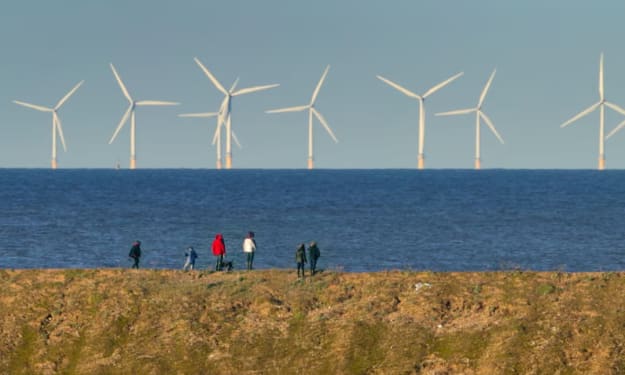
The United Kingdom has joined forces with nine other European countries to create a massive offshore wind power grid in the North Sea, aiming to generate 100 gigawatts (GW) of renewable electricity. This ambitious initiative, one of the largest international energy projects in recent history, reflects Europe’s growing commitment to sustainable energy and the transition away from fossil fuels.
By Aarif Lashari22 days ago in Earth
Tourists Banned From Entering a Famous Snowfall Spot for Four Days: What Happened and Why It Matters. AI-Generated.
Snowfall destinations attract millions of tourists every year. Fresh snow, white landscapes, and winter activities turn certain locations into seasonal hotspots. But sometimes, nature’s beauty comes with serious risks. Recently, authorities temporarily banned tourists from entering a famous snowfall spot for four days, citing safety, environmental, and logistical concerns. The decision sparked debate among travelers, local businesses, and environmental experts. While many tourists expressed disappointment, officials argued that the ban was necessary to protect lives, infrastructure, and the fragile winter environment. Why Authorities Imposed the Ban The temporary closure was not an impulsive move. Officials announced the restriction after extreme snowfall overwhelmed the area, making roads dangerous and emergency access difficult. Heavy snow accumulation reduced visibility, increased avalanche risks, and caused traffic congestion that emergency services could not manage effectively. In previous years, similar conditions had resulted in stranded vehicles, medical emergencies, and damage to local infrastructure. Authorities learned that allowing unrestricted tourism during extreme snowfall could turn a scenic trip into a disaster. By banning entry for four days, officials aimed to: Clear roads and restore access routes Reduce the risk of accidents and avalanches Allow emergency services to operate efficiently Prevent environmental damage caused by overcrowding Tourist Reactions: Frustration and Understanding Many tourists had planned their trips weeks in advance. Hotels were booked, transportation arranged, and expectations set. For them, the sudden ban felt unfair and inconvenient. Social media quickly filled with complaints, with travelers questioning why better planning hadn’t prevented the closure. However, others supported the decision, acknowledging that safety should always come first. Experienced travelers pointed out that winter tourism carries inherent risks, especially in mountainous or high-altitude regions. As one frequent visitor noted online, “Snow is beautiful, but it doesn’t care about travel plans.” Impact on Local Businesses Local businesses often feel the immediate impact of such bans. Hotels, restaurants, tour operators, and small vendors rely heavily on seasonal tourism. A four-day closure can mean significant financial losses, especially during peak snowfall periods. Some business owners expressed concern about lost revenue, while others supported the ban as a necessary short-term sacrifice. Many acknowledged that accidents or fatalities would cause far greater long-term harm to the region’s reputation. In some cases, local authorities offered partial relief measures, such as rescheduling permits, extending hotel bookings, or waiving certain fees. These steps helped ease tensions between officials and the tourism industry. Environmental Concerns During Peak Snowfall Beyond safety, environmental protection played a major role in the decision. Popular snowfall destinations often experience severe strain during peak tourist seasons. Large crowds can damage snow-covered vegetation, increase waste, and disturb wildlife. When snow accumulates rapidly, ecosystems become even more vulnerable. Trampling through fragile areas, littering, and off-road driving can cause long-lasting damage that takes years to recover. Temporary bans give nature time to stabilize. Snowpack settles, wildlife adjusts, and authorities can manage waste and infrastructure more effectively. In this sense, the restriction serves not only humans but the environment as well. The Growing Challenge of Overtourism This incident highlights a broader global issue: overtourism. As social media makes scenic locations instantly famous, tourist numbers can surge beyond what places are designed to handle. Snowfall spots are especially vulnerable because weather conditions can change rapidly. Without strict controls, overcrowding can lead to: Traffic jams in remote areas Overburdened emergency services Increased pollution Higher accident rates Temporary bans are increasingly being used as a management tool, allowing authorities to balance tourism with safety and sustainability. How Authorities Decide When to Close Tourist Sites Decisions like this are usually based on data, not guesswork. Authorities monitor: Snow depth and weather forecasts Road and infrastructure conditions Emergency response capacity Past incident records When multiple risk factors align, closures become unavoidable. Officials also consult meteorologists, environmental experts, and local administrations before announcing restrictions. Clear communication is essential. In this case, officials used public notices, social media updates, and travel advisories to inform tourists and prevent confusion. What Tourists Can Learn From This For travelers, the incident offers valuable lessons. Winter travel requires flexibility. Weather-related bans are not punishments—they are protective measures. Tourists can reduce disruption by: Checking local advisories before traveling Booking refundable accommodations Avoiding peak congestion periods Respecting local rules and restrictions Understanding the realities of winter destinations can make travel safer and more enjoyable. Will Bans Like This Become More Common? As climate patterns become more unpredictable, temporary closures may become more frequent. Sudden heavy snowfall, extreme cold, or rapid snowmelt can quickly turn tourist-friendly areas into hazardous zones. Authorities worldwide are likely to adopt stricter crowd-control measures, especially in fragile or high-risk environments. While inconvenient, these steps are part of responsible tourism management. Final Thoughts The four-day ban on tourists entering a famous snowfall spot reminds us that nature sets the rules—not travel schedules. While such decisions may disappoint visitors and affect local businesses, they play a crucial role in ensuring safety, protecting ecosystems, and preventing long-term damage. Responsible tourism requires patience, adaptability, and respect for local conditions. Sometimes, the smartest travel decision is waiting until nature is ready to welcome visitors again.
By Muhammad Hassan22 days ago in Earth
By Planting More Than One Billion Trees Since the 1990s, China Has Slowed Desert Expansion and Restored Vast Areas of Degraded Land. AI-Generated.
Over the past three decades, China has carried out one of the largest environmental restoration efforts in human history. By planting more than one billion trees since the 1990s, the country has significantly slowed the spread of deserts and helped revive vast areas of once-degraded land. This ambitious reforestation campaign has not only reshaped China’s landscapes but also altered how the world views large-scale environmental recovery. Desertification has long been one of China’s most serious environmental challenges. Expanding deserts threatened farmland, water supplies, biodiversity, and the livelihoods of millions of people. Faced with these risks, China turned to trees—not as a quick fix, but as a long-term strategy. The Growing Threat of Desertification Before large-scale planting began, desertification was advancing at an alarming pace. Northern and western regions of China were particularly vulnerable, with deserts encroaching on villages, farmland, and infrastructure. Dust storms became more frequent, sometimes traveling thousands of miles and affecting neighboring countries. Desertification does not happen overnight. It is often the result of deforestation, overgrazing, climate change, and unsustainable land use. Once land degrades, restoring it becomes difficult and expensive. By the late 20th century, Chinese authorities recognized that without intervention, desert expansion could undermine food security and economic development. The Launch of a Massive Tree-Planting Effort In response, China launched multiple reforestation and land restoration programs in the 1990s. Among the most well-known is the “Three-North Shelterbelt Program,” often referred to as the “Great Green Wall.” Its goal was simple but ambitious: create vast belts of forest to block desert winds, stabilize soil, and protect agricultural land. Tree planting became a national priority. Local governments, communities, students, and even businesses were encouraged to participate. Over time, these efforts added up—more than one billion trees planted across deserts, plains, and degraded regions. How Trees Help Stop Desert Expansion Trees play a crucial role in slowing desertification. Their roots anchor soil in place, reducing erosion caused by wind and water. Leaves and branches act as windbreaks, limiting the movement of sand. Trees also help retain moisture in the soil, creating conditions that allow grasses and other plants to grow. As vegetation returns, ecosystems begin to recover. Wildlife slowly reappears, soil fertility improves, and land once considered unusable can support agriculture again. In many areas of China, regions previously labeled as barren have been transformed into productive landscapes. Restoring Degraded Land at Scale Beyond slowing deserts, China’s reforestation programs have helped restore millions of hectares of degraded land. Formerly overused farmland has been replanted with trees and grasses, allowing soil to recover. Hillsides vulnerable to erosion have been stabilized, reducing flooding risks downstream. Satellite images over the years show a visible increase in green coverage across large parts of the country. These changes are not just cosmetic; they represent improved land health and resilience against climate extremes. Importantly, restoration efforts have evolved over time. Early projects focused on planting large numbers of trees quickly, sometimes using non-native species. More recent programs emphasize sustainability, biodiversity, and selecting tree species suited to local climates. Environmental and Climate Benefits The environmental benefits of planting more than one billion trees extend far beyond desert control. Forests absorb carbon dioxide, helping mitigate climate change. Increased vegetation also improves air quality, reduces dust storms, and supports water cycles. China’s expanding forests have contributed to global greening trends observed by scientists using satellite data. While tree planting alone cannot solve climate change, it plays a meaningful role when combined with emissions reductions and sustainable land management. Challenges and Criticism Despite its successes, China’s tree-planting campaign has not been without criticism. In some regions, fast-growing trees were planted in dry areas where water resources were limited. This led to concerns about water shortages and long-term survival rates. Environmental experts have emphasized that planting trees is only effective when ecosystems are respected. Grasslands, for example, may not benefit from dense forests. Recognizing this, newer initiatives focus on ecosystem-based restoration, not just tree counts. These lessons highlight an important truth: restoration is complex, and success depends on adapting strategies to local conditions. Community Involvement and Economic Impact Reforestation has also had social and economic impacts. Many rural communities have benefited from jobs related to planting, maintaining, and managing forests. Eco-tourism has grown in some restored areas, providing alternative income sources. Involving local communities has proven essential. When people have a stake in protecting restored land, projects are more likely to succeed in the long term. A Model for Global Land Restoration? China’s experience offers valuable lessons for other countries facing desertification. Large-scale restoration is possible, but it requires long-term commitment, scientific planning, and community involvement. While no single model fits all regions, China’s efforts show that degraded land does not have to remain degraded forever. With patience and sustained investment, ecosystems can recover—even at a massive scale. Final Thoughts By planting more than one billion trees since the 1990s, China has demonstrated how determined action can slow desert expansion and restore vast areas of degraded land. The transformation has not been perfect, but it has been significant. As the world grapples with climate change, land degradation, and food insecurity, China’s reforestation journey stands as a powerful reminder: restoring nature is possible—and the benefits can last for generations.
By Muhammad Hassan22 days ago in Earth
Gold Soars Past $5,100 an Ounce as Silver Hits a New Record Amid Tariff and U.S. Shutdown Fears. AI-Generated.
Gold and silver are once again stealing the spotlight in global markets. Gold has surged past $5,100 an ounce, while silver has climbed to a new all-time high, reflecting growing investor anxiety over rising trade tensions and renewed fears of a potential U.S. government shutdown. These dramatic moves underline a familiar pattern: when uncertainty rises, investors often rush toward assets perceived as safe havens. The latest rally in precious metals is being driven by a mix of political instability, economic uncertainty, and concerns about the future direction of global trade and monetary policy. Together, these factors are reshaping market sentiment and pushing gold and silver to record levels. Why Gold Is Breaking Records Gold has long been viewed as a store of value during times of crisis. Its surge past $5,100 an ounce signals deep unease across financial markets. Investors are increasingly worried about the long-term consequences of aggressive trade policies, escalating tariffs, and political gridlock in Washington. Tariff disputes between major economies raise fears of slower global growth and higher inflation. When tariffs increase the cost of goods, purchasing power weakens, and confidence in traditional currencies can decline. Gold often benefits in such environments, as it is not tied to any one government or central bank. At the same time, uncertainty surrounding U.S. fiscal policy has added fuel to the rally. The risk of a government shutdown brings concerns about delayed payments, weakened public services, and broader economic disruption. For investors, gold represents stability when political systems appear fragile. Silver’s Record Run: More Than Just a Safe Haven While gold often grabs headlines, silver’s performance has been equally remarkable. Unlike gold, silver plays a dual role in global markets. It is both a precious metal and an industrial commodity, widely used in electronics, renewable energy, and manufacturing. Silver’s record-breaking rise reflects not only fear-driven buying but also optimism about long-term demand. As industries such as solar power, electric vehicles, and advanced electronics continue to grow, silver’s industrial value strengthens. When combined with its appeal as a hedge against uncertainty, silver becomes especially attractive during volatile periods. This combination of industrial demand and safe-haven appeal has helped silver outperform expectations, pushing prices to levels few analysts predicted just months ago. The Role of Tariffs in Fueling Market Anxiety Trade tariffs have emerged as a central driver behind the surge in precious metals. When governments impose or threaten new tariffs, businesses face higher costs and disrupted supply chains. These pressures often slow economic activity and create uncertainty for investors. Markets tend to react quickly to tariff announcements, pricing in the risk of inflation and reduced corporate earnings. As confidence in equities weakens, investors often shift funds toward assets like gold and silver that are less sensitive to trade disruptions. In this context, the metals rally reflects broader fears that global trade tensions could deepen, harming economic growth and destabilizing financial markets. U.S. Shutdown Fears Add to Safe-Haven Demand The prospect of a U.S. government shutdown has further unsettled investors. Shutdowns disrupt federal operations, delay economic data releases, and weaken confidence in political leadership. Even short shutdowns can have ripple effects across markets. For international investors, political dysfunction in the world’s largest economy raises questions about fiscal discipline and long-term stability. These concerns often lead to increased demand for gold, which is viewed as a neutral asset unaffected by domestic political struggles. Silver, though more volatile than gold, often follows the same trend during periods of heightened uncertainty. Central Banks and the Precious Metals Boom Another important factor behind rising gold and silver prices is central bank behavior. Many central banks have been increasing their gold reserves in recent years, seeking to diversify away from the U.S. dollar and reduce exposure to geopolitical risk. When central banks buy gold, it sends a strong signal to markets. It reinforces gold’s role as a strategic asset and supports higher prices. This institutional demand adds another layer of support to the current rally. At the same time, expectations around interest rates continue to influence precious metals. Lower or stable interest rates reduce the opportunity cost of holding non-yielding assets like gold and silver, making them more attractive to investors. What This Means for Investors The surge in gold and silver highlights how sensitive markets have become to political and economic uncertainty. While rising prices can present opportunities, they also come with risks. Precious metals can be volatile, and sharp gains are sometimes followed by sudden corrections. For long-term investors, gold and silver are often seen as portfolio diversifiers rather than primary growth assets. Their value lies in providing balance during turbulent times, not necessarily in delivering consistent returns. Short-term traders, meanwhile, are closely watching political developments, trade negotiations, and fiscal decisions, knowing that headlines alone can move prices significantly. Looking Ahead: Will the Rally Continue? Whether gold and silver can maintain their record levels depends largely on how current uncertainties unfold. If tariff tensions ease and political stability improves, some of the safe-haven demand could fade. However, if uncertainty persists—or worsens—precious metals may remain well supported. What’s clear is that gold and silver are once again playing a central role in global markets, reflecting deeper concerns about economic resilience and political stability. Final Thoughts Gold’s surge past $5,100 an ounce and silver’s record-breaking rally are more than just market milestones—they are signals of widespread unease. Tariff fears, political gridlock, and global uncertainty are reshaping investor behavior, pushing money toward assets that have historically offered protection in turbulent times. As markets navigate these challenges, precious metals remain a powerful reminder that confidence, trust, and stability still matter deeply in the global financial system.
By Muhammad Hassan22 days ago in Earth
Here’s What the Fed’s Highly Anticipated Rate Decision This Week Means for Bitcoin and the Dollar. AI-Generated.
Every time the U.S. Federal Reserve meets to decide interest rates, global markets hold their breath. Stocks, bonds, currencies, and increasingly cryptocurrencies react almost instantly to the Fed’s signals. This week’s highly anticipated rate decision is no different, especially for two assets that often move in opposite directions: Bitcoin and the U.S. dollar. At its core, the Fed’s interest rate policy determines how expensive or cheap money is. When rates rise, borrowing becomes costlier and investors often shift toward safer assets. When rates fall, risk appetite increases, benefiting assets like stocks and cryptocurrencies. Understanding this relationship helps explain why Bitcoin traders and currency markets are watching the Fed so closely. A Quick Refresher: What Is the Fed Deciding? The Federal Reserve uses interest rates as a tool to manage inflation and economic growth. By raising rates, it aims to cool inflation by slowing spending. By cutting rates, it encourages borrowing and investment during economic slowdowns. This week’s decision comes at a delicate moment. Inflation has cooled from its peak but remains a concern, while economic growth shows mixed signals. Markets are divided over whether the Fed will: Hold rates steady Signal future rate cuts Maintain a “higher for longer” stance Each of these outcomes carries different implications for Bitcoin and the dollar. What the Decision Means for the U.S. Dollar Interest Rates and Dollar Strength The U.S. dollar tends to strengthen when interest rates rise or are expected to stay high. Higher rates attract global investors seeking better returns on dollar-denominated assets such as U.S. bonds. This increased demand pushes the dollar upward. If the Fed keeps rates high or signals caution about cutting, the dollar is likely to remain strong. A strong dollar often pressures other currencies and commodities, making imports cheaper but exports less competitive. If the Fed Turns Dovish On the other hand, if the Fed hints at future rate cuts, the dollar could weaken. Lower interest rates reduce the appeal of holding dollars, especially compared to higher-yielding currencies or alternative assets. A weaker dollar tends to support risk-on assets, including equities and cryptocurrencies. This is where Bitcoin enters the conversation. What the Decision Means for Bitcoin Bitcoin and Interest Rates: An Inverse Relationship Bitcoin is often described as a “risk asset,” meaning it tends to perform better when financial conditions are loose and liquidity is abundant. When interest rates are low, investors are more willing to take risks, and capital flows into assets like Bitcoin. If the Fed signals rate cuts or a softer policy stance, Bitcoin could benefit. Lower rates reduce the opportunity cost of holding non-yielding assets like Bitcoin, making it more attractive compared to cash or bonds. High Rates Are a Headwind If the Fed remains hawkish, Bitcoin may face short-term pressure. High interest rates strengthen the dollar and make safer investments more appealing. This environment can reduce speculative demand for cryptocurrencies. However, Bitcoin’s reaction isn’t always immediate or predictable. While short-term moves often follow Fed announcements, long-term trends depend on broader adoption, regulation, and market confidence. Bitcoin’s “Digital Gold” Narrative One reason Bitcoin still draws attention during Fed decisions is its evolving role as a potential hedge. Supporters argue that Bitcoin protects against inflation and currency debasement, similar to gold. When investors fear that central banks may eventually return to money-printing or prolonged low rates, Bitcoin’s fixed supply becomes attractive. If the Fed signals concern about economic growth or future easing, this narrative may strengthen Bitcoin’s appeal. That said, Bitcoin has not yet consistently behaved like a traditional safe haven. It remains volatile and sensitive to broader market sentiment. Short-Term Volatility vs. Long-Term Trends Fed decisions often trigger sharp short-term moves in both Bitcoin and the dollar. Traders react to headlines, press conferences, and even subtle wording changes. These immediate reactions, however, don’t always reflect long-term direction. For Bitcoin, long-term performance depends on: Institutional adoption Regulatory clarity Technological development Broader trust in traditional financial systems For the dollar, long-term strength depends on U.S. economic performance, global demand for dollar-denominated assets, and monetary policy consistency. What Investors Are Watching Closely Beyond the rate decision itself, investors will analyze: The Fed chair’s tone during the press conference Updated economic projections Language around inflation and labor markets Even if rates remain unchanged, the Fed’s guidance can move markets significantly. A single phrase suggesting patience or concern can shift expectations—and prices. Final Thoughts This week’s Federal Reserve rate decision highlights the growing connection between traditional finance and digital assets. A strong dollar and high interest rates generally challenge Bitcoin, while easing financial conditions tend to support it. Still, Bitcoin’s story is bigger than one Fed meeting. While short-term volatility is almost guaranteed, long-term trends depend on trust, adoption, and the evolving role of cryptocurrencies in the global economy. For everyday investors, the key takeaway is perspective. Fed decisions matter, but reacting emotionally to every announcement can be costly. Understanding the broader forces at play helps navigate both the crypto market and traditional currencies more confidently.
By Muhammad Hassan22 days ago in Earth
Edinburgh and Glasgow Top London as UK’s Nightlife Hotspots, Uber Data Shows. AI-Generated.
For decades, London has been seen as the undisputed heart of the UK’s nightlife, drawing partygoers with its clubs, concerts, late-night dining, and cultural events. However, new data released by Uber suggests that the balance may be shifting. According to recent ride-hailing trends, Edinburgh and Glasgow have now overtaken London as the UK’s top nightlife hotspots, signaling a major change in how and where Britons choose to spend their nights out.
By Aarif Lashari22 days ago in Earth
Pictured: British Mother Stabbed to Death in Spain. AI-Generated.
The tragic death of a British mother who was stabbed to death in Spain has sent shockwaves through both the local community where the incident occurred and her hometown in the United Kingdom. Spanish authorities have confirmed that the woman died after sustaining fatal stab wounds, and an active investigation is underway to determine the circumstances surrounding her death.
By Aarif Lashari22 days ago in Earth
Franklin County Snow Emergency. AI-Generated.
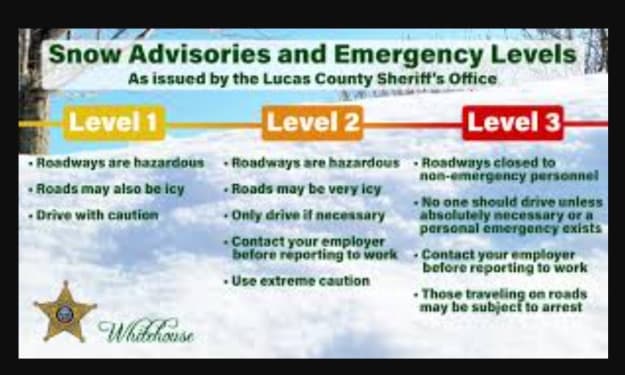
Winter weather in Ohio can change quickly, and when heavy snow or ice hits, local governments rely on snow emergency levels to keep residents safe. One of the most searched winter questions each year is: what level is Franklin County snow emergency right now? Understanding how these emergency levels work—and how they compare with nearby counties like Delaware County—can help drivers, workers, and families make safer decisions during severe weather. This article breaks down everything you need to know about the Franklin County snow emergency, including how levels are determined, where to find updates, and what each level means for daily life. What Is a Snow Emergency in Franklin County? A snow emergency is declared when weather conditions make travel dangerous due to snow, ice, or freezing rain. In Franklin County, Ohio, officials monitor road conditions, weather forecasts, and accident reports before announcing a snow emergency level. The Franklin County snow level system is designed to limit unnecessary travel and reduce accidents. Each level comes with specific guidelines for residents and employers. Local media outlets, especially 10TV Weather, play a major role in communicating these updates to the public in real time. Snow Emergency Levels Explained To understand what level snow emergency is Franklin County Ohio, it helps to know what each level represents. Level 1 Snow Emergency A Level 1 advisory means roads are slippery, especially bridges and secondary roads. Drivers should use caution, reduce speed, and allow extra stopping distance. Travel is permitted No legal restrictions Increased risk on untreated roads At this stage, daily activities usually continue as normal, though delays are common. Level 2 Snow Emergency When conditions worsen, officials may declare a Level 2 snow emergency. This signals that roads are hazardous and travel should be limited to essential trips only. Driving is discouraged Only necessary travel is advised Accidents become more frequent During a Level 2, many schools, businesses, and government offices may close or operate on delays. This is often the level that sparks widespread concern across Franklin County. Level 3 Snow Emergency Level 3 is the most serious designation. Roads are extremely dangerous or impassable, and travel is legally restricted. Only emergency personnel should be on the roads Driving can result in citations or arrest Conditions pose serious safety risks A Level 3 snow emergency is rare but critical. When declared, residents are urged to stay indoors until conditions improve. How Franklin County Determines Snow Emergency Levels Officials rely on multiple factors before announcing a snow emergency: Snowfall totals and accumulation rates Ice formation and road treatment effectiveness Traffic accidents and emergency response delays Weather forecasts from meteorologists Agencies coordinate closely with weather services and local law enforcement. Reports from 10TV Weather often provide early insight into whether conditions may escalate. Comparing Franklin County and Delaware County Snow Emergencies Many Ohio residents commute between counties, which makes comparing alerts important. A Delaware County snow emergency may not always match Franklin County’s status. For example: Franklin County could be under a Level 2 while Delaware County remains at Level 1 Snow bands may impact northern counties more severely Timing of road treatment can differ Drivers should always check both counties before traveling. Conditions can change rapidly, especially during overnight storms. Where to Find Reliable Updates Staying informed is essential during winter storms. The most reliable sources for Franklin County snow emergency updates include: Franklin County Sheriff’s Office announcements Official county websites and social media pages Local news stations, especially 10TV Weather Emergency alert systems and local radio Searching phrases like what level is Franklin County or what level snow emergency is Franklin County Ohio during storms is common, but always rely on official sources for confirmation. How Snow Emergencies Affect Schools and Workplaces Snow emergency levels often influence closures and delays: Schools typically close at Level 2 or Level 3 Government offices may shut down during Level 2 Many employers follow county advisories However, private businesses may set their own policies, so employees should check with supervisors directly. Preparing for a Franklin County Snow Emergency Preparation can make a major difference during winter weather. Residents are encouraged to: Keep vehicles fueled and stocked with emergency supplies Monitor forecasts before storms arrive Avoid unnecessary travel during Level 2 or Level 3 emergencies Check on elderly neighbors when conditions worsen Simple planning can reduce stress and improve safety during severe winter events. Why Snow Emergency Levels Matter Snow emergencies are not just warnings—they are safety tools. Each Franklin County snow level helps emergency crews prioritize resources, reduce accidents, and protect lives. Ignoring advisories can put drivers and first responders at risk. Understanding the system allows residents to make informed, responsible decisions. Final Thoughts Winter in Ohio is unpredictable, but information makes it manageable. Knowing how the Franklin County snow emergency system works—and staying updated through trusted sources like 10TV Weather—can help you stay safe when conditions deteriorate. Whether you’re checking what level is Franklin County, comparing alerts with a Delaware County snow emergency, or planning your commute, awareness is your best defense against winter hazards.
By Saboor Brohi 22 days ago in Earth
Severe Weather Conditions and School Closures in the United States
Severe Weather Conditions and School Closures in the United States Severe weather has long been one of the main reasons for school closures across the United States. From powerful winter storms and freezing temperatures to hurricanes, floods, and extreme heat, weather conditions can disrupt daily life and force education authorities to prioritize student safety. In recent years, climate variability has increased the frequency and intensity of these events, making weather-related school closures a recurring concern for families, educators, and local governments.
By America today 22 days ago in Earth